Amityville: A New Generation
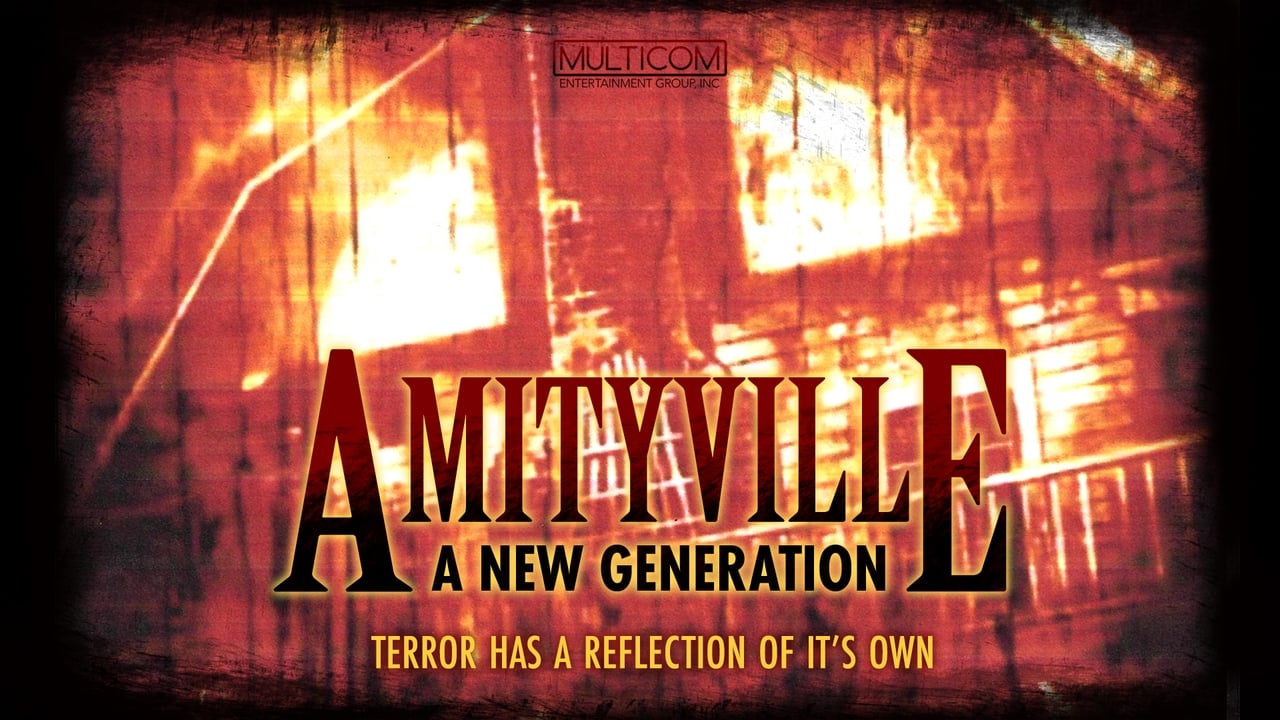
The reflection stares back, distorted, not quite right. A ripple across the silvered surface, and for a moment, the face isn't yours. That's the insidious chill that Amityville: A New Generation tries to capture – the horror not of a haunted house, but of a haunted object, a conduit for an evil that has long since detached itself from cursed geography. Released straight-to-video in 1993, this seventh (!) installment drifted even further from the infamous Long Island address, bringing the malevolence into the heart of bohemian New York City, trapped within an antique mirror.
### A Crack in the Glass
We meet Keyes Terry (Ross Partridge), a photographer gifted a baroque, frankly quite ugly, mirror by a homeless man who claims to have salvaged it from... well, you know where. Keyes lives and works in a communal artists' loft, a setting ripe for psychological unease and fractured relationships. Soon, the mirror begins to exert its influence, twisting perceptions, dredging up repressed traumas, and manifesting spectral figures – notably, Keyes' estranged father, Franklin Bonner, revealed through unsettling visions to have been possessed and driven to murder his family years prior, an event tied directly back to the original Amityville house. The plot, penned by Christopher DeFaria and Antonio Toro, leans heavily into psychological horror, attempting to explore themes of inherited guilt and the cyclical nature of violence, all channeled through this cursed looking-glass.
### Shards of Dread, Strokes of Banality
Director John Murlowski attempts to cultivate a specific kind of 90s urban decay atmosphere. The artists' loft, filled with jarring sculptures and half-finished canvases, serves as a decent backdrop for things going bump in the night. There's a certain grimy authenticity to the setting, a far cry from the suburban nightmare of the original. The film relies less on jump scares and more on suggestive imagery – distorted reflections, fleeting figures, and a pervasive sense of paranoia. The practical effects surrounding the mirror’s manifestations are sometimes effective in that uniquely unsettling, low-budget 90s way; think strange liquids oozing, faces warping, moments that stick with you precisely because they feel slightly off.
Yet, the dread often feels diluted. This was the second film in the series, following Amityville 1992: It's About Time and its demonic clock, to pin the horror on a cursed object rather than the house itself. This shift, likely driven by the prohibitive costs and narrative limitations of constantly returning to 112 Ocean Avenue for DTV budgets, felt like a significant watering down of the core concept for many fans. The mirror idea has potential, tapping into primal fears about identity and hidden realities, but the execution here often stumbles into predictable territory. The pacing can be lethargic, and the attempts at psychological depth sometimes feel more like soap opera melodrama than genuine terror.
### Faces in the Reflection

Ross Partridge carries the film as Keyes, delivering a performance steeped in brooding artist angst. He conveys the character's descent into obsession reasonably well, though the script sometimes leaves him adrift. Julia Nickson, perhaps best known to genre fans from Rambo: First Blood Part II, plays his skeptical girlfriend Suki, offering a grounded counterpoint to Keyes' unraveling reality. And Lala Sloatman (niece of musician Frank Zappa, a fun bit of trivia) plays Llanie, another artist in the collective, caught in the mirror's sinister web. The performances are typical of the era's DTV horror – earnest, sometimes overwrought, but fitting the overall tone. There's a strange story that the mirror prop itself was genuinely antique and quite heavy, causing some logistical headaches on the low-budget set, a small echo of the on-set "curses" sometimes whispered about on bigger horror productions.
### The DTV Franchise Machine
Amityville: A New Generation is a quintessential example of 90s franchise management via the video store shelf. The name recognition was the key selling point, the actual connection to the source becoming increasingly tenuous. Shot primarily in Los Angeles, doubling for New York, the film likely operated on a tight budget (typical for producers Steve White and Barry Bernardi's DTV output around this time). While specific figures are elusive, these films were designed for profit on the rental market, not theatrical glory. You can almost picture the VHS box art – likely emphasizing the mirror and hinting at dark secrets – designed to grab your eye in the horror aisle of Blockbuster or Hollywood Video. Remember scanning those shelves, seeing that familiar Amityville name, and wondering, "What object is haunted this time?"
The film doesn't really leave a lasting legacy beyond being another numbered entry in a seemingly endless series. It lacks the iconic power of the original or the gonzo energy of some later sequels. Yet, watching it now evokes a specific kind of nostalgia – the feel of late-night cable or a hopeful rental, the earnest attempt to make something spooky with limited resources, the very particular aesthetic of early 90s horror trying to find its footing after the slasher boom.
### Final Reflection
Amityville: A New Generation tries to find horror in introspection, literally reflecting the darkness within its protagonist. It has moments of atmospheric potential and taps into the inherently creepy nature of old mirrors. However, it's hampered by a meandering plot, diluted scares, and the inescapable feeling of a franchise stretching its premise thin for the home video market. It’s less terrifying haunted house and more slightly cursed episode of Melrose Place. For hardcore Amityville completists or lovers of 90s DTV horror peculiarities, it holds some curiosity value.
Rating: 3/10
This score reflects the film's significant departure from the core Amityville terror, its often slow pacing, and underdeveloped psychological themes. While it boasts a few unsettling mirror effects and captures a specific 90s DTV vibe, it ultimately fails to deliver sustained dread or compelling horror, feeling more like a footnote than a vital chapter in the sprawling, uneven saga. It's a dim reflection of the franchise's former power, interesting mostly as a relic of the era when horror franchises went straight-to-tape to survive.