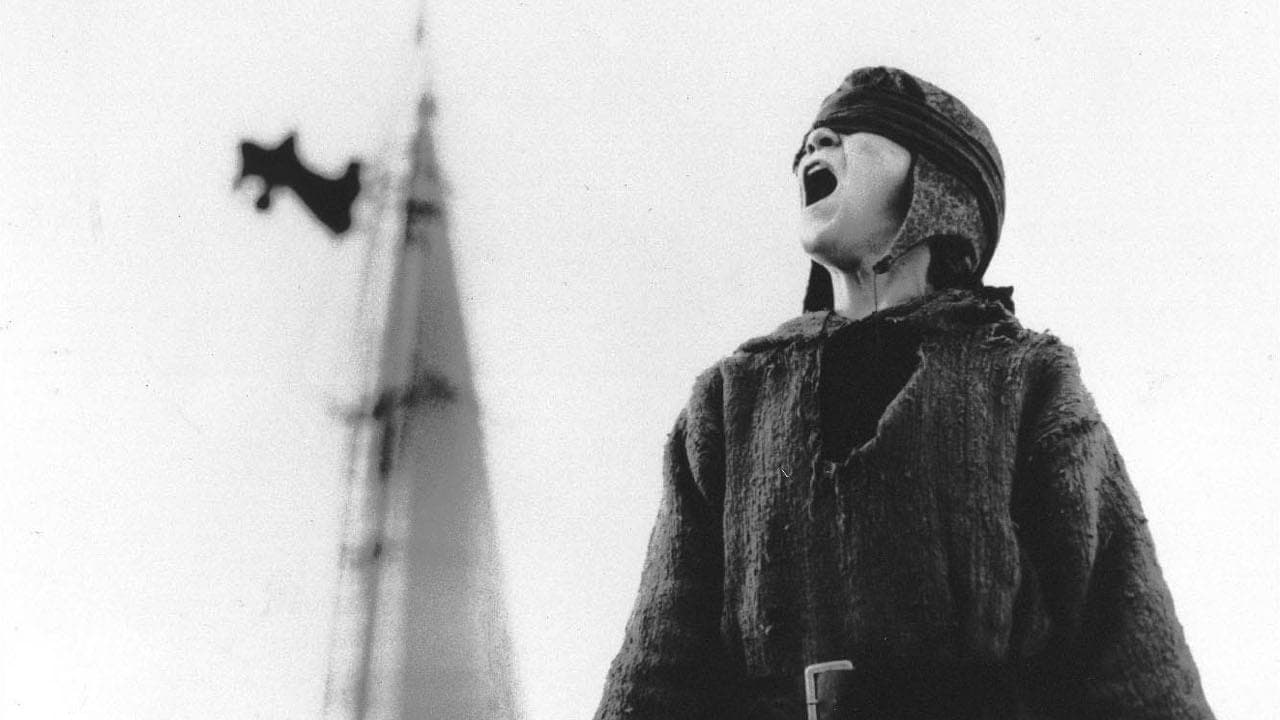
It starts not with a bang, but with a chilling monochrome dread. Picture this: Cumbria, England, 1348. The Black Death crawls across the land, indiscriminate and terrifying. In a small mining village, huddled against the encroaching doom, desperation breeds a wild hope. A young boy, Griffin, blessed or burdened with second-sight, dreams of salvation: burrowing through the Earth itself to reach the other side, where a great church spire awaits, a beacon against the plague. This striking, almost primal image is our entry point into Vincent Ward's profoundly strange and visually arresting 1988 film, The Navigator: A Medieval Odyssey. Forget your typical time-travel tropes; this is something far more elemental, a journey born of grit, faith, and sheer, unbelievable necessity.
Out of the Darkness
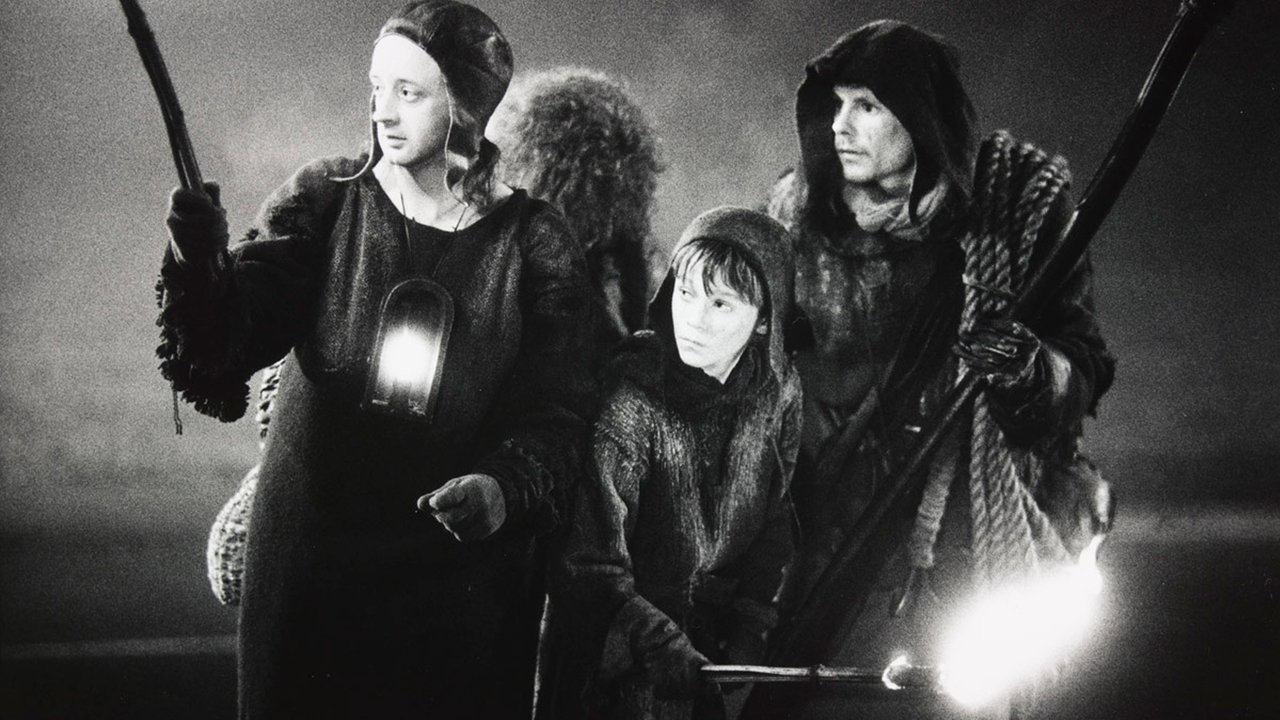
The film masterfully immerses us in the grim reality of the 14th century. Shot in stark, beautiful black and white by cinematographer Geoffrey Simpson (who would later lens Shine), these early scenes feel almost like recovered historical documents. The mud, the fear, the rough-hewn faces – it’s palpable. There's Connor (Bruce Lyons), the pragmatic leader clinging to Griffin's visions; Searl (Chris Haywood), the skeptic whose doubt feels achingly modern; and young Griffin himself, played with astonishing gravity by newcomer Hamish McFarlane. You believe their desperation, their willingness to undertake this seemingly impossible task: digging straight down, guided only by a child's dream, to appease God and erect a cross on a distant cathedral.
It's a testament to Ward's direction, blending gritty realism with an almost fable-like quality. We feel the claustrophobia of the mine, the back-breaking labor, the flickering hope against overwhelming odds. There’s a raw physicality to it all, a sense of lives lived close to the earth and closer still to death. This isn't romanticized history; it's survival painted in shades of grey.
Into the Alien Light
And then, they break through. Not into another medieval cavern, but into… something else. The screen explodes into colour, harsh and overwhelming. The sounds shift from wind and digging to the roar of engines and incomprehensible noise. Our Cumbrian miners haven't just tunneled through rock; they've tunneled through six centuries, emerging into late 20th-century Auckland, New Zealand.
This transition is one of the film's most powerful moments. The deliberate contrast between the monochromatic past and the saturated, almost lurid colour palette of 1988 underscores the miners' complete and utter disorientation. To them, this world of automobiles, neon lights, and towering structures is as alien and terrifying as any circle of Hell Dante might have conceived. Their quest, however, remains unchanged: find the tallest spire, plant their cross, and somehow save their village back in time. The film brilliantly portrays their attempts to interpret this baffling new reality through the lens of their medieval understanding – motorways become vast, dangerous rivers; a nuclear submarine surfacing in the harbour becomes a sea monster to be navigated.


A Visionary Quest, On Screen and Off
The Navigator was a remarkably ambitious undertaking for its time, especially considering its relatively modest budget (around $4.3 million AUD). A New Zealand/Australian co-production, it punched far above its weight, winning numerous awards, including Best Film and Best Director at the Australian Film Institute Awards. Vincent Ward, known for his visually driven storytelling (he would later direct the stunning What Dreams May Come), reportedly conceived many of the film's key images through his own paintings, giving the movie a unique, almost dreamlike logic.
Finding the right actor for Griffin was paramount. Hamish McFarlane, in his only major film role, carries the emotional core with a quiet intensity that belies his age. He embodies the strange wisdom and profound burden of the visionary, making the fantastical premise feel grounded in human emotion. The supporting cast, largely unfamiliar faces to international audiences at the time, lends an air of authenticity; they feel less like actors and more like people genuinely ripped from another time. Filming itself presented challenges, from working in confined mining tunnels to staging the complex emergence into the modern world. The result is a film that feels handcrafted, driven by a singular artistic vision rather than commercial compromise.
Echoes Through Time
What truly elevates The Navigator beyond its intriguing premise is its thematic depth. It's a film about faith pushed to its absolute limits, about the clash between ancient belief systems and modern secularism. How does one maintain faith when confronted with a future that renders your entire worldview obsolete? It also explores disorientation, the feeling of being adrift in a world you don't understand – a feeling perhaps universally resonant, regardless of the century. Some critics at the time drew parallels to the anxieties of the late 80s, seeing allegories for the AIDS crisis (an inescapable plague) or the impact of colonialism (one world violently intruding upon another).
Does their quest make logical sense? Not remotely. But the film isn't about logic; it's about the power of belief, the desperate human need for meaning and salvation in the face of oblivion. It asks us to consider what lengths we might go to, what realities we might be willing to bend, to protect the ones we love and the world we know. What lingers most after the screen fades to black isn't just the striking imagery, but the haunting questions about time, faith, and perception.
Rating: 9/10
The Navigator: A Medieval Odyssey is a rare beast – an intelligent, visually stunning, and deeply atmospheric piece of fantasy filmmaking that defies easy categorization. Its deliberate pacing and allegorical nature might not appeal to everyone expecting a straightforward time-travel adventure, but its ambition and execution are undeniable. The stark beauty of the black and white medieval world, the jarring shift to colour, the powerful central performance from Hamish McFarlane, and Vincent Ward's uncompromising vision make this a standout cult classic from the late 80s. It earns its 9 for sheer originality, visual artistry, and the haunting, resonant feeling it leaves behind.
It’s one of those films that, once seen, burrows into your memory much like its protagonists burrowed through the earth – a strange, beautiful, and unsettling journey that stays with you long after the tape has been rewound.