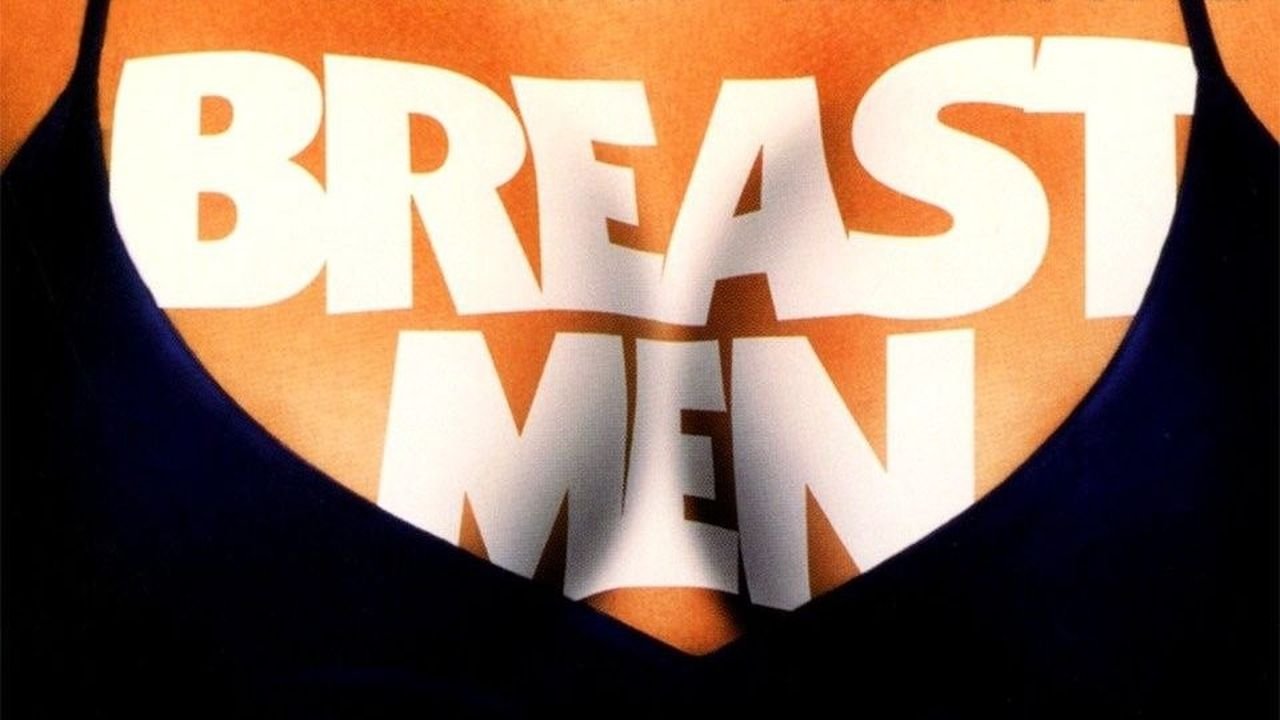
It’s a premise that, even decades later, feels audacious: a feature film chronicling the rise and bitter rivalry of the two Houston plastic surgeons credited with inventing the silicone breast implant. Yet, back in 1997, HBO, already carving out its niche for boundary-pushing content, delivered Breast Men. Watching it again now, pulling that metaphorical tape from the shelf, feels like unearthing a curious time capsule – a surprisingly sharp character study wrapped in a story intrinsically tied to ambition, ethics, and the often-unpredictable currents of societal desire. It wasn't the kind of movie you'd casually stumble upon at Blockbuster; it felt like a discovery, something talked about in hushed tones after the kids were asleep.

Partners in Innovation, Rivals in Hubris
At its core, Breast Men is driven by the fascinating, often fraught dynamic between its two leads. We meet Dr. William Larson (Chris Cooper) and Dr. Kevin Saunders (David Schwimmer) as idealistic young residents in the early 1960s. Larson is the quiet, methodical one, grounded in the science and genuinely motivated by reconstructive possibilities following mastectomies. Saunders, even then, possesses a restless ambition, an eye for the market, and a charisma that borders on slickness. Cooper, already showcasing the stoic integrity that would become his hallmark in films like American Beauty (1999) and Adaptation. (2002), perfectly embodies Larson's initial earnestness and later disillusionment. His performance is a study in contained emotion, the weight of unintended consequences settling heavily on his shoulders.
Then there’s Schwimmer. Plucked from the height of his Friends mega-fame, his casting as the increasingly narcissistic Saunders was a gamble that largely pays off. While moments of Ross Geller's anxious energy inevitably peek through, Schwimmer leans into Saunders's less savory traits – the hunger for fame, the casual disregard for ethical lines, the eventual descent into pure opportunism. Seeing him play against type, embracing a character driven by ego rather than neurotic charm, was genuinely compelling back in '97 and remains a highlight of the film. The tension between Cooper's restraint and Schwimmer's escalating showmanship forms the film's powerful central axis.

More Than Skin Deep
Written by John Stockwell (who many might remember onscreen from Top Gun (1986) but who also penned later films like Blue Crush (2002)), the script delves into surprisingly complex territory. It doesn't shy away from the ethical murkiness surrounding the burgeoning cosmetic surgery industry. The film touches upon the initial reconstructive goals inspired by real-life pioneers Drs. Thomas Cronin and Frank Gerow, but quickly pivots to the explosion of elective augmentation, fueled by Saunders's aggressive marketing and the changing cultural landscape. We see the initial triumphs, the booming business, but also the foreshadowing of the health scares and legal battles that would later engulf the industry. I recall finding a certain irony in watching this unfold on HBO, a network simultaneously pushing cultural boundaries while presenting a cautionary tale about unchecked ambition within another evolving field.
The film captures the shifting eras – from the hopeful post-war optimism of the early 60s to the swinging excesses of the 70s and the eventual litigious reckoning – with commendable period detail in its costumes and production design. Director Lawrence O'Neil maintains a steady hand, balancing the character drama with the procedural elements of medical innovation and business building. He doesn't sensationalize the surgeries themselves, focusing instead on the human cost and ethical compromises involved. Supporting roles, like Emily Procter (later of CSI: Miami fame) as Laura Hughes, a nurse caught between the two men, add necessary emotional grounding.
Retro Fun Facts & Lasting Impressions
While fictionalized, the core story draws heavily from reality. The initial breakthrough really did happen in Houston, and the clash between scientific caution and commercial zeal was palpable in the industry's early days. Stockwell's script reportedly underwent significant development, trying to find the right balance between biopic and cautionary tale. One fascinating tidbit often overlooked is how the film tackles the perception versus the reality of patient outcomes, hinting at the complex psychological factors driving demand long before reality TV fully normalized cosmetic procedures. Watching it today, knowing the decades of debate and medical advancements that followed, adds another layer of historical perspective. It's a snapshot of a specific moment when a medical procedure became a cultural phenomenon, and the film captures that inflection point effectively. It wasn't a massive ratings hit for HBO at the time, but it certainly generated conversation, tackling a subject few broadcast networks would have dared touch.
What lingers most after watching Breast Men isn't just the compelling performances or the intriguing subject matter, but the questions it raises about progress, profit, and the very definition of 'improvement'. Does the drive for innovation inevitably get tangled with ego and greed? How do societal pressures shape our desires, even down to our physical selves? The film doesn't offer easy answers, presenting its flawed protagonists with a surprising degree of nuance.
Rating: 7.5/10
Breast Men earns its score through strong central performances, particularly Cooper's grounded turn and Schwimmer's effective casting against type, and its willingness to engage with complex ethical themes without resorting to cheap sensationalism. It’s a well-crafted, thought-provoking piece of 90s cable filmmaking that captures a specific cultural moment tied to medical history and ambition. While perhaps not a widely remembered title, it’s a rewarding watch for those seeking character-driven drama with a unique historical hook.
It remains a potent reminder that sometimes the most dramatic stories aren't found in fiction, but in the messy, complicated history of human innovation and its often unforeseen consequences.