Okay, pull up a chair, maybe pour yourself something contemplative. We're stepping away from the neon glow of synth-pop actioners for a moment and venturing into the rain-slicked shadows of late 80s French cinema. Remember browsing those slightly intimidating "Foreign Films" shelves at the video store? Sometimes, nestled between the Fellinis and the Kurosawas, you'd find something unexpected, something quiet yet deeply unsettling. Patrice Leconte's Monsieur Hire (1989) was often one such discovery, a film that doesn't shout but whispers chilling truths about loneliness and the danger of assumptions.

What lingers, long after the VCR has clicked off, is the overwhelming sense of isolation. It permeates every frame, clinging to the title character like the damp chill of his sparsely furnished apartment. We first meet Monsieur Hire (Michel Blanc) through his own intense, secretive gaze – a tailor by trade, a voyeur by compulsion, observing his young neighbour, Alice (Sandrine Bonnaire), from across the courtyard. It’s an act that immediately puts us on edge. Is he merely lonely, or is there something more sinister behind those watchful eyes, especially when a young woman's body is discovered nearby?
A Study in Stillness
The casting of Michel Blanc is, frankly, a stroke of genius. Known primarily for comedic roles in France (think Les Bronzés), Blanc undergoes a startling transformation here. He sheds every comedic tic, inhabiting Hire with a profound stillness and a palpable sense of otherness. His movements are precise, economical; his face often a mask that hints at deep, unspoken pain and perhaps resentment. It's a performance built on restraint, conveying volumes through averted glances and stiff posture. You feel the weight of societal judgment pressing down on him, the quiet desperation of a man utterly alone in the world. It’s no surprise Blanc took home the Best Actor award at Cannes for this role – it’s a masterclass in understated intensity. Why does his portrayal feel so authentic? Perhaps because it taps into that universal fear of being misunderstood, of being judged solely on appearances.

The Enigma Across the Courtyard
Opposite Blanc is Sandrine Bonnaire as Alice, the object of Hire's fascination. Bonnaire, who had already mesmerized audiences in films like Vagabond (1985), brings a captivating ambiguity to Alice. She's aware of Hire's gaze, but her reactions are unpredictable. Is she playing games? Is she genuinely drawn to this strange man? Or is she hiding secrets of her own? Her performance is crucial; she’s not just a passive object but an active participant in the complex psychological dance that unfolds. The scenes where she directly confronts Hire, turning the tables on the observer, are crackling with unspoken tension. It's a dynamic that forces us to question who is truly observing whom, and for what purpose.
Leconte's Unblinking Eye
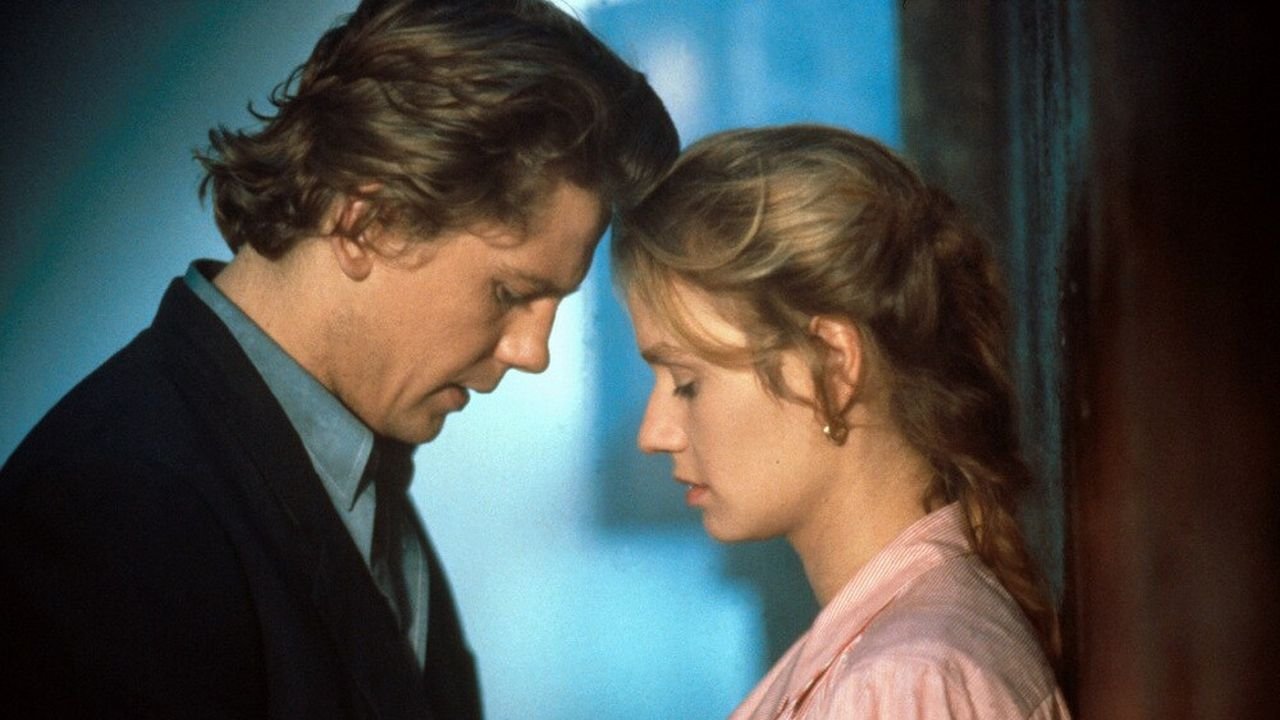
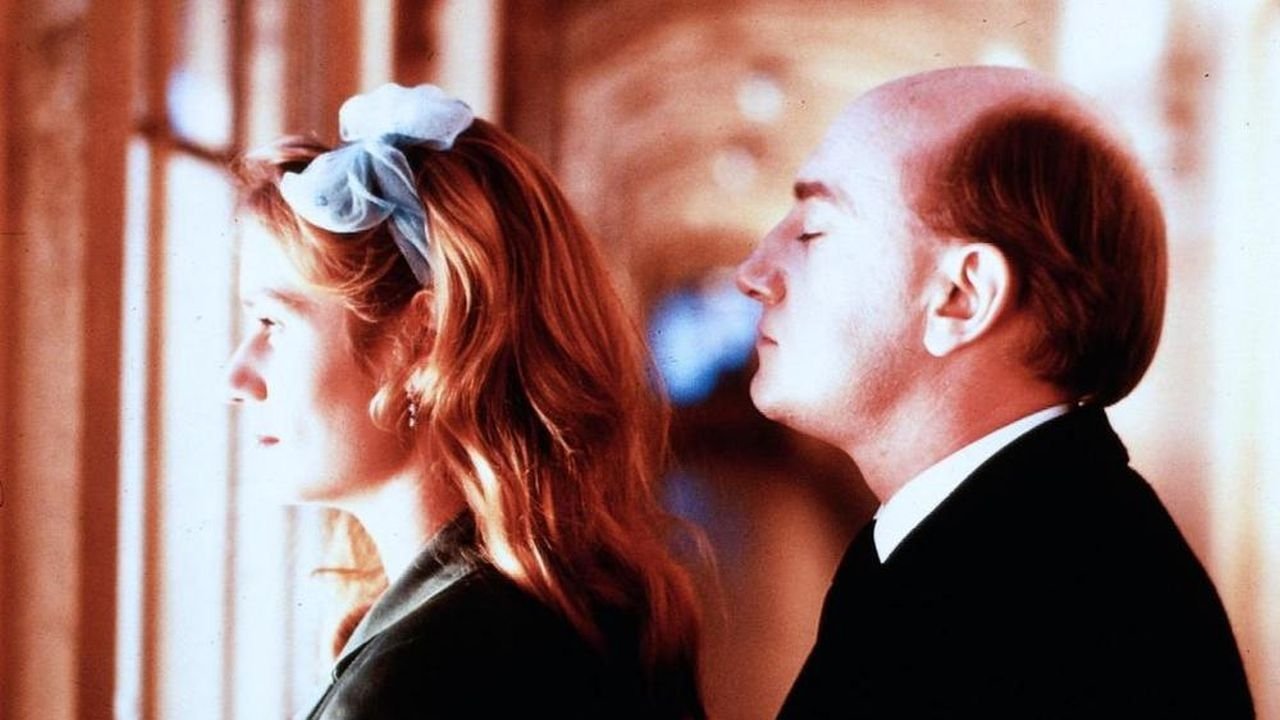
Director Patrice Leconte, who co-wrote the screenplay adapted from a Georges Simenon novel (Les Fiançailles de M. Hire – previously filmed as Panique in 1947), crafts a film of meticulous control. The camera often adopts Hire's voyeuristic perspective, trapping us with him in his watchful solitude. Leconte uses a muted, often blue-toned colour palette and the persistent presence of rain to create a claustrophobic, melancholic atmosphere. It feels like a world perpetually shrouded in twilight, both literally and metaphorically. Apparently, Leconte aimed for an almost silent film quality, letting the visuals and Michael Nyman’s haunting, minimalist score carry the emotional weight. There's a deliberate precision here – every shot feels considered, every silence pregnant with meaning. This isn't the explosive action or broad comedy often found on the VHS shelves; it's a meticulously constructed mood piece, a slow-burn thriller where the tension builds not through chases, but through exchanged glances and the crushing weight of suspicion.
Beyond the Surface
Monsieur Hire isn't just a crime story, though the murder mystery provides the narrative engine. It digs deeper, probing uncomfortable questions about prejudice, the nature of intimacy, and the ease with which society condemns those who don't fit in. Hire is ostracized not necessarily for anything he's done, but for who he appears to be – withdrawn, different, unsettling. Doesn't this resonate with anxieties we still grapple with today, the snap judgments based on incomplete information? The film doesn't offer easy answers or clear-cut heroes and villains. It leaves you contemplating the murky grey areas of human behaviour and the devastating consequences of loneliness. I remember renting this on a whim, perhaps drawn by the stark cover art, expecting a straightforward thriller. What I got instead was something far more haunting, a film that burrowed under my skin and stayed there.
Rating: 9/10
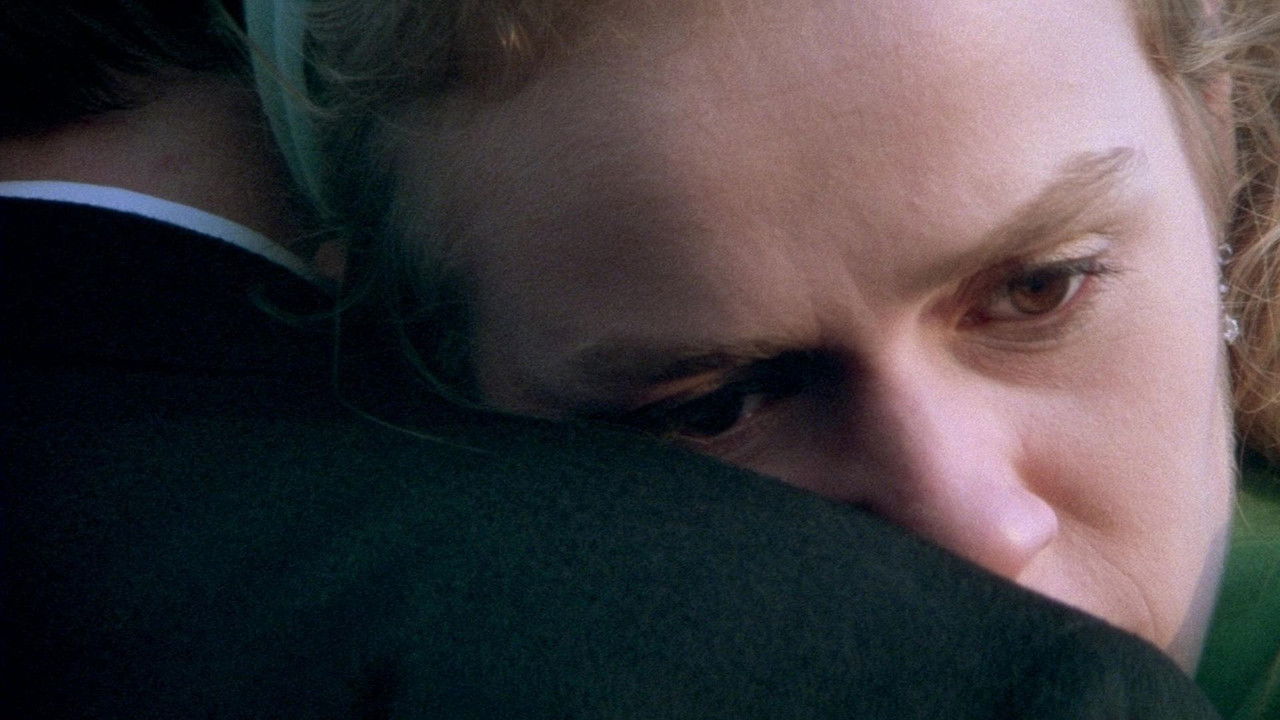
This score reflects the film's masterful execution, Michel Blanc's unforgettable performance, Patrice Leconte's atmospheric direction, and its chillingly relevant exploration of complex themes. It might lack the instant gratification of a blockbuster, but its power lies in its quiet intensity and psychological depth. It's a near-perfect example of French cinematic artistry from the period, delivering a character study wrapped in a thriller's clothing.
Monsieur Hire is a potent reminder that sometimes the most profound stories are found not in the noise, but in the silence, in the unspoken spaces between lonely souls watching each other across a rain-streaked courtyard. A truly haunting gem from the VHS era.