There’s a peculiar kind of archaeological thrill in pulling a dusty VHS tape off the shelf and seeing the director credited as “Alan Smithee.” It’s more than just a pseudonym; it’s a distress signal, a ghost in the machine whispering tales of studio battles, creative compromises, and a vision potentially lost. Such is the immediate intrigue surrounding Catchfire (1990), a film whose off-screen drama almost eclipses the moody, uneven thriller playing out on screen. Digging into this one feels less like revisiting a classic and more like uncovering a fascinating artifact from a specific, often turbulent, moment in filmmaking.

A Spark Ignites Pursuit
The premise itself holds a familiar noirish allure. Jodie Foster, riding high on her dramatic powerhouse turn in The Accused (1988) and just before her iconic role in The Silence of the Lambs (1991), plays Anne Benton, a conceptual artist whose life takes a violent detour. While driving, she inadvertently witnesses a brutal mob execution and becomes the sole loose end the killers need tied up. Forced into hiding, she crafts a new identity, but the past isn't easily erased. Enter Milo, a coolly efficient hitman played with unsettling charisma by the film's own director, Dennis Hopper. His assignment is simple: find Anne and silence her. But what unfolds is far stranger than a standard chase thriller. Milo becomes utterly captivated by Anne, his professional detachment dissolving into a dangerous, art-fueled obsession.
Hopper Behind and Before the Lens
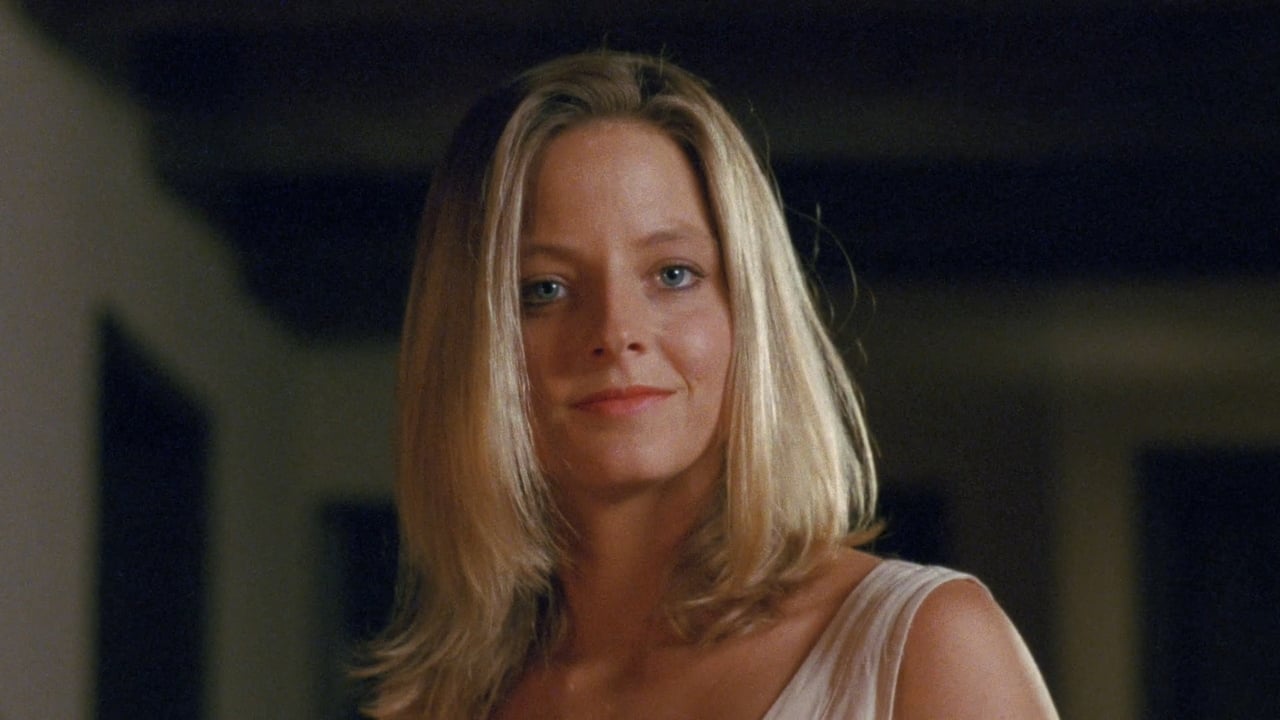
The presence of Dennis Hopper here is impossible to ignore, both as the film’s driving creative force (initially, at least) and its magnetic antagonist. As Milo, he embodies a quiet intensity, a coiled viper observing his prey not just with lethal intent, but with a peculiar, almost aesthetic appreciation. Hopper, already a legend for directing Easy Rider (1969) and for unforgettable acting roles like Frank Booth in David Lynch's Blue Velvet (1986), brings a specific, slightly unhinged energy that elevates Milo beyond a simple hired gun. He’s mesmerizing, even when the script leaves his motivations feeling murky.
But the real story, the one whispered about in video stores back in the day, was Hopper’s battle over the final cut. Unhappy with the version released theatrically by Vestron Pictures under the title Catchfire, Hopper had his name removed, hence the infamous "Alan Smithee" credit. Reportedly budgeted around $10 million, the film barely made a ripple at the box office, becoming more known for its troubled birth than its content. Hopper later assembled and released his own preferred version, often running about 20 minutes longer, titled Backtrack. Finding that specific cut on VHS or cable became something of a treasure hunt for dedicated cinephiles, offering a glimpse into what might have been. The Backtrack cut fleshes out the strange connection between Milo and Anne, making the narrative (slightly) more coherent, but the theatrical Catchfire is the version most of us likely stumbled upon first, a fascinatingly fractured experience in its own right.
Foster Ablaze Amidst the Smoke

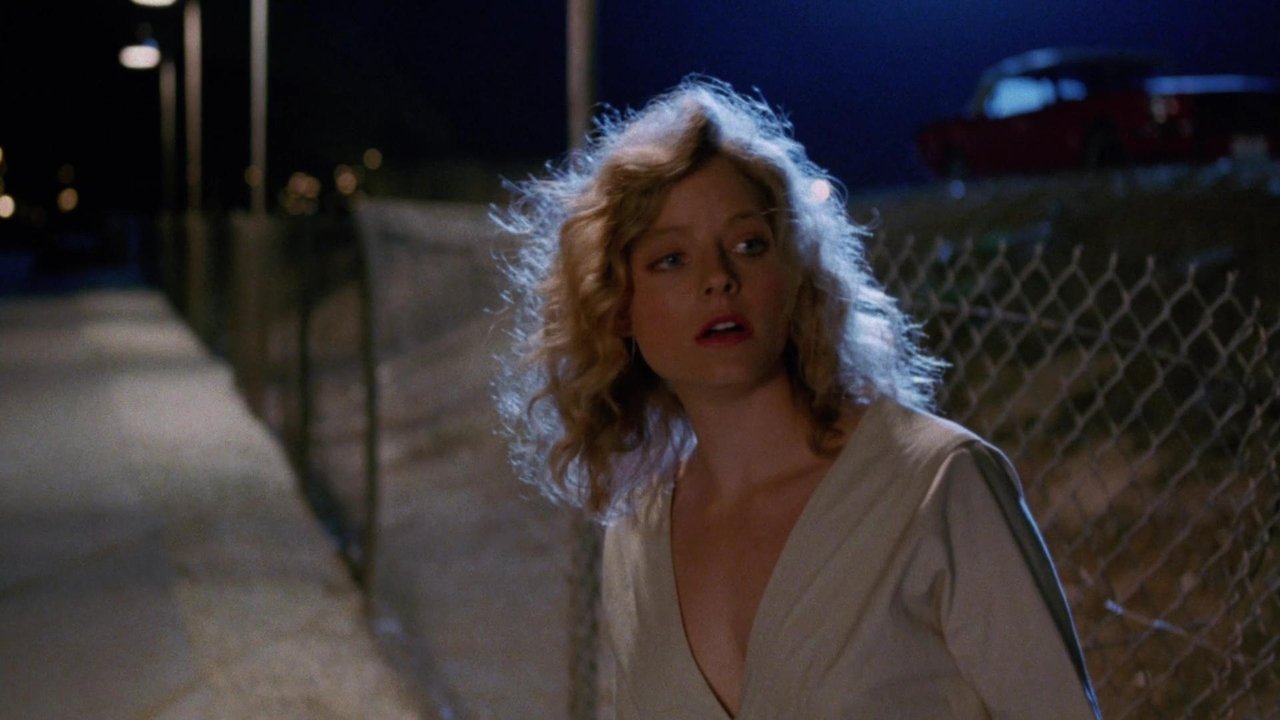
Even within the sometimes disjointed narrative of the Catchfire cut, Jodie Foster is compelling. Her Anne Benton is intelligent and resourceful, grappling with fear but refusing to be merely a passive victim. There’s a grounded reality to her performance that often anchors the film’s more eccentric impulses. You feel her desperation as her carefully constructed new life begins to crumble under Milo’s relentless, almost spectral pursuit. It’s a testament to her talent that she finds nuance in a character whose deeper motivations sometimes feel sacrificed in the edit. What drives Anne beyond survival? The film, at least in this version, seems less interested in exploring that than in the strange magnetism between hunter and hunted.
A Gallery of Eccentrics
One of the undeniable joys of revisiting Catchfire is its frankly astonishing supporting cast, populated by familiar faces often appearing in brief, memorable turns. Dean Stockwell, Hopper’s Blue Velvet co-star, exudes his signature smooth strangeness as the mob boss pulling the strings. We get glimpses of John Turturro and Fred Ward as mob enforcers. And, in one of his final screen appearances, the legendary Vincent Price lends his unmistakable voice and presence as mob patriarch Mr. Avoca – a fleeting but welcome sight. There’s even an uncredited Joe Pesci popping up, adding another layer to the feeling that you've stumbled into some kind of quirky, parallel cinematic universe. These appearances contribute to the film’s patchwork quality, like wandering through a gallery where distinct, vivid portraits briefly catch your eye before you move on.
Atmosphere Over Answers
Does Catchfire entirely work? In its theatrical form, perhaps not seamlessly. The pacing can feel uneven, and the central relationship between Milo and Anne, while intriguing, develops in fits and starts, leaving you questioning the psychological leaps. Yet, the film possesses a undeniable mood. Hopper crafts moments of genuine visual interest, playing with reflections, shadows, and the stark landscapes Anne escapes through. There's a pervasive sense of unease, amplified by a score that blends synthesizers with more traditional cues. It often feels like watching a dream – sometimes lucid, sometimes frustratingly opaque. It doesn't always provide clear answers, focusing instead on the feeling of being watched, of being pursued by something inescapable, perhaps even something within oneself.
This ambiguity, amplified by the knowledge of its troubled production, is precisely what makes Catchfire such a compelling artifact of the VHS era. It’s the kind of film you’d rent on a whim, drawn in by the cast or the cool cover art, and be left mulling over its strangeness long after the tape clicked off. It wasn’t aiming for blockbuster status; it felt like something more personal, more idiosyncratic, even in its compromised state. Remember finding these kinds of unexpected, imperfect gems nestled between the hits at the local video store?
---
Rating: 6/10
Catchfire is undeniably flawed, marked by its troubled production history and narrative inconsistencies in the commonly available theatrical cut. However, the magnetic performances from Dennis Hopper and Jodie Foster, the incredible constellation of supporting actors, and its pervasive moody atmosphere make it a fascinating watch. Its value lies less in its perfection and more in its status as a cinematic curiosity – a glimpse into a director's compromised vision and a reminder of the ambitious, sometimes messy, but often intriguing films that populated the video store shelves of the early 90s. It's a film that sparks more questions than it answers, lingering like the scent of smoke after a fire you only glimpsed from a distance.