It starts with a smirk and a snap. Not the snap of fingers, but the sharp, sickening crack of one deliberately broken at the Miami airport baggage claim. That moment, delivered with casual brutality by Frederick J. Frenger, Jr., serves as our jarring welcome to the sun-drenched, morally ambiguous world of Miami Blues. This isn't your standard neon-soaked 90s thriller; there's a different kind of heat haze shimmering off the pavement here, one thick with desperation, dark humor, and the pervasive sense that normalcy is just a badly fitting disguise.
Sunshine Noir
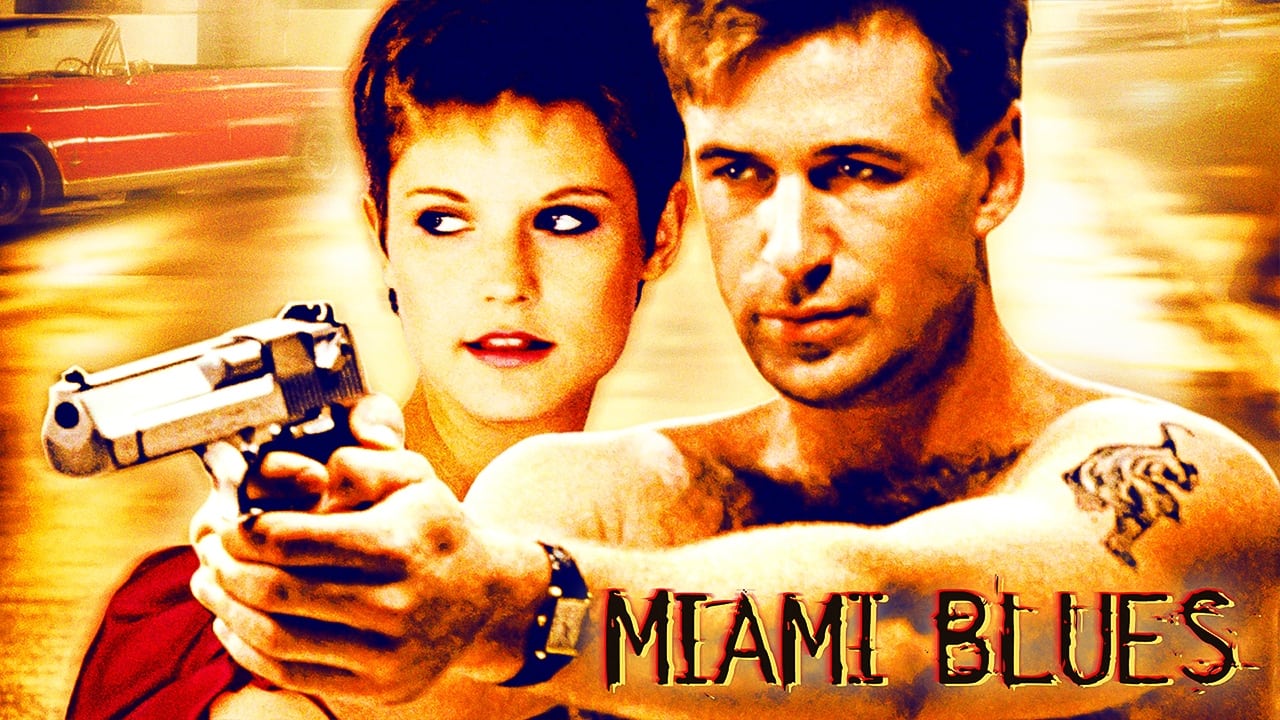
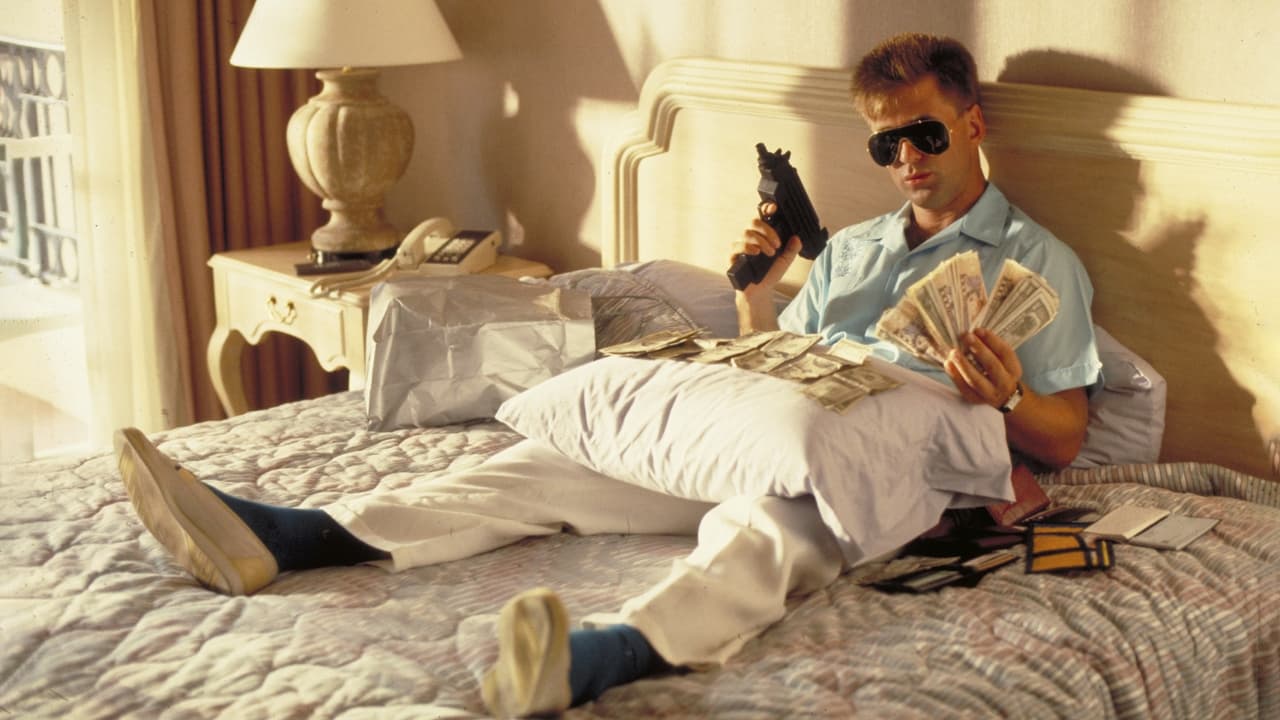
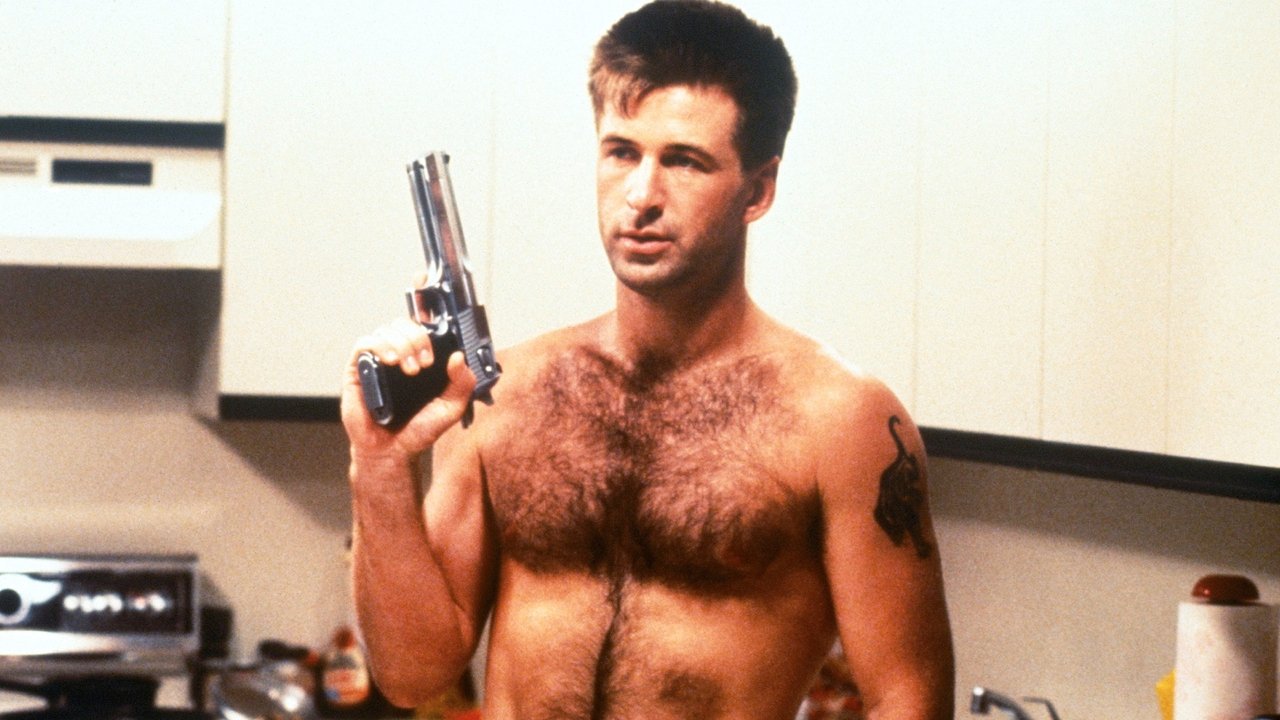
Directed with a uniquely off-kilter sensibility by George Armitage (who wouldn't direct again until 1997's Grosse Pointe Blank), Miami Blues adapts the first of Charles Willeford's celebrated Hoke Moseley novels. And it's immediately clear we're in the hands of storytellers fascinated by the frayed edges of society. Alec Baldwin, riding high on the charisma that would soon make him a household name, is Junior Frenger. Fresh out of prison, he arrives in Miami seemingly without a plan beyond impulsive chaos. He's charming, handsome, utterly psychopathic, and almost immediately, through a series of violent, sometimes absurd events, finds himself impersonating a police detective, complete with stolen badge and gun. It's a performance of chilling magnetism; Baldwin makes Junior terrifying precisely because you can see how someone might fall for his act, at least initially. Remember that chilling scene where he calmly explains his philosophy while making sandwiches? Pure, unadulterated menace delivered with a shrug.
The Dentured Detective
Trying to make sense of the wreckage Junior leaves behind is Sergeant Hoke Moseley, played with wonderful, weary authenticity by the great Fred Ward. If Junior is unchecked id, Hoke is pure pragmatism, albeit a uniquely Floridian brand. Willeford's creation is no slick super-cop; he's middle-aged, lives in a cheap hotel, struggles with alimony, and, most famously, often has to manage his ill-fitting false teeth. Ward, who could play rough-and-tumble decency like few others (Tremors, The Right Stuff), leans into Hoke's exhaustion. He’s seen it all, and Junior’s brand of unpredictable violence is just another headache in a city full of them. The moment Junior steals Hoke's badge, gun, and dentures feels less like a plot device and more like a perfect metaphor for the indignities Hoke endures. It’s a testament to Ward's grounded performance that Hoke remains the film’s moral anchor, even with his own quirks and failings. It's hard to imagine anyone else capturing that specific blend of competence and utter world-weariness.
An Unlikely Haven
Caught between these two forces is Susie Waggoner, portrayed by Jennifer Jason Leigh. Susie is a naive, aspiring homemaker working as a prostitute, dreaming of a simple, stable life. She falls for Junior's facade, offering him a kind of domesticity he seems both drawn to and utterly incapable of sustaining. Leigh, already known for tackling complex and often vulnerable characters (Last Exit to Brooklyn, Fast Times at Ridgemont High), finds the delicate balance in Susie. She's not just a victim; there's a core of hopeful resilience there, a yearning for connection that makes her relationship with the dangerous Junior strangely poignant, if deeply unsettling. Watching her try to build a life with him, oblivious for far too long to his true nature, generates a unique kind of suspense. Does her innocence offer Junior a chance at redemption, or is she just another potential casualty?

Retro Fun Facts: Grit Behind the Gloss
Miami Blues didn't exactly set the box office on fire, pulling in just under $10 million. It wasn't a blockbuster, finding its audience more slowly on VHS – becoming one of those quintessential "discoveries" down the aisles of Blockbuster or Hollywood Video. It feels like a film slightly out of time, carrying a grittier, more novelistic sensibility than many early 90s crime flicks. Producer Jonathan Demme, known for his own vibrant character studies often set in quirky corners of America (Something Wild, Married to the Mob), clearly fostered an environment where Armitage’s distinct vision could flourish. Willeford's novel was the first of four featuring Hoke Moseley, and while sequels were likely hoped for, the film's modest returns meant this remained Hoke's only cinematic outing. The violence, when it comes, feels startlingly real – less stylized than much contemporary action, adding to the film’s unsettling power. That opening finger-break scene? Apparently, it caused more than a few walkouts during early screenings.
The Lingering Blues
What makes Miami Blues stick with you, years after the VCR heads needed cleaning? It’s that strange, compelling blend of tones. It’s a crime story, certainly, but also a darkly funny character study and a snapshot of a specific kind of sun-baked desperation. Armitage refuses to paint in simple moral shades. Junior is monstrous, yet undeniably charismatic. Hoke is flawed but decent. Susie is naive but possesses surprising inner strength. The film doesn't offer easy answers or neat resolutions. Instead, it leaves you pondering the thin membrane separating order from chaos, civility from savagery, particularly in a place as transient and unpredictable as Miami felt on screen. Doesn't that central theme – the allure of adopting a persona, of faking it till you make it, even criminally – resonate in unsettling ways even today?
Watching it now takes me right back to that feeling of finding something unexpected on the shelf, something that didn’t quite fit the usual categories but grabbed you with its confidence and its willingness to be strange. It’s a reminder that sometimes the most memorable films aren’t the biggest hits, but the ones that offer a truly unique flavor.

Rating: 8/10
Miami Blues earns its score through its trio of fantastic central performances, particularly Baldwin's unsettling star turn and Ward's perfectly weary counterpoint. George Armitage crafts a distinctive atmosphere, blending dark humor and sudden violence with a confidence rooted in Charles Willeford's excellent source material. It’s a film that feels lived-in, unpredictable, and refreshingly devoid of easy moralizing. While its specific, sometimes jarring tone might not click with everyone, for fans of quirky crime cinema and stellar character work, it remains a standout gem from the early 90s rental era.
It’s a potent cocktail of sunshine, larceny, and existential dread – a vacation postcard from the edge, stamped and sent thirty years ago, that still feels disconcertingly relevant.