Okay, let's dim the lights, imagine the gentle hum of the VCR firing up, and settle in. Some films arrive like a familiar, comfortable blanket, others like a strange, intoxicating perfume you can't quite place but find yourself drawn to. Patrice Leconte's The Hairdresser's Husband (1990), or Le Mari de la coiffeuse as it spun on European reels, belongs firmly in the latter category. It wasn't the kind of tape you'd grab for a raucous Friday night viewing party; it was something quieter, more intimate, a film that whispers its secrets rather than shouts them. I distinctly remember stumbling upon its intriguing cover in the 'World Cinema' aisle of my local video store, a curious oasis amidst the louder action and comedy titles vying for attention. It promised something different, and different it certainly was.
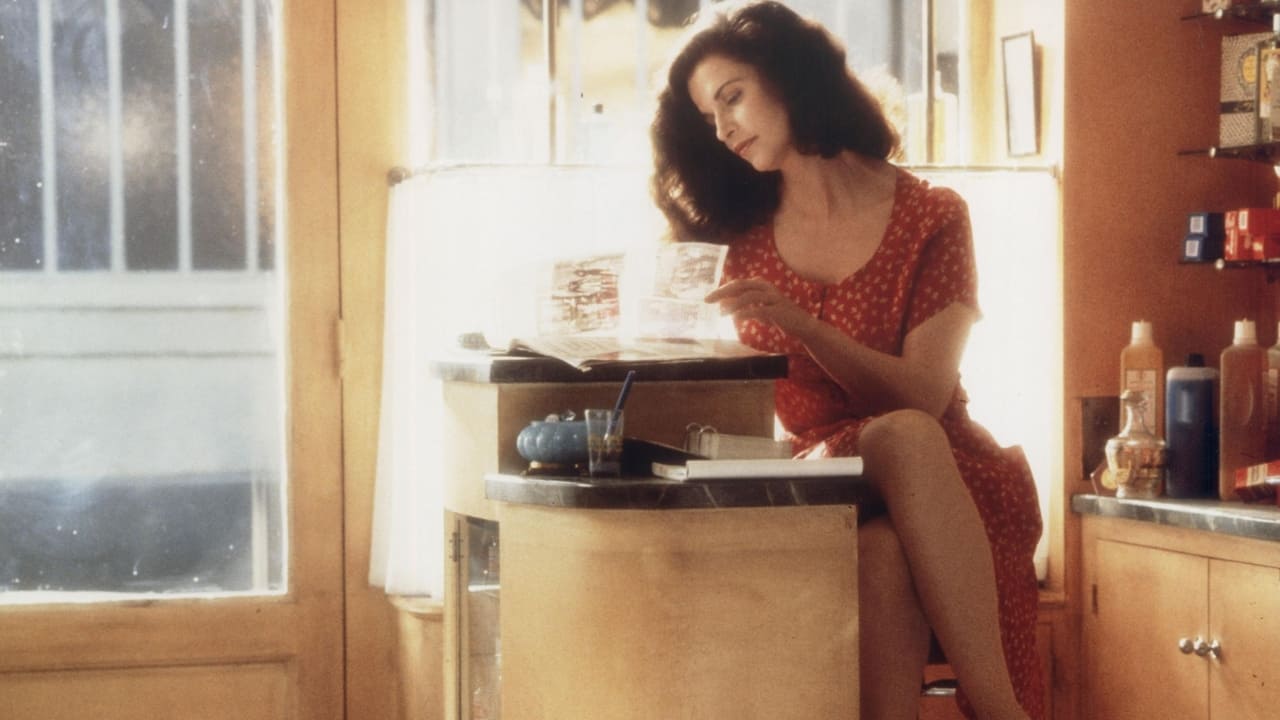
A World Within Four Walls
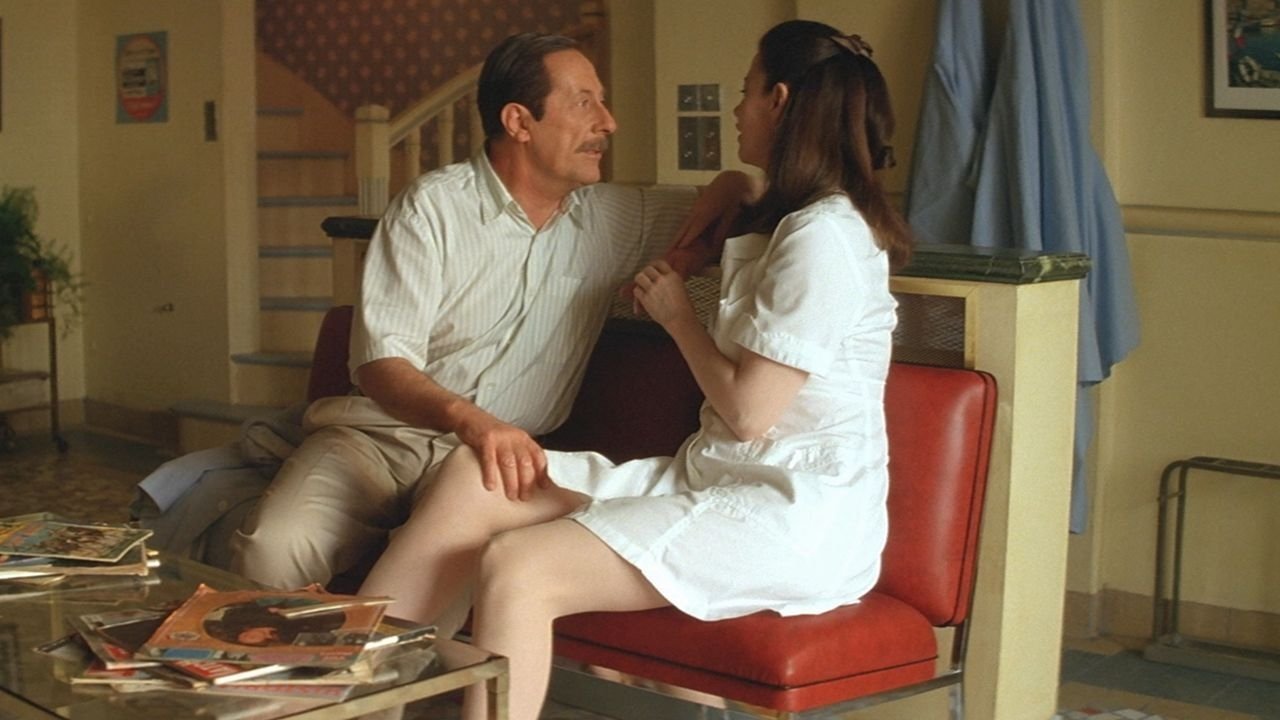
The film opens with a memory, bathed in the warm glow of childhood obsession. Young Antoine confesses his singular ambition: to marry a hairdresser. Not just any hairdresser, but the sensual, maternal figure who offered him his first brush with gentle intimacy. Fast forward decades, and the older Antoine, played with a quiet intensity that feels utterly lived-in by the legendary Jean Rochefort (a familiar face from French classics like An Elephant Can Be Extremely Deceptive (1976) and the later Ridicule (1996)), finally encounters his hairdresser, the captivating Mathilde (Anna Galiena). What follows isn't a conventional courtship, but an almost immediate merging of souls. They marry, and their existence becomes almost entirely contained within the sun-drenched, slightly timeless confines of Mathilde's salon. This setting, primarily filmed within the controlled environment of Studios Éclair near Paris (though exteriors captured the charm of Senlis, France), becomes a character itself – a bubble of shared passion, routines, and sensual delight, deliberately detached from the mundane world outside. Leconte, who also co-wrote the screenplay with Claude Klotz, apparently drew inspiration from his own childhood fascination, transforming a fleeting memory into this potent, almost dreamlike narrative.
The Weight of Perfect Bliss
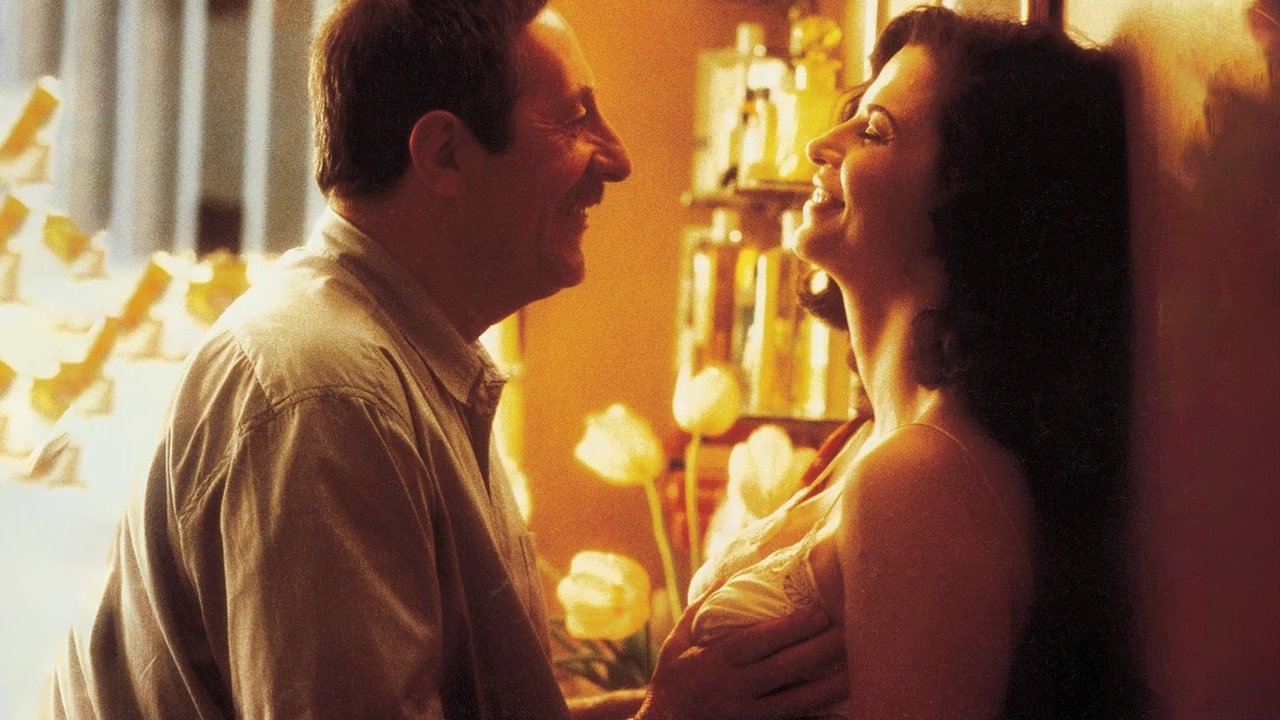
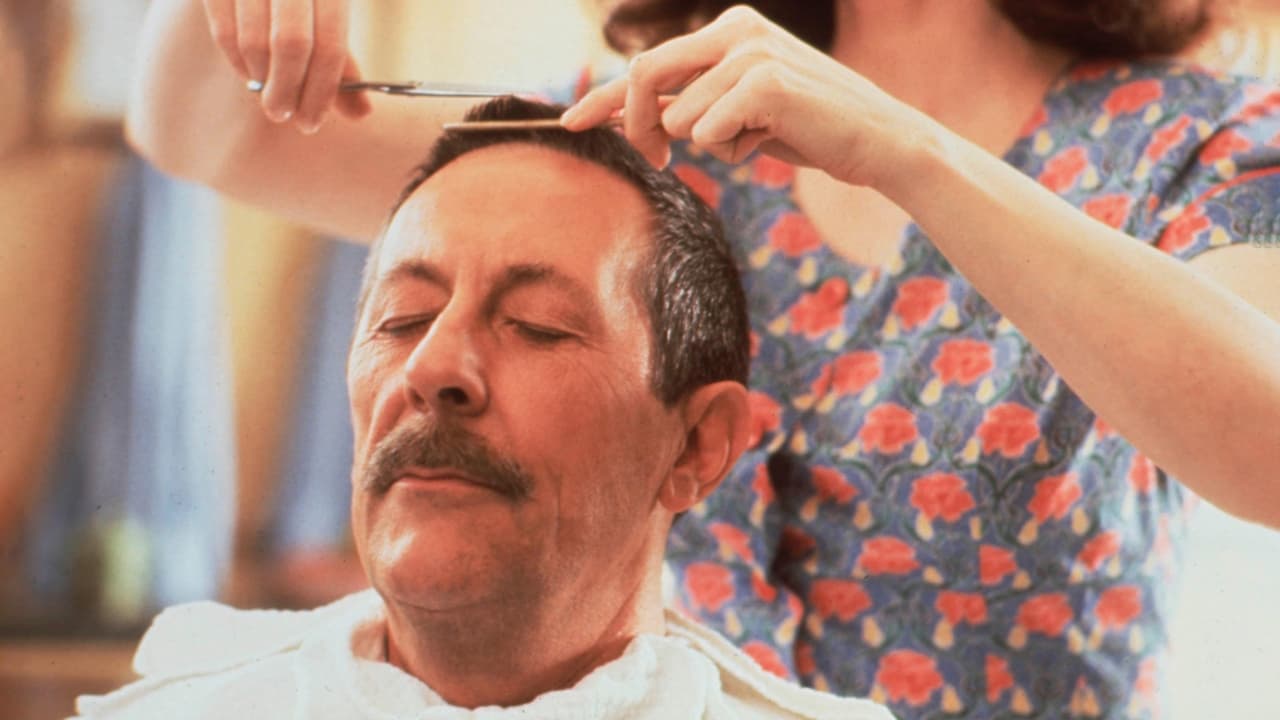
What makes The Hairdresser's Husband resonate so deeply, even decades later, is its unwavering focus on this enclosed world. There's little external conflict; the drama arises purely from the intensity of Antoine and Mathilde's connection. Rochefort, already a César-winning stalwart of French cinema, brings a lifetime of subtle expression to Antoine. His character is passive, almost childlike in his contentment, finding complete fulfillment simply by being in Mathilde's presence, watching her work, absorbing the atmosphere she creates. Galiena, in a role that brought her international attention, embodies Mathilde with a radiant sensuality that feels both knowing and guileless. Their chemistry is magnetic, believable in its profound intimacy. They communicate through shared glances, gentle touches, and the comfortable silence of people who need no words. You believe utterly in their shared universe, a testament to both the actors' skill and Leconte's sensitive direction. He crafts scenes – Mathilde cutting hair while Antoine watches, their languid dances to exotic music (the evocative score by Michael Nyman, later famed for The Piano (1993), is unforgettable) – that feel suspended in time, moments of pure, perhaps unattainable, bliss.
Echoes in the Salon
But can such perfect, hermetically sealed happiness truly last? The film doesn't shy away from the melancholy undercurrent beneath the sunlit surfaces. Antoine's single-minded devotion, while romantic, also borders on the obsessive. Their isolation, while comforting, feels fragile. Is this idyllic existence sustainable, or is it an elaborate fantasy built to keep the complexities of life at bay? The film doesn't offer easy answers, letting the mood and the characters' unspoken emotions guide the viewer. It’s a film less about plot twists and more about the exploration of a feeling – the consuming nature of love when it becomes the sole focus of existence. It garnered significant critical acclaim upon release, earning several César Award nominations in France, cementing Patrice Leconte's reputation as a director capable of handling nuanced emotional landscapes with a distinct visual flair. While perhaps not a massive blockbuster rental on the scale of Hollywood hits, its presence on VHS shelves offered a sophisticated, poignant alternative, a French cinema VHS discovery for the curious viewer.
Beneath the Surface
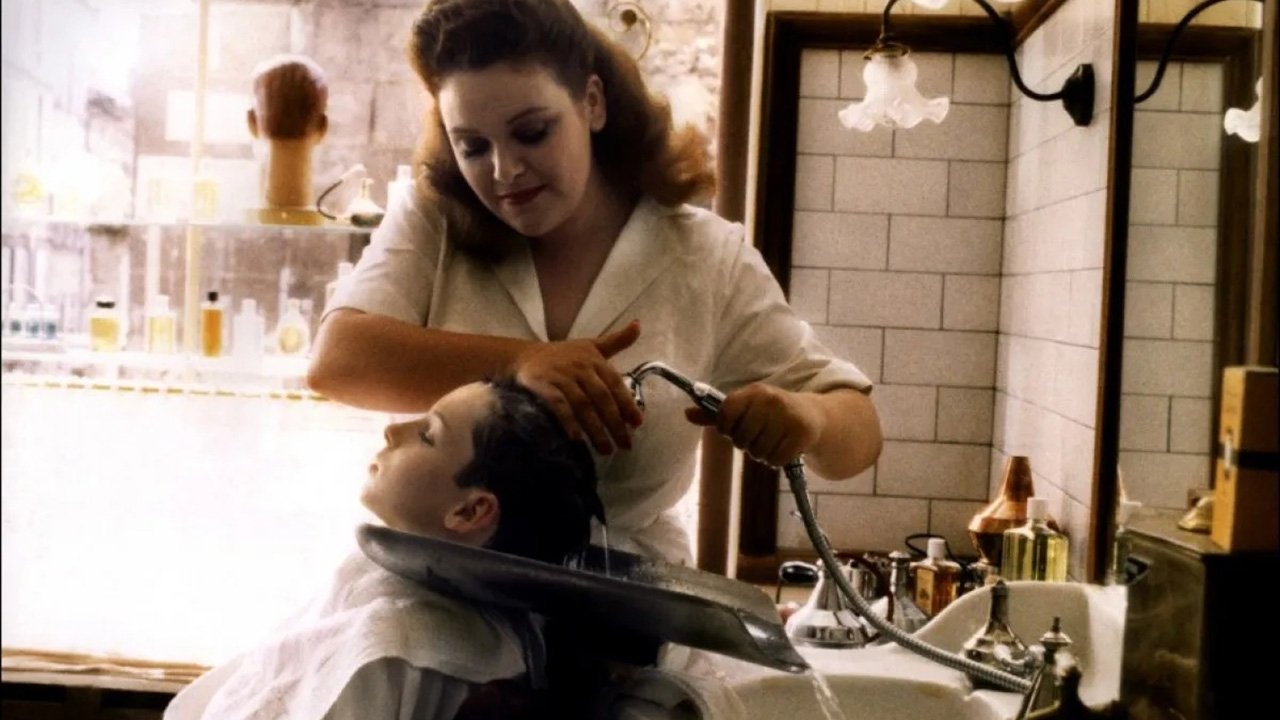
Interestingly, the film's deliberate pacing and contained setting might have been seen as limitations by some, but Leconte turns them into strengths. The salon isn't just a backdrop; it's the incubator for their love, fragrant with lotions and the snip-snip of scissors, a world where time seems to bend to their desires. There's little in the way of flashy effects, of course; the magic here is purely atmospheric and performative. The focus remains steadfastly on the two leads, their faces, their gestures, the palpable connection that defines their shared life. It asks us to consider what true happiness means, and whether seeking refuge from the world is a sustainable path to contentment.
Rating: 9/10
The Hairdresser's Husband earns a high rating for its unique, hypnotic atmosphere, the profound and nuanced performances by Jean Rochefort and Anna Galiena, and its courageous exploration of obsessive love and idealized intimacy. It’s a film that trusts its audience, relying on mood, suggestion, and powerful chemistry rather than conventional narrative devices. The direction is assured, the score is perfect, and the central relationship feels achingly real, even within its almost fairy-tale-like encapsulation. It avoids melodrama, achieving instead a poignant, sensual resonance that feels deeply earned.
This is a film that stays with you long after the tape clicks off – a haunting, beautiful meditation on finding paradise, and the quiet anxieties that linger even in the most perfect-seeming sanctuary. It’s a reminder that sometimes the most profound stories are whispered, not shouted.