What lingers most profoundly after the dust settles, not just from the bombs of war, but from the venomous settling of scores that follows? Claude Berri’s 1990 film Uranus plunges us headfirst into that murky, uncomfortable aftermath – a small French town in 1945, ostensibly liberated, yet suffocating under the weight of suspicion, accusation, and desperate self-preservation. It’s the kind of film that might have caught your eye in the 'World Cinema' aisle of the local video store, its slightly austere cover hinting at something heavier than the usual Saturday night rental, promising a depth that rewards the curious viewer. And reward it does, though not always comfortably.
### A Town Holding Its Breath
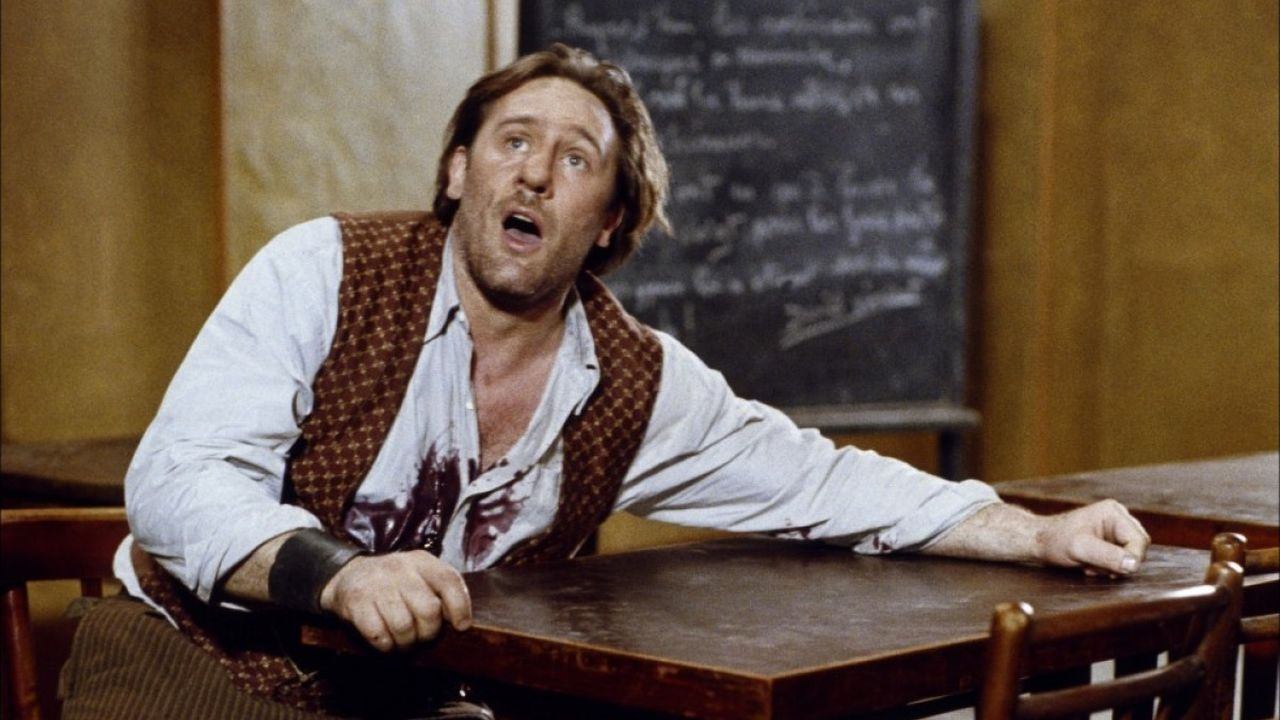
Forget heroic narratives of unified resistance triumphing over evil. Uranus, adapted from Marcel Aymé's pointed 1948 novel, paints a far more complex and unsettling portrait. The war may be officially over, but its psychic wounds fester openly. Housing is scarce due to bombing, forcing unlikely neighbours together. This setup becomes the crucible for the film's drama: Léopold Lajeunesse (Gérard Depardieu), a boisterous, poetry-spouting café owner and former Pétain supporter, finds his home requisitioned to house not only his family but also Archambaud (Jean-Pierre Marielle), a timid science teacher whose family apartment was destroyed, and Rochard (Daniel Prévost), a communist activist eager to root out collaborators. Into this already volatile mix comes Maxime Loin (Gérard Desarthe), an actual collaborator being hidden by Archambaud out of a complex sense of misplaced loyalty or perhaps sheer human pity.
The air crackles with unspoken histories and barely concealed resentments. Berri, who gave us the pastoral beauty and simmering tragedy of Jean de Florette (1986) and Manon des Sources (1986), masterfully captures the claustrophobia, not just of the cramped living quarters, but of the town itself. Every glance feels loaded, every overheard conversation potentially damning. Who denounced whom? Who profited from the Occupation? Who truly resisted, and who merely survived by looking the other way? These aren't questions with easy answers, and Uranus refuses to provide them.
### Giants Navigating Moral Fog
The film rests heavily on the shoulders of its exceptional cast, a gathering of French cinematic titans. Gérard Depardieu, already a global star, is a force of nature as Léopold. He’s loud, often drunk, politically naive perhaps, yet capable of surprising moments of vulnerability and insight. His passionate, booze-fueled recitation of the poem invoking the distant, indifferent planet Uranus gives the film its title and encapsulates his tragicomic bewilderment at human cruelty. It’s a performance of immense physical presence and raw emotion, perfectly capturing a man trying to find his footing on shifting moral ground.
Equally compelling is Jean-Pierre Marielle as Archambaud. His quiet dignity and intellectualism mask a deep anxiety and the terrible burden of sheltering Loin. Marielle portrays the paralyzing fear of the decent man caught in indecent times with heartbreaking subtlety. And then there's the legendary Philippe Noiret as Watrin, the melancholic engineer who observes the town's descent with a weary philosophical detachment, finding solace in entomology while human society devours itself. Noiret, ever the master of understated grace (think Cinema Paradiso (1988)), provides the film's quiet conscience, a necessary counterpoint to the surrounding turmoil. Seeing these three actors share the screen, navigating Berri’s intricate script (co-written with Arlette Langmann), is a masterclass in ensemble acting.
### Echoes of Occupation
Adapting Aymé’s novel, itself part of a trilogy exploring the Occupation’s moral complexities, was a significant undertaking for Berri. He reportedly saw Uranus as the thematic conclusion to his own explorations of the period. The film doesn't shy away from the ugliness of post-liberation purges – the épuration sauvage – where personal vendettas often masqueraded as righteous justice. It dares to suggest that the lines between hero, villain, and survivor were often desperately blurred. This wasn't necessarily a popular theme in France, even decades after the war, making the film's production somewhat brave. It was, in fact, France's submission for the Best Foreign Language Film category at the 63rd Academy Awards, although it ultimately wasn't nominated – perhaps its challenging ambiguity proved too much for Academy voters accustomed to clearer narratives.
The film isn't about grand battles or overt acts of heroism. It’s about the small, grinding pressures of daily life under extreme circumstances, the compromises made for survival, and the poison that lingers long after the fighting stops. Watching it today, perhaps on a format far removed from the original VHS tapes we might have rented, its exploration of mob mentality, political expediency, and the difficulty of true reconciliation feels depressingly relevant. Doesn't the rush to judgment and the murky definition of 'collaboration' echo in our own polarized times?
### Final Reckoning
Uranus is not an easy watch. It replaces the comforting clarity of good versus evil with a disquieting moral fog. The pacing is deliberate, reflecting the slow burn of simmering tensions. Yet, it's precisely this complexity, coupled with the powerhouse performances and Berri's assured direction, that makes it so compelling and ultimately rewarding. It’s a film that forces introspection, asking uncomfortable questions about human nature under duress.
Rating: 8/10
This score reflects the film's exceptional acting, its brave exploration of difficult historical themes, and its evocative, unsettling atmosphere. While its deliberate pace and morally ambiguous characters might not appeal to everyone seeking straightforward entertainment, Uranus stands as a powerful, mature drama that powerfully earns its emotional weight. It’s a potent reminder, discovered perhaps unexpectedly on a dusty video shelf, that the end of a war is often just the beginning of a different kind of battle. What truly defines collaboration, and how easily can righteousness curdle into vengeance? The questions linger, unsettlingly.