There's a quiet ache that settles in long after the credits roll on Ang Lee's 1991 debut, Pushing Hands (Tui Shou). It's not the explosive catharsis of a typical Hollywood drama, but something more subtle, a lingering resonance like the phantom pressure after a Tai Chi exercise. This wasn't the kind of film that jumped off the video store shelf with flashy cover art; finding it often felt like discovering a hidden channel, a story whispered rather than shouted, yet its power lies precisely in that hushed intimacy. It forces us to ask: how do we bridge the chasms – not just of language or culture, but of generations and unspoken expectations – within the walls of our own homes?
A Gentle Collision of Worlds
The premise is deceptively simple: Mr. Chu (Sihung Lung), an elderly Tai Chi master from Beijing, moves to suburban New York to live with his son Alex (Bo Z. Wang), daughter-in-law Martha (Lai Wang), and grandson Jeremy. Martha, a white American writer struggling with deadlines and cultural adjustments, finds her meticulously structured life disrupted by her father-in-law's presence. Mr. Chu, displaced and unable to communicate easily, retreats into his routines – Tai Chi, calligraphy, cooking – inadvertently creating friction points within the household. It's a classic setup for intergenerational and intercultural conflict, but Lee, alongside his frequent collaborator James Schamus (who co-wrote the screenplay), sidesteps melodrama. Instead, they focus on the small, everyday collisions – the smell of Chinese cooking clashing with Martha's sensibilities, the differing approaches to discipline, the profound loneliness felt by both Mr. Chu and Martha despite living under the same roof.
The Eloquence of Silence
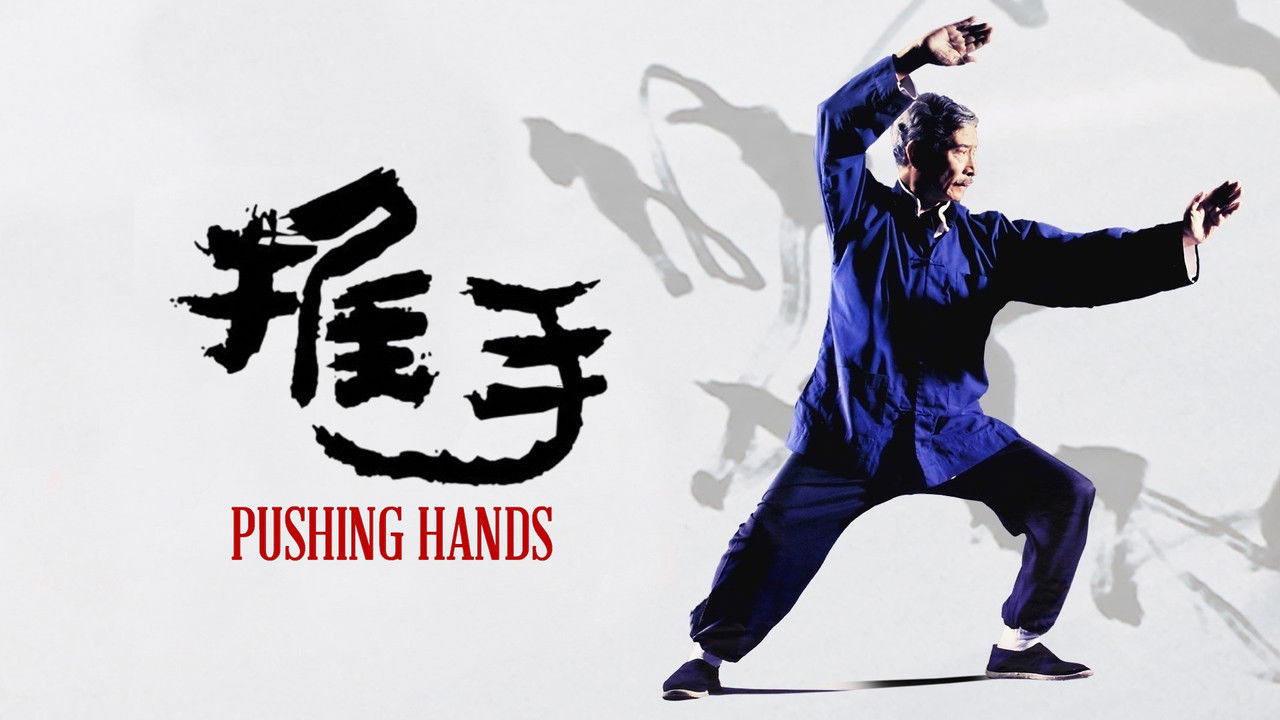
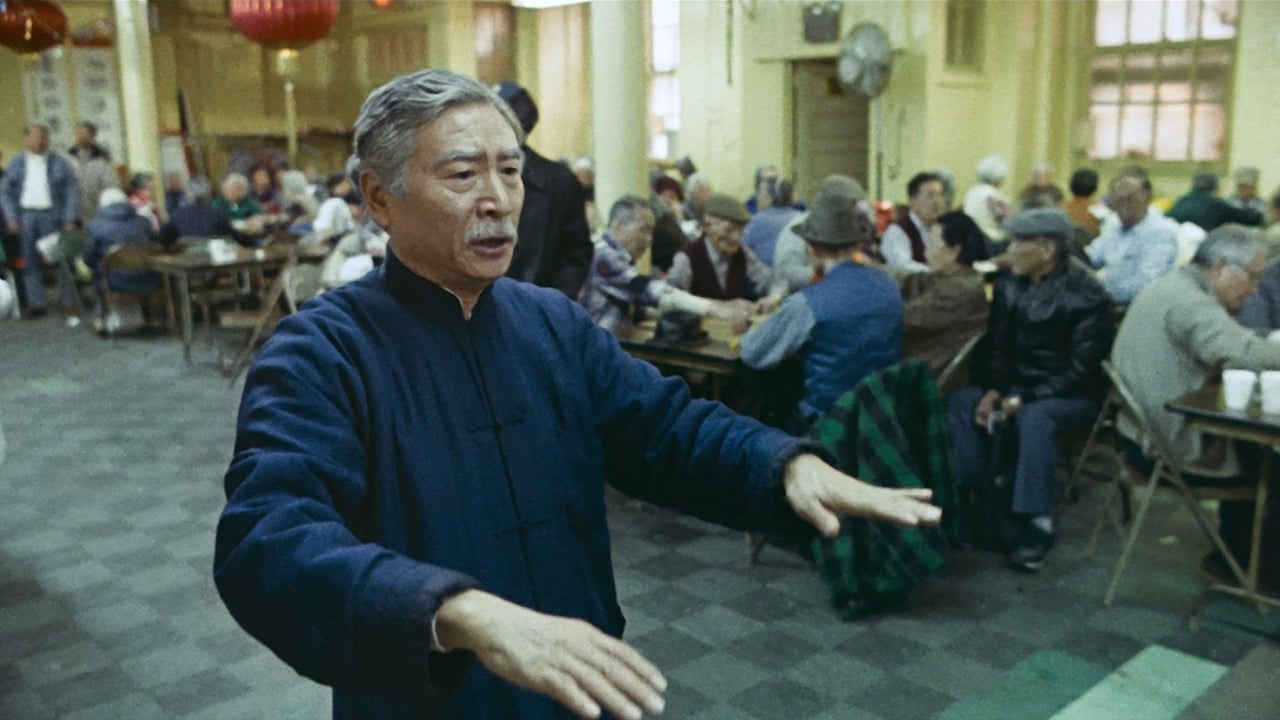
What truly elevates Pushing Hands is the masterful performance by Sihung Lung. For those who came to know Ang Lee through later films like Crouching Tiger, Hidden Dragon (2000) or Life of Pi (2012), seeing his collaboration with Lung here, the first of their "Father Knows Best" trilogy (which also includes The Wedding Banquet (1993) and Eat Drink Man Woman (1994)), is a revelation. Lung embodies Mr. Chu with extraordinary grace and quiet dignity. His face is a landscape of unspoken emotions – loneliness, pride, confusion, a deep yearning for connection veiled by cultural reserve. Much of his performance relies on silence, on the subtle shifts in his posture during Tai Chi, the careful strokes of his calligraphy brush, the way he observes the alien world around him. It's a performance built on nuance, conveying volumes without needing extensive dialogue.
Equally compelling, though perhaps less immediately sympathetic, is Lai Wang as Martha. She isn't portrayed as a villain, but as a woman under pressure, grappling with her own creative frustrations and the unexpected demands of caring for an elderly relative whose world is utterly different from hers. Her exasperation feels authentic, born not of malice but of genuine incompatibility and the stress of navigating cultural differences within the intimacy of her own home. The film wisely gives her space, allowing us to understand her perspective even as we ache for Mr. Chu. Their interactions, often mediated by the well-meaning but somewhat overwhelmed Alex, are a masterclass in depicting the friction that arises when distinct ways of life are forced into close proximity.
Ang Lee's Assured Beginning
It's astonishing to remember this was Ang Lee's feature directorial debut, reportedly made for a mere $400,000. Filmed primarily in Westchester County, New York, the film exhibits a confidence and sensitivity that belies his newcomer status. Lee demonstrates an early mastery of visual storytelling, using cramped interiors and careful framing to emphasize the characters' emotional confinement. The camera often observes, patient and empathetic, allowing moments of quiet tension or unspoken feeling to unfold naturally. The Tai Chi sequences, particularly the "pushing hands" exercise Mr. Chu practices, become a potent metaphor for the entire film: a delicate balance of yielding and resisting, of finding connection through gentle opposition, a dynamic mirrored in the family's struggles to adapt to one another.
There's a specific scene, later in the film, where Mr. Chu finds himself working in the chaotic kitchen of a Chinatown restaurant. Amidst the noise and steam, he finds a peculiar kind of belonging, a space where his skills are understood and valued. It's a poignant contrast to the quiet, isolating discomfort of his son's suburban home. This sequence, like much of the film, speaks volumes about the need for community and the pain of displacement.
Beyond the VHS Tape
Watching Pushing Hands today, perhaps retrieving a memory of that distinctive, often slightly worn Good Machine production company logo on the VHS tape, feels like revisiting a cornerstone. It's a film that eschews easy answers. There are no grand reconciliations or sudden transformations. Instead, it offers a profoundly moving portrait of flawed, relatable people trying, and often failing, to understand each other across formidable divides. It reminds us that communication is more than just shared language; it's about empathy, patience, and the willingness to see the world from another's perspective, however different it may be. Doesn't this struggle for understanding, across generations and cultures, still feel remarkably relevant today?
Rating: 9/10
This score reflects the film's exceptional emotional depth, the powerhouse performance by Sihung Lung, and Ang Lee's remarkably assured direction in his debut. It's a quiet film, requiring patience, but its insights into family dynamics, cultural friction, and the universal experience of aging and displacement are profoundly resonant. The pacing is deliberate, mirroring the characters' lives, which might test viewers accustomed to faster narratives, but the emotional payoff is immense.
Pushing Hands remains a testament to the power of quiet observation and empathetic storytelling, a gentle yet deeply affecting work that marked the arrival of a major directorial talent and resonates long after the screen goes dark. It leaves you contemplating the invisible forces – tradition, expectation, love, frustration – that push and pull within every family.