It starts, as these things sometimes do, not with a cosmic bang but with a jolt of static electricity and the crushing mundanity of middle management. There’s a peculiar sort of resonance in watching Barry Thomas stumble through his endlessly repeating Wednesday in 12:01, a feeling that goes beyond the clever sci-fi premise. It taps into that low-level anxiety, that sense many of us felt (or perhaps still feel) of days blurring together, routines becoming ruts. But what if one day offered a chance, however bizarre, to break the cycle entirely?
An Accidental Loop
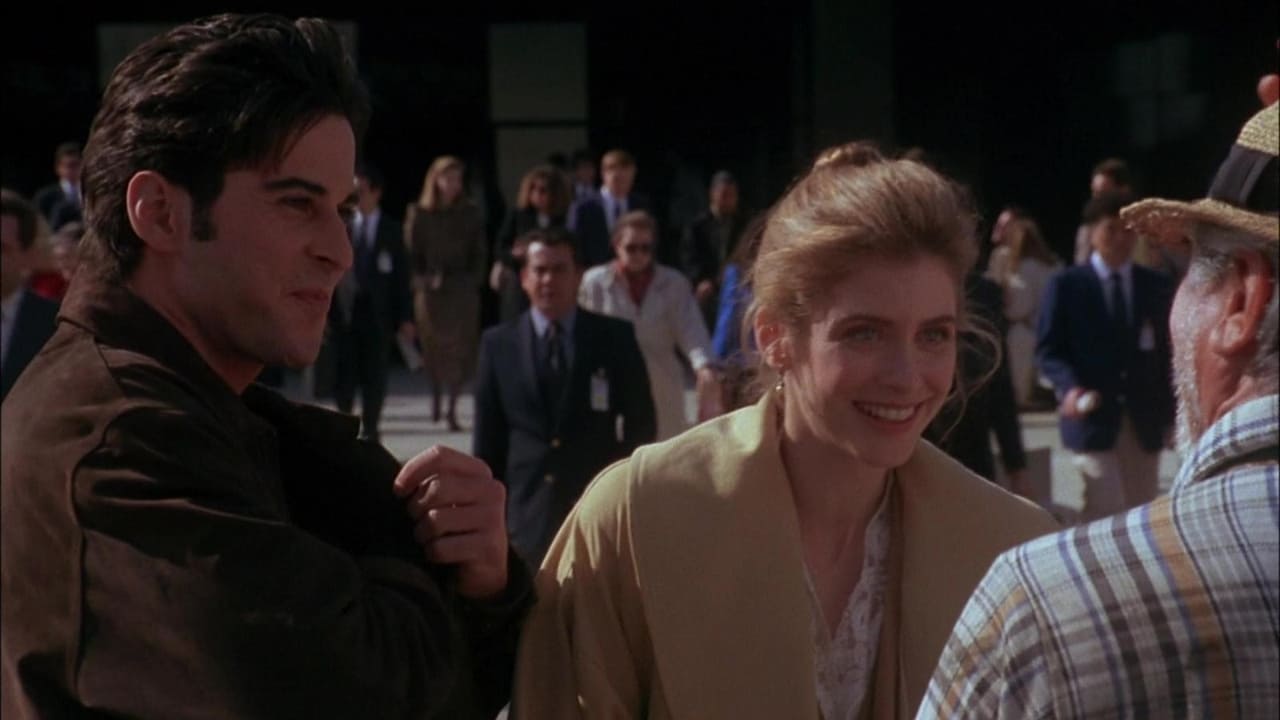
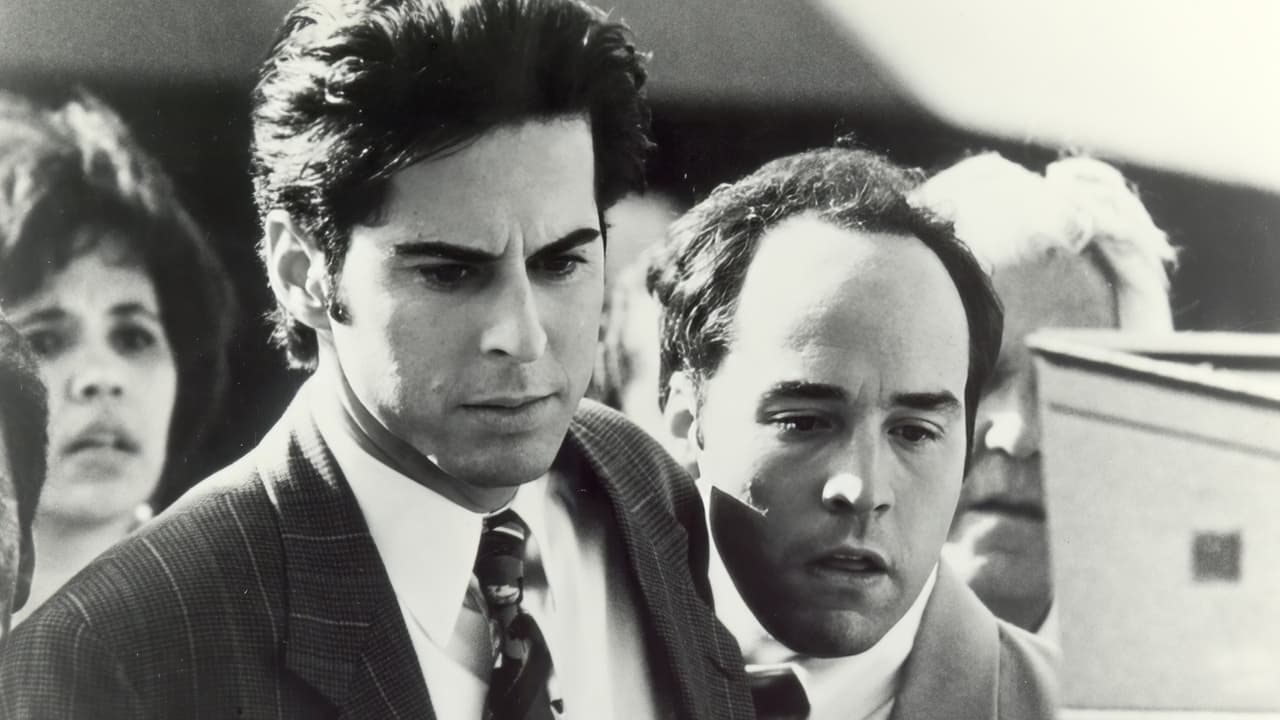
12:01, which first flickered onto our CRT screens as a Fox TV movie premiere back in 1993, presents us with Barry (Jonathan Silverman), a quintessential 90s office drone nursing a quiet crush on the brilliant physicist Lisa Fredericks (Helen Slater). His life is unremarkable until a freak encounter with an experimental particle accelerator – the kind of wonderfully specific technobabble device these films thrived on – locks him into a 24-hour loop, forever reliving the day Lisa is tragically murdered. Silverman, always adept at playing the slightly overwhelmed but decent guy (remember Weekend at Bernie's?), perfectly captures Barry's journey from baffled victim of circumstance to unlikely hero. There's an earnestness to his performance, a vulnerability mixed with growing resolve, that makes you root for him instantly. You feel his frustration, his desperation, and ultimately, his courage.
Beyond the Shadow of the Groundhog
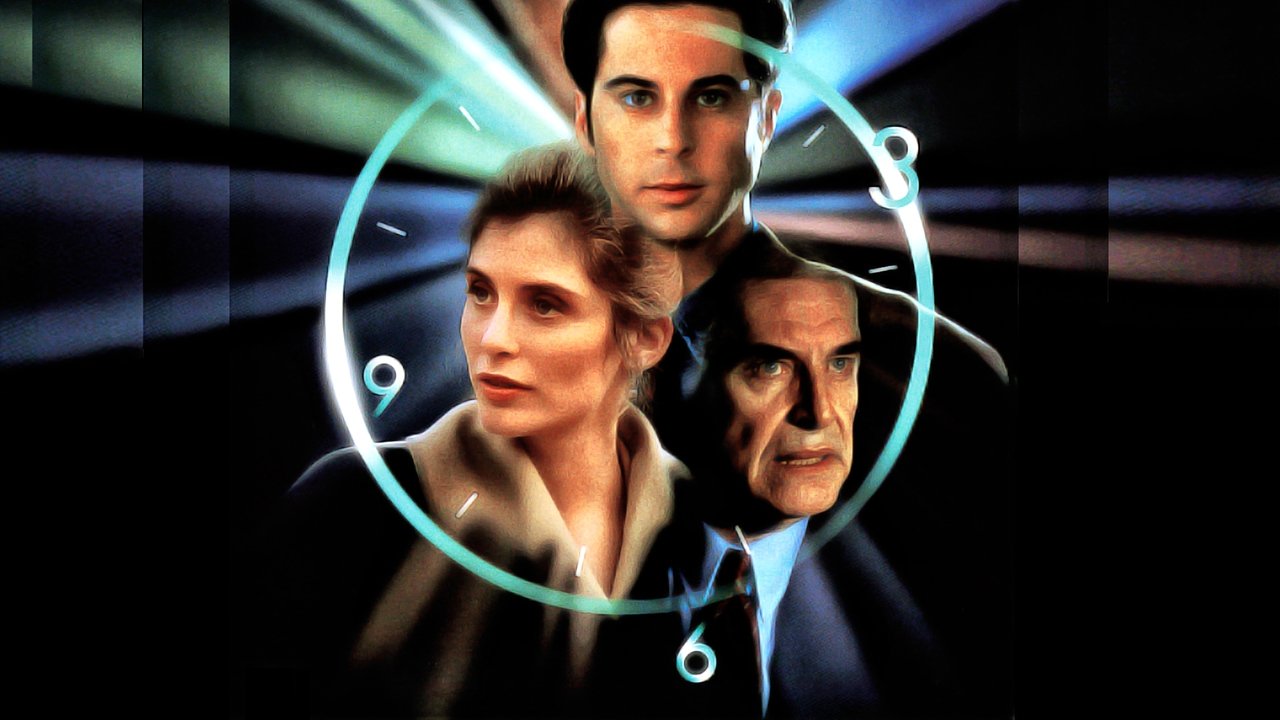
Okay, let's address the Punxsutawney Phil in the room. Yes, 12:01 arrived on screens mere months after Groundhog Day (1993) became a cultural phenomenon. The comparison is unavoidable, and frankly, probably did this capable TV movie a disservice at the time. But here’s a slice of retro trivia worth savoring: 12:01 is adapted from a 1973 short story (and later a novel) by Richard Lupoff, meaning its core concept significantly predates Bill Murray’s existential Puxsutawney nightmare. While Groundhog Day masterfully explored the philosophical and comedic potential of its loop, 12:01 leans more into its sci-fi thriller roots. The "temporal bounce," as it's termed here, isn't a mystical occurrence but a (pseudo) scientific one, and Barry's motivation isn't initially self-improvement, but a desperate, focused mission: save Lisa. It gives the film a different kind of urgency, a race-against-the-resetting-clock tension that stands on its own.
Earnestness and Veteran Presence
Helen Slater, bringing her inherent intelligence and warmth (familiar from films like Supergirl (1984) and The Legend of Billie Jean (1985)), makes Lisa more than just a damsel in distress. She's the brilliant mind whose work inadvertently caused the loop and the person whose fate drives Barry's every repeated action. Their burgeoning connection feels sweet and genuine amidst the temporal chaos. And then there’s Martin Landau as Dr. Thadius Moxley, the requisite shady corporate figure pulling the strings. Landau, ever the professional, lends the role a weight and subtle menace that elevates the proceedings. It’s always a pleasure to see a veteran actor commit fully, even in a project without blockbuster ambitions; you can see glimmers of the intensity that would soon win him an Oscar for Ed Wood (1994).
The Craft of the TV Movie
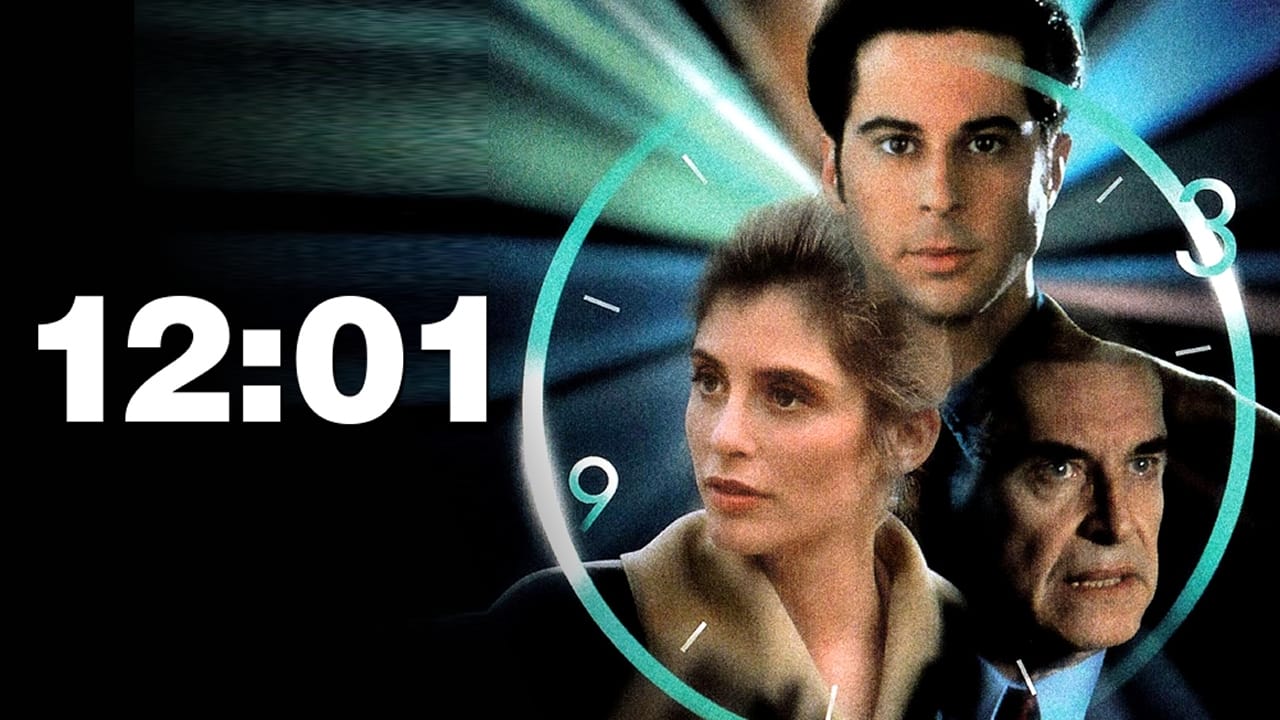
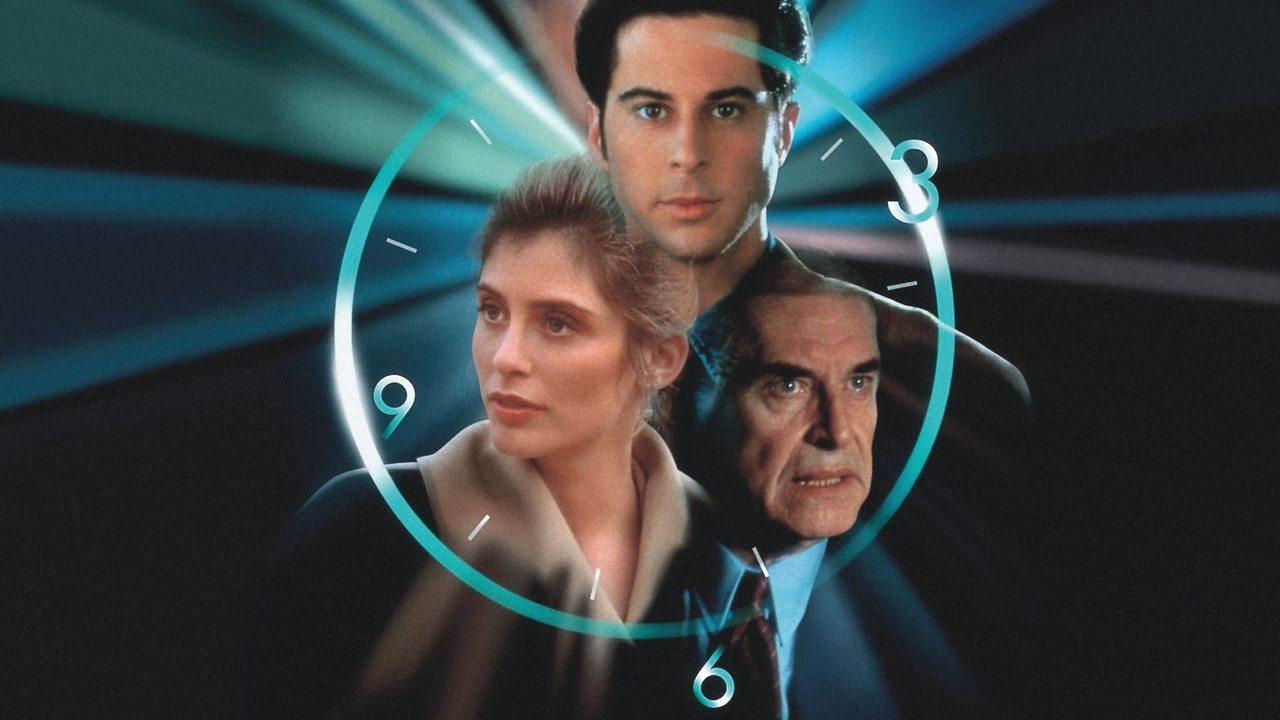
Directed by Jack Sholder, who had already proven his genre chops with the stylish cult favorite The Hidden (1987) and the infamous A Nightmare on Elm Street 2: Freddy's Revenge (1985), 12:01 showcases the particular charm of a well-executed 90s TV movie. The budget constraints are apparent – this isn't filled with elaborate effects – but Sholder uses the resources effectively, focusing on performance and pacing. The scenes around the particle accelerator have that distinct, slightly clunky but endearing practical effects feel we remember so well. Filmed primarily around Sacramento, California, there's an authentic sense of place that grounds the fantastical elements. It’s telling that the film even garnered an Emmy nomination for Outstanding Writing, a nod to the solid storytelling structure crafted by Philip Morton from Lupoff's source material. It hits its marks with efficiency and heart.
That Warm VHS Glow
Watching 12:01 today evokes a specific kind of nostalgia. It’s the nostalgia of discovering a hidden gem on late-night TV or picking up an intriguing-looking tape from the "New Releases" wall at the video store, maybe based solely on the familiar faces on the cover. It captures that particular early-90s aesthetic – the office technology, the slightly oversized suits, the earnest blend of sci-fi concepts with straightforward emotional stakes. I distinctly recall catching this on its original broadcast, intrigued by the premise and charmed by Silverman's everyman appeal. It felt like a smart, engaging piece of television, a feeling that holds up surprisingly well.
Rating: 7/10
12:01 is far more than just a footnote in the time-loop genre. It's a genuinely engaging, well-acted, and cleverly plotted sci-fi thriller with a romantic heart, anchored by a truly likable lead performance from Jonathan Silverman. While comparisons to its big-screen cousin are inevitable, it succeeds on its own terms as a prime example of quality 90s television filmmaking. The direction is solid, the supporting cast (especially Landau and Slater) adds class, and the story, rooted in Richard Lupoff's earlier work, offers a compelling race against (and within) time. It might lack the philosophical depth or comedic genius of Groundhog Day, but its earnest charm, thriller pacing, and satisfying execution earn it a solid 7 out of 10. It successfully blends genres and delivers exactly the kind of enjoyable, slightly quirky sci-fi story that was a hallmark of the era.
It leaves you pondering not just the nature of time, but the quiet power of perseverance, even when faced with the seemingly insurmountable task of changing a single, endlessly repeating day. What would you do with infinite chances?