Alright, rewind your mind back to those glorious days browsing the comedy section at Blockbuster. Remember stumbling across those covers with maybe one big star you recognized, paired with someone who looked familiar, promising laughs and maybe a little something more? That's the exact vibe pulling 1993's Amos & Andrew off the shelf felt like. A title that sounds almost like a Vaudeville act, hinting at the odd-couple pairing within, this film is a fascinating time capsule – a social satire wrapped in a hostage comedy, starring two actors just on the cusp of exploding into the stratosphere.

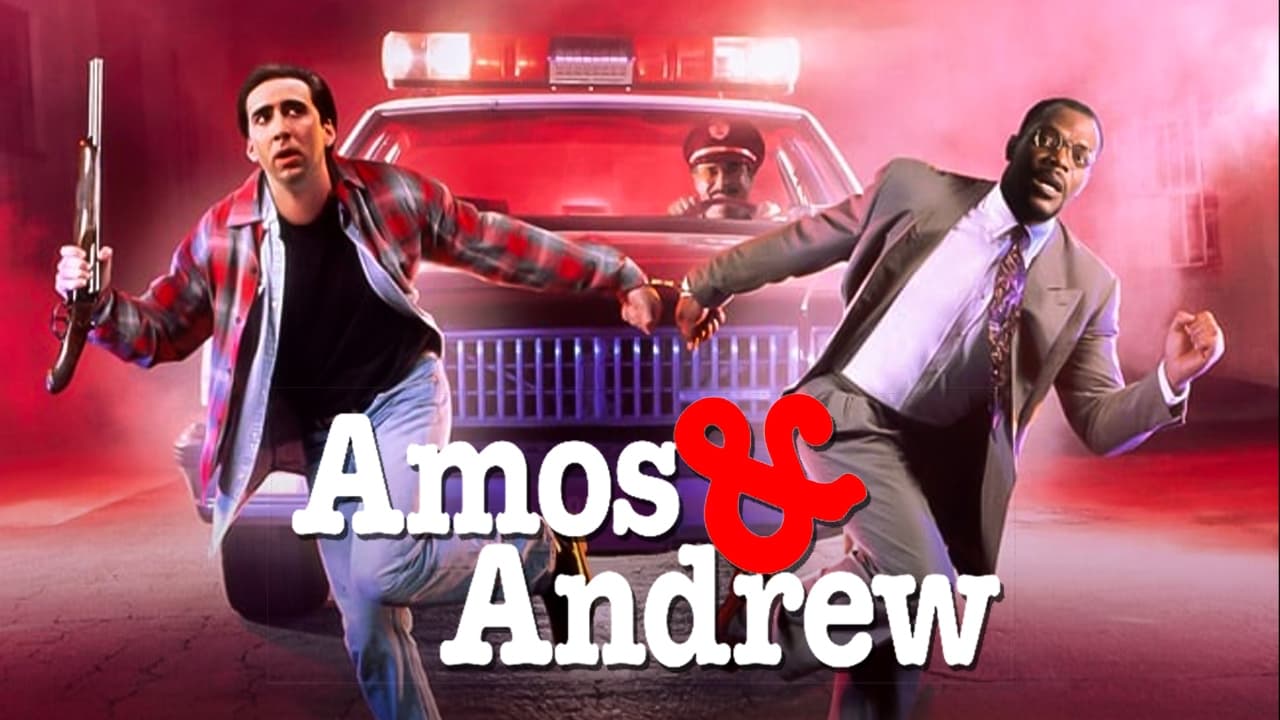
The setup is pure, distilled early-90s concept: Andrew Sterling (Samuel L. Jackson), a Pulitzer Prize-winning playwright, buys a vacation home on what he thinks is a quiet, idyllic island inhabited mostly by wealthy white folks. Late one night, neighbours spot him unloading his stereo and, well, you can guess the rest. They mistake the new homeowner for a burglar, leading to a hilariously over-the-top police response orchestrated by the craven Police Chief Tolliver (Dabney Coleman, doing his reliably excellent smarmy authority figure thing). Realizing their potentially racist blunder, Tolliver concocts a plan: find a real criminal to stage a hostage situation with Sterling, making the police look like heroes when they "rescue" him. Enter Amos Odell (Nicolas Cage), a dim-witted, perpetually unlucky petty thief already in custody.
An Odd Couple For the Ages (Almost)
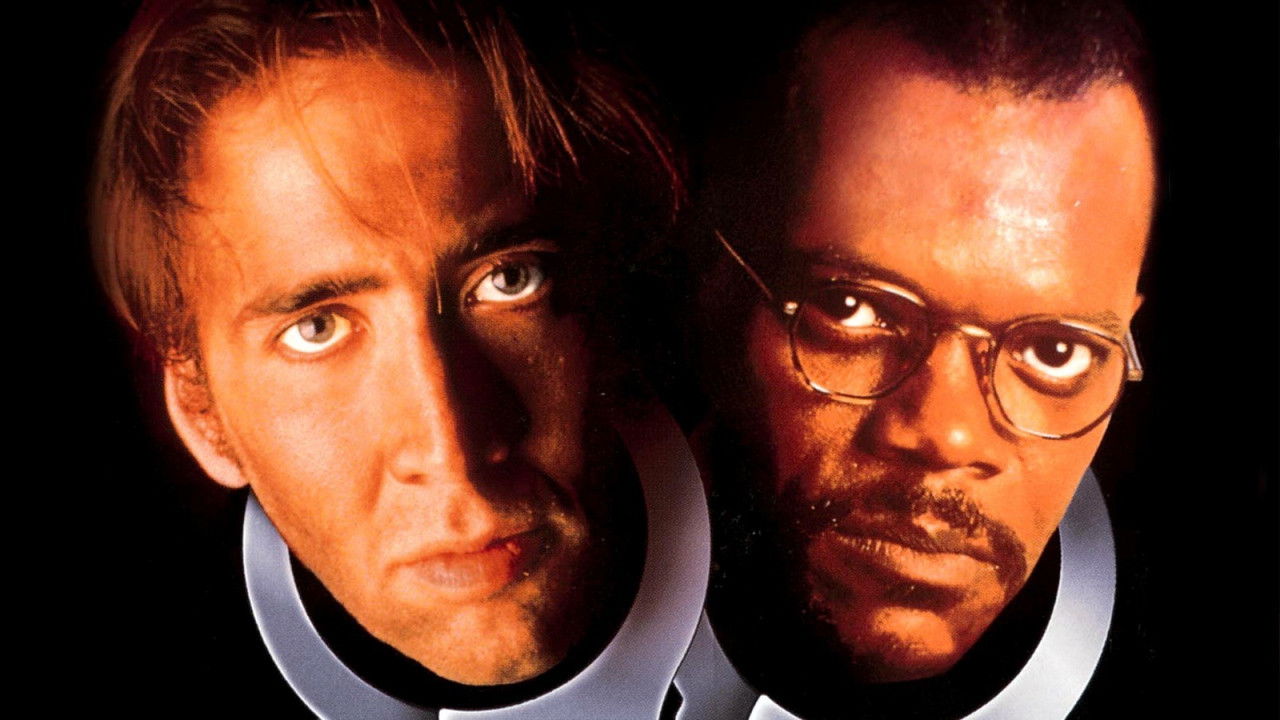
What unfolds is less an action film and more a contained, increasingly farcical pressure cooker. The real energy comes from the clash between Jackson’s weary, intelligent Sterling and Cage’s twitchy, none-too-bright Amos. Watching this now, it’s electrifying to see Jackson simmering with that righteous anger and sharp wit that would soon make him iconic in Pulp Fiction (1994). He brings a grounded dignity to Sterling, even amidst the absurdity. And Cage? He’s deploying that uniquely unpredictable energy he became famous for, though perhaps not yet at full "Cage Rage" levels. Amos isn't malicious, just misguided and desperate, and Cage makes him strangely sympathetic. Their back-and-forth inside the besieged house forms the core of the film.
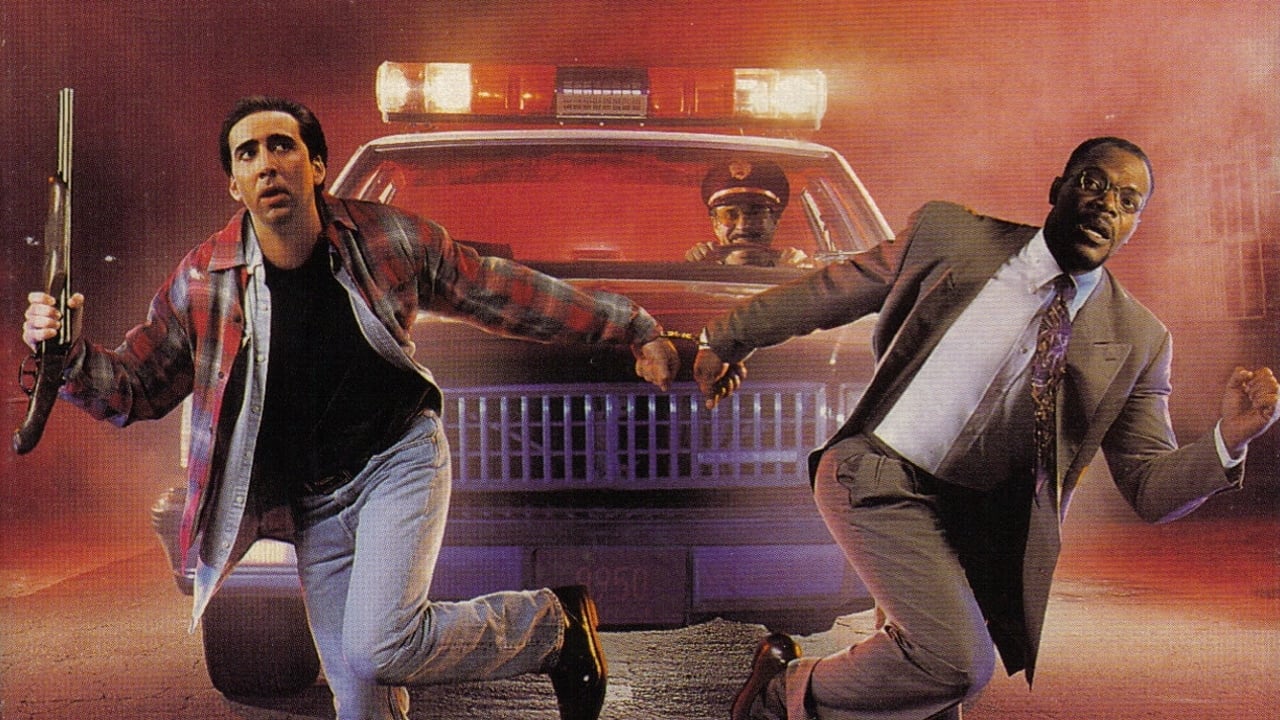
This was the directorial debut for E. Max Frye, who had previously penned the screenplay for Jonathan Demme's brilliant and quirky Something Wild (1986). You can see some of that off-kilter sensibility here, attempting to blend sharp social observation with broader comedic strokes. Filmed largely in Wilmington, North Carolina – a frequent stand-in for picturesque East Coast towns in films of the era – the movie feels tangible. No slick CGI polish here; the houses look real, the police cars feel like actual municipal vehicles, and the growing media circus outside Sterling's home has that slightly chaotic, practical feel of news crews descending on a scene back then.
Satire with Blunted Edges?
Let's be honest, the social commentary on race and media perception, while definitely present and ambitious for a mainstream comedy in '93, feels a bit… broad by today's standards. Chief Tolliver's motivations are cartoonishly self-serving, and the townsfolk are painted with similarly wide brushes. It aims for the pointed satire of something like Network (1976) but lands closer to a situation comedy, albeit one with unusually high stakes. Did it feel sharper back then, watching it on a fuzzy CRT? Maybe. The themes it tackles – racial profiling, media manipulation, political expediency – were certainly relevant, and arguably remain so.
One fun piece of trivia: the film had a modest budget (around $10 million) and didn't exactly set the box office alight, grossing just under that domestically. It became more of a home video discovery, the kind of tape you'd grab based on the star power, perhaps pleasantly surprised by its attempt to say something. It also features Michael Lerner, fresh off his Oscar nomination for Barton Fink (1991), chewing scenery gloriously as a desperate politician trying to manage the fallout. Seeing these actors, some established veterans and others on the verge of superstardom, interact in this specific context is a huge part of the retro appeal. Remember how real those panicked reactions from the townsfolk looked? It felt less staged, more like genuine chaos unfolding, a hallmark of filmmaking before digital crowds became the norm.
Lost Gem or Dated Curiosity?
Amos & Andrew isn't a forgotten masterpiece, but it’s far more interesting than its relatively obscure status might suggest. It’s a snapshot of two massive talents sharing the screen before their careers went supernova, tackling tricky subject matter within a comedic framework that feels distinctly early 90s. The pacing keeps things moving, even if the plot relies on escalating misunderstandings rather than intricate plotting. It has that slightly rough-around-the-edges charm common to films of the period that weren't mega-blockbusters.
There's a warmth to it, despite the underlying tension and satire. You root for Andrew and, surprisingly, even for Amos. It’s the kind of movie that sparked conversations after the credits rolled on your VCR – maybe about the themes, maybe just about how funny Cage was or how cool Jackson seemed. It’s a product of its time, certainly, but one with enough wit, strong performances, and inherent weirdness to make it worth tracking down.
VHS Heaven Rating: 6/10
Justification: The rating reflects the undeniable charisma of its leads (Jackson and Cage are magnetic even in lesser material) and the film's ambitious, if sometimes clumsy, attempt at social satire. It earns points for its unique premise and that tangible, pre-digital 90s feel. However, the satire often lacks subtlety, and the execution feels somewhat uneven, keeping it from being a true classic. It's a solid, interesting rental, but not quite top-shelf material.
Final Take: A quirky hostage comedy with surprisingly sharp teeth (for its time) and a cast that punches well above the script's weight – the kind of 'just different enough' movie that made browsing those video store aisles so rewarding.