It begins, as so many descents do, with a mistake. A flash of violence in the rain, a life accidentally extinguished, and the weight of consequence pressing down like the humid Los Angeles night. But Deadfall isn't just another neo-noir tale of bad luck and worse choices. No, this 1993 curiosity rapidly spirals into something far stranger, a film less about the darkness in the human heart and more about the baffling, almost alien energy radiating from one single, unforgettable performance. Watching it again now, decades after first pulling that worn VHS box off a dusty rental shelf, feels like unearthing a particularly weird fever dream.

The Long Con Gets Weird
Our ostensible guide through this grimy underworld is Joe Donan, played by the ever-reliable Michael Biehn (The Terminator, Aliens). After inadvertently killing his father's adversary during a con gone wrong, Joe learns his father's dying wish: find his estranged twin brother, Lou, and pull off the "long con" his father never could. Joe is the straight man, the weary point-of-view character seemingly dropped into a world operating on nightmare logic. Biehn, always a grounding presence, does his best to anchor the film, his quiet intensity a stark contrast to the chaos brewing around him. You feel his desperation, his desire to honour his father, even as the landscape becomes increasingly treacherous and bizarre.
The setup feels familiar, borrowing heavily from classic noir tropes – femme fatales, shadowy figures, intricate plots built on betrayal. Director Christopher Coppola (yes, brother to Nicolas, nephew to Francis Ford) clearly aims for a certain smoky, rain-slicked mood. There are flashes of competence in the staging, attempts at visual flair meant to evoke dread and paranoia. But any conventional atmosphere the film manages to build is utterly, irrevocably, and hilariously demolished the moment Joe meets his uncle Eddie.
Hurricane Eddie Hits Town
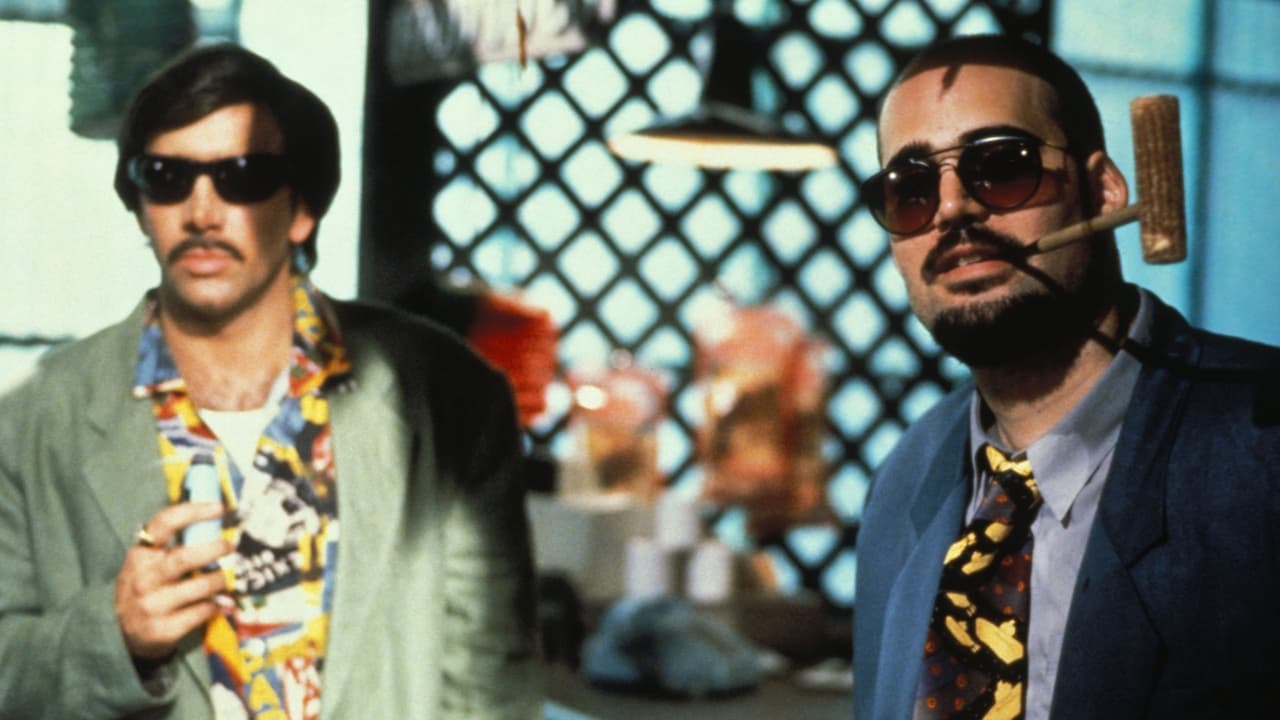
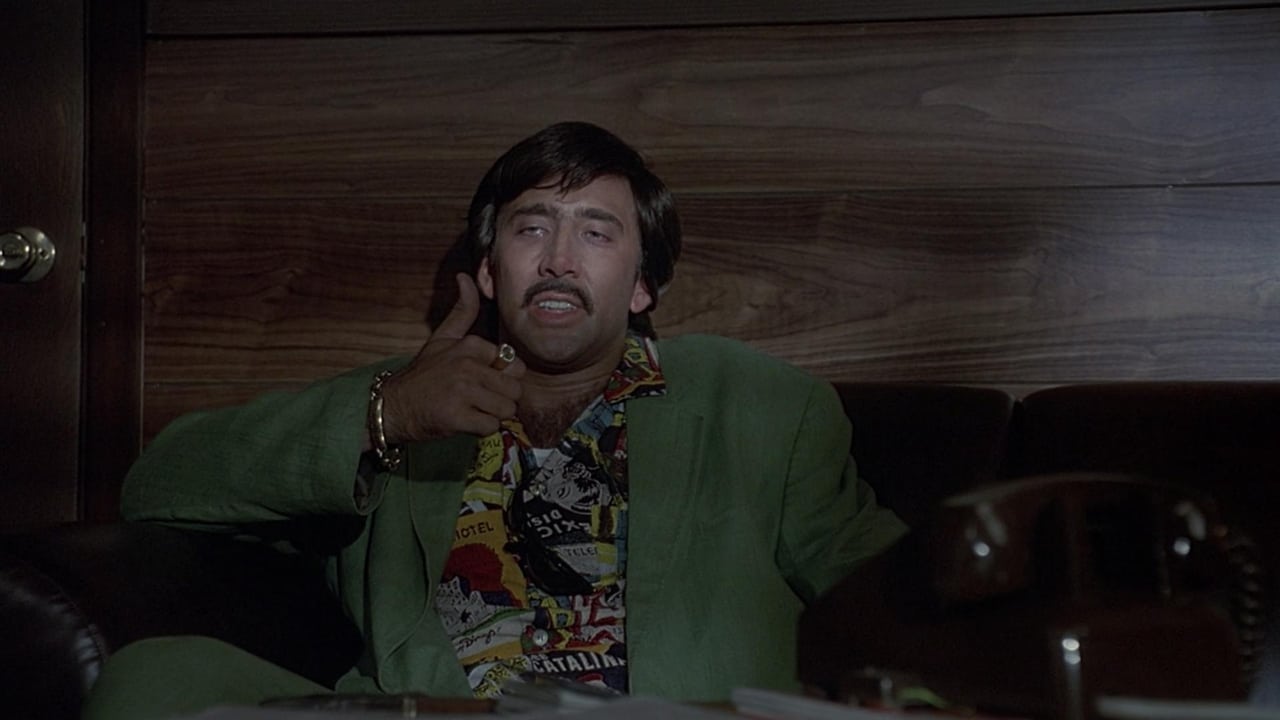
And then there's Eddie. Played by Nicolas Cage in a performance so spectacularly unhinged it transcends mere acting and enters the realm of performance art spectacle, Eddie is the plutonium core of Deadfall. Sporting a ludicrous wig, a perpetually greasy demeanor, and a voice that careens between a high-pitched whine and a guttural roar, Cage doesn't just steal scenes; he sets them on fire, salts the earth, and dances maniacally on the ashes. This isn't the controlled intensity of his later Oscar-winning work or even the enjoyable bombast of his action hero phase. This is Cage unleashed, reportedly improvising heavily, seemingly operating on a frequency only he can hear.
The Coppola connection feels crucial here; one wonders if any other director could or would have allowed such an unrestrained turn. Eddie snorts cocaine like a vacuum cleaner, delivers monologues with the cadence of a malfunctioning carnival barker ("Compared to Eddie King... you ain't SHIT!"), and embodies a level of erratic menace that’s less threatening and more deeply, profoundly weird. Did watching this back in the day leave you more scared or just utterly bewildered? It’s a performance so outlandishly over-the-top it generates its own kind of tension – the tension of wondering what bizarre outburst will happen next. It single-handedly warps the film's intended tone into something surreal and borderline hallucinatory. Rumour has it that Cage’s approach left even his co-stars stunned during filming, unsure how to react to the sheer force of... whatever it was he was doing.

Talent Left Stranded
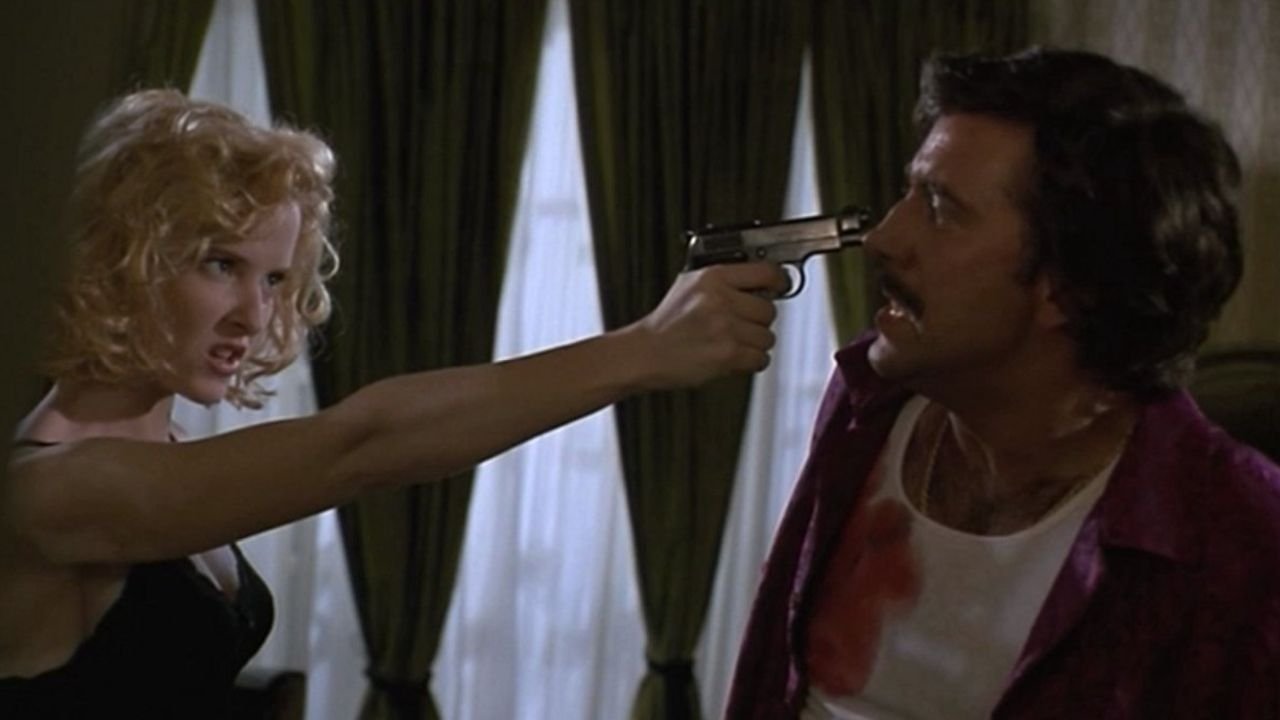
Surrounding Biehn and Cage is a surprisingly stacked supporting cast, likely drawn in by the Coppola name or perhaps the promise of a gritty crime thriller. We get glimpses of James Coburn as Joe's twin Lou (playing it relatively straight, thankfully), Peter Fonda as a sleazy associate, Charlie Sheen in a brief, swaggering cameo, Sarah Trigger as the requisite femme fatale Diane, and even Talia Shire (the Coppolas' aunt, famous as Adrian in Rocky) shows up. Yet, they often feel like bystanders watching the Cage tornado rip through the scenery. Biehn tries valiantly to maintain the narrative thread, but it’s a losing battle against the sheer gravitational pull of Eddie's eccentricity.
The film tries to maintain its noir ambitions. The plot involves diamonds, double-crosses, and hidden identities. There are attempts at stylish visuals, but often the execution feels hampered, perhaps by its reported $10 million budget (which, frankly, feels generous given the final product's sometimes rough edges). The score strains for moody significance, but it's often drowned out by the sheer volume of Cage's performance. It occupies this strange space between serious crime drama and unintentional, absurdist comedy.
A Cult Artifact of Sheer Strangeness
Deadfall bombed spectacularly upon release, critically savaged and ignored by audiences. It wasn’t slick enough for the mainstream, too bizarre for noir purists, and perhaps just too much Nicolas Cage for anyone unprepared. Yet, like many VHS-era oddities, it found a strange afterlife, passed around among cult film enthusiasts drawn by the sheer audacity of Cage's performance. It became a "you have to see this to believe it" kind of movie. Remarkably, Cage himself seems fond of the character, reprising the role of Eddie King nearly 25 years later in the 2017 film Arsenal, proving that some forces of nature just can't be contained.
Watching Deadfall today is an exercise in appreciating cinematic extremes. It’s a fundamentally broken film, a failed attempt at stylish noir derailed by one of the most gloriously over-the-top performances ever committed to celluloid. But there’s an undeniable fascination in witnessing it. It’s the kind of discovery that made trawling video store shelves so rewarding – you might not find a masterpiece, but you could stumble upon something utterly unique, something bafflingly memorable.
VHS Heaven Rating: 3/10
Justification: The plot is derivative and often incoherent, the direction struggles to establish a consistent tone, and most of the cast seems lost. Michael Biehn provides a solid, if overwhelmed, center. However, the film achieves a unique cult status almost entirely due to Nicolas Cage's astonishingly bizarre performance. It’s not "good" in any traditional sense, but it’s unforgettable. That singular element elevates it slightly from utter disaster to a fascinating curio. It fails as a noir thriller but succeeds as a showcase for unrestrained eccentricity.
Final Thought: Deadfall isn't a film you recommend for its quality, but for its sheer, jaw-dropping weirdness. It's a testament to the unpredictable alchemy of filmmaking, where sometimes, the most memorable element is the one that throws everything else completely off balance. A must-see for Cage completists and lovers of cinematic train wrecks.