There's a certain shimmering quality to the light in Woody Allen's A Midsummer Night's Sex Comedy (1982), a hazy, golden luminescence that feels less like mere cinematography and more like captured memory. Watching it again, decades after first discovering it tucked away on a video store shelf – likely nestled somewhere between his more famous urban neuroses – feels like stepping into a sun-dappled daydream, albeit one laced with the familiar Allen-esque anxieties about love, fidelity, and the ticking clock of existence. It’s a film that immediately distinguishes itself, not just within Allen’s own considerable body of work, but within the landscape of early 80s comedy itself.

A Weekend in the Country
Set in the idyllic countryside of upstate New York around the turn of the 20th century (a gorgeous stand-in filmed near Allen's own haunts in Pocantico Hills), the premise is elegantly simple, echoing both Shakespeare's fairy-fueled romantic entanglements and, more pointedly, Ingmar Bergman's Smiles of a Summer Night (1955). Three couples converge for a weekend getaway: Andrew (Woody Allen), a crackpot inventor and Wall Street broker, and his seemingly content wife Adrian (Mary Steenburgen); the visiting esteemed philosopher Leopold (José Ferrer) and his much younger fiancée, Ariel (Mia Farrow), who happens to be a past flame of Andrew's; and Andrew's best friend, the cheerfully lecherous Dr. Maxwell Jordan (Tony Roberts) accompanied by his free-spirited nurse girlfriend, Dulcy (Julie Hagerty). Over the course of a weekend filled with woodland walks, awkward dinners, and Andrew’s experiments with a fantastical "spirit ball," simmering desires and regrets bubble to the surface under the watchful eye of a luminous summer moon.
Whispers on the Breeze: Performances and Atmosphere
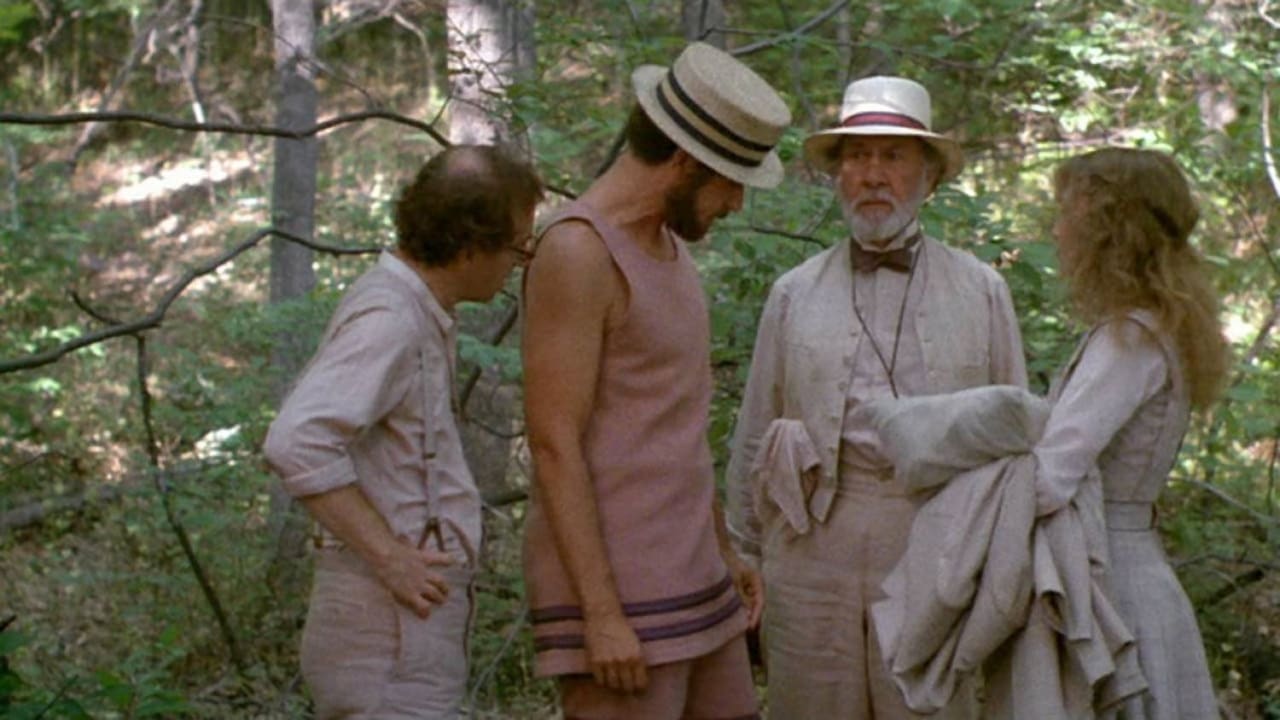
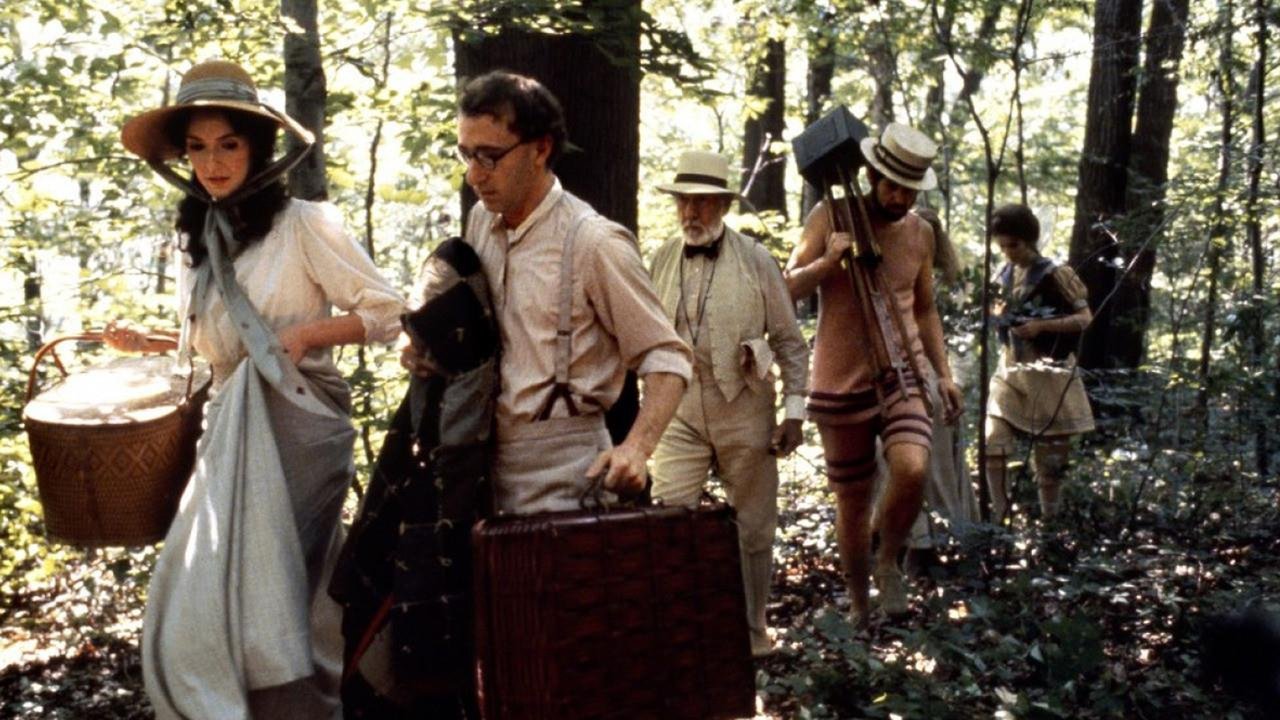
What truly elevates the film beyond a simple bedroom farce is the ensemble cast and the palpable atmosphere created by Allen and his legendary cinematographer Gordon Willis (The Godfather, Annie Hall). Willis, often known for his mastery of shadow, here paints with light, capturing the ephemeral beauty of the natural world with an almost impressionistic touch. The dappled sunlight filtering through trees, the soft glow of lanterns at dusk – it all contributes to a feeling of fleeting magic, a perfect backdrop for the characters' own transient passions and philosophical musings.
The performances are uniformly strong, navigating the script's blend of light comedy and existential angst. Woody Allen plays a variation of his familiar persona, the neurotic intellectual grappling with desire, but Andrew’s tinkering inventor adds a layer of whimsical distraction. It’s fascinating to see him opposite Mia Farrow in their very first collaboration (of thirteen!). Farrow brings an ethereal, almost otherworldly quality to Ariel, a woman whose presence quietly disrupts the carefully constructed lives around her.
Mary Steenburgen is wonderfully grounded as Adrian, hinting at unexplored depths beneath her accommodating exterior; there was definite buzz around her performance at the time, though an Oscar nomination didn't materialize. Tony Roberts, an Allen regular, provides reliable comic relief as the unapologetically libidinous Maxwell, while Julie Hagerty (so memorable from Airplane!) embodies a delightful, uninhibited earthiness. Towering over them, both literally and figuratively, is José Ferrer. His Leopold is a magnificent creation – pompous, fiercely intelligent, yet deeply insecure beneath the academic bluster. The intellectual sparring between Leopold and Andrew provides some of the film's sharpest moments.
Nature, Invention, and the Human Heart
Beneath the frothy surface, A Midsummer Night's Sex Comedy gently probes the tension between the primal forces of nature – desire, attraction, the beauty of the landscape itself – and the constructs of human intellect and society – marriage vows, philosophical arguments, even Andrew's slightly absurd inventions designed to capture unseen energies. Does his "spirit ball," meant to reveal ghostly images and perhaps inner truths, offer any more real insight than simply surrendering to the potent magic of a summer night? The film doesn’t offer easy answers, preferring instead to luxuriate in the ambiguity, much like the hazy light bathing the countryside. It was perhaps this lighter, more whimsical touch, a departure from the biting satire of Manhattan (1979), that led to a somewhat mixed critical reception and underwhelming box office performance back in '82 (grossing around $9 million against a $10 million budget). Some found it slight, but others, myself included, find its charm enduring.
Rediscovering a Pastoral Gem
Rewatching A Midsummer Night's Sex Comedy today feels less like analyzing a major cinematic statement and more like revisiting a pleasant, slightly melancholy memory. It lacks the sharp edges of Allen’s best-known works, trading urban angst for pastoral romance and philosophical banter. Finding this on VHS back in the day often felt like uncovering a minor secret, a different flavor of Allen that maybe wasn't for everyone but held its own unique appeal. It's a reminder that even amidst the big blockbusters and genre flicks that defined the era, quieter, more character-focused comedies like this carved out their own space on the rental shelves. The Mendelssohn score, instantly recognizable, only adds to the feeling of a playful, almost classical cinematic excursion.
Rating: 7/10
A Midsummer Night's Sex Comedy earns a solid 7 out of 10. While perhaps not reaching the iconic heights of some other Woody Allen 80s films, its visual beauty (thanks to Gordon Willis), charming ensemble performances (particularly from Ferrer and the first pairing of Allen and Farrow), and gently amusing exploration of familiar Allen themes in a unique pastoral setting make it a worthwhile and often lovely viewing experience. It may be lighter fare, but its atmospheric charm and witty observations linger like the scent of summer grass after the credits roll.
It remains a gentle, sun-dappled detour in Allen's filmography, a pleasant reminder that sometimes, the most profound encounters happen not in the bustling city, but during a fleeting weekend bathed in the magic of a midsummer night.