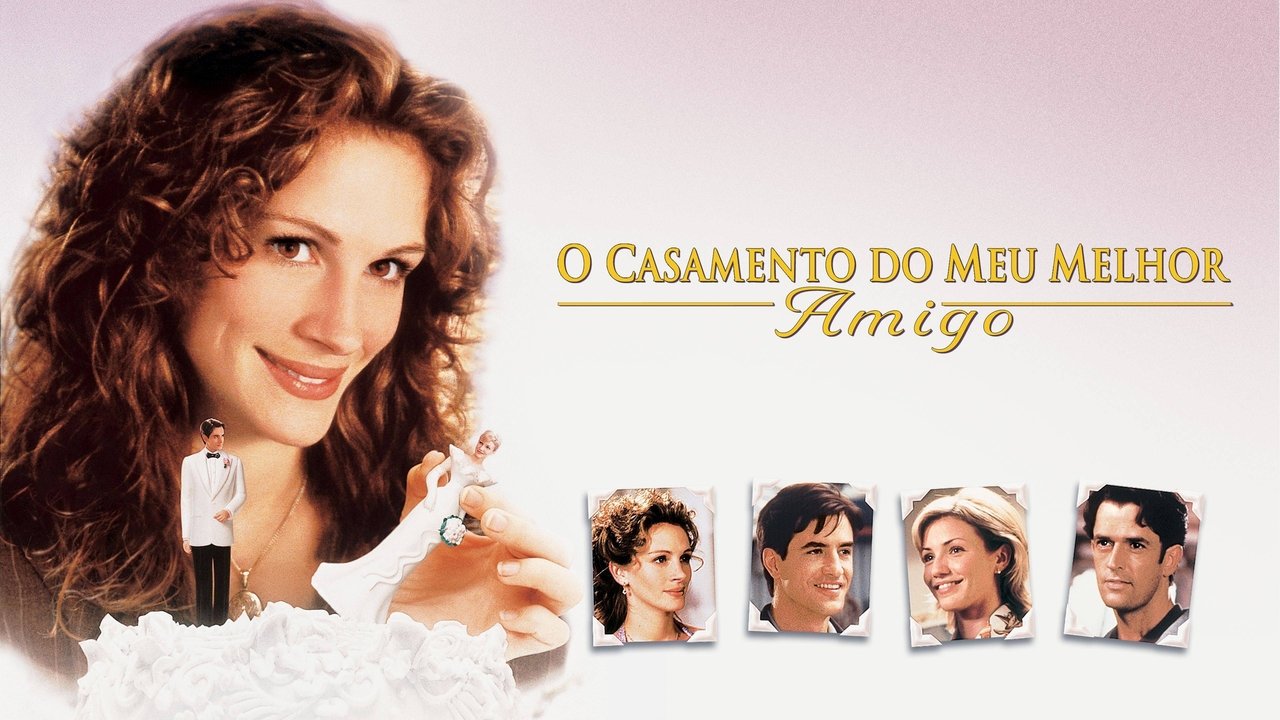
It starts with a pact, doesn't it? That half-joking promise made years ago between friends: "If we're not married by 28, we'll marry each other." For Julianne Potter, played with a captivating, often uncomfortable, energy by Julia Roberts, that pact suddenly snaps into sharp focus with a phone call. Her best friend, Michael O'Neal (Dermot Mulroney), is getting married. In four days. And not to her. Watching My Best Friend's Wedding (1997) again after all these years, what strikes me isn't just the gloss and the undeniable star power, but how astonishingly brave it was for a mainstream romantic comedy to hinge on a protagonist who is, for large stretches, undeniably the villain of her own story.
Our Heroine, The Saboteur
Let's be honest, pulling this film out of its cardboard sleeve at the rental store back in '97, you probably expected a standard Julia Roberts charmer. And charm she does, but it’s weaponized. Julianne isn't lovelorn in the traditional, sympathetic sense; she's driven by a potent cocktail of panic, possessiveness, and pure, unadulterated jealousy. She doesn't just want Michael back; she wants to win, to prove that she was the rightful choice all along. Roberts leans into Julianne's scheming with a self-aware glint in her eye that makes her manipulations both appalling and strangely compelling. We see the calculations, the forced smiles, the moments where even she seems surprised by her own audacity. It's a performance that dares you to dislike her, yet Roberts finds the flicker of vulnerability beneath the sabotage, the genuine pain fueling the often terrible decisions. Was there ever a moment where you weren't squirming for her, even while rooting against her?
The Perfect Obstacle, The Unexpected Ally
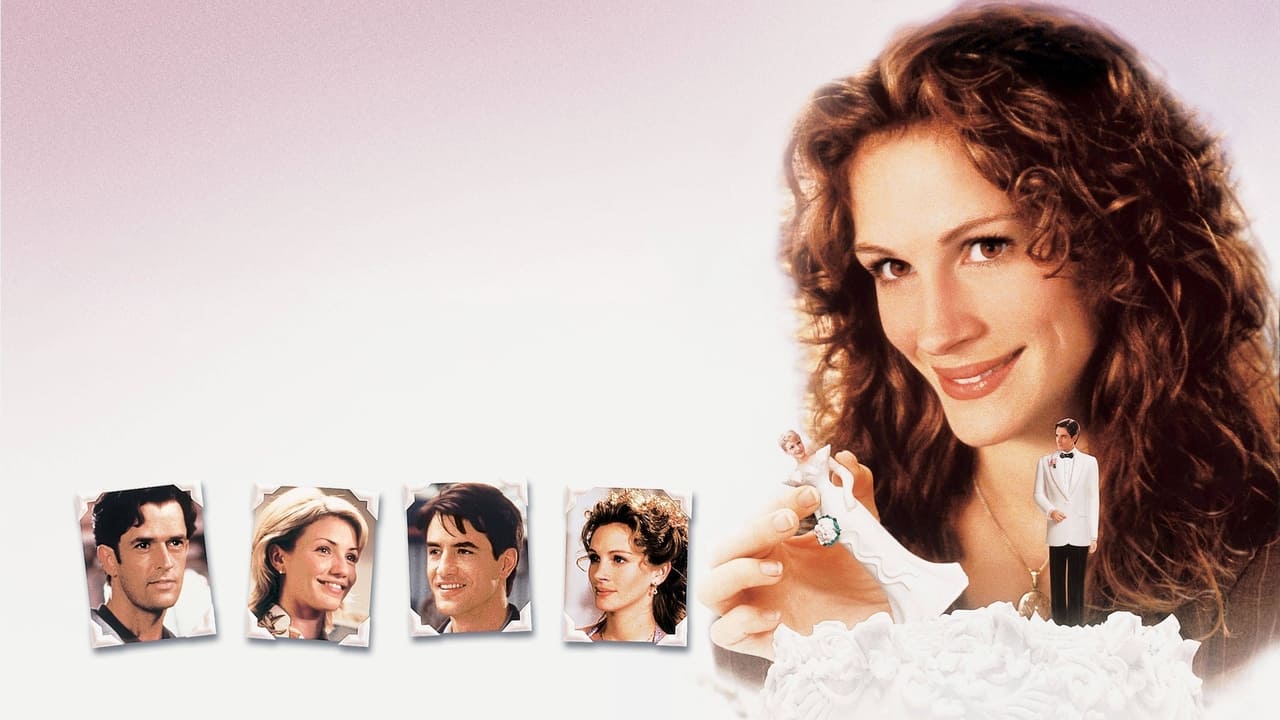
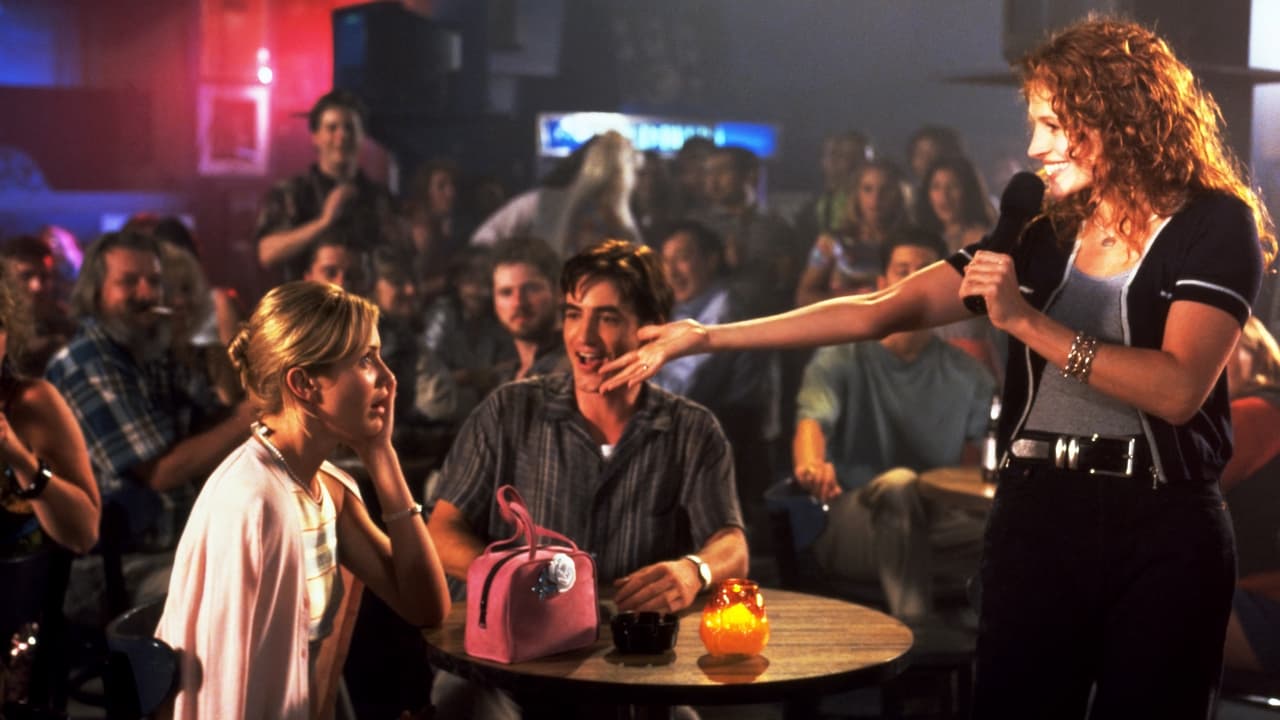
Of course, Julianne’s plan wouldn't be half as fraught (or funny) without the radiant obstacle that is Kimberly "Kimmy" Wallace. Cameron Diaz, in a role that truly launched her into the stratosphere after The Mask (1994), is effervescent perfection. Kimmy isn't just sweet; she's smart, kind, surprisingly resilient, and genuinely head-over-heels for Michael. Diaz embodies her with such infectious joy and open-heartedness that Julianne’s increasingly desperate attempts to break them up feel doubly cruel. Remember that excruciating karaoke scene? It's Kimmy's utter lack of guile, even in her off-key singing, that makes Julianne's manipulation feel so low. Mulroney, as the object of affection, plays Michael with a sort of handsome earnestness, perhaps slightly oblivious, but fundamentally decent, making Julianne’s belief that she can just snatch him back seem even more misguided.
But the film's secret weapon, the character who elevates it from mere rom-com to something far more memorable, is George Downes. Rupert Everett strolls in, effortlessly steals every scene he’s in, and provides not only sparkling wit but also a crucial anchor of sanity and conscience for Julianne (even while posing as her fiancé). His delivery is impeccable, turning simple lines into comedic gold. The impromptu singalong to "I Say a Little Prayer" in the restaurant remains an absolute highlight of 90s cinema – a moment of pure, unbridled joy orchestrated by George that momentarily melts away the tension and reminds everyone (including the audience) what genuine connection looks like. It’s hard to overstate Everett’s impact; he brought a level of sophisticated, queer representation to a major Hollywood film that felt fresh and vital.
Digging Deeper Than Expected
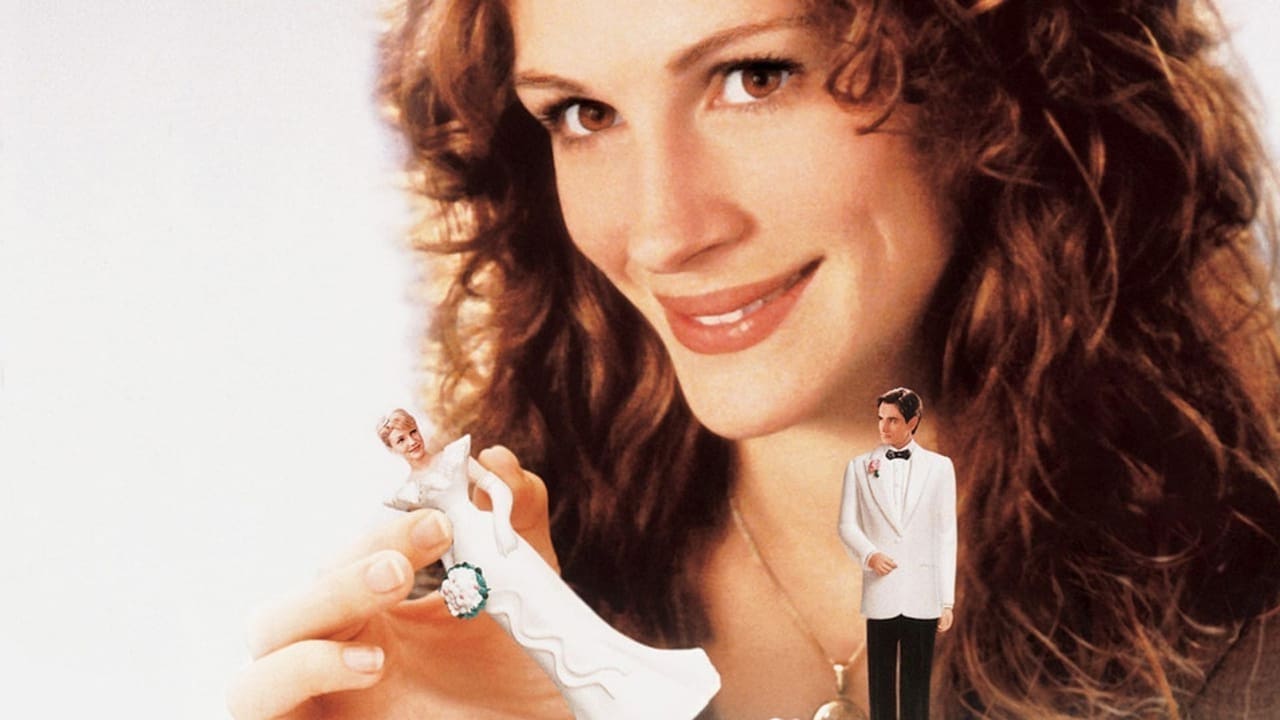
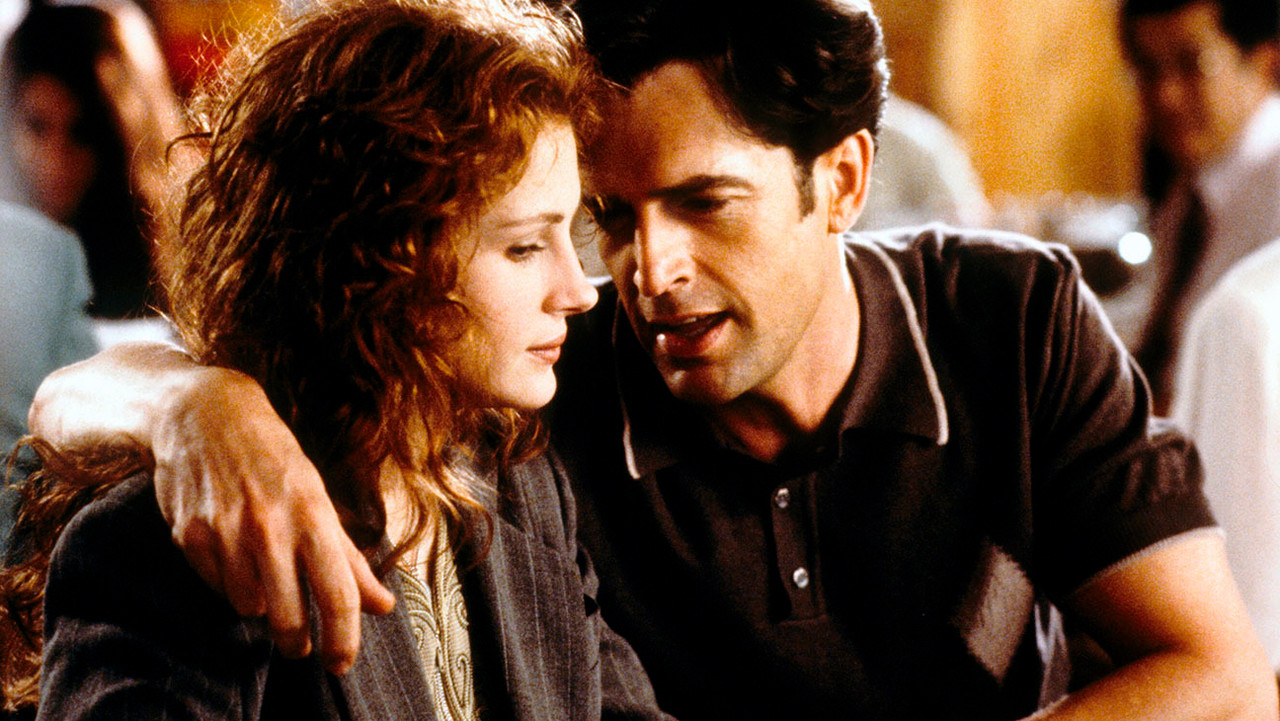
Beneath the polished surface, director P. J. Hogan (who gave us the wonderfully quirky Muriel's Wedding in 1994) and writer Ronald Bass (Rain Man, 1988) are playing a different game. This isn't just about will-they-won't-they; it's about the messy reality of realizing what you had only when it's gone, the destructive nature of jealousy, and the difficult, often painful, process of letting go and growing up. The film cleverly subverts expectations. It presents the glamorous world of high society weddings, the witty banter, the beautiful people – all the tropes we expect – but uses them as a backdrop for a surprisingly complex emotional journey.
And speaking of subverting expectations, here’s a bit of trivia that underscores the film's unusual maturity: the original ending reportedly saw Julianne meeting a new potential love interest (played by John Corbett, no less!) at the wedding, offering her a neat romantic consolation prize. Test audiences, however, apparently felt Julianne hadn't truly earned a happy romantic ending after her behaviour. They wanted her to face the consequences, to learn her lesson. The filmmakers listened, reshooting the ending to give us the poignant, bittersweet dance with George – a moment of true friendship and acceptance, rather than instant romantic gratification. It’s a choice that feels earned and gives the film a lasting resonance often missing from the genre. The film certainly resonated with audiences financially, pulling in nearly $300 million worldwide against a $21.7 million budget – a testament to its broad appeal despite its tricky protagonist.
The Lasting Impression
Rewatching My Best Friend's Wedding is like catching up with an old friend who has turned out to be more complicated and interesting than you initially remembered. It’s funny, it’s sharp, the performances are terrific across the board, and James Newton Howard's Oscar-nominated score perfectly captures the swirl of romance and underlying panic. It looked gorgeous, felt quintessentially '90s in its style, and gave us dialogue that still sparkles. That familiar feel of a late-90s blockbuster hit, the kind you absolutely had to rent, is palpable.
Rating: 8/10
This score reflects the film's clever subversion of rom-com tropes, the risky but compelling central performance from Roberts, Everett's iconic turn, and its surprising emotional depth. It stumbles occasionally – Julianne's actions sometimes push the boundaries of believability even for comedy – but its wit, charm, and willingness to embrace a more complex, less conventionally "happy" ending make it stand out. It’s a film that understands that sometimes, the most important relationship isn't the romantic one you chase, but the platonic one that catches you when you fall.
It leaves you thinking not just about love, but about friendship, forgiveness, and the sometimes brutal honesty required to truly move forward. What better lesson for a film night, even all these years later?