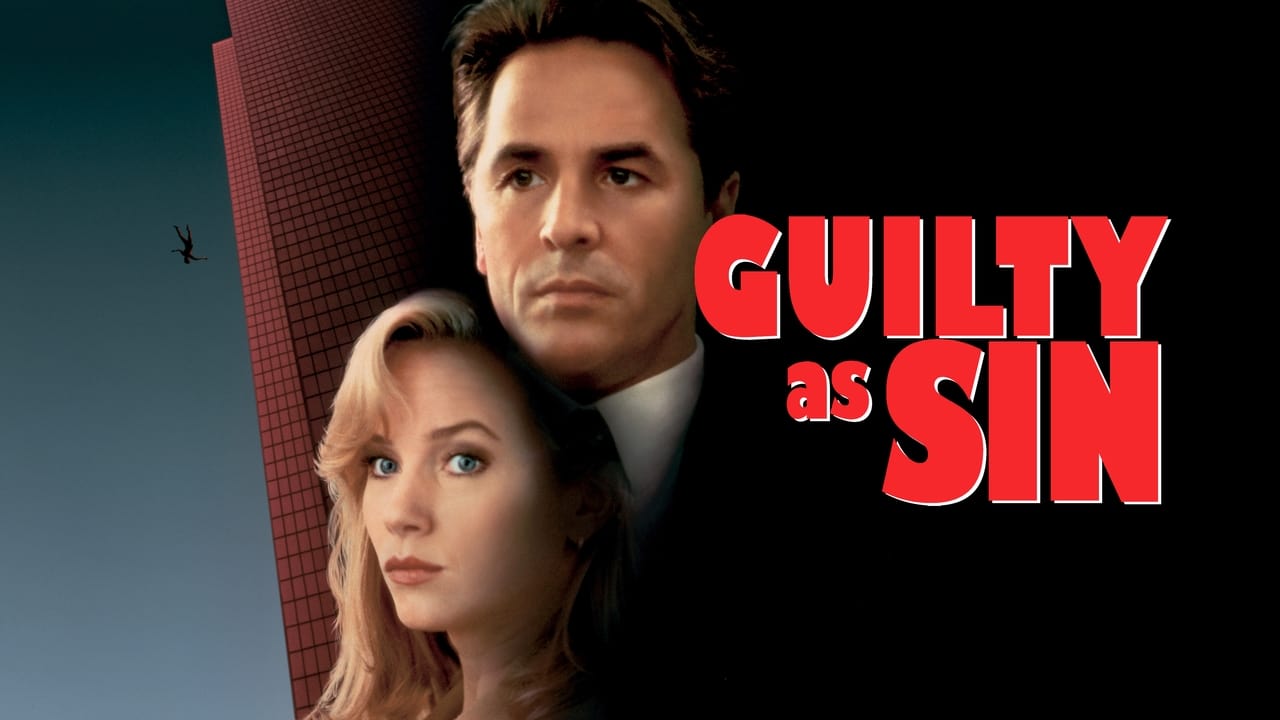
Okay, let's slide another tape into the VCR. Tonight, we're revisiting a slick, slightly overlooked slice of early 90s tension: Guilty as Sin (1993). There's a certain kind of thrill inherent in the courtroom drama, isn't there? The clash of intellects, the slow reveal of truth (or lies), the high stakes... but what happens when the danger isn't just legal, but deeply, personally menacing? This film plunges us right into that uncomfortable space.

The Devil Wears Armani
At the heart of Guilty as Sin is a fascinating, almost predatory dynamic. We meet Jennifer Haines, played by Rebecca De Mornay riding high on the icy wave of her success in The Hand That Rocks the Cradle (1992). Haines is a sharp, ambitious Chicago defense attorney on the ascent, hungry for the big case that will cement her reputation. Enter David Greenhill (Don Johnson), a devastatingly charming, smooth-talking playboy accused of murdering his incredibly wealthy older wife for the inheritance. Johnson, shedding some of the pastel hues of his Miami Vice days, leans into Greenhill's seductive confidence. He insists Haines take his case, flattering her ego while subtly hinting at a darkness beneath the expensive suits. It’s this central relationship – the lawyer drawn into her client's manipulative orbit – that gives the film its simmering energy. You watch Haines, initially so self-assured, slowly realize she might be dancing with the devil himself, and the gradual dawning of fear and entrapment on De Mornay’s face is compelling.
Lumet in Thriller Territory
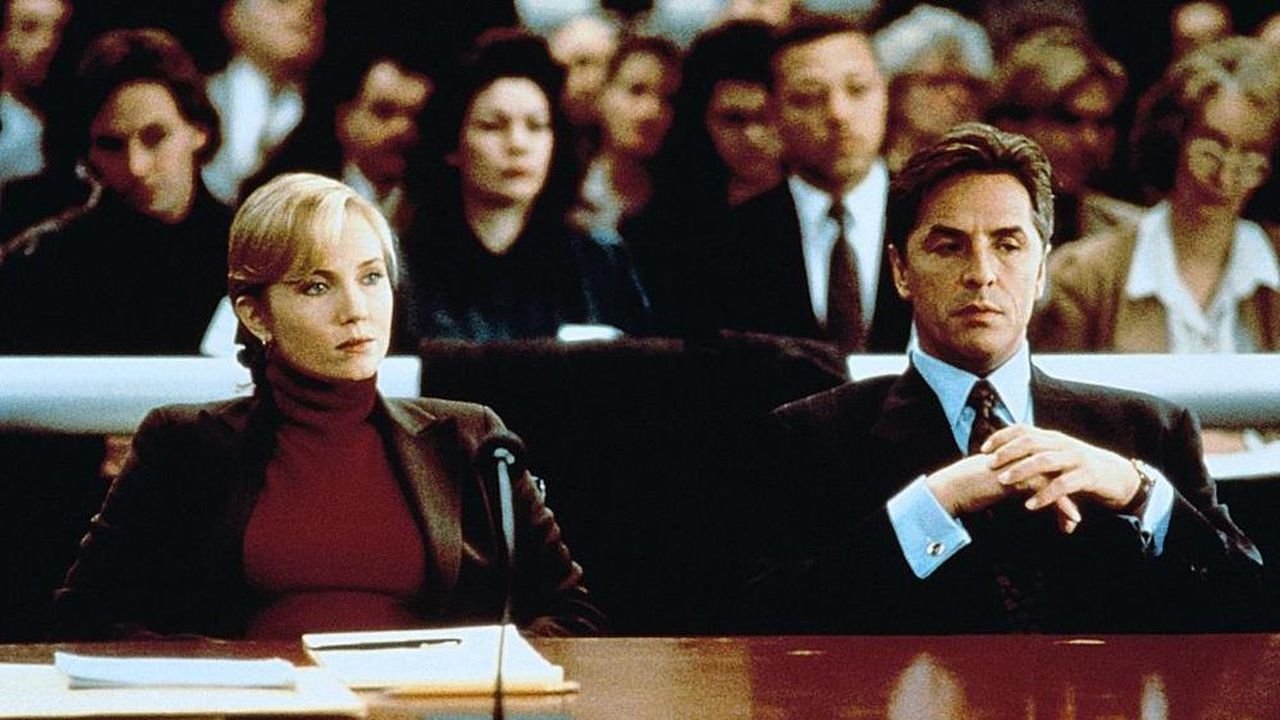
What elevates Guilty as Sin above standard genre fare is the man behind the camera: the legendary Sidney Lumet. Known for searing dramas like 12 Angry Men (1957), Network (1976), and the superb legal drama The Verdict (1982), Lumet brings a weight and psychological intensity you might not expect. He understands the claustrophobia of power dynamics and the subtle ways people manipulate each other. While the film has the glossy sheen typical of early 90s thrillers, Lumet focuses tightly on the performances, letting the tension build through loaded glances and carefully worded threats rather than just overt action. He uses the courtroom not just as a stage for legal maneuvering, but as a pressure cooker for Haines's escalating panic. Does the film reach the heights of Lumet's masterpieces? Perhaps not, but his experienced hand ensures it’s smarter and more gripping than it might have been otherwise.
A Cohen Script's Edge
Adding another layer of intrigue is the script by Larry Cohen. Cohen, a cult filmmaker in his own right known for quirky, often satirical genre pieces like It's Alive (1974) and Q: The Winged Serpent (1982), isn't the most obvious collaborator for Lumet. Apparently, Cohen penned the script on spec (originally titled Beyond a Reasonable Doubt, a name already claimed by a 1956 Fritz Lang film), and Lumet was drawn to its compelling premise. While Guilty as Sin feels more conventional than Cohen's directorial efforts, you can still sense his touch in the cynical view of the legal system and the slightly off-kilter, almost darkly comedic moments in Greenhill's audacious manipulations. The pairing of Cohen's pulpy sensibilities with Lumet's grounded direction creates an interesting, if sometimes uneven, texture. It's a high-concept thriller premise executed with unexpected pedigree.

Retro Fun Facts & 90s Vibes
Watching this now definitely evokes that specific early-to-mid 90s thriller feel. Think Basic Instinct (1992) or Single White Female (1992) – films exploring dangerous obsession, professional women navigating treacherous personal waters, and stylish surfaces hiding rot underneath. Guilty as Sin fits snugly into this cycle. De Mornay’s power suits feel era-perfect, symbols of her character's initial confidence and ambition before the cracks start to show.
It’s also interesting to note the film's context. De Mornay was a hot commodity after The Hand That Rocks the Cradle, making her casting as another woman potentially threatened by a charismatic man a savvy, if perhaps slightly typecasting, move. Don Johnson was actively working to establish himself as a serious film actor beyond his television fame. The film performed modestly at the box office, pulling in around $23 million domestically against a $16 million budget – perhaps explaining why it feels more like a solid video store staple than a widely remembered blockbuster. It became one of those reliable Friday night rentals, the kind of movie you'd grab alongside a bigger hit, often proving more satisfying than expected. The supporting cast, including Stephen Lang as a dogged prosecutor, also adds solid grounding.
Ambition's Price
Ultimately, Guilty as Sin is a compelling exploration of how ambition can blind us and how easily charm can curdle into menace. It questions the very nature of the attorney-client relationship when the client might be a calculating sociopath. What does Haines owe Greenhill legally, versus what does she owe her own conscience, her own safety? The film doesn't offer easy answers, letting the moral ambiguity hang heavy in the air, much like the Chicago humidity Lumet subtly evokes. Is Greenhill truly guilty? The film plays its cards close, focusing more on Haines's psychological unraveling than on solving the mystery outright, which makes for a more unsettling experience.
Rating & Final Thought
7/10
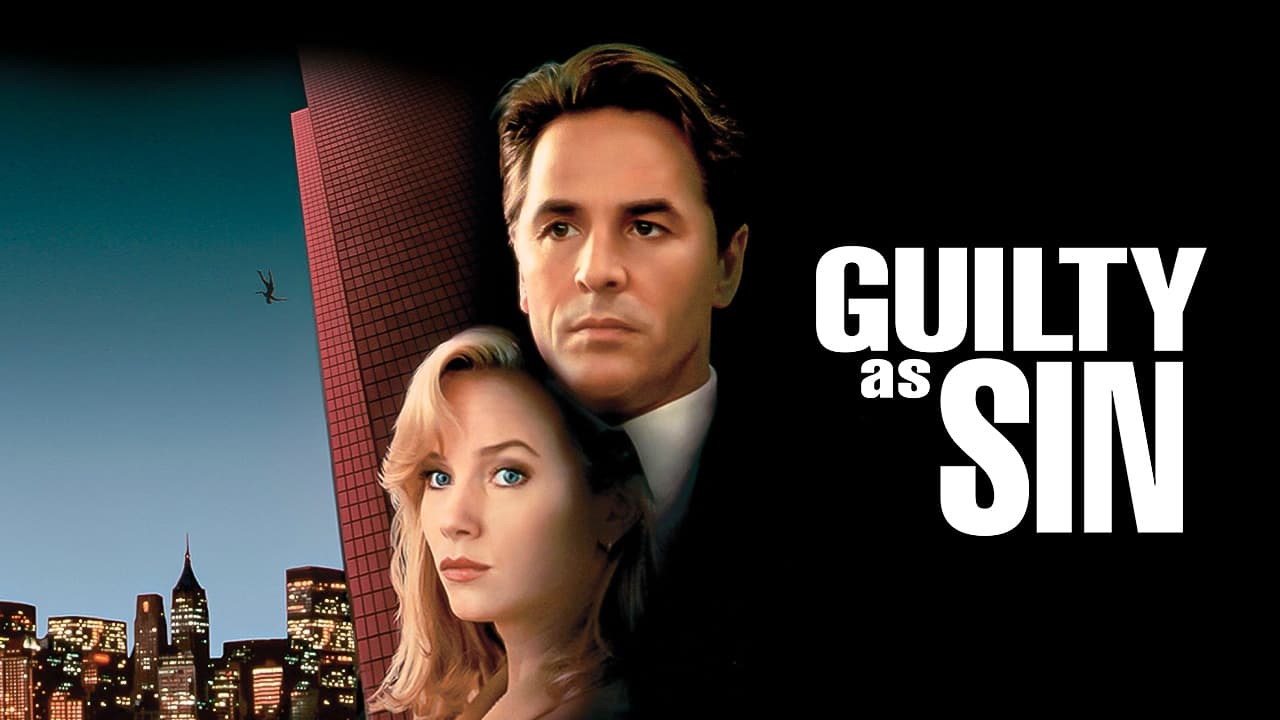
Guilty as Sin earns a solid 7. It's a well-acted, tightly directed psychological thriller boosted significantly by Lumet's assured hand and the potent central dynamic between De Mornay and Johnson. While it might follow some familiar 90s thriller beats and perhaps doesn't reach the profound depths of Lumet's best work, it's far more intelligent and engaging than its somewhat forgotten status might suggest. The script has bite, the performances click, and the tension is palpable. It definitely justifies its spot on the "VHS Heaven" shelf – a reminder that sometimes the most dangerous prisons aren't made of bars, but of bad choices and misplaced trust. What lingers most is the chilling question: how well can you ever truly know someone, especially when they're paying you not to?