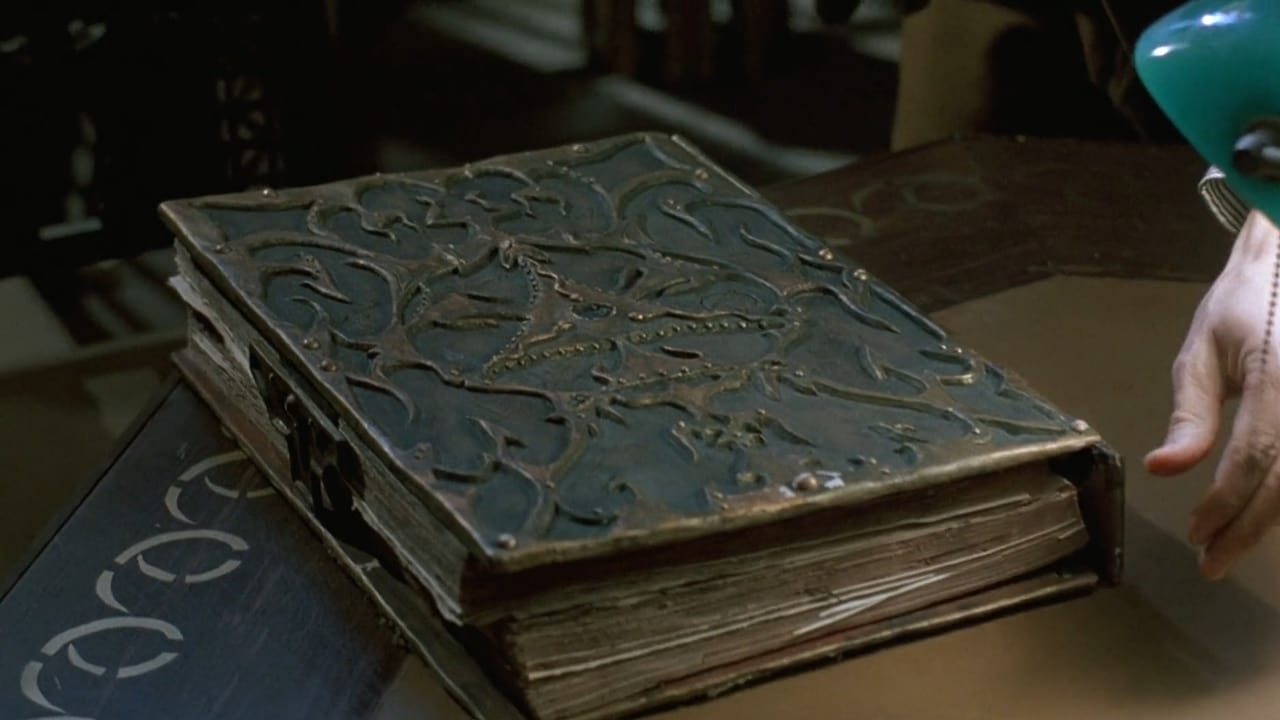
The heavy tome sits locked away, not just within the film's hidden library, but deep within the dusty archives of 90s horror. To open Necronomicon (1993) – also known sometimes, fittingly, as Necronomicon: Book of the Dead – feels like rediscovering a slightly warped, forbidden VHS tape, one whispered about more than proudly displayed. It promises cosmic dread and delivers a strange, uneven, yet undeniably memorable descent into practical effects-laden madness, guided by none other than H.P. Lovecraft himself, or at least, a suitably intense Jeffrey Combs playing him.
### Opening the Forbidden Pages
The wraparound story, helmed by producer and horror stalwart Brian Yuzna (Society, Bride of Re-Animator), sets a perfectly pulpy, atmospheric stage. Combs, already cemented as a Lovecraftian icon thanks to Re-Animator (1985) and From Beyond (1986), embodies the author not as a retiring New England gentleman, but as a driven occult investigator. He infiltrates a monstrous, Giger-esque library guarded by monks to steal glances at the titular grimoire, unlocking three tales supposedly drawn from its pages. Combs sinks his teeth into the role, giving Lovecraft a desperate energy that perfectly complements the film's often lurid tone. This framing device, while simple, effectively binds the disparate segments with a shared sense of seeking knowledge man was not meant to possess. The production design of the library alone, dripping with bio-mechanical dread, sets the stage for the weirdness to come.
### Drowned Sorrows and Gothic Chills
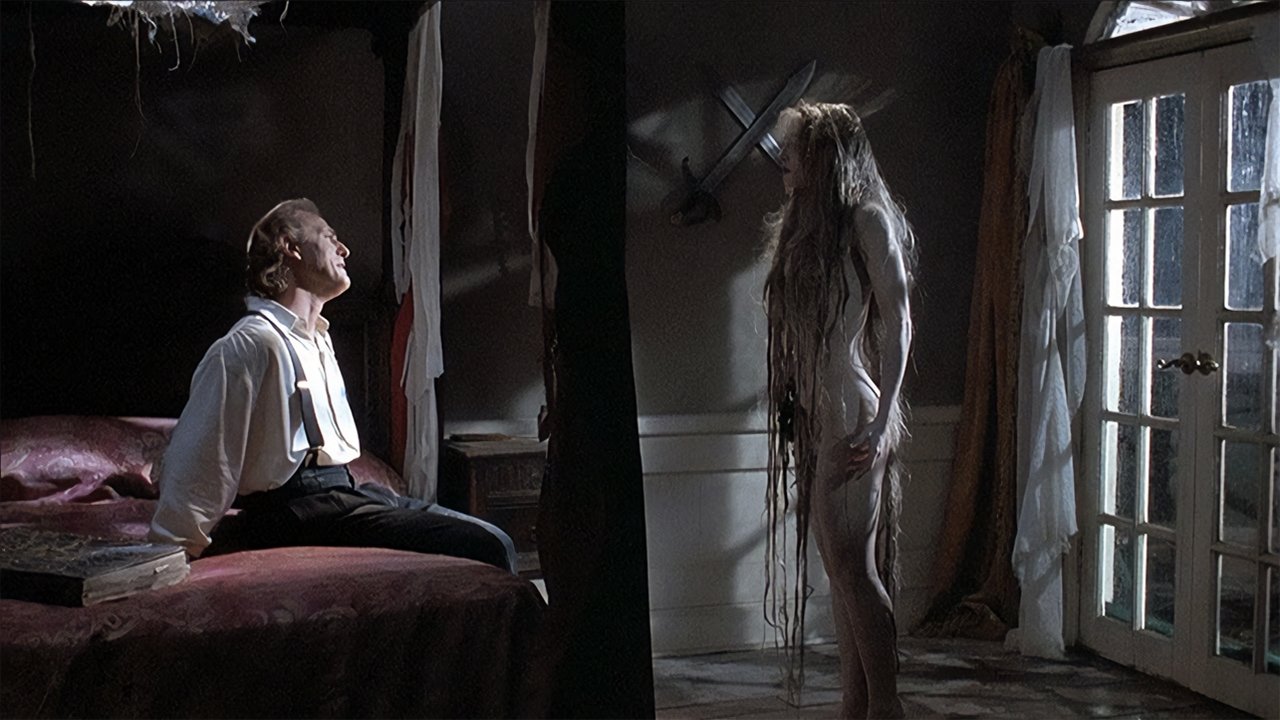
The first segment, "The Drowned," directed by Christophe Gans (who would later bring us the visually stunning Brotherhood of the Wolf), shifts gears immediately. Based loosely on "The Rats in the Walls," it tells the story of Edward De Lapoer (Bruce Payne) inheriting a desolate coastal hotel and discovering a dark family secret tied to the Necronomicon and the sea. Gans injects a surprising amount of gothic atmosphere and tragic romance into his tale. Payne, always a compelling screen presence (Passenger 57), delivers a performance layered with grief and dawning horror. The visual style here is richer, more traditionally cinematic than the other segments, focusing on rain-lashed nights and crumbling grandeur. The practical effects depicting his resurrected ancestor are suitably grotesque, hinting at the aquatic horrors Lovecraft often invoked. This segment often feels like the most 'complete' story, benefiting from Gans' strong visual sense, even if the Lovecraftian connection feels a touch thin beyond the name drops.
### The Unrelenting Cold
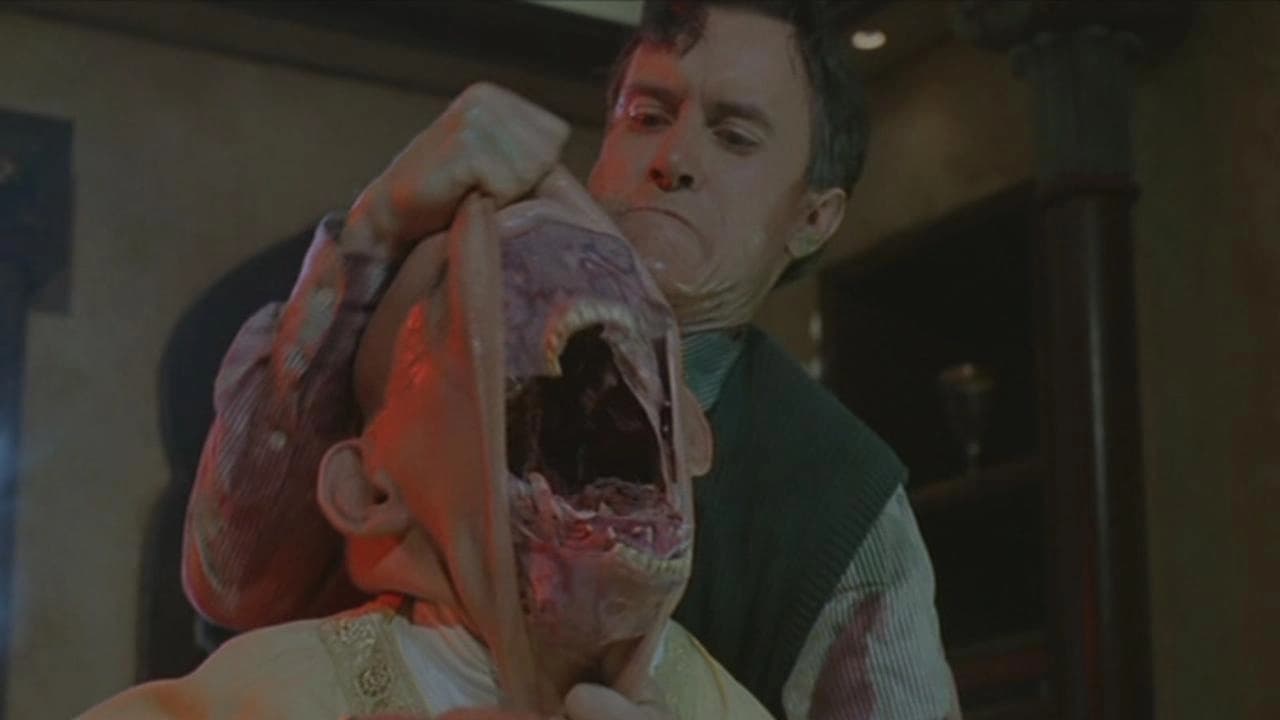
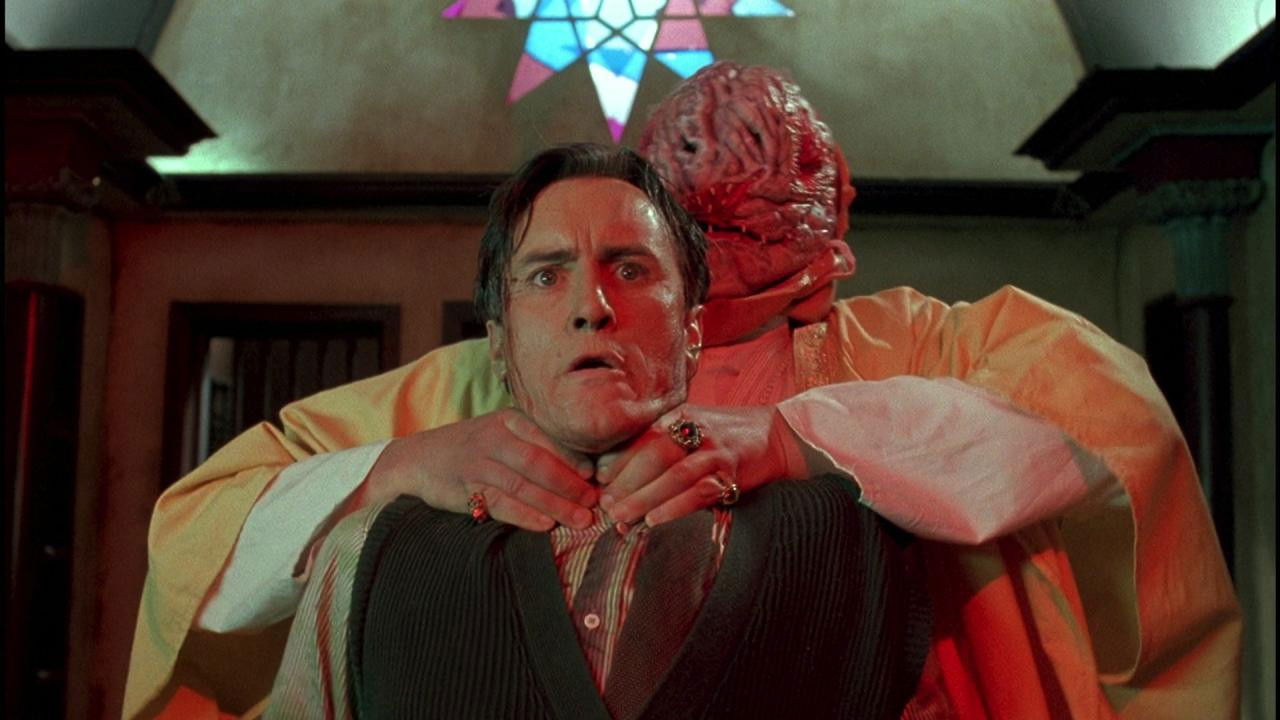
Next, "The Cold," directed by Shusuke Kaneko (later famed for his brilliant Gamera trilogy in the 90s and Death Note films), plunges us into urban decay and Cronenbergian body horror. Adapting "Cool Air," it follows a reporter (Dennis Christopher) investigating a series of gruesome murders who encounters the enigmatic Dr. Madden (David Warner), a man living in a perpetually refrigerated apartment. This segment is arguably the most genuinely unsettling. Kaneko builds a palpable sense of claustrophobia and dread within the confines of the apartment. David Warner, a master of conveying weary intelligence and underlying menace (Time Bandits, Tron), is perfectly cast as the doctor clinging to a horrifying semblance of life. The makeup and practical effects used to depict Madden's condition are stomach-churning, achieving a level of believable grotesquerie that truly chills. It’s a slow burn that erupts into truly unnerving biological horror, capturing the story's core themes of defying death at an unnatural cost. It’s said the film endured a lengthy, troubled production, facing budget issues and rights clearances taking years; perhaps some of that struggle translates into the desperate, clinging-to-life feel of this segment.
### Whispers in the Goo
Finally, Brian Yuzna returns to direct "Whispers," inspired by "The Whisperer in Darkness." This is pure, uncut Yuzna – gooey, aggressive, and darkly comic. It follows two Philadelphia police officers, played by Signe Coleman and Obba Babatundé, tracking a serial killer known as 'The Butcher' (Richard Lynch). Their pursuit leads them into subterranean tunnels where things get… well, Lovecraftian, complete with bat-winged, brain-like creatures. This segment is the most reliant on elaborate, and often delightfully rubbery, practical effects, courtesy of artists like Screaming Mad George and the Todd Masters Company. Richard Lynch (Bad Dreams) brings his signature unsettling intensity to the role of the human antagonist. While perhaps the least subtle of the three, "Whispers" delivers the kind of creature feature thrills Yuzna excels at, a frantic chase through slime-dripping corridors culminating in a truly bizarre cosmic encounter. It feels like a direct descendant of From Beyond's interdimensional horrors. Reportedly, some effects had to be scaled back due to budget constraints, but what remains is a testament to the ambitious, hands-on creature work of the era.
### Judging the Grimoire
Necronomicon is undeniably an uneven film, a common affliction for horror anthologies. Gans provides gothic mood, Kaneko delivers chilling body horror, and Yuzna brings the splatter. Yet, despite the tonal shifts, there's a unifying commitment to practical effects and a genuine affection for the source material, however loosely adapted. Jeffrey Combs's wraparound performance is a major highlight, lending the entire affair a meta-textual glee for Lovecraft fans. The practical effects, while occasionally showing their seams by today's standards, possess a tangible, often repulsive physicality that CGI rarely achieves. Seeing this on VHS back in the day felt like unearthing something genuinely weird and forbidden, a midnight movie transmitted directly from some strange dimension. Did anyone else feel that Combs' Lovecraft almost willed the book into existence through sheer pulp desire?
Rating: 6.5/10
Justification: While ambitious and featuring strong performances (especially Combs and Warner) and memorably grotesque practical effects in Kaneko's chilling segment and Yuzna's gleefully gooey finale, the film suffers from the inherent unevenness of its anthology format. Gans' segment feels slightly disconnected tonally, and the overall narrative cohesion relies heavily on the enjoyable but simple framing device. It’s elevated by its cult status, its connection to Lovecraft lore, and its dedication to practical creature-craft, making it a fascinating artifact of 90s horror, but it doesn't quite reach the heights of consistency seen in some other anthologies of the era.
Final Thought: Necronomicon remains a cherished oddity for many horror fans – a strange, sometimes clunky, but often visually arresting trip into Lovecraftian nightmares, powered by 90s practical effects wizardry and the sheer cult-movie energy of its creators. It's a book you might hesitate to open, but once you do, its bizarre visions tend to stick with you.