It begins not with a character, but with an object. A crisp twenty-dollar bill, freshly dispensed from an ATM, embarking on an unpredictable journey through the urban landscape. That's the beautifully simple, yet profoundly resonant, premise of Keva Rosenfeld's 1993 indie gem, Twenty Bucks. Watching it again after all these years, slipping that worn VHS tape into the VCR felt less like revisiting a movie and more like uncovering a time capsule – not just of the early 90s, but of a certain kind of earnest, observational filmmaking that feels increasingly rare.
The Life Cycle of a Bill
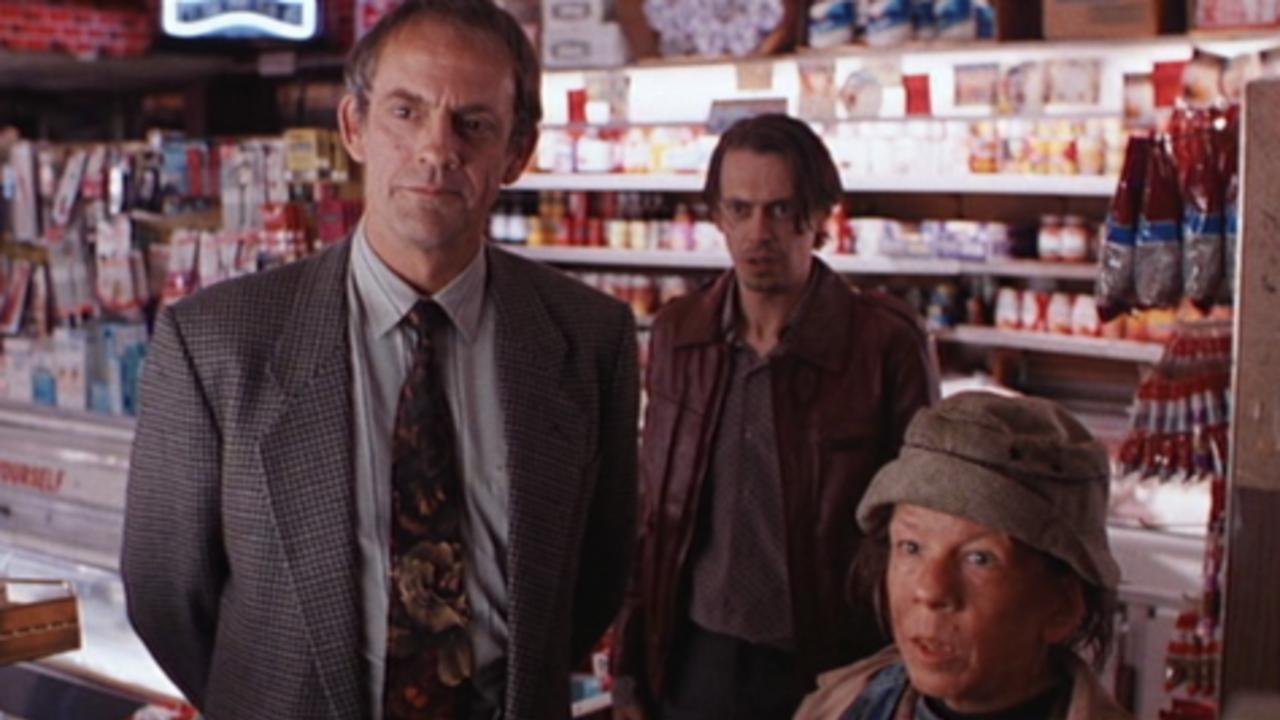
The film eschews a traditional narrative, instead opting for an episodic structure where the titular bank note serves as the connecting thread. We follow its path as it's passed from hand to hand – a homeless woman, a pair of young lovers, a struggling writer, a couple of petty thieves, a hopeful bride, and more. Each vignette offers a fleeting glimpse into a different life, a snapshot of joy, desperation, happenstance, or quiet contemplation. There's no grand plot arc, no central protagonist in the conventional sense, only the relentless forward momentum of currency and the intersecting lives it briefly illuminates. It’s a structure that could easily feel disjointed, yet under Rosenfeld's gentle direction, it achieves a surprising cohesion, painting a mosaic of city life bound by the invisible threads of commerce and chance. Doesn't it make you wonder about the stories your own pocket money could tell?
A Constellation of Familiar Faces
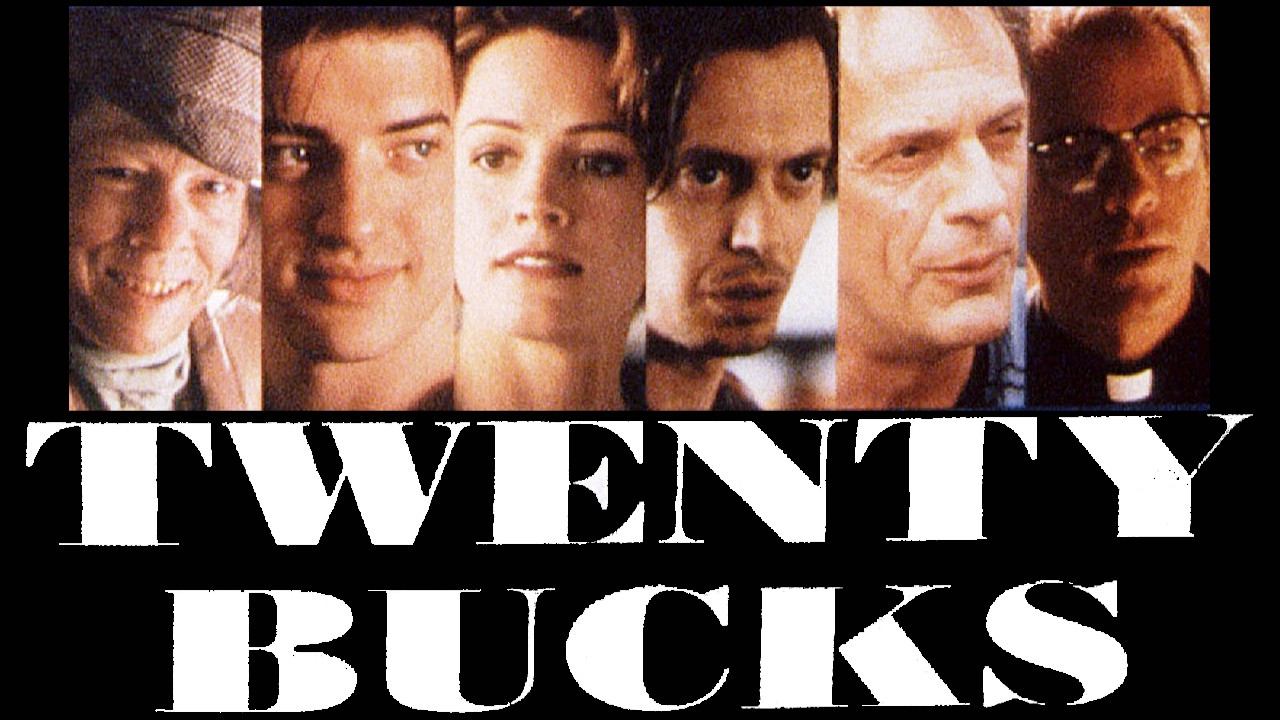
What truly elevates Twenty Bucks beyond its intriguing concept is its remarkable ensemble cast, a veritable who's who of established character actors and stars-on-the-rise. Seeing a young Brendan Fraser as Sam, a charmingly naive security guard whose path crosses with the bill early on, is a delight. He brings that effortless likability that would define his later career, even in this smaller role. Elisabeth Shue, as aspiring writer Emily Adams, captures the anxieties and hopes of creative struggle with touching authenticity. Her segment, involving a fateful lottery ticket purchased with the $20, feels particularly poignant.
But it’s perhaps the character actors who leave the deepest impression. The ever-watchable Steve Buscemi pops up as a desperate stick-up artist, bringing his signature nervous energy. The great Christopher Lloyd, far from his wilder roles like Doc Brown in Back to the Future (1985), delivers a nuanced turn as Jimmy, a weary sign-painter. And then there’s Linda Hunt as Angeline, the philosophical homeless woman who first receives the bill. Hunt possesses an extraordinary ability to convey immense depth and history with just a look or a line reading; her presence anchors the film's opening and sets a contemplative tone. Seeing performers like David Schwimmer, Gladys Knight, Melora Walters, and even William H. Macy in brief appearances adds layers of discovery, like finding hidden treasures within the narrative tapestry. It feels like a casting director’s dream, assembling such talent for what was clearly a passion project.
A Story Decades in the Making
The journey of the film itself is almost as fascinating as the journey of the bill within it. The screenplay has roots stretching back nearly sixty years! Co-writer Leslie Bohem adapted a story penned by his father, Endre Bohem, back in the 1930s, itself supposedly inspired by a fragment of a Leo Tolstoy story. Imagine that script, conceived in the era of Roosevelt and Gable, finally finding life in the Clinton years, filmed on the streets of Minneapolis and St. Paul. This incredible backstory adds a layer of almost mythic resonance. It speaks to the enduring power of a simple idea and the tenacity required to bring personal projects to the screen, especially on a modest budget (reportedly around $1 million). You can feel that indie spirit – the focus on character moments over spectacle, the resourceful use of locations, the sense that everyone involved believed deeply in the story they were telling.
More Than Just Money
Beyond the clever gimmick, Twenty Bucks quietly probes themes of value, connection, and the ephemeral nature of existence. The $20 bill itself remains indifferent, unchanged by the dramas swirling around it, yet its passage triggers moments of hope, despair, generosity, and betrayal. It highlights how easily lives intersect, often without awareness, and how a small amount of money can represent vastly different things to different people – a meal, a gamble, a gift, a lifeline. What lingers after the credits roll is not necessarily the fate of the bill, but the echoes of the human stories it encountered. It’s a film that invites reflection on the unseen connections that bind us and the quiet dramas playing out all around us, every single day.
VHS Heaven Rating: 8/10
Twenty Bucks is a quintessential early 90s indie discovery, the kind of film you might have stumbled upon at the local video store, nestled between the blockbusters, and felt like you'd found something special. Its episodic nature might not satisfy those seeking a driving plot, but its charm lies in its quiet observations, its stellar ensemble cast (many caught just before or during major career moments), and its uniquely poignant premise. The decades-long journey of the script to the screen adds a remarkable layer of history. It’s a warm, thoughtful, and ultimately moving piece of filmmaking that uses a simple conceit to explore the complex tapestry of human life.
It’s a film that reminds us that sometimes the most compelling stories aren't the loudest, but the ones whispered in the brief exchanges and fleeting moments that make up our days – moments perhaps witnessed only by the currency passing through our hands.