Alright fellow tape travelers, gather 'round the flickering glow of the metaphorical CRT. Tonight, we're digging into a curious corner of the video store shelf, one that might have caught your eye back in '94 precisely because it seemed a little… unexpected. Remember flipping through the channels, maybe late on a Sunday night, and stumbling across a brand-new Woody Allen movie premiering not in theaters, but right there on ABC? That's the unique territory of Don't Drink the Water (1994), a film that feels less like a blockbuster rental and more like discovering a rare B-side from a favorite band.
### An Unexpected Detour Behind the Curtain
What we have here isn't just any Woody Allen flick; it's Allen revisiting his own past, specifically his 1966 Broadway play. Now, some of you might vaguely recall (or actively try to forget) the 1969 film adaptation starring Jackie Gleason. Let's just say Allen wasn't exactly thrilled with how that turned out – a retro fun fact often cited is his profound dissatisfaction with director Howard Morris's take on his material. So, a quarter-century later, Woody decided to take the reins himself, writing, directing, and starring in this made-for-TV version, aiming to finally capture the frantic, farcical energy he originally intended.
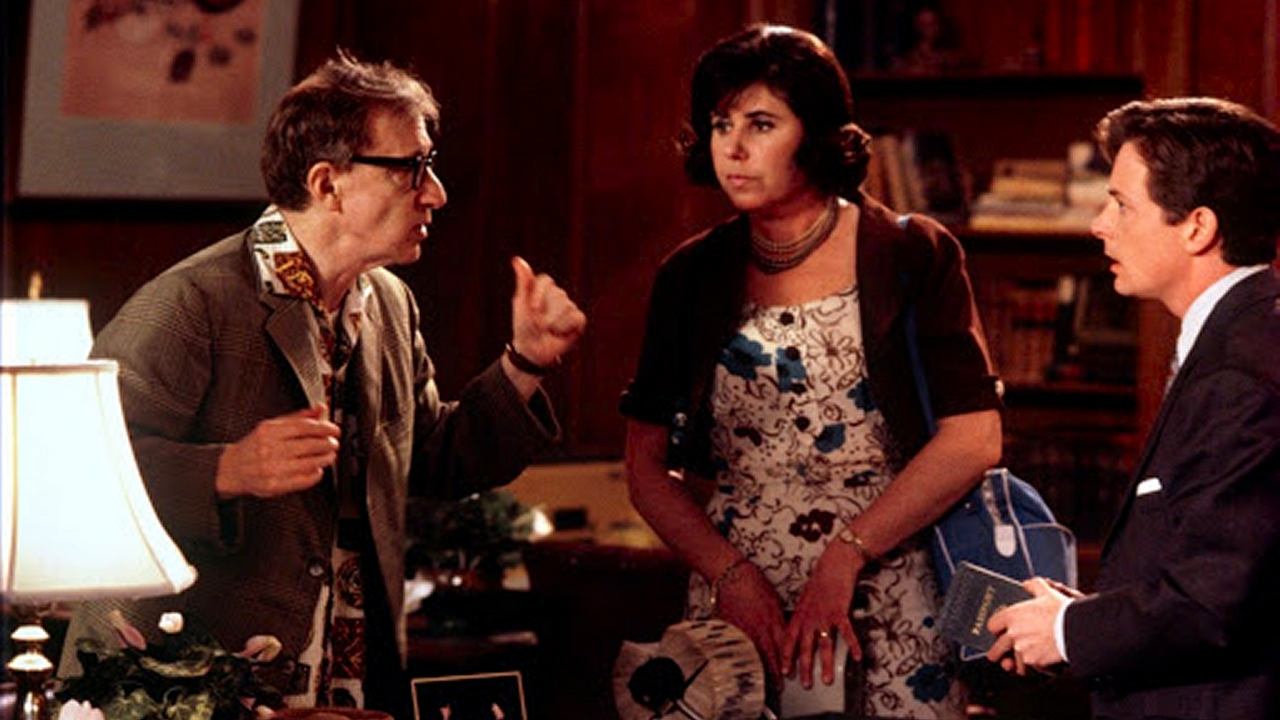
The setup is pure Cold War-era absurdity, even filtered through a 1994 lens: the Hollander family – Walter (a perfectly neurotic Allen), Marion (the wonderful Julie Kavner, Marge Simpson herself!), and daughter Susan (Mayim Bialik, fresh off Blossom) – are hapless American tourists. While vacationing in a fictional communist country, they accidentally cause an international incident (Walter takes photos in a restricted zone, naturally) and are forced to seek refuge in the decidedly chaotic U.S. Embassy.
### Trapped with the Usual Suspects
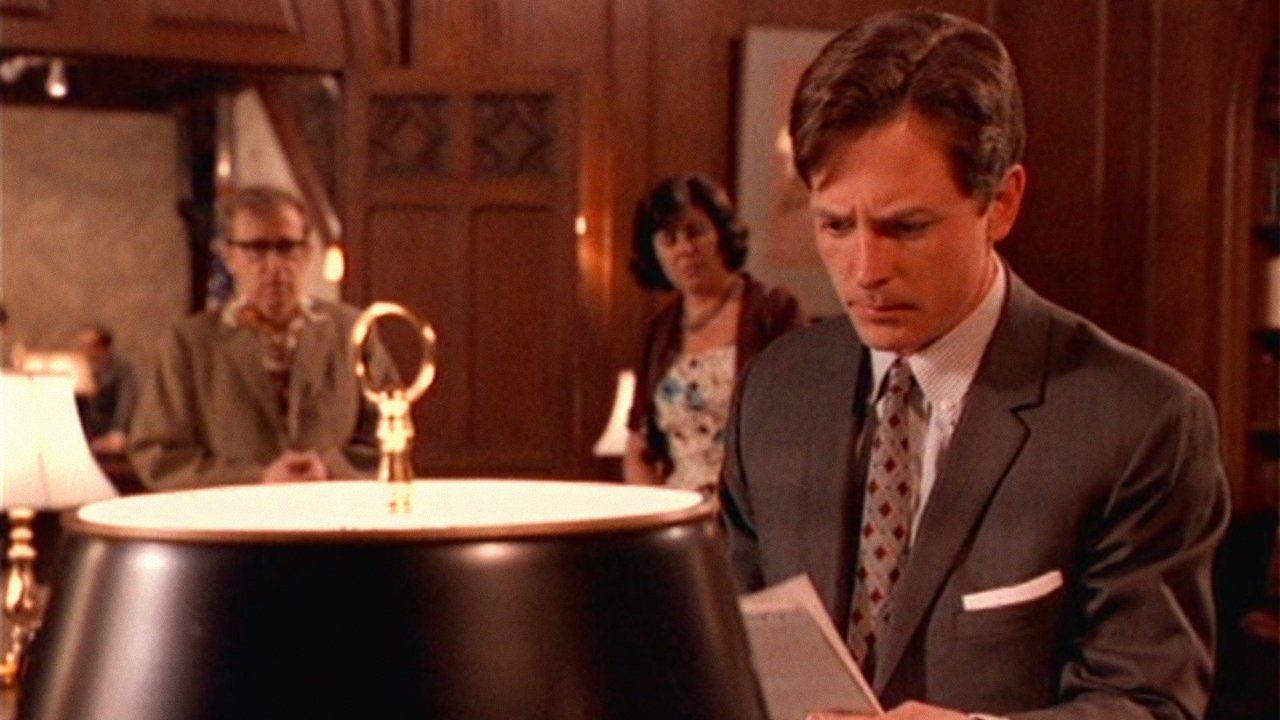
The embassy itself is run by the perpetually flustered Ambassador Magee (Josef Sommer) and his seemingly incompetent son, Axel (Michael J. Fox), who's been temporarily left in charge. What unfolds is less political thriller and more claustrophobic comedy of errors, a pressure cooker environment where cultural clashes, romantic sparks (between Axel and Susan), and Walter Hollander's escalating panic collide.
This film lives and dies by its dialogue and performances, and Allen, doing his classic kvetching schtick as Walter, is firmly in his comfort zone. He rattles off one-liners and anxieties with the rapid-fire precision we expect. But the real treat here, especially for 90s kids, is seeing Michael J. Fox share the screen with Allen. As Axel Magee, the diplomat's son desperate to prove himself (and escape his father's shadow), Fox brings his signature charm and comedic timing. It’s fascinating to see him navigate Allen's distinctively stylized dialogue; he feels both like a classic Allen character and uniquely himself. Remember how effortlessly likable Fox always was, even when playing slightly hapless characters? He nails that here.
Mayim Bialik holds her own as the lovestruck daughter, and the supporting cast is sprinkled with familiar faces, including a delightful, albeit brief, appearance by the late, great Dom DeLuise as a flamboyant priest seeking asylum. The whole affair feels distinctly stage-bound, which makes sense given its origins. The single embassy setting enhances the feeling of entrapment and escalating farce. There aren’t grand vistas or complex action sequences; the "action" here is purely verbal, a relentless barrage of jokes and panicked pronouncements.
### From Broadway to the Boob Tube
Making this as a TV movie was an interesting choice. On one hand, it allowed Allen complete creative control to finally realize his version. On the other, you can sometimes feel the constraints of the format – the lighting feels a bit flatter, the sets perhaps a touch less expansive than his theatrical releases of the era like Bullets Over Broadway (also 1994). It doesn’t quite have the cinematic polish of his big-screen work, but there’s a certain intimate charm to it. It feels like exactly what it is: a filmed play, performed by a game cast clearly enjoying the material.
Was it considered a major triumph back then? Not really. Critics saw it mostly as a minor, amusing footnote in Allen's extensive filmography, perhaps an improvement on the '69 version but hardly essential. It didn't make waves like his theatrical releases. But finding it on VHS, or catching that original TV broadcast, felt like uncovering a slightly hidden piece of Allen's world. It wasn't Manhattan or Annie Hall, but it was undeniably him, doing his thing, just on a different channel.
This is the kind of movie that thrives in the "VHS Heaven" space – maybe not a stone-cold classic, but a fascinating artifact. It’s Woody Allen trying to right a perceived wrong, bringing along Michael J. Fox for a surprisingly enjoyable comedic ride, all packaged in that distinct mid-90s TV movie aesthetic.
Rating: 6.5/10
Justification: While undeniably a minor work and feeling very much like a filmed play with TV movie constraints, the sharp dialogue, Allen's reliable neurotic energy, and the winning presence of Michael J. Fox make it an enjoyable curiosity. It successfully captures the farcical tone Allen intended, even if it lacks cinematic ambition.
Final Thought: It might not be cinematic champagne, but sometimes, a glass of slightly fizzy, unexpectedly televised water hits the spot just right, especially when served by this cast.