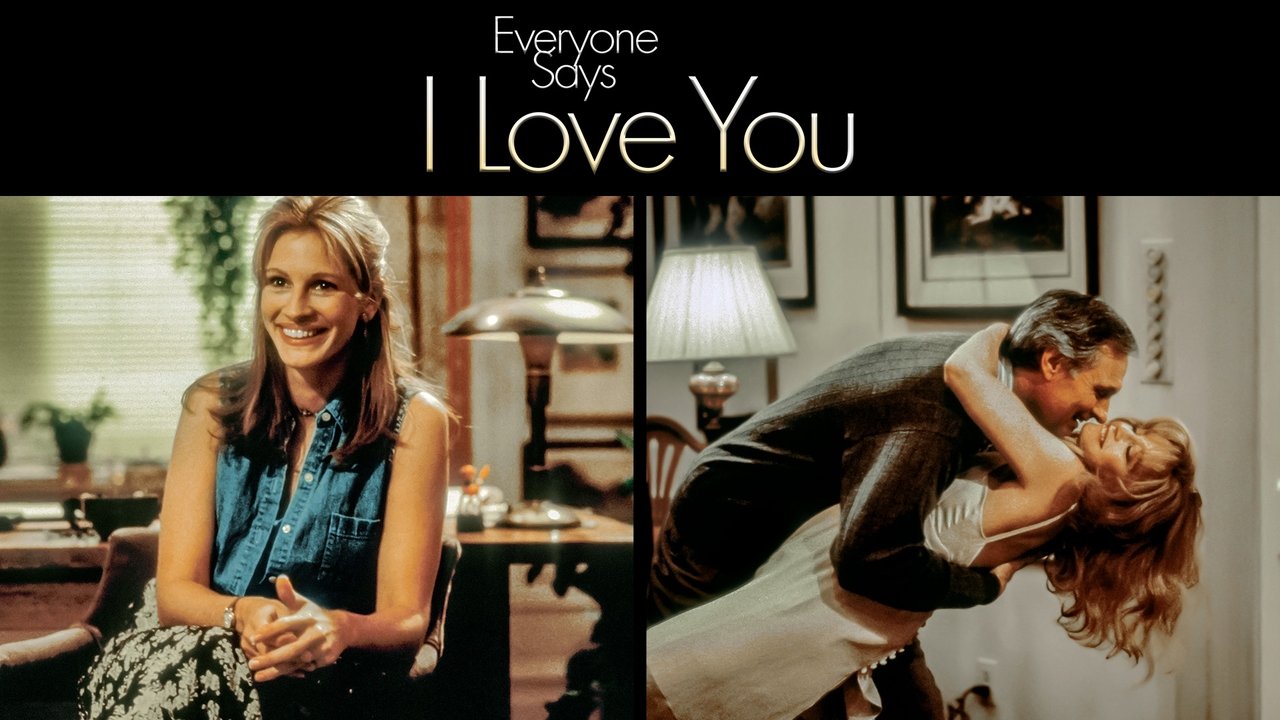
What happens when a filmmaker synonymous with neurotic urban intellectuals, complex relationships, and witty, often cynical dialogue decides to make… an old-fashioned movie musical? The result is 1996’s Everyone Says I Love You, a cinematic confection that feels both utterly unlike anything else in Woody Allen’s extensive filmography and yet, somehow, unmistakably his. It's a film that arrived on VHS shelves like a charmingly unexpected guest, perhaps rented on a whim, promising familiar stars but delivering something quite peculiar and, for many, surprisingly delightful.
An Unconventional Chorus
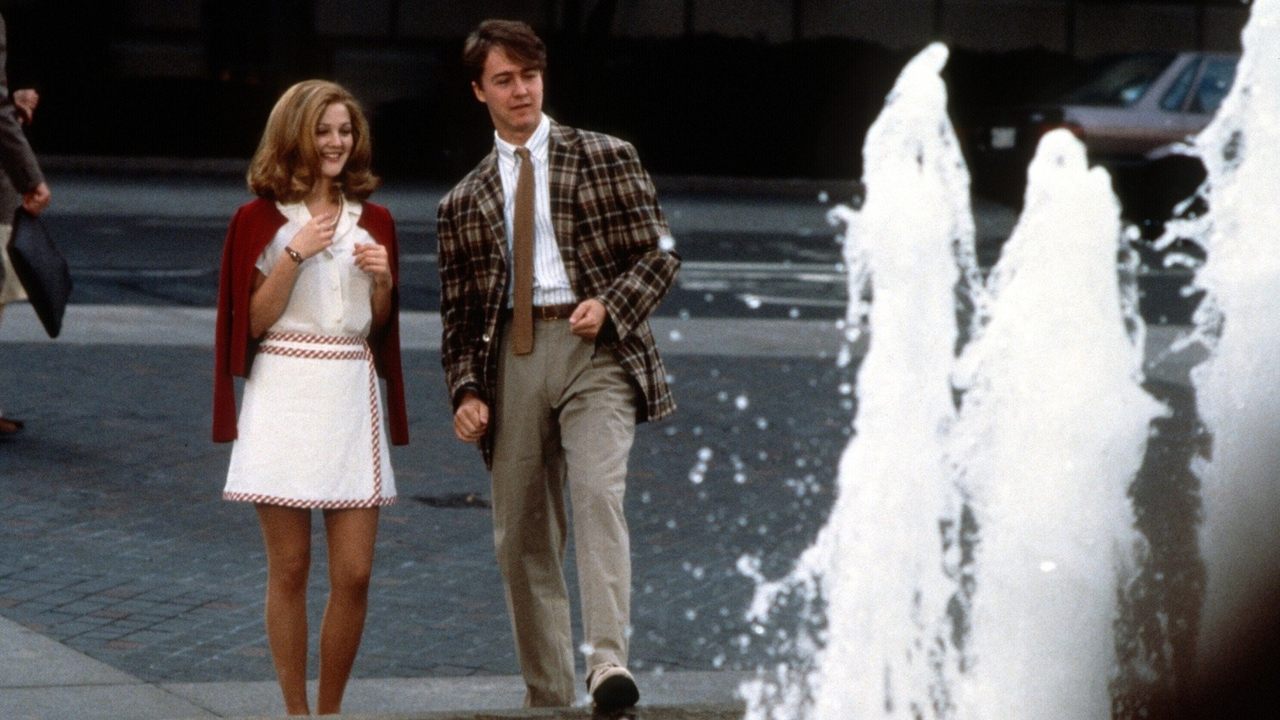
The film's most striking, and arguably most debated, feature is its musical approach. Allen, known for his meticulous control, made the audacious choice to have his star-studded cast – many not known for their singing prowess – perform classic American songbook standards themselves. Forget polished Broadway vocals; here, we get the raw, sometimes hesitant, occasionally off-key but undeniably heartfelt renditions of actors like Alan Alda, Goldie Hawn, Edward Norton, and Allen himself. It was a deliberate gamble. Allen wanted the singing to feel authentic to the characters, ordinary people caught up in bursts of romantic emotion spilling into song, rather than seasoned performers breaking into elaborate numbers. The effect is disarming. There's a vulnerability, a charming lack of slickness that lowers the barrier between the audience and the characters' heightened feelings. Does Edward Norton have a hidden career as a crooner? Not quite, but his earnest rendition of "Just You, Just Me" is genuinely winning. It makes the fantastical premise – people spontaneously singing their feelings – feel strangely grounded.
Tapestry of Tangled Hearts
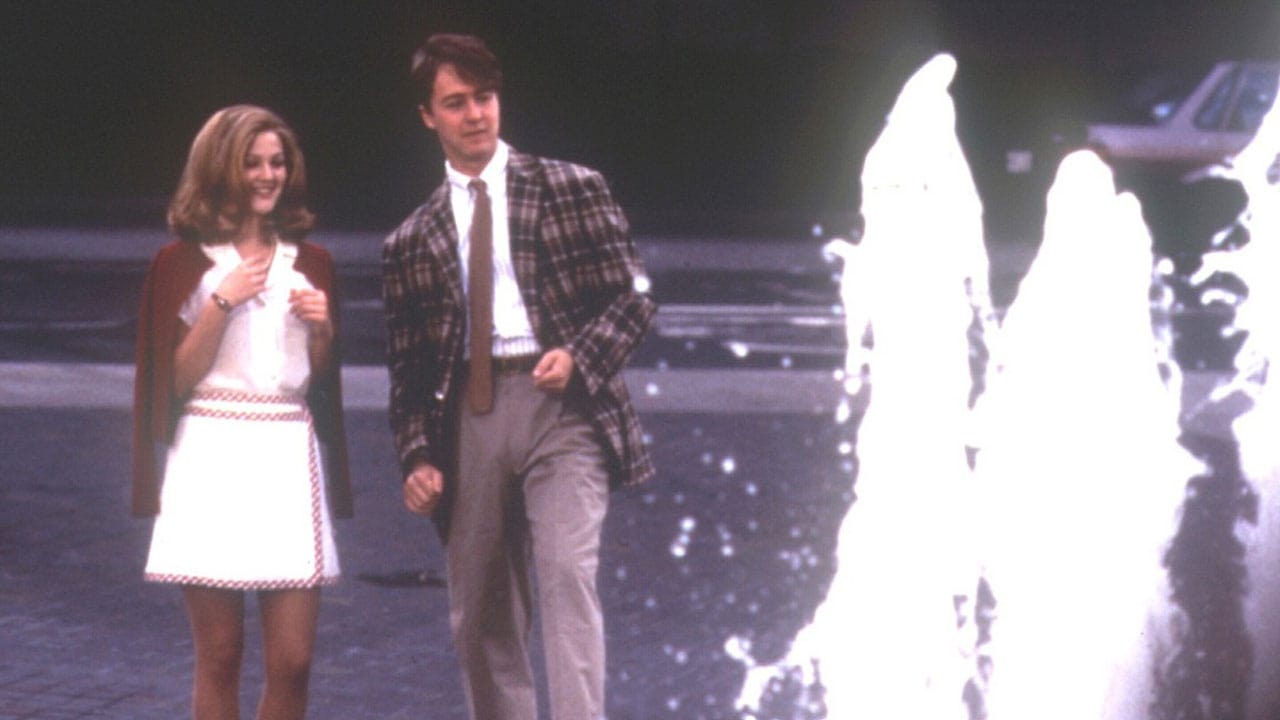
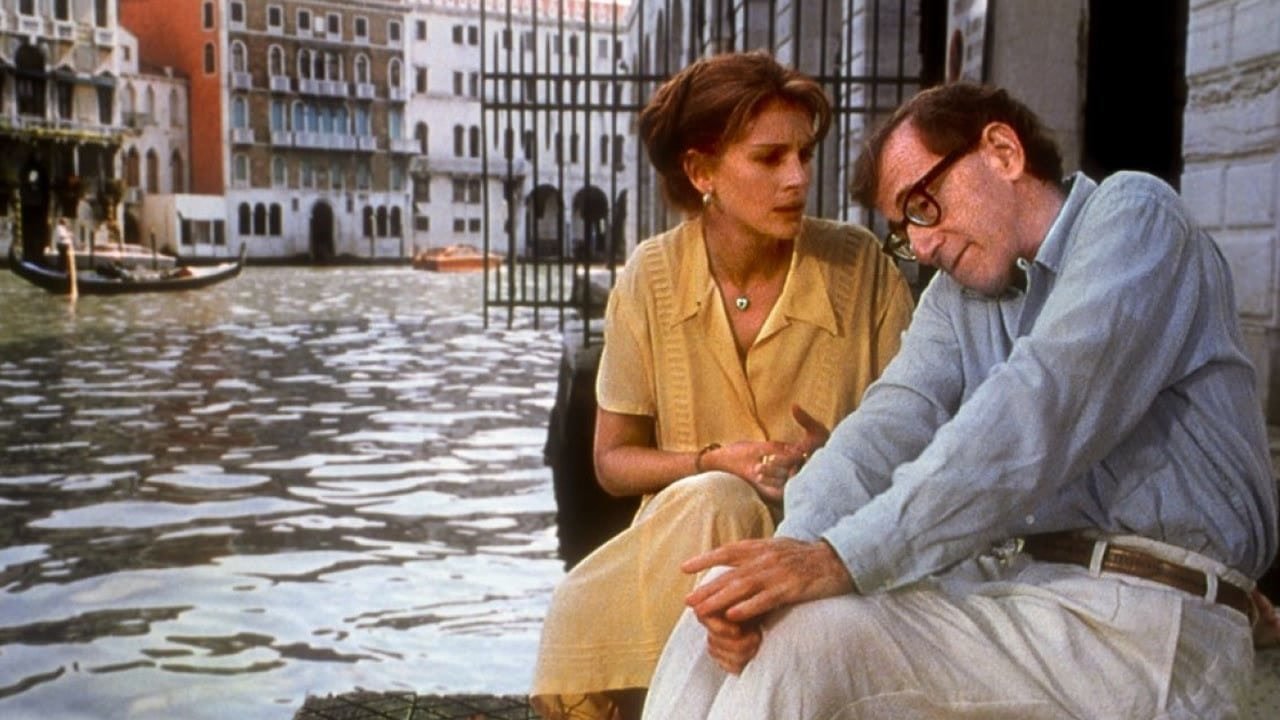
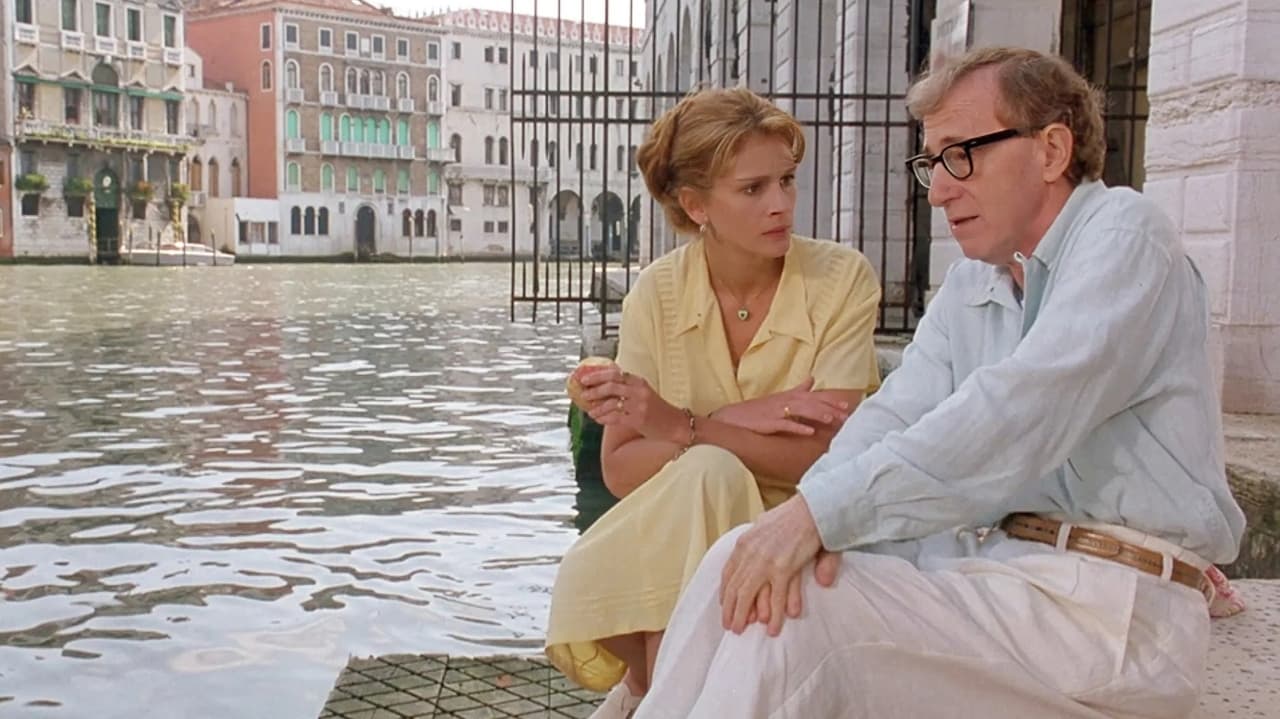
The narrative weaves together the romantic entanglements of an extended, affluent Manhattan family and their circle, hopping breezily between New York, Venice, and Paris. We follow Holden (Edward Norton) searching for the perfect engagement ring, Skylar (Drew Barrymore) falling for an ex-con (Tim Roth) much to the chagrin of her parents Bob and Steffi (Alan Alda and Goldie Hawn), Steffi herself wrestling with lingering feelings for her ex-husband Joe (Woody Allen), and Joe attempting to woo the married Von (Julia Roberts) using insider information gleaned from her therapy sessions (overheard by his daughter DJ, played by Natasha Lyonne). It’s classic Allen territory – infidelity, romantic illusions, the messy intersections of love and desire – but filtered through a candy-colored lens. The lavish settings and beautiful cinematography create an almost dreamlike atmosphere, a deliberate counterpoint to the often-complicated emotions at play. This wasn't a cheap production, clocking in around $20 million, a significant sum for Allen at the time, largely visible in the gorgeous location work and detailed production design.
Stars Align, Voices Waive
The ensemble cast is a key part of the film's appeal. Goldie Hawn, radiating her signature charm, gets one of the film’s most magical moments – literally floating on air while dancing with Allen along the Seine in Paris. That delightful sequence, by the way, wasn't CGI trickery but achieved with wires and cranes, a testament to the era's practical ingenuity. Alan Alda provides his reliable warmth as the family patriarch. Allen plays a variation of his familiar persona, neurotic yet endearing, his own slightly shaky vocals fitting perfectly with the film's ethos. Julia Roberts brings star power, and a young Natalie Portman shines in an early role. Interestingly, the one main cast member whose voice was dubbed was Drew Barrymore. Despite Allen's preference for authenticity, he reportedly felt her singing voice just wasn't quite right for the part, so she was dubbed by singer Olivia Hayman – a rare instance where the 'real voice' concept was overridden. It's a piece of trivia that highlights the specific vision Allen was aiming for, even if it meant making exceptions.
A Touch of Whimsy, A Dash of Reality
While soaked in romantic fantasy – exemplified by moments like a chorus line of dancing ghosts in a funeral home singing "Enjoy Yourself (It's Later Than You Think)" – the film doesn't completely abandon Allen's usual preoccupations. The songs might be sweet, but the situations often involve deception, dissatisfaction, and the bittersweet realization that love rarely follows a neat script. The musical numbers aren't just decorative; they often comment ironically on the action or reveal inner truths the characters struggle to articulate. The famous Groucho Marx number ("Hooray for Captain Spaulding") during a stuffy Parisian party feels like a pure burst of Allen's comedic anarchy injected into the elegance. Does the whimsical tone always perfectly mesh with the underlying relationship drama? Perhaps not seamlessly, but the friction itself is part of the film’s unique texture. It dares to be both lighthearted and emotionally complex, often in the same scene.
Echoes from the Video Store Aisle
I remember seeing the Everyone Says I Love You VHS box on the 'New Releases' wall at Blockbuster. The cast alone was intriguing, but the "Woody Allen Musical" description felt like a curveball. Would it be awkward? Brilliant? It certainly wasn't the typical 90s fare dominating the charts. Upon release, the film wasn't a huge commercial success, grossing under $10 million domestically against its $20 million budget, and critical reception was mixed. Some found the singing amateurish and the tone jarring, while others embraced its unique charm and heartfelt optimism. Watching it today, perhaps on a less-than-pristine transfer that mimics that old VHS feel, its sincerity feels even more pronounced. In an era often defined by irony and grunge, here was a film unabashedly celebrating romance, family, and the sheer joy of classic songs, even if sung imperfectly. It feels like a warm, slightly eccentric postcard from a different time.
Rating: 7/10
This score reflects the film's undeniable charm, ambition, and genuinely winning moments, particularly Hawn's floating dance and the surprisingly effective performances from the non-singing cast. It’s docked points for the sometimes uneven tone where the whimsy occasionally feels forced, and the fact that the central conceit – the raw singing – won't work for everyone. However, the film’s unique place in Allen's filmography, its gorgeous visuals, and its ultimately good-hearted spirit make it a worthwhile watch. It earns its rating through its sheer audacity and the surprising emotional resonance achieved despite, or perhaps because of, its unconventional approach.
Everyone Says I Love You remains a curious, often lovely anomaly. It's a film that wears its heart, and its slightly off-key voice, proudly on its sleeve, leaving you with a lingering tune and perhaps a quiet smile – a reminder that sometimes, the most charming expressions are the least perfect ones.