Okay, pull up a chair, maybe pour yourself something contemplative. We're stepping away from the neon glow of 80s action and the synth-pop scores for a moment, reaching for a tape on the rental shelf that felt… different. Remember those? Tucked between the blockbusters, sometimes you'd find a cover that promised something heavier, something that might linger long after the VCR clicked off. Gianni Amelio’s Lamerica (1994) was exactly that kind of find – a film that arrived with the weight of history on its shoulders, offering not escapism, but a profound, unsettling mirror.
It begins with an illusion, a cynical venture wrapped in false hope. Two Italian entrepreneurs, the slick Fiore (Michele Placido, known to many from the long-running crime drama La Piovra) and his younger, ambitious protégé Gino (Enrico Lo Verso), arrive in Albania just as the iron grip of communism has shattered, leaving a vacuum of chaos and desperate poverty. Their plan? Exploit the situation by setting up a phantom shoe factory, using an elderly, supposedly senile political prisoner named Spiro (played with devastating authenticity by non-professional actor Carmelo Di Mazzarelli) as a figurehead chairman. It feels like a sharp, almost cruel inversion of history – Italians, whose own parents or grandparents might have dreamed of "L'America" as a promised land, now playing the role of opportunistic colonizers in Europe's poorest nation.
A Descent into Forgotten Histories
What starts as a seemingly straightforward con unravels into something far more complex and haunting. Gino, initially embodying a kind of arrogant, modern European confidence, finds himself stranded when Spiro wanders off. His journey to retrieve the old man becomes a descent, not just into the harsh realities of post-communist Albania, but into the labyrinth of forgotten memory and displaced identity. Enrico Lo Verso gives a remarkable performance here. You see the swagger peel away layer by layer, replaced by confusion, desperation, and ultimately, a dawning, horrified empathy. His transformation isn't sudden or sentimental; it’s a grueling stripping away of illusions, forced by circumstance.
The discovery that Spiro isn't Albanian at all, but an Italian named Michele Talarico who vanished decades earlier, believing he's still a young man trying to get back to Sicily after World War II, is the film’s aching heart. He represents a past Italy wants to forget, a history of poverty and emigration that inconveniently mirrors the Albanian plight Fiore and Gino seek to exploit. The irony is thick enough to choke on. Spiro’s fragmented memories, his stubborn insistence on returning to a home that no longer exists as he remembers it, becomes a powerful symbol of lost souls adrift in history's turbulent wake. Finding Carmelo Di Mazzarelli, reportedly a shepherd Amelio discovered, to play this role was a stroke of genius; his face carries the un MISTAKE: should be 'unmistakable' unmistakable weight of lived hardship, lending Spiro an authenticity that transcends acting.
The Weight of Authenticity
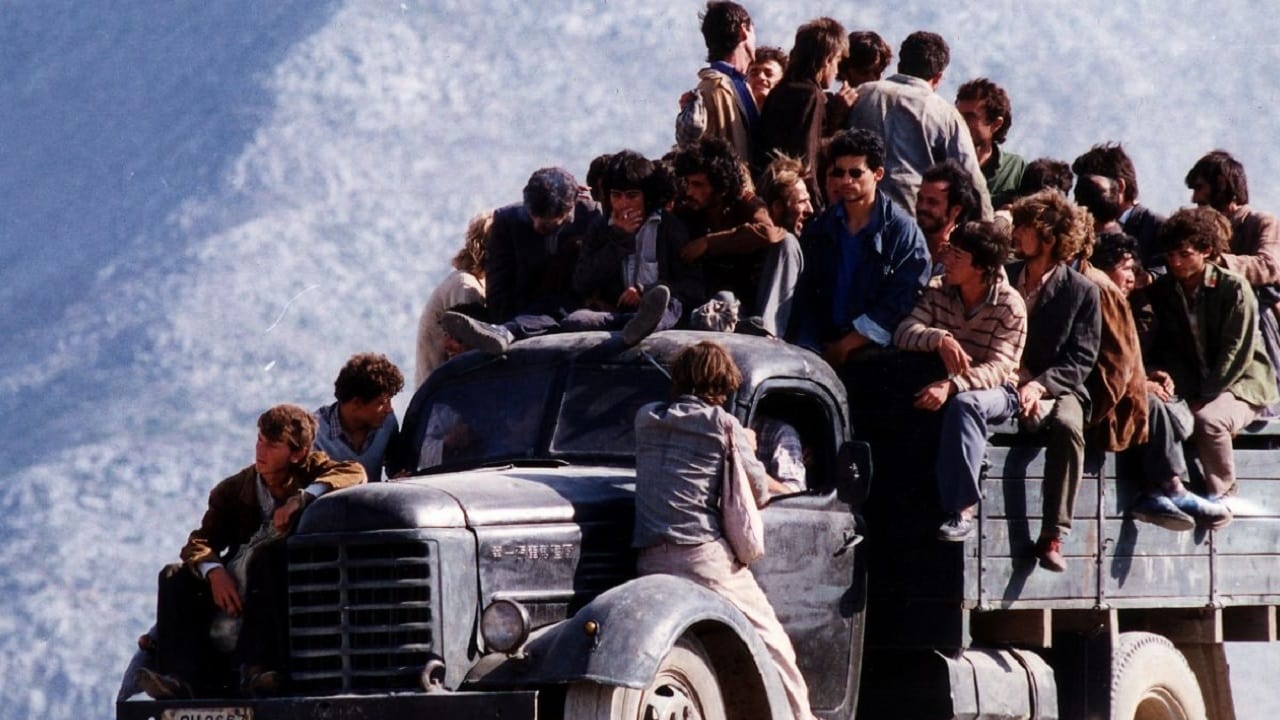
Filming Lamerica couldn't have been easy. Gianni Amelio, who had already explored societal issues in films like Stolen Children (1992), plunged his crew into the very real turmoil of early 90s Albania. That rawness permeates every frame. This isn't a sanitized Hollywood depiction of hardship; the desolate landscapes, the crumbling infrastructure, the faces etched with desperation – it all feels utterly real because, largely, it was. This commitment to authenticity recalls the spirit of Italian Neorealism, finding profound human drama amidst societal collapse. Amelio uses the landscape not just as a backdrop, but as a character, reflecting the internal desolation of those trapped within it.
The film doesn't offer easy answers or neat resolutions. It confronts the viewer with uncomfortable truths about exploitation, the cyclical nature of migration driven by poverty, and the selective amnesia of wealthier nations. Watching Gino, stripped of his passport, money, and Italian identity, forced amongst the very people he initially viewed with disdain, you have to ask: how much separates the exploiter from the exploited when the thin veneer of privilege is removed? What does national identity even mean when faced with such fundamental human desperation?
Echoes Across the Adriatic
The film culminates in one of the most potent and unforgettable closing sequences of 90s European cinema. Gino finds himself among thousands of Albanians crammed onto a dilapidated ship bound for Italy – the "America" of their dreams. He spots Spiro/Michele among the crowd, lost but perhaps finally heading "home," though to a home that won't recognize him. The camera pans across the sea of faces, hopeful and haunted, a powerful visual echo of countless historical migrations, including Italy's own past exodus. It’s a scene that stays with you, a stark reminder of enduring human struggles that felt urgent in 1994 and, frankly, feels depressingly relevant today. This wasn't the kind of film you rented for a Friday night pizza party, but encountering it on VHS felt like uncovering a hidden truth, a necessary counterpoint to the era's more bombastic offerings.
***
Rating: 9/10
Justification: Lamerica earns this high rating through its profound thematic depth, its unflinching portrayal of a specific historical moment with universal resonance, Gianni Amelio's masterful, neorealist-inspired direction, and the deeply affecting performances, particularly from Enrico Lo Verso and the unforgettable Carmelo Di Mazzarelli. The film’s willingness to confront uncomfortable truths about history, identity, and exploitation, captured with such raw authenticity during a challenging shoot in post-communist Albania, makes it a powerful and enduring piece of cinema. It might lack the easy comforts of other VHS-era favorites, but its intellectual and emotional impact is undeniable.
Final Thought: Lamerica doesn't just depict a journey across a broken landscape; it forces a journey within the viewer, leaving you contemplating the ghosts of history and the enduring, often tragic, quest for a better shore.