Okay, fellow tapeheads, let’s rewind to the mid-90s video store shelves. Picture this: you’re scanning the comedy section, past the usual Hollywood fare, and your eyes land on a curious cover. Maybe it shows a kid in tribal gear incongruously placed in a bustling city. That tape, my friends, was likely Un Indien dans la ville, known to many of us through its English-dubbed version or perhaps its Stateside remake, as Little Indian, Big City (1994). And what a weird, charmingly clumsy, and quintessentially French comedy trip it was.

This wasn't your typical slick Hollywood production; it felt different right off the bat. The premise alone is pure high-concept gold, the kind that probably sounded amazing in a pitch meeting: Stéphane Marchadot (Thierry Lhermitte), a slick Parisian commodities broker, travels deep into the Venezuelan Amazon jungle ("Lipo-Lipo land," the film calls it) to finalize his divorce from Patricia (Miou-Miou), only to discover he has a 13-year-old son named Mimi-Siku (Ludwig Briand), raised entirely among the tribe. To get his divorce papers signed, Stéphane must agree to take Mimi-Siku back to Paris for a visit. Cue the ultimate fish-out-of-water chaos.
### Parisian Jungle Gym
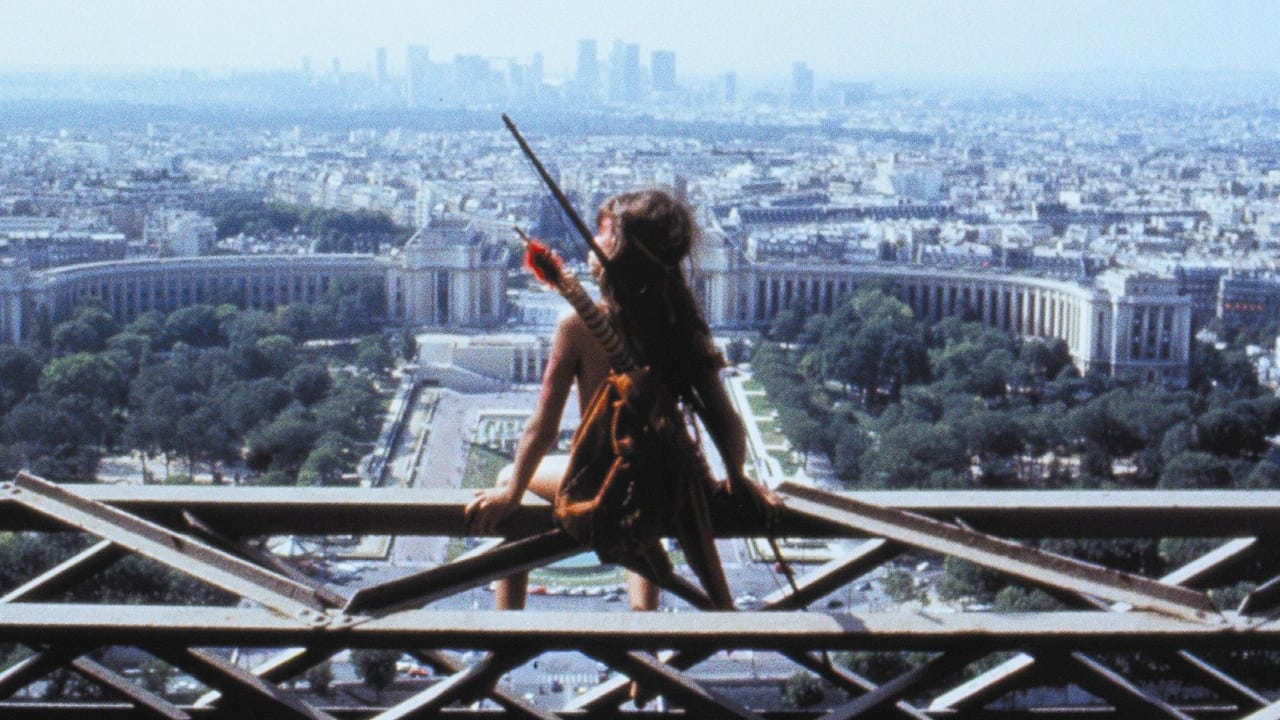
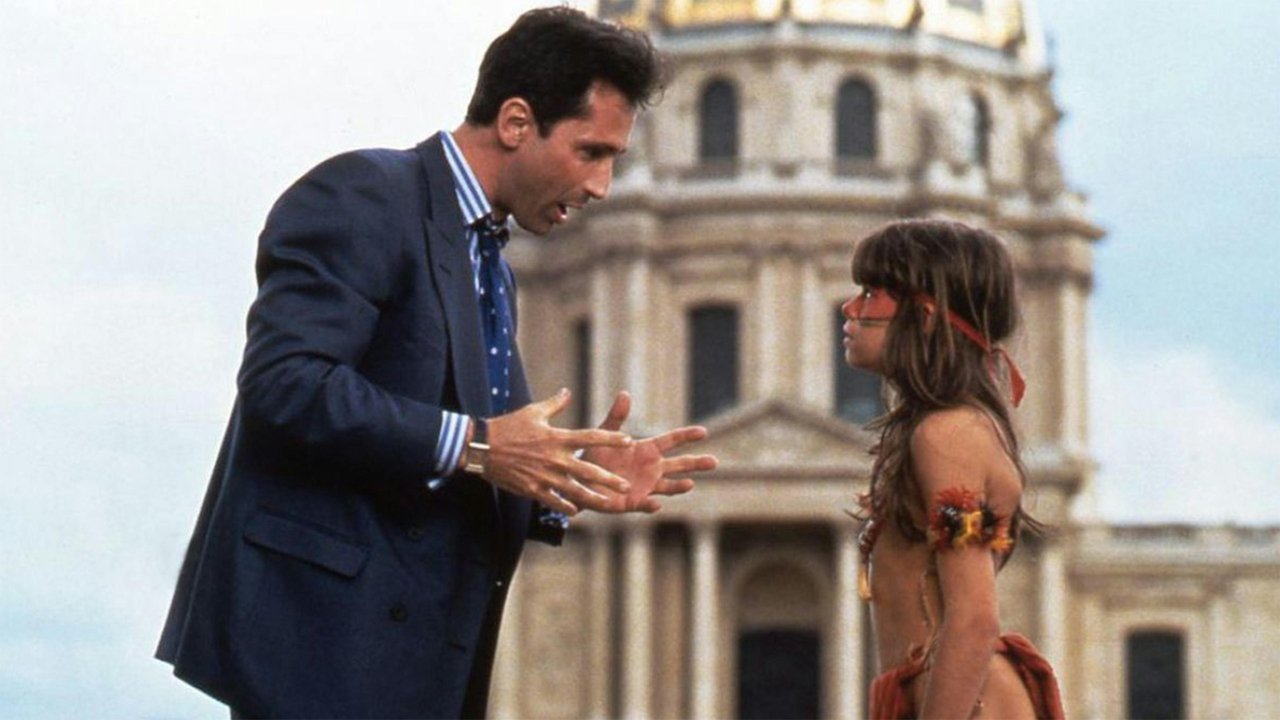
What follows is a relentless barrage of culture-clash gags, some landing better than others, but all delivered with a certain Gallic shrug and commitment to the bit. Thierry Lhermitte, already a huge comedy star in France thanks to his work with the Le Splendid troupe (think Les Bronzés or Santa Claus is a Stinker), is perfectly cast as the increasingly frazzled yuppie dad. He’s got that exasperated charm down pat, trying to juggle his demanding fiancée Charlotte (Arielle Dombasle) and his high-pressure job with a kid who thinks climbing the Eiffel Tower is just another Tuesday and casually hunts pigeons in the city with a blowpipe.
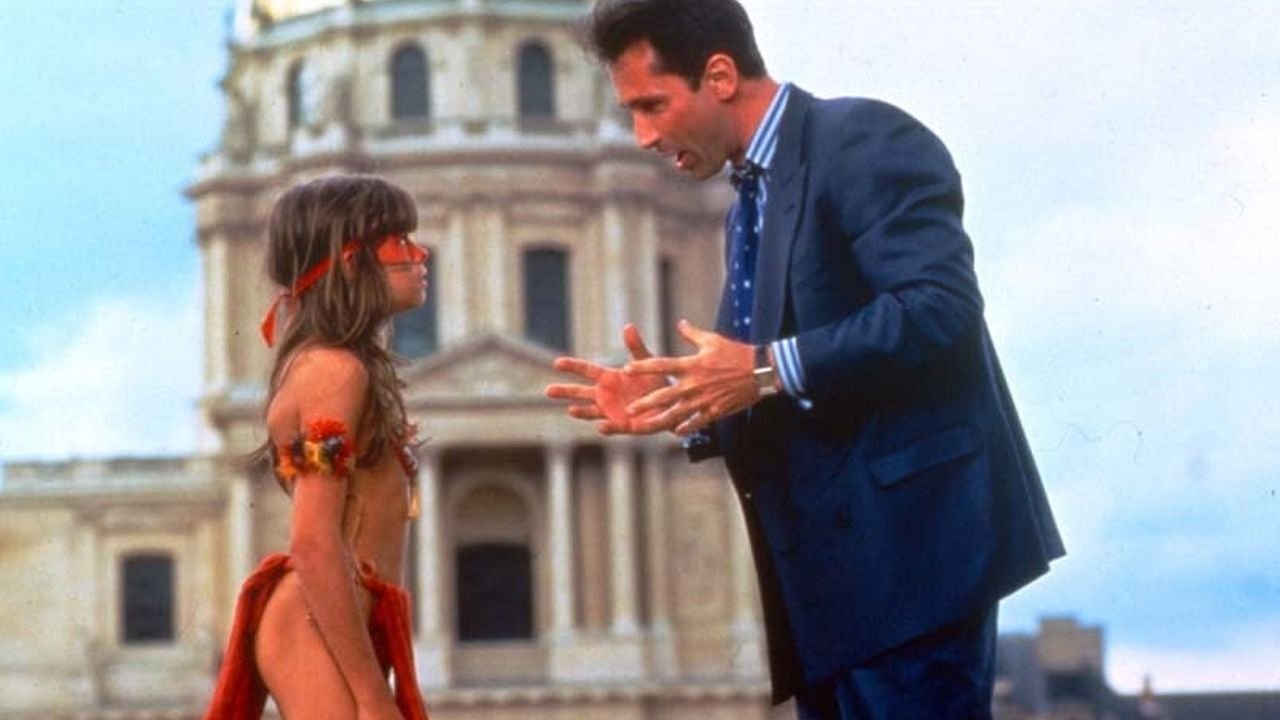
Let's talk about those "action" scenes, 90s comedy style. Forget CGI – this was the era of committed physical comedy. Remember Mimi-Siku scaling Stéphane’s apartment building with the agility of a jungle cat? That felt genuinely impressive, relying on stunt work and clever framing rather than digital trickery. It possessed a tangible quality, a sense of real effort that modern, smoother effects often lack. It wasn't about explosive spectacle, but the sheer absurdity of seeing these jungle skills applied to the urban landscape. A retro fun fact here: Lhermitte himself actually co-wrote the screenplay with director Hervé Palud and others, clearly tailoring the central role to his specific comedic strengths.
### Tarantulas and Translation Troubles
The supporting cast adds layers to the mayhem. Patrick Timsit as Stéphane’s colleague Richard Montignac gets drawn into the chaos, enduring Mimi-Siku’s well-intentioned but disastrous attempts at jungle living in a Parisian apartment. His reactions are priceless. And who could forget Maïtika, Mimi-Siku’s enormous pet tarantula, causing predictable panic wherever it scuttles? It’s broad stuff, sure, but undeniably memorable. Another retro fun fact: The film was a massive hit in France, selling nearly 8 million tickets and becoming the highest-grossing film of the year there. Its success was so significant that Disney quickly snapped up the rights for an American remake, which became 1997's Jungle 2 Jungle starring Tim Allen, a version many in North America might know better, though arguably lacking some of the original's specific French flavour (and box office magic).
Watching it now, some elements feel distinctly of their time. The portrayal of the indigenous tribe leans heavily on familiar tropes, and the pacing can sometimes feel a bit scattershot, bouncing between slapstick set pieces and slightly underdeveloped emotional beats about father-son bonding. But there’s an earnestness to it, a commitment to its goofy premise that’s hard to truly dislike. The dubbed versions often found on VHS added another layer of charming awkwardness, the voices never quite syncing, which somehow felt fitting for the film's slightly off-kilter vibe. I distinctly remember renting the English-dubbed VHS and being bewildered but strangely entertained by the whole affair.
### Finding the Charm in the Chaos
Director Hervé Palud keeps things moving at a brisk pace, focusing on visual comedy and the clash of worlds. The score is typically bouncy and light, underscoring the comedic moments without becoming overly intrusive. It’s not a film aiming for deep thematic resonance; it’s aiming for laughs derived from putting a character completely out of his element into the heart of sophisticated, cynical Paris, and for the most part, it succeeds on those terms. It’s a reminder of a time when international comedies, even broad ones like this, could find space on video store shelves and offer a different comedic sensibility.
Little Indian, Big City wasn't high art, and critical reception outside of France was decidedly mixed, often pointing out the simplistic plot and cultural caricatures. Yet, for many who caught it on tape back in the day, it remains a fondly remembered oddity. It represents that specific strand of 90s comedy – unpolished, sometimes problematic by today's standards, but possessing a certain energetic charm and reliance on practical gags that felt grounded, even when depicting something as absurd as a kid trying to spear fish in the Seine.
Rating: 6/10
Justification: The film scores points for its genuinely funny lead performances (Lhermitte and Timsit are great), memorable fish-out-of-water scenarios, and its status as a massive cultural phenomenon in its home country. It delivers on its high-concept premise with some laugh-out-loud moments rooted in practical comedy. However, it loses points for its dated cultural depictions, uneven pacing, and a script that sometimes feels more like a series of sketches than a fully cohesive narrative. The charm is undeniable, but so are the rough edges.
Final Thought: A wonderfully weird slice of 90s French blockbuster comedy that feels like finding a slightly battered but intriguing import curio at the back of the video store – maybe not perfect, but guaranteed to raise a nostalgic smile (and maybe an eyebrow).