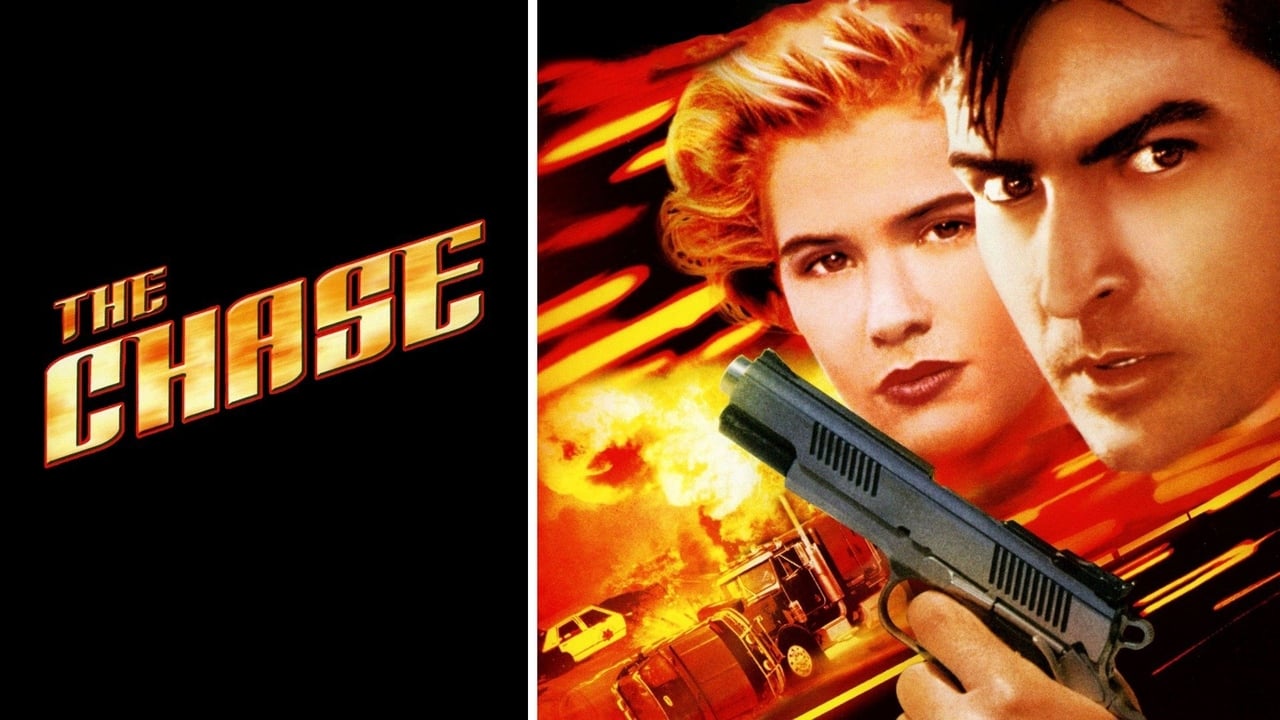
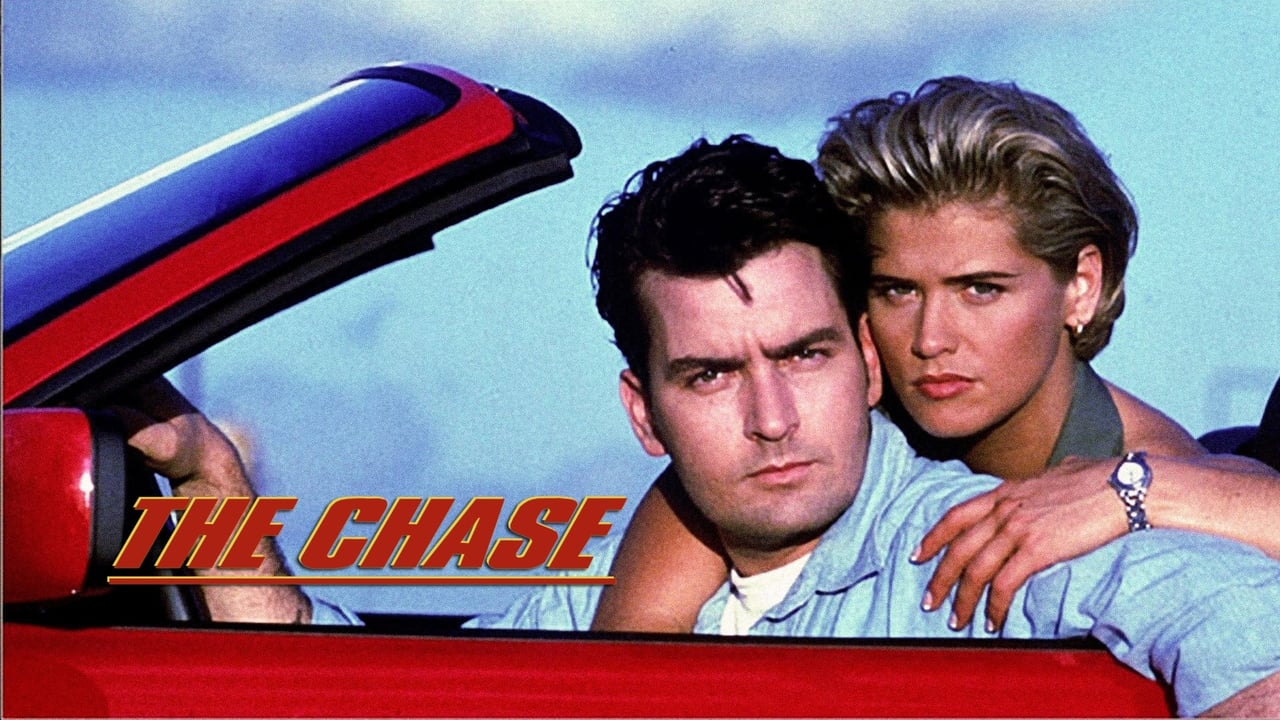
Okay, buckle up, fellow travelers on the magnetic tape highway! Remember that feeling? Scanning the action shelf at Blockbuster, maybe late on a Friday night, and your eyes land on something that just screams weird energy? That was The Chase (1994) for me. The cover promised Charlie Sheen, a fast car, a damsel maybe not-so-in-distress, and pure, unadulterated velocity. It wasn't promising Citizen Kane, it was promising 90 minutes of pedal-to-the-metal distraction, and boy, did it deliver on that specific, frantic promise.
Highway to Heck
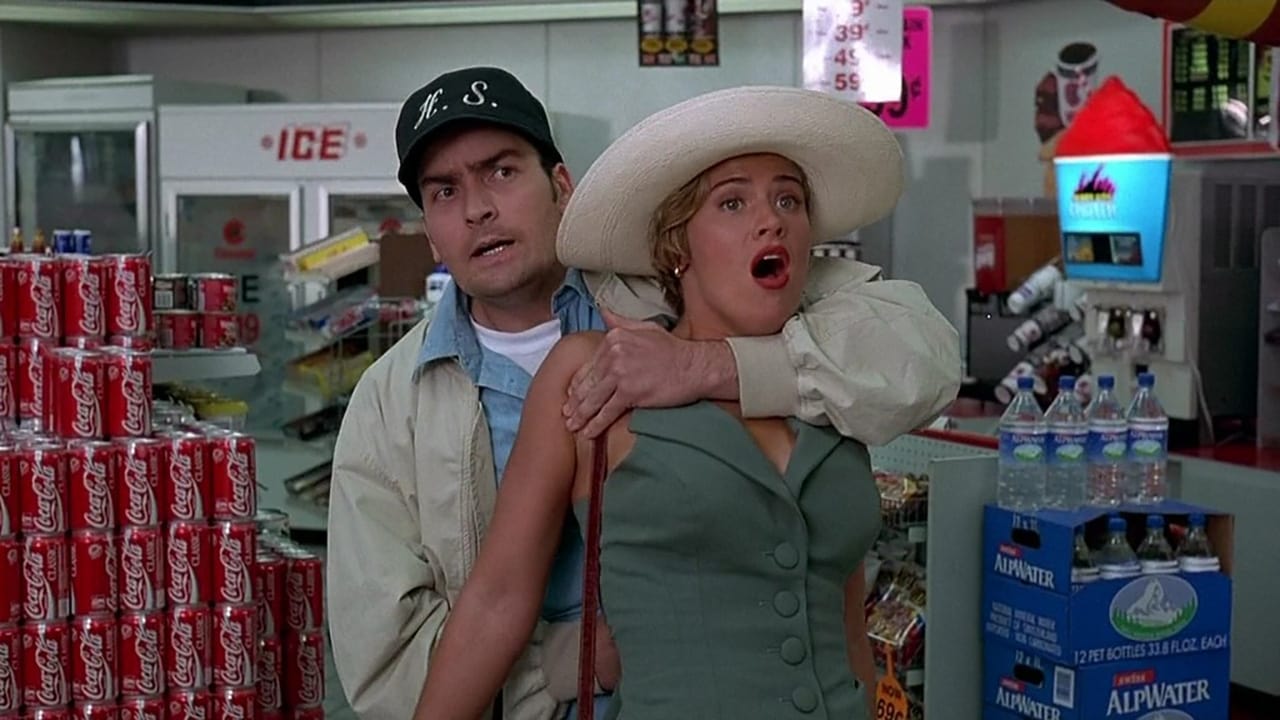
The premise is beautifully, almost absurdly simple: Jack Hammond (Charlie Sheen, deep in his Hot Shots! era but playing it mostly straight here) is wrongly convicted. During a prisoner transfer, he makes a break for it, impulsively grabs the nearest person – who happens to be Natalie Voss (Kristy Swanson, fresh off staking vampires), daughter of a mogul – shoves her into her own cherry-red BMW, and hits the freeway. The rest of the movie? Literally the chase. Cops, news helicopters, rubberneckers, the whole nine yards, all playing out largely in real-time across the sun-baked concrete arteries of Southern California (though actually filmed on location, tying up miles of Houston freeways – a logistical nightmare!).
Writer-director Adam Rifkin, a fascinating voice responsible for cult oddities like Detroit Rock City and the truly bizarre The Dark Backward, commits hard to this high-concept pitch. Retro Fun Fact: Rifkin reportedly banged out the script in a caffeine-fueled ten days, inspired by the soul-crushing reality of Los Angeles traffic and a desire to craft a contained thriller. That raw, almost impatient energy bleeds through every frame. It’s less a story unfolding and more a situation escalating, captured with a restless camera that rarely leaves the immediate vicinity of that fleeing BMW.
Trapped in a Luxury Box
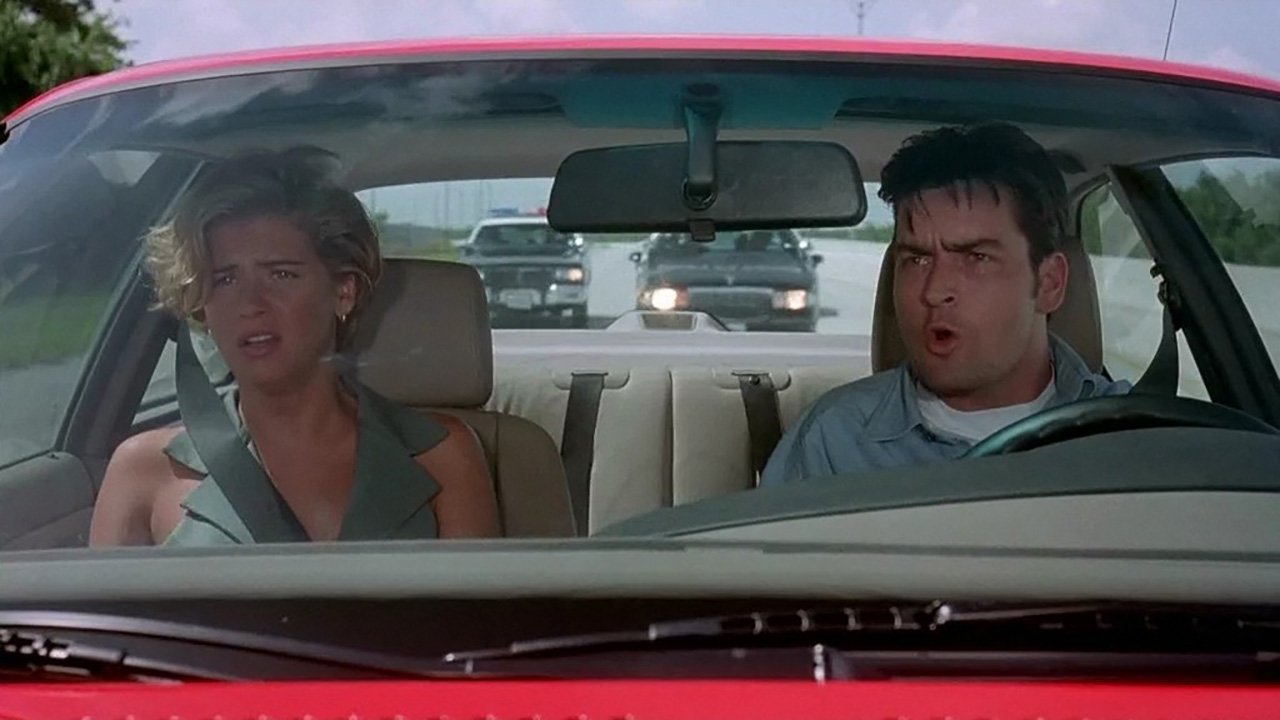
Inside the car, it's a pressure cooker. Sheen, playing Jack less as a desperate fugitive and more as a slightly bewildered guy reacting to chaos, has a strange, evolving dynamic with Swanson's Natalie. She goes from terrified hostage to intrigued participant surprisingly fast, maybe too fast for credibility, but hey, this isn't exactly Pinter. Their dialogue snaps and crackles with a certain 90s rom-com energy awkwardly bolted onto a life-or-death pursuit. Does it always work? Nah. But does it keep things moving between crashes? Absolutely. It’s the kind of character work sketched quickly, relying heavily on the actors' established personas – Sheen the misunderstood rogue, Swanson the capable woman finding unexpected adventure.
Outside the car is where the film finds its satirical teeth, sinking them into the burgeoning 24/7 news cycle and reality TV culture. We see the chase unfold through the eyes of salivating news anchors, moronic TV cops doing ride-alongs, and the increasingly bizarre public reacting to the spectacle. Leading the police pursuit are Officers Dobbs and Figus, played with delightful odd-couple energy by Henry Rollins and Josh Mostel. Mostel is pure exasperated comedy, but Rollins... man, Rollins is a revelation. Retro Fun Fact: To capture that wired, almost unhinged intensity, Rollins actually did ride-alongs with LAPD officers before filming, and you can feel that borrowed tension buzzing off him. He’s not just playing a cop; he’s channeling pure, high-strung authority on the edge.
Real Cars, Real Stakes
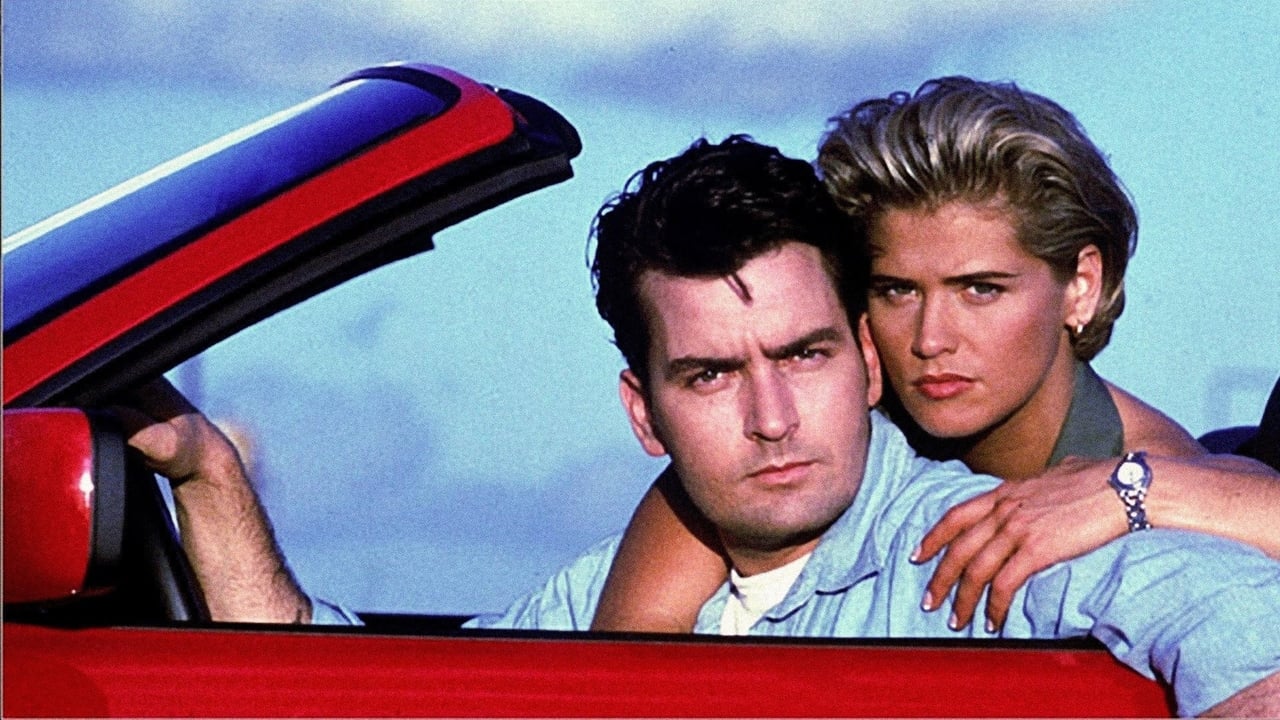
Let's talk about what makes The Chase a true VHS Heaven artifact: the action. This film lives and breathes practical stunts. Remember when car crashes felt heavy? When you saw actual metal twisting and shearing? That’s the currency The Chase deals in. Helicopters swoop low, police cruisers spin out in showers of sparks, and cars flip with a weight that CGI often smooths over. There's a tactile reality to the danger. You feel the G-force in the turns, the impact of the collisions. Was that multi-car pile-up perfectly choreographed? Maybe not by today's pixel-perfect standards, but it felt chaotic and genuinely dangerous in a way that grips you. Retro Fun Fact: Keep your eyes peeled during the freeway madness for some truly inspired cameos, including Flea and Anthony Kiedis of the Red Hot Chili Peppers piloting a ridiculously oversized monster truck – a perfect slice of 90s alternative culture injecting itself into the mayhem.
The film's relatively modest budget (around $15 million, which sadly didn't translate to box office gold, grossing only about $7.9 million domestically) likely necessitated this practical approach, forcing Rifkin and his stunt team to get creative with real vehicles and real risks. It gives the film a gritty, grounded texture, even amidst the absurdity. The driving rock/alternative soundtrack, a staple of 90s action flicks, further fuels the relentless momentum.
Does it Hold Up, or Just Coast on Fumes?
Look, The Chase isn't high art. Some of the dialogue feels clunky, the romance angle strains credulity, and the satire, while pointed, isn't exactly subtle. It's very much a product of its time – fast, loud, a little shallow, but undeniably entertaining. It captures that specific MTV-fueled aesthetic of the mid-90s, blending action, comedy, romance, and social commentary into a kinetic, if sometimes uneven, package. It feels like a movie made with passion and a singular, slightly crazy vision, even if the execution sometimes wobbles.
VHS Heaven Rating: 7/10
Justification: The Chase earns a solid 7 for its sheer commitment to its high-concept premise and its impressive display of old-school practical stunt work. It's relentlessly paced, features a standout intense performance from Henry Rollins, and offers a snapshot of 90s action filmmaking sensibilities – flaws and all. While the script and character development are often secondary to the spectacle, the sheer energy, satirical edge, and tactile nature of the chase itself make it a genuinely fun and nostalgic ride. It loses points for some dated elements and uneven tone, but its core engine still runs surprisingly strong.
Final Thought: In an era before CGI rendered physics optional, The Chase was a testament to the visceral thrill of real metal, real speed, and real stakes barreling down a real highway – a gloriously excessive, feature-length stunt sequence wrapped in a time capsule.