How far would you go? It's a question that lurks beneath the surface of suburban comfort, a hypothetical nightmare most of us push away. But Eye for an Eye, the 1996 thriller directed by the esteemed John Schlesinger, drags that question kicking and screaming into the light. Watching it again after all these years, the familiar white clamshell case almost a memory itself, I was struck by how potently it still taps into that primal fear – the fear of the system failing, and the terrifying allure of taking justice into your own hands.
A Mother's Fury, A System's Failure
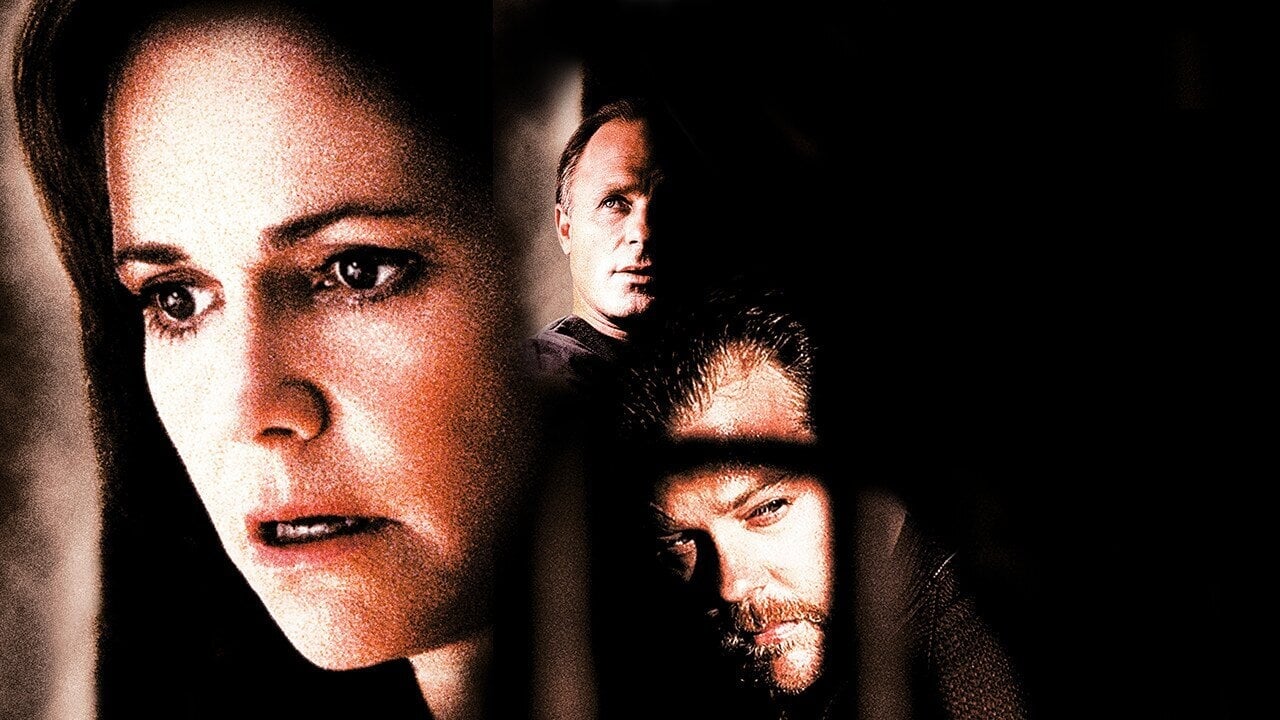
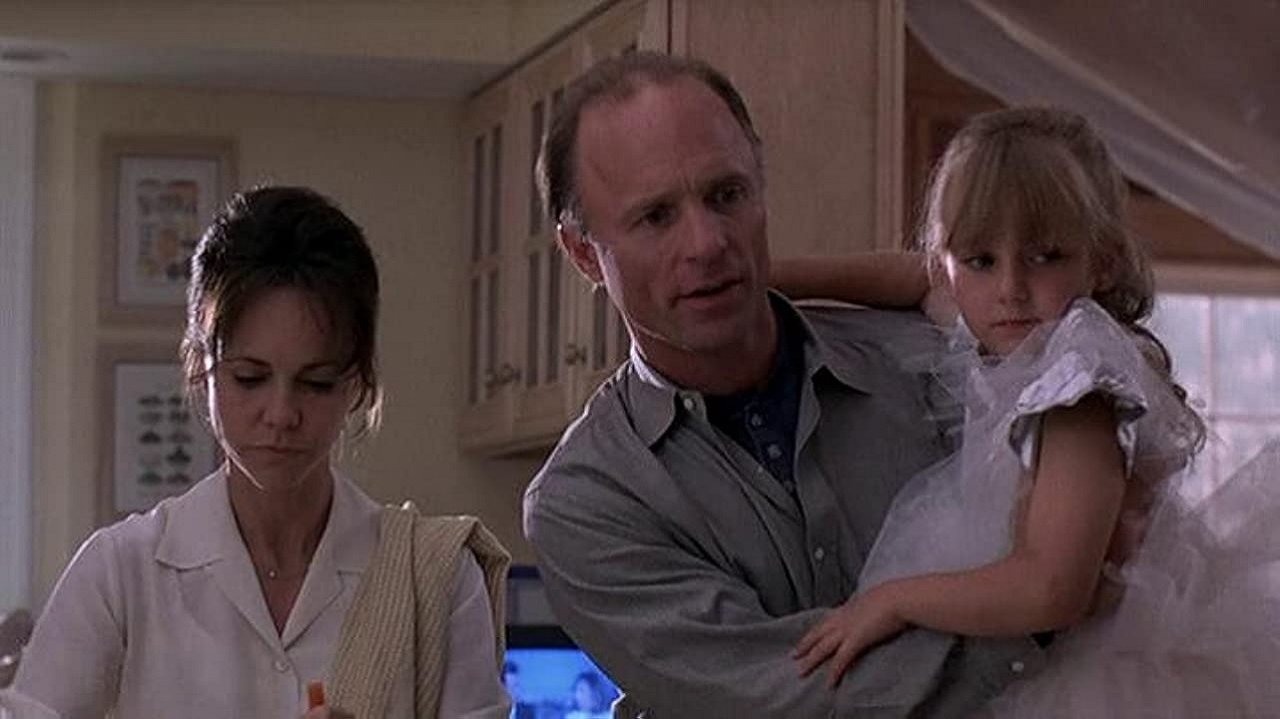
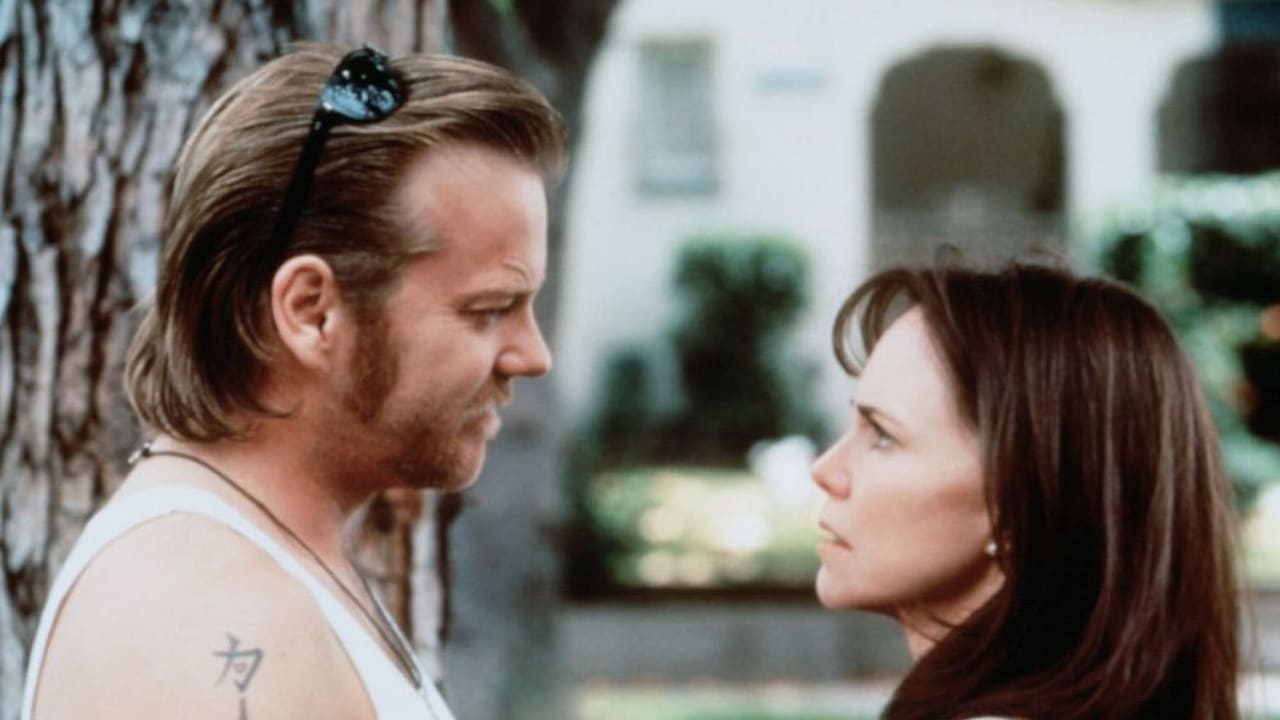
At its core, Eye for an Eye is the story of Karen McCann (Sally Field), a successful working mother whose idyllic family life is shattered when her teenage daughter is brutally murdered during a home invasion. The initial shock gives way to a chilling determination when the killer, Robert Doob (Kiefer Sutherland), is apprehended, only to be released on a legal technicality – a DNA sample mishandled, a procedural error setting a monster free. This is where the film truly ignites. The procedural aspects, the courtroom disappointments, they feel frustratingly real, tapping into a vein of societal anxiety about justice denied that was palpable in the mid-90s and, frankly, hasn't gone away.
What elevates this above standard revenge fare is Sally Field's raw, visceral performance. We know her from so many roles, often embodying resilience and warmth, but here she channels something far darker. It’s not just grief; it’s a corrosive rage that hollows her out and reshapes her. Her transformation from devastated mother to methodical vigilante is gripping, less about empowerment and more about the soul-crushing cost of vengeance. Field makes Karen’s descent utterly believable, her eyes reflecting a terrifying emptiness even as her resolve hardens. You feel the weight of every sleepless night, every researched detail, every step closer to an irrevocable act.
The Banality of Evil and a Touch of Class
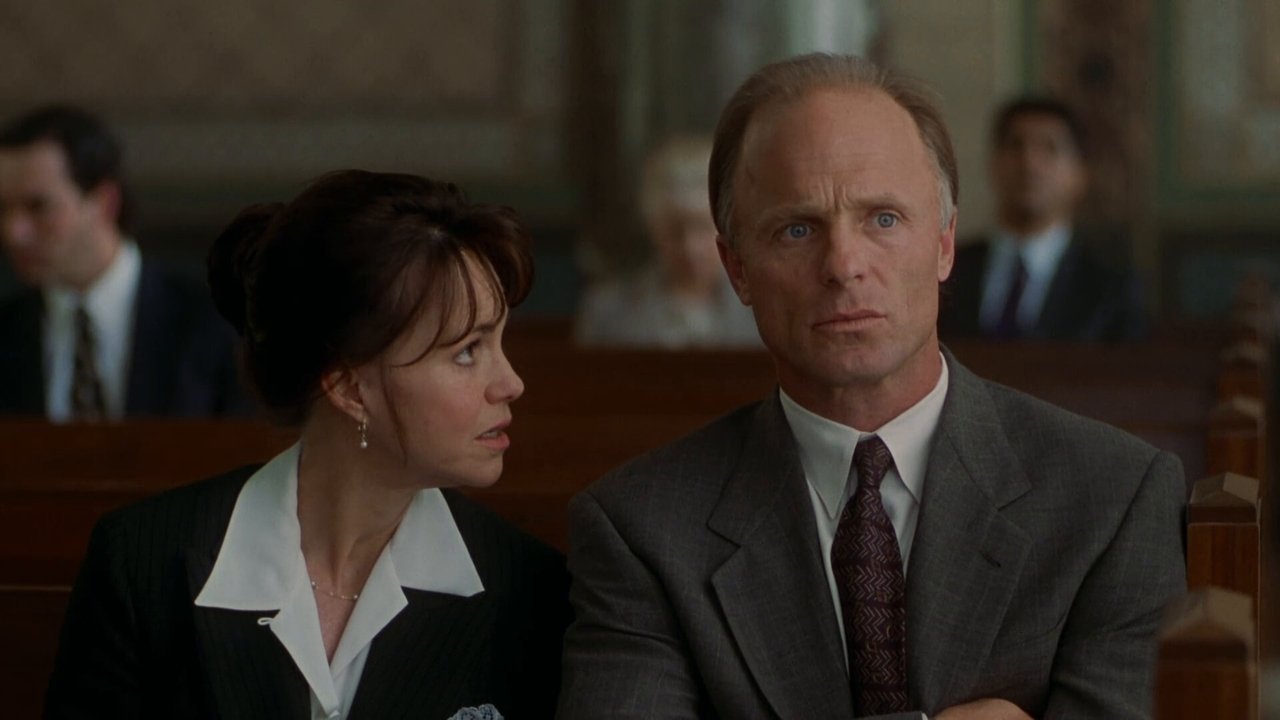
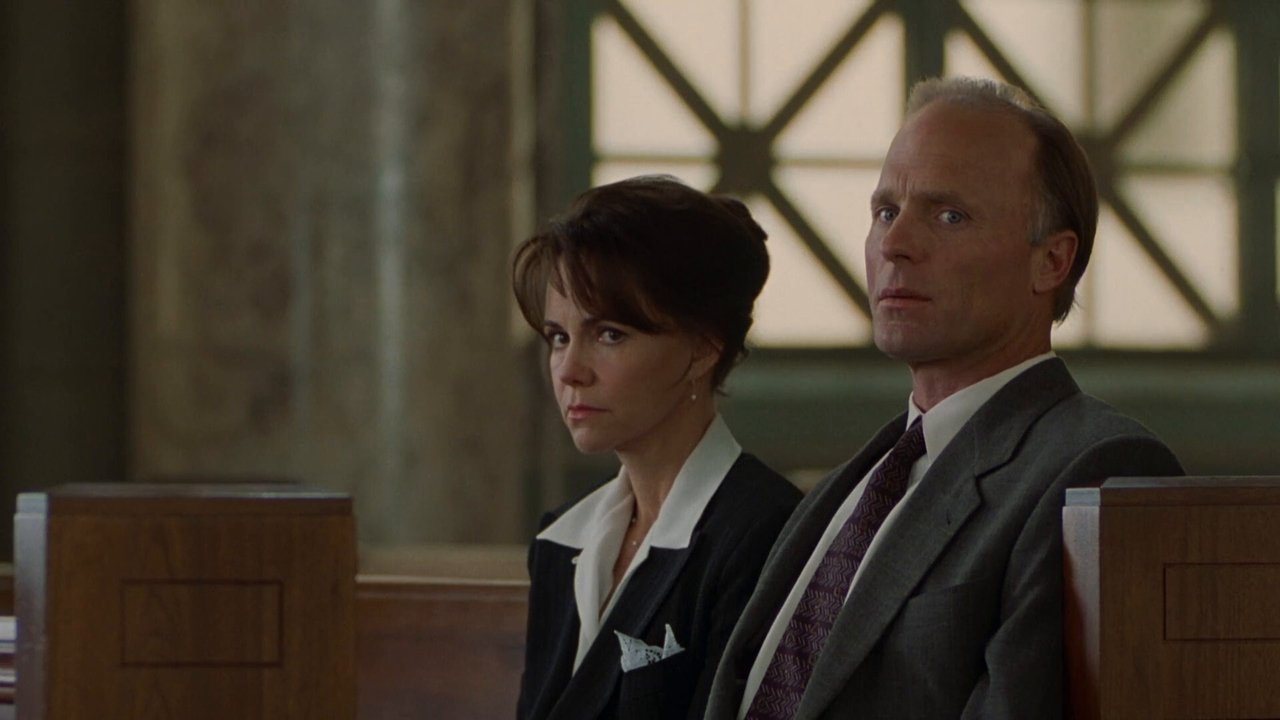
Opposite Field, Kiefer Sutherland delivers a truly unsettling performance as Robert Doob. This isn't a cackling movie maniac; Doob is chillingly mundane, almost pathetic in his lack of remorse, delivering groceries with the same vacant expression he likely wore during the murder. Sutherland plays him with a slimy, unrepentant normalcy that makes him all the more terrifying. There’s no grand motive, just predatory impulse and a smirking awareness of his own untouchability. It’s a performance that burrows under your skin. Ed Harris adds necessary ballast as Karen’s husband, Mack, representing the struggle between supporting his grieving wife and recoiling from the path she's choosing. His quiet desperation provides a crucial counterpoint to Karen's burning intensity.
It's fascinating to consider this film came from John Schlesinger, the director behind character-driven masterpieces like Midnight Cowboy (1969) and the paranoid classic Marathon Man (1976). While Eye for an Eye operates in a more conventional thriller space, Schlesinger's touch is evident in the focus on Karen's internal struggle and the gritty depiction of Los Angeles, contrasting affluent neighbourhoods with the city's neglected corners. Reportedly, the final script, adapted by Rick Jaffa and Amanda Silver from Erika Holzer's novel, was streamlined by the studio into a more straightforward revenge plot than Schlesinger initially envisioned. You can sometimes feel that tension – moments of deeper character insight bumping against the demands of the thriller formula. Yet, even within those constraints, Schlesinger crafts sequences of palpable suspense, particularly the nerve-wracking climax.
Reliving the Rental Era
Remember seeing this on the shelf at Blockbuster? It was a solid rental hit back in '96, pulling in nearly $60 million worldwide on a $20 million budget – decent numbers for a mid-budget adult thriller at the time. Critically, it was met with a more mixed reception, often labelled as manipulative or predictable. And yes, watching it now, some plot mechanics feel convenient, designed to push Karen inevitably towards her confrontation with Doob. The vigilante support group she encounters, for instance, feels a bit like a screenwriter's device.
But does predictability entirely negate its power? I’d argue not. The film taps directly into a raw nerve, forcing us to confront uncomfortable questions. What is justice when the legal system falters? Is personal retribution ever justifiable? Eye for an Eye doesn’t offer easy answers, depicting Karen’s actions not as heroic triumph but as a desperate, soul-altering last resort. The film's atmosphere, aided by Newton Howard's effectively sombre score, lingers long after the credits roll.
Final Judgment
Eye for an Eye might follow some familiar beats of the 90s revenge thriller, and its exploration of vigilantism certainly invites debate. However, it transcends mere exploitation thanks to Sally Field's ferociously committed lead performance, Kiefer Sutherland's genuinely creepy antagonist, and the steady, character-focused hand of director John Schlesinger, even working within genre confines. It captures a specific kind of parental terror and systemic frustration with unnerving clarity.
Rating: 7/10
While not flawless, the sheer intensity of Field's portrayal and the uncomfortable questions it forces us to ask make this a memorable and potent entry from the mid-90s thriller boom. It’s a film that stays with you, less for its plot twists and more for the chilling conviction in Karen McCann’s eyes. What would you have done?