Okay, pull up a comfy chair, maybe grab something that isn't grey and flavourless, because we're diving into a short film that packs more emotional weight and visual invention into six minutes than many features manage in two hours. I'm talking about Mark Osborne's stunning 1998 stop-motion short, More. This wasn't something you'd typically find nestled between the action flicks and comedies at Blockbuster, but if you were lucky enough to catch it – perhaps at a festival, on a curated animation showcase tape, or even later online – its bleak beauty likely etched itself into your memory. It arrived near the end of the millennium, a poignant, almost silent scream against the very consumerism and conformity that felt increasingly overwhelming as the digital age dawned.
### A World Drained of Colour
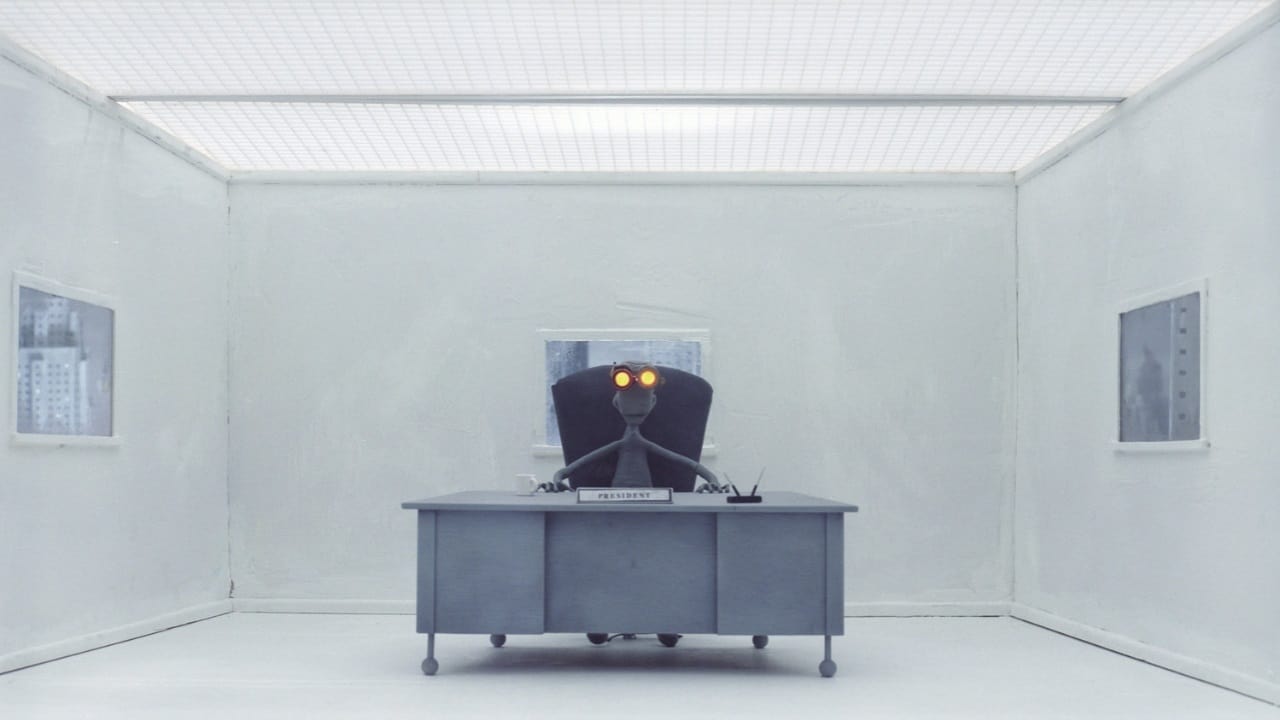
More plunges us into a meticulously crafted, yet oppressively grey, cityscape. Our protagonist, an unnamed inventor, toils away on an assembly line in a soul-crushing factory. His world is literally monochrome, reflecting the drudgery and lack of passion in his life and the lives of those around him. He dreams of colour, of joy, recalling vibrant childhood memories – a stark contrast to his present reality. This visual metaphor isn't subtle, but it's incredibly effective, rendered with painstaking stop-motion detail that makes the oppressive atmosphere tangible. You can almost feel the dust and despair settling on everything. The character design itself, with those large, expressive eyes set in a weary, almost alien face (Elijah Shepard provided the character 'voice' effects), conveys volumes without dialogue.
### The Pursuit of Happiness... in a Box?

Driven by nostalgia and a desperate yearning for something, well, more, our inventor pours his energy into creating a device: the "Happy Helmet" (though never explicitly named, its function is clear). These goggles promise to bring colour, excitement, and sensation back into the user's life. When he finally perfects and shares his invention, it becomes an instant sensation. Suddenly, the grey world is flooded with artificial colour and forced smiles. The irony, of course, is brutal. This manufactured happiness requires constant use of the device, leading to addiction and further disconnection from genuine experience. The film masterfully depicts this slide, turning a symbol of hope into one of dependency and illusion. It’s a powerful critique of chasing external validation and quick fixes, a theme that feels perhaps even more relevant today than it did in 1998.
### Stop-Motion Marvel, IMAX Innovation
Let's talk craft, because More is a technical marvel. Animated by Mark Osborne himself (who would later co-direct Kung Fu Panda), the stop-motion is fluid and expressive, giving the melancholic figures a surprising amount of life. The sets are incredibly detailed, creating a believable, albeit stylized, industrial dystopia.
Retro Fun Fact: Here's something truly remarkable: More holds the distinction of being the first stop-motion animated film ever shot and released in the IMAX format. Imagine seeing those intricate details and the stark contrast between grey reality and manufactured colour on that massive screen! Osborne reportedly funded the short partly through personal savings and credit cards, pouring immense dedication into his vision. It paid off critically, earning him an Academy Award nomination for Best Animated Short Film in 1999. The haunting, atmospheric score, prominently featuring a looped segment from New Order's "Elegia" (initially uncleared, later licensed after the film gained acclaim!), perfectly complements the visuals, enhancing the sense of longing and unease. It's a masterclass in using music to amplify theme and mood.
### The Lingering Grey
(Minor Spoilers Ahead, though the impact is thematic)
The ending is where More truly lands its emotional punch. Our inventor achieves success, wealth, and recognition, yet finds himself isolated atop a towering structure, overlooking the very world he sought to escape. The vibrant colours of his childhood memories remain elusive, replaced by the artificial glow of his own invention. He has gained everything, yet lost the very essence of what he was searching for. It's a deeply affecting conclusion, leaving the viewer with a lingering sense of sadness and a profound question about the true cost of progress and the pursuit of happiness in a consumer-driven society.
Why It Still Resonates
Even removed from the specific anxieties of the late 90s, More speaks volumes. It's a timeless parable about authenticity, the dangers of escapism, and the importance of finding genuine connection and meaning. The craftsmanship is undeniable, a testament to the power of stop-motion animation to convey complex emotions and ideas. It’s a short film that demands attention, contemplation, and perhaps a little self-reflection. It might not have been the Saturday night rental staple, but its artistry and message secured its place as a significant piece of late-20th-century animation.
VHS Heaven Rating: 9/10
This score reflects the film's exceptional artistry, technical innovation (especially the IMAX achievement), powerful thematic depth, and lasting emotional impact, all achieved within a mere six minutes. It's a near-perfect execution of its concept, held back only fractionally by the inherent limitations of its runtime in exploring every nuance, though its conciseness is also a strength.
More is a potent shot of melancholic beauty, a reminder from the cusp of the new millennium that sometimes, the brightest colours come from within, not from a gadget promising instant joy. A true gem worth seeking out.