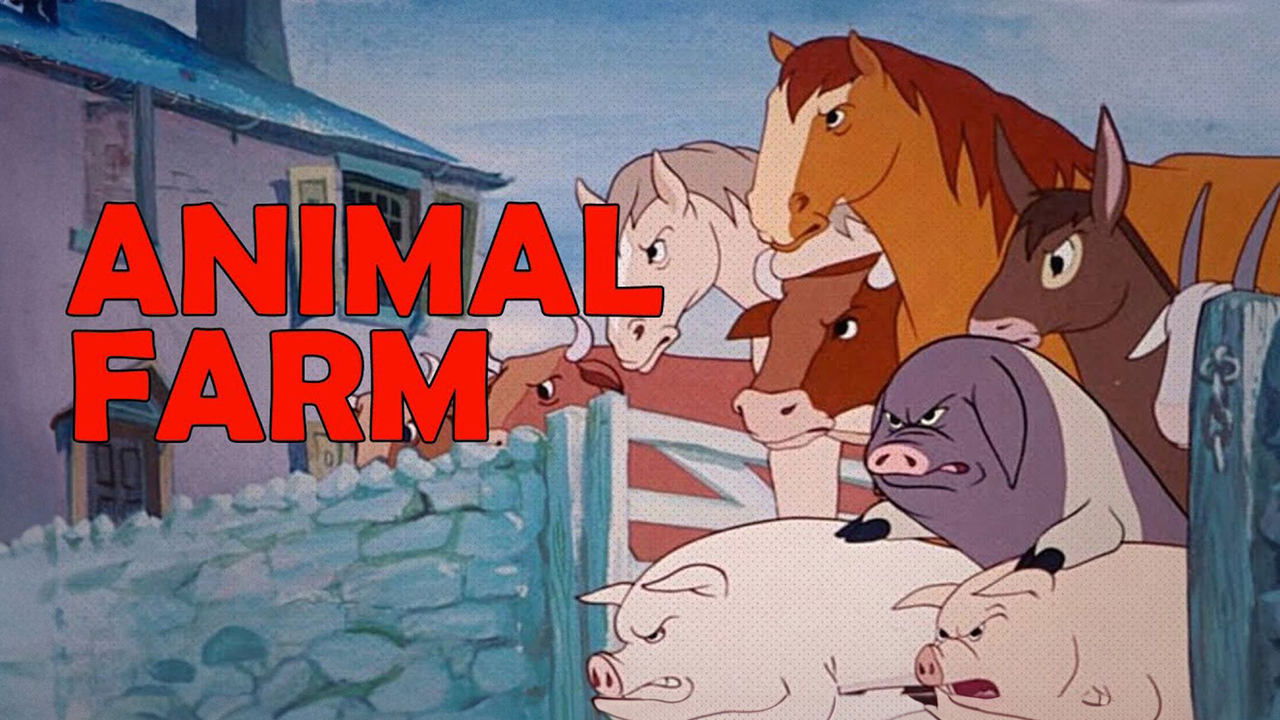
Adapting George Orwell is always a tightrope walk, perhaps never more so than when bringing his searing allegorical novella, Animal Farm, to the screen. The spectre of the stark, effective 1954 animated feature loomed large. So, when news arrived in the late 90s of a live-action version, utilizing real animals, cutting-edge animatronics, and nascent CGI, the reaction was likely a mix of intrigue and skepticism. Could such a feat even be pulled off, let alone capture the chilling essence of Orwell's warning? The result, the 1999 TNT television film directed by John Stephenson, is a fascinating artifact of its time – an ambitious, technically intriguing, yet ultimately complex and somewhat compromised retelling that landed on VHS shelves, inviting us to witness its unique experiment.

A Barnyard of Technological Ambition
The first thing that strikes you, revisiting Animal Farm (1999) today, is the sheer technical audacity. John Stephenson, making his directorial debut here, came from a background steeped in creature effects, having worked on projects like Babe (1995) and Teenage Mutant Ninja Turtles (1990). That experience is evident in the film's commitment to blending real, trained animals with the remarkable animatronics provided by Jim Henson's Creature Shop. This wasn't just slight mouth movements; these were expressive puppets integrated with living creatures, further augmented by digital effects that were pushing boundaries for television at the time. Reportedly budgeted around $23 million – a hefty sum for a TV movie then – the production, filmed on location in Ireland, clearly spared little expense in trying to make Orwell's talking beasts believable.
Does it entirely work? Viewed through modern eyes, the seams inevitably show. Some effects feel dated, and the moments where animatronics take over from real animals can occasionally dip into the uncanny valley. Yet, there’s an undeniable charm and weight to the practical effects work that CGI often struggles to replicate. The sheer effort involved commands respect. You can almost feel the immense challenge faced by the filmmakers in coordinating fur, feathers, puppetry, and pixels to bring this political fable to life. I remember seeing it on a CRT back in the day, likely via a fresh Blockbuster rental, and being genuinely impressed by the visual spectacle, even if something felt slightly... off.

Voices of the Revolution (and Tyranny)
Where the film unequivocally succeeds is in its voice cast. This is no B-list affair; it’s a veritable who's who of distinguished actors lending their pipes to the animal ensemble. Patrick Stewart is chillingly effective as the calculating and ruthless Napoleon, his measured tones dripping with menace as the pig consolidates power. Opposite him, Kelsey Grammer (then at the height of his Frasier fame) brings an idealistic fervor to Snowball, making his eventual downfall all the more poignant. Ian Holm absolutely nails the slippery, sycophantic nature of Squealer, the regime's propagandist.
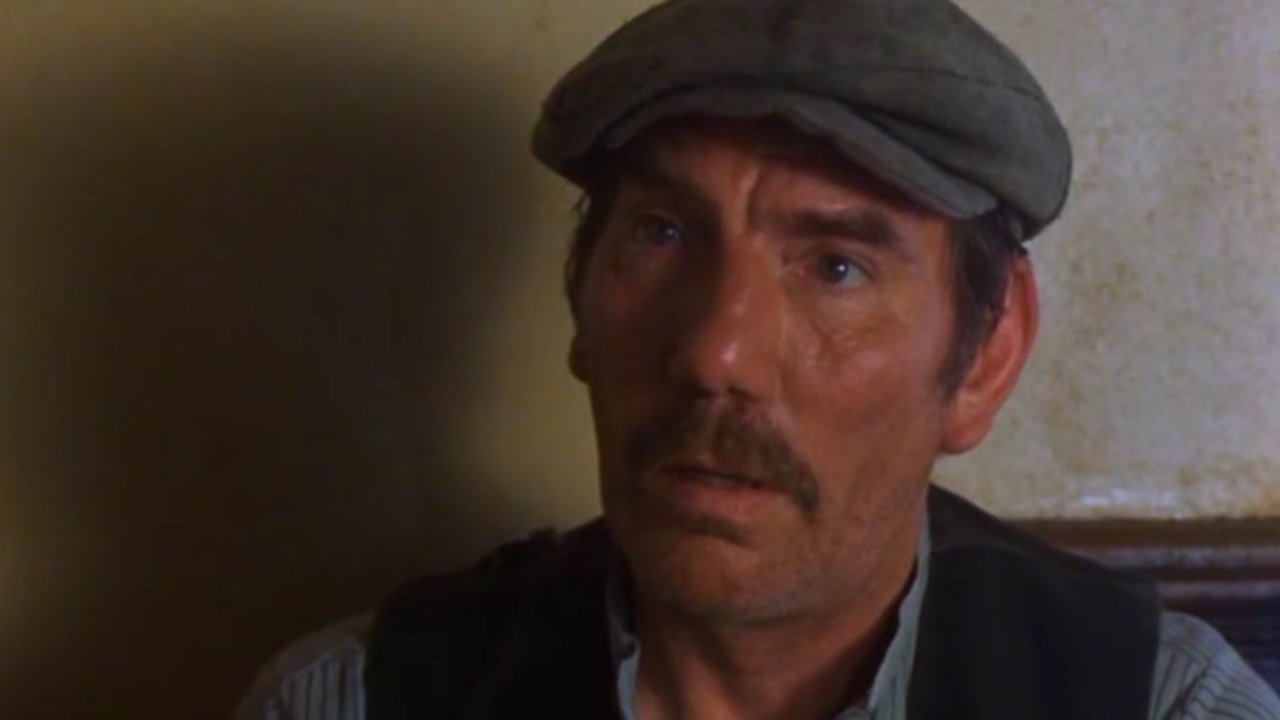
And the talent doesn't stop there. The late, great Paul Scofield imbues the tragic workhorse Boxer with heartbreaking dignity and loyalty, while Peter Ustinov lends gravitas to the revolutionary spark of Old Major. Julia Ormond provides the film’s conscience as the observant sheepdog Jessie, and even Julia Louis-Dreyfus has a turn as the vain, ribbon-loving horse Mollie. Anchoring the human element is the formidable Pete Postlethwaite as the dissolute Farmer Jones, a brief but impactful performance that sets the stage for the animals' uprising. These performances are crucial; they elevate the potentially awkward visuals and ensure the allegorical weight of the characters lands with force. They aren't just voicing animals; they are embodying the archetypes of revolution, corruption, and resilience.
Orwell Lite? The Question of Adaptation
Here lies the film's most debated aspect. While visually ambitious and vocally superb, the adaptation, penned by Martyn Burke and Alan Janes, makes significant alterations to Orwell's narrative, particularly the ending. Spoiler Alert! Instead of the novel's famously bleak conclusion – where the pigs become indistinguishable from the humans they overthrew, a perfect circle of tyranny – the film opts for a more hopeful resolution. Jessie and a group of other animals manage to escape the farm after witnessing Napoleon's ultimate betrayal, finding refuge in an idyllic, hidden spot. The final narration suggests the cycle might be broken, that a new, better life is possible away from the corruption of Manor Farm (now ironically returned to its original name).
Why the change? One can speculate it was deemed necessary for a prime-time television audience, perhaps softening the blow of Orwell’s brutal pessimism. But does this revised ending serve the story? For many, myself included, it feels like a dilution of Orwell's core message. The chilling power of the original text lies precisely in its despairing final image, the stark warning that power inevitably corrupts, and revolutions can devour their own ideals. Introducing an escape route, however well-intentioned, arguably lessens the impact and universality of the allegory. It shifts from a cautionary tale about systemic corruption to a more individualized story of survival.
Barnyard Trivia & The VHS Shelf
Despite its narrative tinkering, the production remains a fascinating piece of late-90s filmmaking. The sheer logistics of wrangling dozens of real animals alongside complex animatronics on Irish farm locations must have been monumental. It stands as one of the most ambitious projects undertaken by Jim Henson's Creature Shop after Henson's passing, showcasing their continued mastery of practical creature effects in a changing technological landscape. While critical reception at the time was mixed – praising the technical craft while often questioning the adaptation choices – its arrival on VHS made it accessible to a wide audience, offering a visually unique take on a literary staple. For many kids of the era, this might have been their first exposure to Animal Farm, the talking animals perhaps initially masking the dark political undercurrents.
Reflecting on the Farm
Watching Animal Farm (1999) today is a curious experience. It's a film caught between loyalty to a classic text and the perceived demands of a mainstream audience, between the tangible craft of animatronics and the burgeoning possibilities of CGI. The ambition is palpable, the voice acting is superb, and the practical effects work retains a certain tactile power. Yet, the altered ending undeniably softens the blow of Orwell's chilling message. Is it a definitive adaptation? Perhaps not. Is it a failure? Absolutely not. It remains a compelling, if flawed, attempt to visualize a difficult story, and a significant example of high-concept television production from the cusp of the millennium. It makes you ponder – how do you translate such potent allegory without compromise? What is gained, and what is lost, in the transition from page to screen, especially when dealing with such iconic material?
Rating: 6/10
The score reflects the film's undeniable technical ambition, the outstanding voice cast, and the inherent power of the source material it mostly conveys. However, it's held back by the dated look of some effects and, more significantly, the compromised ending that dilutes Orwell's devastating conclusion. It earns points for the sheer audacity of the attempt and the Henson Creature Shop's impressive work, making it a worthwhile curiosity from the VHS era.
Final Thought: A fascinating, perhaps ultimately frustrating, experiment in adaptation that showcases both the potential and the pitfalls of bringing complex literary allegories to life with the tools (and perceived audience limitations) of its time. It remains memorable, perhaps more for what it tried to be than for what it fully achieved.