The projected image flickers, distorted faces twisting across the screen even before the first proper scene unfolds. It’s the unsettling title sequence of 1999's House on Haunted Hill, a blast of industrial noise and fragmented asylum imagery courtesy of Marilyn Manson, immediately signaling that this isn't your parents' haunted house party. This remake wasn't content with the charming gothic chills of the 1959 William Castle original; it aimed for something slicker, meaner, and altogether more aggressive for the turn-of-the-millennium audience. And watched late at night, maybe on a slightly worn tape rented from Blockbuster, it certainly delivered a jolt.
Invitation to Terror
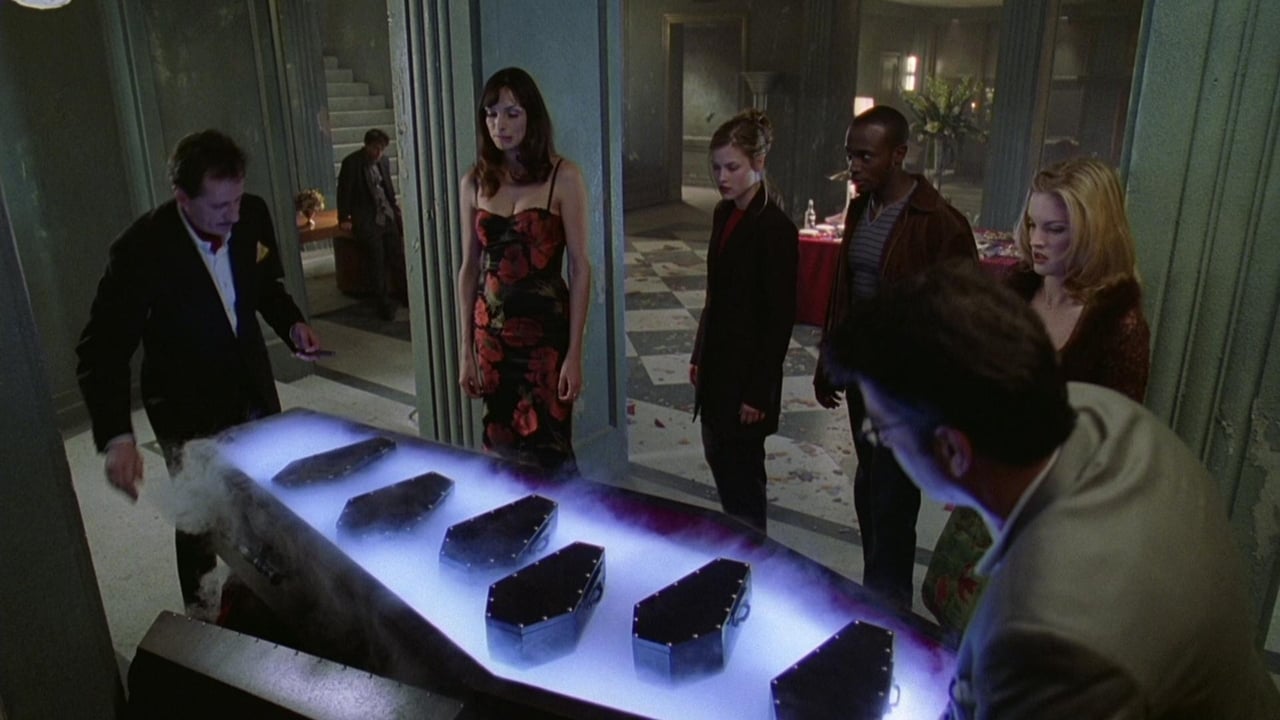
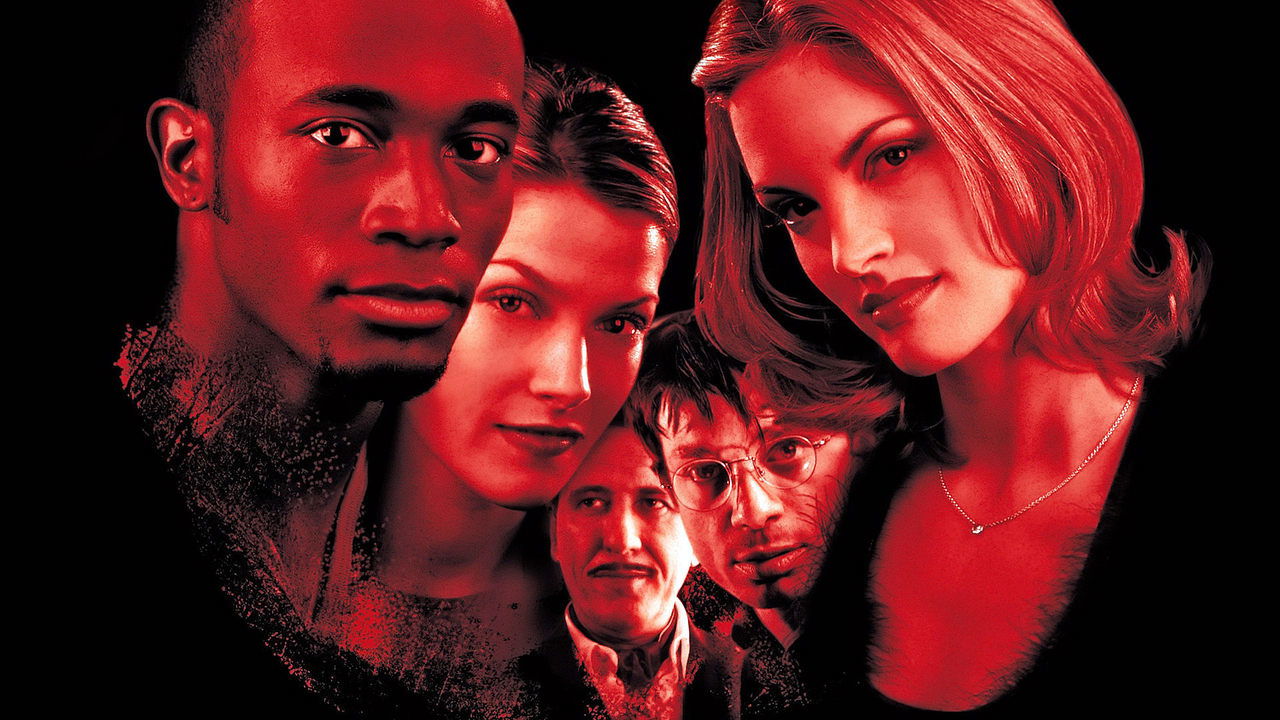
The premise echoes the original, but amps up the cynicism. Eccentric millionaire Stephen Price – played with scenery-chewing, delightful menace by the great Geoffrey Rush – designs a twisted birthday "experience" for his estranged wife, Evelyn (Famke Janssen). He invites a group of strangers (Taye Diggs, Ali Larter, Bridgette Wilson, Peter Gallagher, and a surprisingly dialed-down Chris Kattan) to spend the night in a long-abandoned asylum for the criminally insane. Survive until morning, endure Price's orchestrated scares, and walk away with a million dollars each. Of course, the house has other plans. The Vannacutt Institute for the Criminally Insane isn't just hosting a party; it is the party, and the spirits of its tortured past are the uninvited guests eager to crash.
A Symphony of Rust and Rot
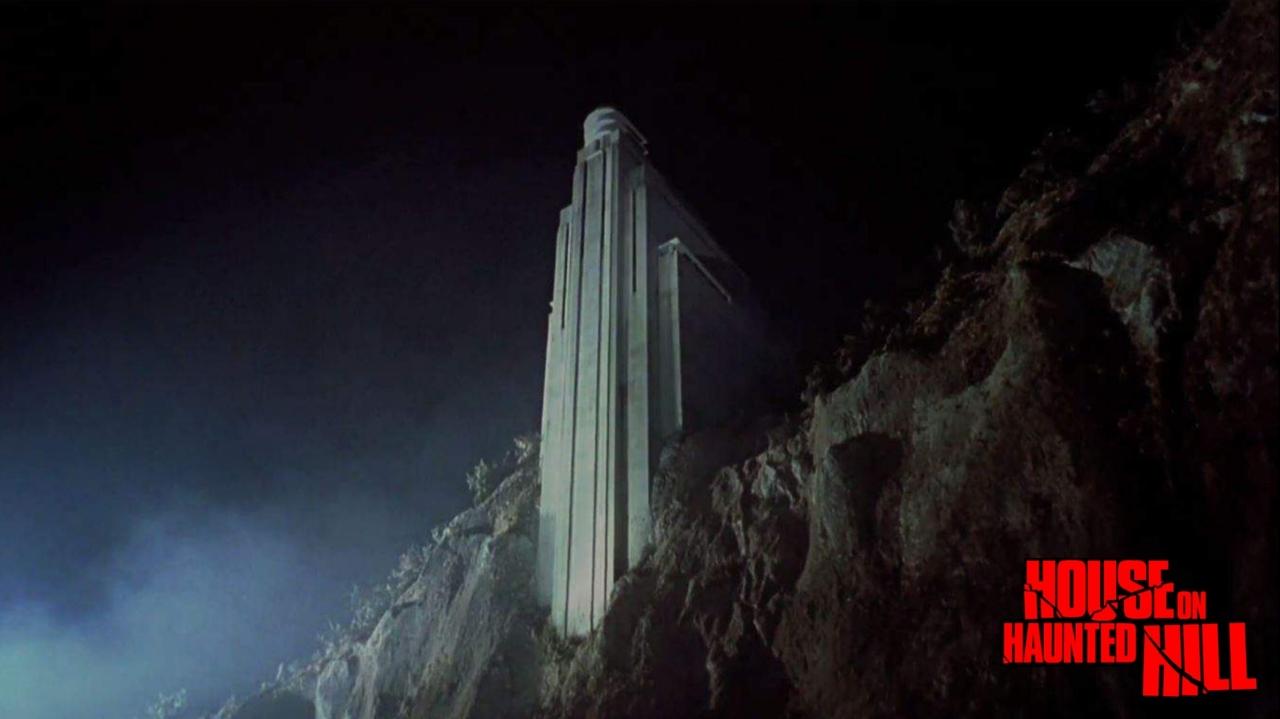
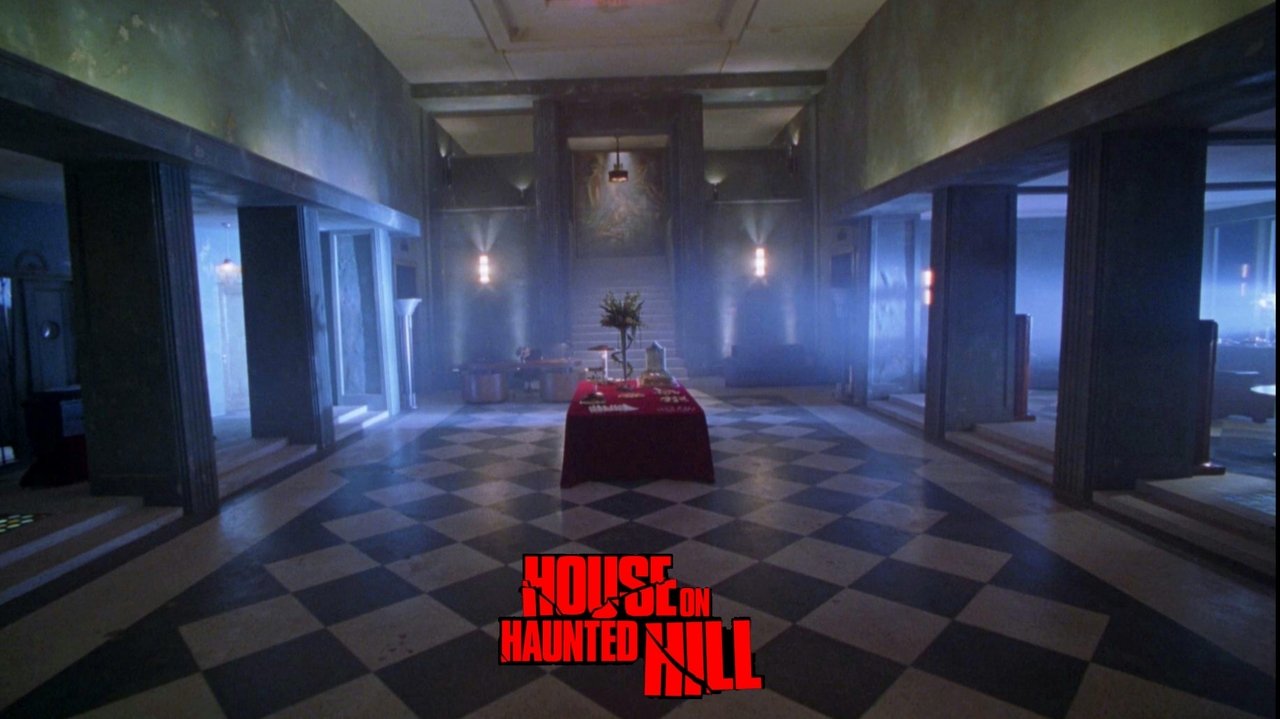
What this House on Haunted Hill remake, directed by horror enthusiast William Malone (Creature, FeardotCom), truly nails is its oppressive atmosphere. Forget quaint cobwebs; this asylum is a character in itself – a sprawling nightmare of peeling paint, rusted medical equipment, and shadows that seem to coalesce in the corners of your vision. The production design is genuinely striking, particularly the infamous "Saturation Chamber," a spinning zoetrope of psychological torture that feels ripped from a Clive Barker fever dream. It's a visual feast of decay, enhanced by a pounding industrial score that keeps the nerves perpetually frayed. This film was one of the early efforts from Dark Castle Entertainment, the production company founded by Joel Silver, Robert Zemeckis, and Gilbert Adler with the explicit goal of remaking classic horror films with modern budgets and style. They poured a reported $37 million into this gothic playground, aiming for spectacle, and visually, they largely succeeded. Its box office haul of over $40 million proved audiences were hungry for this kind of stylish dread.
Price of Admission
While the supporting cast fills familiar horror archetypes (the resourceful hero, the skeptic, the terrified comic relief), the film belongs entirely to Geoffrey Rush. Fresh off his Oscar win for Shine (1996), Rush dives headfirst into Stephen Price, crafting a character who is equal parts Vincent Price homage and gleefully sadistic ringmaster. His pencil mustache twitches with barely concealed contempt, and his delivery of lines like "Congratulations, you're all going to die... horribly" drips with dark amusement. He elevates the material considerably, providing a magnetic center amidst the escalating chaos. Famke Janssen, too, leans into the femme fatale archetype, her verbal sparring with Rush adding a layer of bitter marital strife to the supernatural proceedings. Doesn't their venomous relationship feel almost as unsettling as the ghosts?

Ghosts in the Machine
This being a late-90s horror film, the practical effects share screen time with ambitious, if now somewhat dated, CGI. The spectral manifestations – jerky, glitching figures born from the asylum's horrific experiments – were genuinely unnerving at the time. Think of the surgeon ghost, appearing and disappearing with sickening speed, or the climactic reveal of "The Darkness," the amorphous entity formed from the collective rage of the tormented spirits. It was a bold attempt to visualize supernatural horror using the digital tools available, even if the seams show more clearly on modern high-definition screens. Remember how cutting-edge that chaotic mass of spirits looked back then? The film’s production wasn’t without its own quirks; finding a suitable location led them to use exteriors of the Griffith Observatory in Los Angeles, heavily disguised to look like the imposing asylum. Talk about movie magic masking a tourist hotspot.
Lockdown Legacy
The film truly hits its stride when the security shutters slam down, trapping everyone inside – a classic haunted house trope executed with brutal efficiency. From there, it's a relentless barrage of scares, some relying on jump tactics, others on genuinely disturbing imagery (like the infamous operating room scene). William Malone keeps the pace breathless, rarely allowing the audience or the characters a moment to recover. While it might lack the psychological depth of some horror classics, its commitment to visceral thrills and stylish presentation made it a standout studio horror release of its era. It tapped into that end-of-the-century anxiety, delivering a glossy, gruesome package that resonated with audiences, even leading to a (less successful) direct-to-video sequel, Return to House on Haunted Hill (2007).
Final Verdict
House on Haunted Hill (1999) isn't high art, and some of its elements haven't aged gracefully. The character development beyond Price and Evelyn is thin, and the reliance on CGI can pull you out of the moment occasionally. However, it's a fiercely atmospheric and often genuinely creepy ride, anchored by a phenomenal performance from Geoffrey Rush and drenched in stylish, turn-of-the-millennium gothic dread. It fully commits to its nasty premise, delivering memorable scares and a palpable sense of confinement. For those of us who remember grabbing this tape, perhaps drawn in by its striking cover art or the promise of modern horror spectacle, it remains a potent shot of late-90s nostalgia.
Rating: 6.5/10
Justification: The score reflects the film's undeniable strengths in atmosphere, production design, and Geoffrey Rush's captivating performance. It successfully updates the premise with a darker, more visceral edge. However, it loses points for underdeveloped supporting characters, reliance on CGI that has dated noticeably, and a plot that prioritizes scares over deeper substance. It's a fun, stylish, and effectively creepy slice of late-90s studio horror, but not quite a timeless classic.
Final Thought: A slick, mean-spirited funhouse ride that, despite its flaws, perfectly captured the glossy, aggressive style of horror popular at the dawn of the new millennium. It might not haunt your dreams, but it definitely knew how to lock you in for a good scare.