### The Grand Tapestry of Togetherness
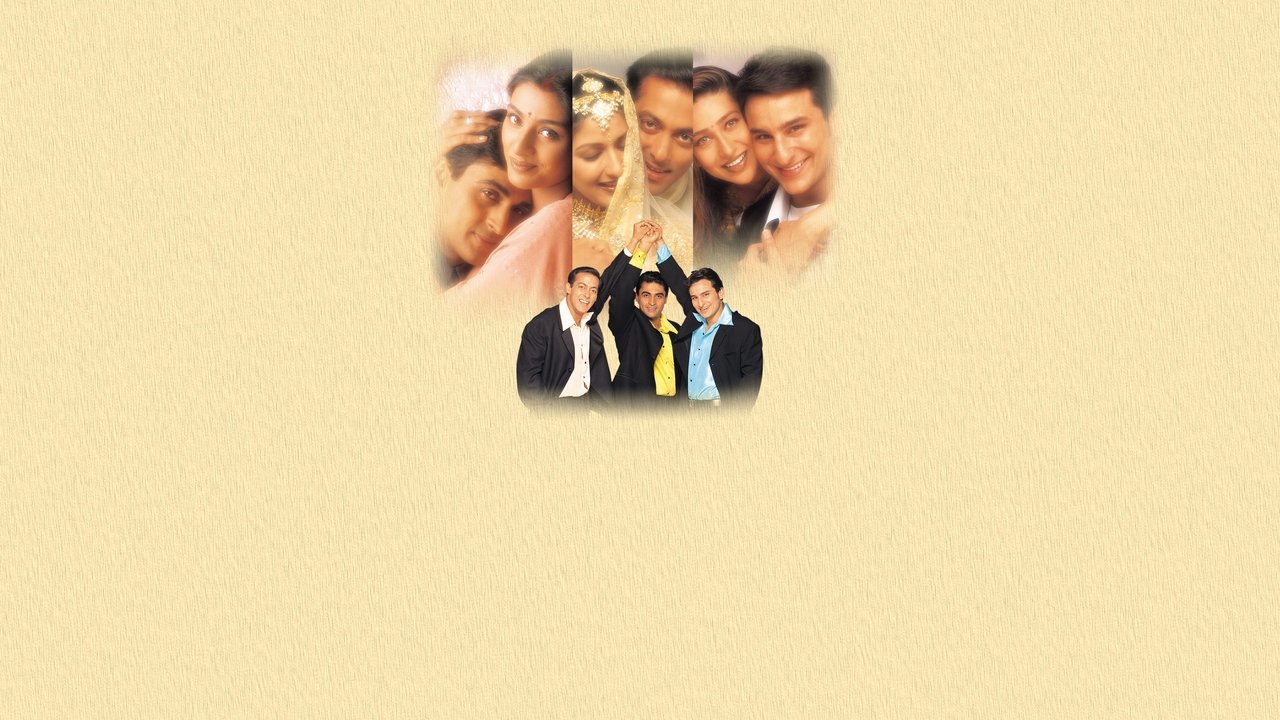
Forget subtle character arcs or gritty realism for a moment. Cast your mind back to the late 90s, a time when Bollywood seemed determined to outdo itself in sheer scale and sentiment. Enter Sooraj R. Barjatya's 1999 opus, Hum Saath Saath Hain: We Stand United. Watching this film felt less like viewing a movie and more like being invited to the most elaborate, perfectly choreographed, and emotionally charged family gathering imaginable. It wasn't just a film; it was an event, often spilling across two VHS tapes due to its generous three-hour-plus runtime – a commitment we gladly made back then for a dose of pure, unadulterated family saga.
### A Celebration of Family (and Fashion)
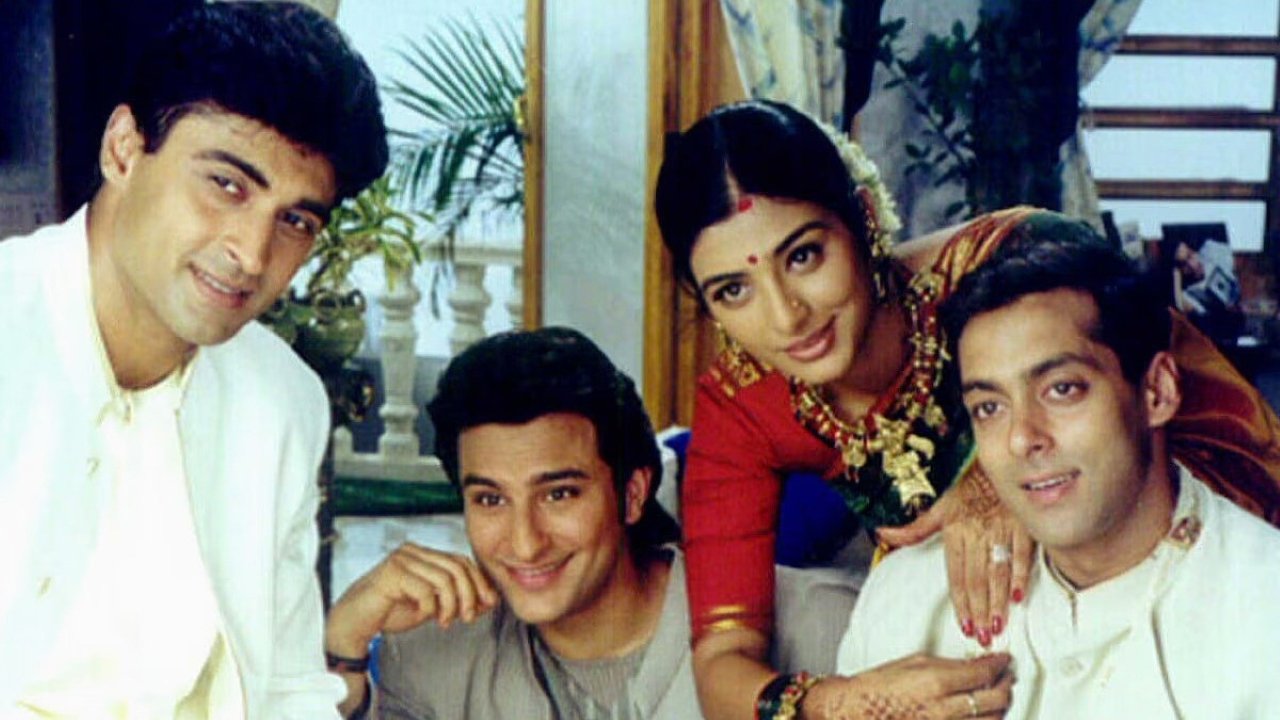
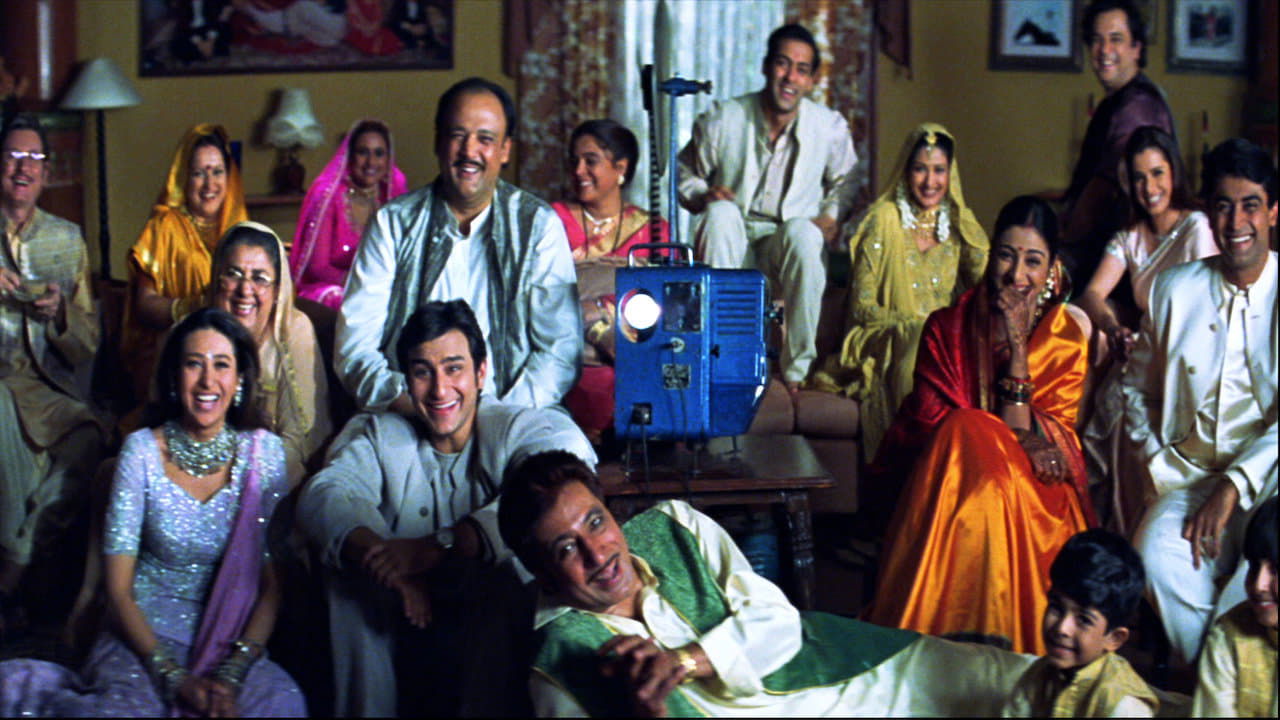
At its core, Hum Saath Saath Hain is a celebration of the joint family system, portraying the idyllic life of Ramkishan (Alok Nath) and Mamta (Reema Lagoo) and their extended brood. We have the dutiful eldest son Vivek (Mohnish Bahl) and his wife Sadhana (Tabu), the playful Prem (Salman Khan) paired with the bubbly Preeti (Sonali Bendre), and the youngest couple Vinod (Saif Ali Khan) and Sapna (Karisma Kapoor). Oh, and let's not forget the sister Sangeeta (Neelam Kothari) and her husband Anand (Mahesh Thakur). If that sounds like a lot of characters, it is! Barjatya, known for his grand family narratives like Hum Aapke Hain Koun..! (1994), doesn't just give us a family; he gives us a dynasty, living in near-perfect harmony, punctuated by countless songs, elaborate rituals, and wardrobes that seemed to require their own zip code.
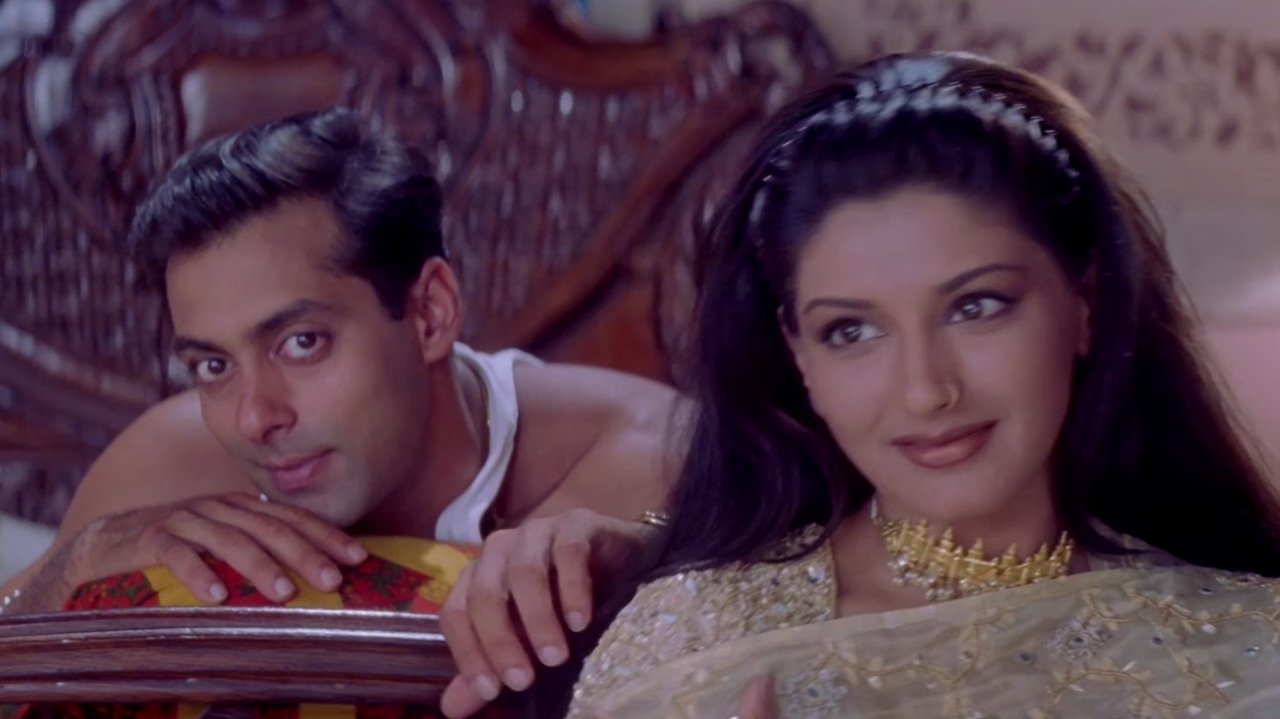
The film spends a significant portion establishing this blissful existence. Days are filled with prayer, playful teasing, mutual respect, elaborate meals, and spontaneous musical numbers. It’s almost aggressively wholesome, presenting an ideal that perhaps never truly existed but felt incredibly comforting to watch unfold on screen. The chemistry between the younger couples, particularly the mischievous energy between Saif Ali Khan and Karisma Kapoor, provides much of the film's lighthearted charm. Salman Khan, embodying the shy, devoted Prem, was peak 90s Bollywood heartthrob material here.
### Behind the Scenes of Harmony
Putting together such a colossal ensemble was no small feat. Sooraj R. Barjatya reportedly wanted each character, no matter how small their role seemed, to feel integral. This commitment extended to the famous "ABCDEFGHI..." song, a charmingly literal introduction where each letter corresponds to a character's trait or relationship – a simple, memorable device that helped audiences keep track of the sprawling cast. The film was shot extensively in picturesque locations in Rajasthan, particularly Jodhpur, adding a layer of regal authenticity to the family's affluent lifestyle. Its budget, reportedly around ₹17 crore (a significant sum in 1999), was clearly visible on screen, translating into a massive box office success, grossing over ₹81 crore worldwide and becoming one of the highest-grossing Bollywood films of the year, reaffirming Barjatya's Midas touch with family entertainers.
Interestingly, despite its rosy portrayal, the film faced minor controversies. A scene involving Salman Khan and Saif Ali Khan hunting blackbucks during the shoot led to a real-life legal case that lingered for years, a stark contrast to the film's on-screen depiction of pious living. It’s one of those behind-the-scenes details that adds a layer of unexpected reality to this hyper-idealized world.
### When Paradise Gets Shaken
Of course, no drama is complete without conflict. The serpent enters this Eden in the form of Mamta's friends (including the wonderfully catty Bindu) and some internal insecurities, poisoning her mind against her stepson Vivek. This leads to the film's central conflict: a potential division of the family business and home, mirroring elements of the epic Ramayana. It’s here the film shifts gears, exploring themes of duty, sacrifice, and the fragility of trust. While the conflict feels somewhat manufactured and resolved with perhaps unrealistic speed, it provides the necessary emotional weight and allows the characters, particularly Vivek and Sadhana, to demonstrate their unwavering commitment to family unity. The performances deepen here; Mohnish Bahl, often relegated to supporting roles, gets a chance to shine as the virtuous elder brother.
### The Enduring Appeal of Togetherness
Watching Hum Saath Saath Hain today is a potent shot of nostalgia. Yes, the plotting can feel simplistic, the runtime indulgent, and the vision of family life almost impossibly utopian by modern standards. The sheer number of songs might test the patience of contemporary viewers (though many, composed by Raamlaxman, were chartbusters back then). Yet, there's an undeniable warmth and sincerity to Barjatya's vision. It taps into a deep-seated yearning for connection, community, and uncomplicated goodness.
It represents a specific era of Bollywood filmmaking – grand, colourful, emotional, and deeply rooted in traditional values. It might feel like a relic to some, but for those who grew up renting those double VHS tapes, it’s a reminder of a time when cinema offered a comforting escape into a world where, ultimately, love and family conquered all. It wasn't trying to be edgy or subversive; it was offering a three-hour embrace, a reassurance that togetherness was the ultimate virtue.
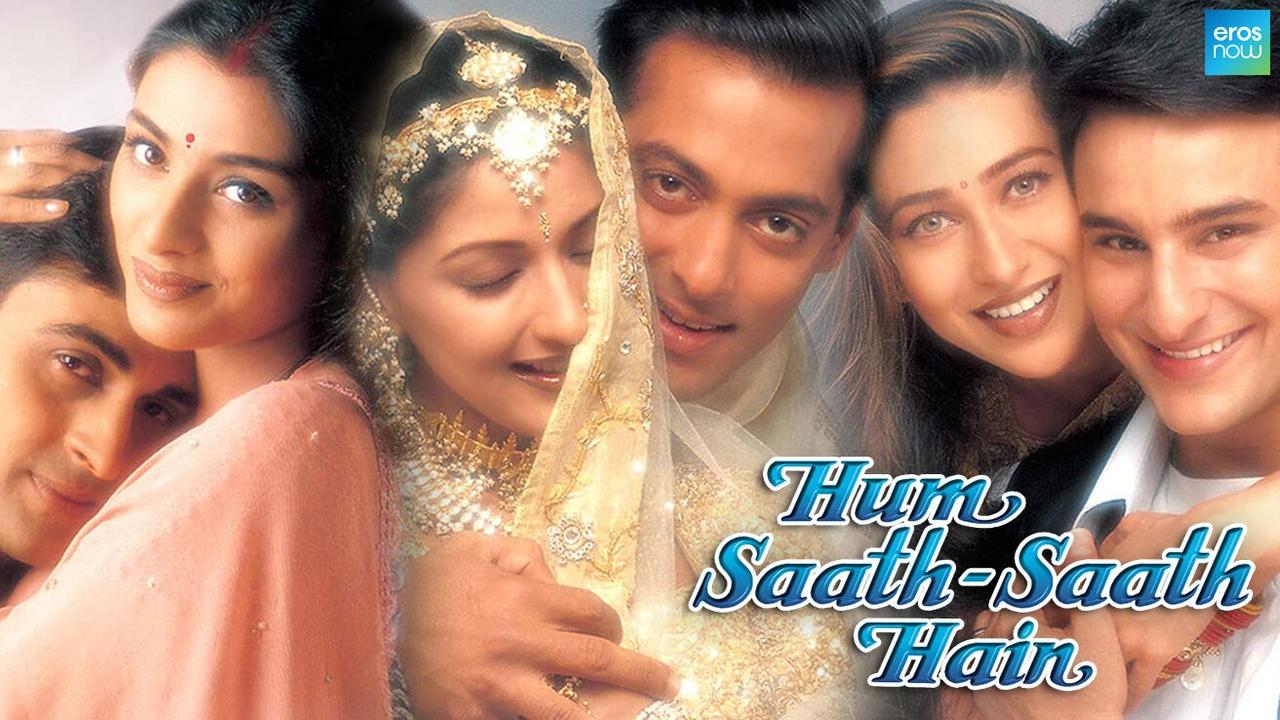
Rating: 7/10
Justification: Hum Saath Saath Hain earns a solid 7 for its sheer earnestness, memorable ensemble cast, fantastic music, and its status as a quintessential 90s Bollywood family blockbuster. It perfectly captures the zeitgeist of its time, delivering exactly what audiences expected from a Sooraj R. Barjatya film. While its idealized portrayal, extreme length, and somewhat simplistic conflict resolution might feel dated now, its core message of family unity still resonates, and the production values remain impressive. It’s a film that wears its heart proudly on its (very embroidered) sleeve.
Final Thought: Like leafing through a cherished family photo album filled with slightly posed but genuinely happy pictures, Hum Saath Saath Hain remains a comforting, if lengthy, reminder of Bollywood's grand sentimental era. Grab some snacks (you'll need them), settle in, and let the togetherness wash over you.