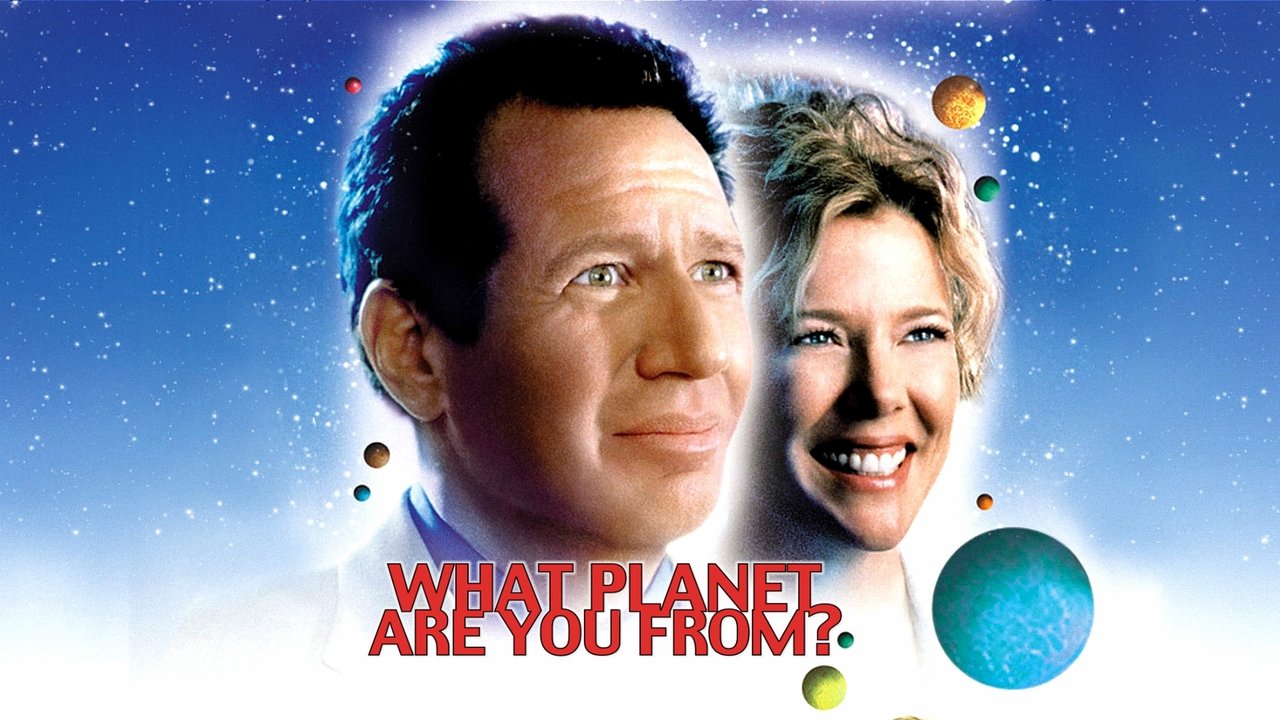
Okay, fellow tape travelers, let's rewind to the year 2000. The Y2K bug hadn't ended the world, frosted tips were still (questionably) cool, and video store shelves held a few cinematic curveballs. Nestled amongst the burgeoning DVD section and the fading glory of VHS was a title with a premise so peculiar, backed by such unexpected talent, it demanded a rental: Mike Nichols directing Garry Shandling as an alien sent to Earth to impregnate a human woman, complete with... well, let's just say unique biological engineering. Yes, we're talking about What Planet Are You From?
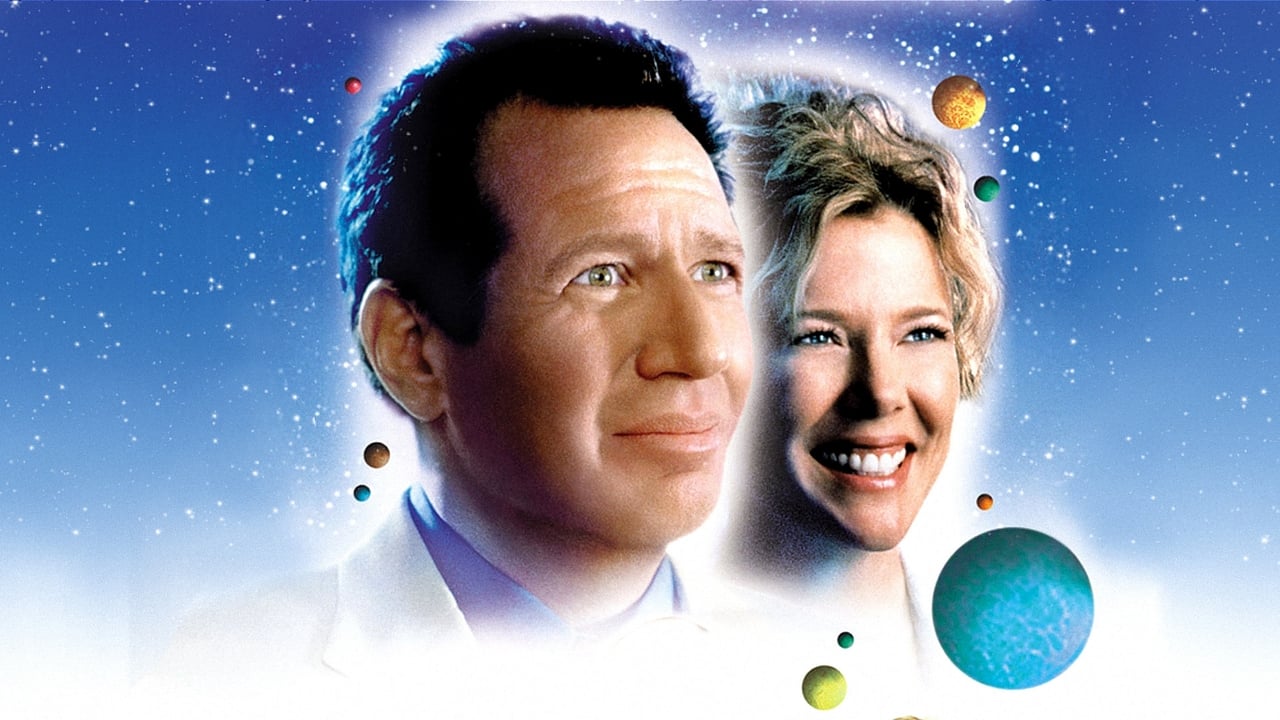
This film landed with a thud back then, a genuine head-scratcher that vanished faster than a dial-up connection. But looking back through the haze of CRT static, there's something strangely compelling about this ambitious misfire. It’s the kind of movie that feels like a fever dream cobbled together from studio notes and one comedian’s very specific, slightly uncomfortable vision.
Mission: Impregnation (and Awkwardness)
The setup is pure high-concept sci-fi comedy: a race of hyper-advanced, emotionless male aliens from a planet far, far away needs to ensure its survival. Their solution? Send their best agent, H1449 (credited simply as Harold Anderson on Earth), down to Phoenix, Arizona. His mission: woo an Earth female, impregnate her, and bring the baby back home. Simple, right? Except Harold has been trained via galactic instructional videos, lacks any understanding of human emotion, and, most famously, possesses reproductive equipment that emits a distinct, continuous hum whenever aroused.
Garry Shandling IS Harold
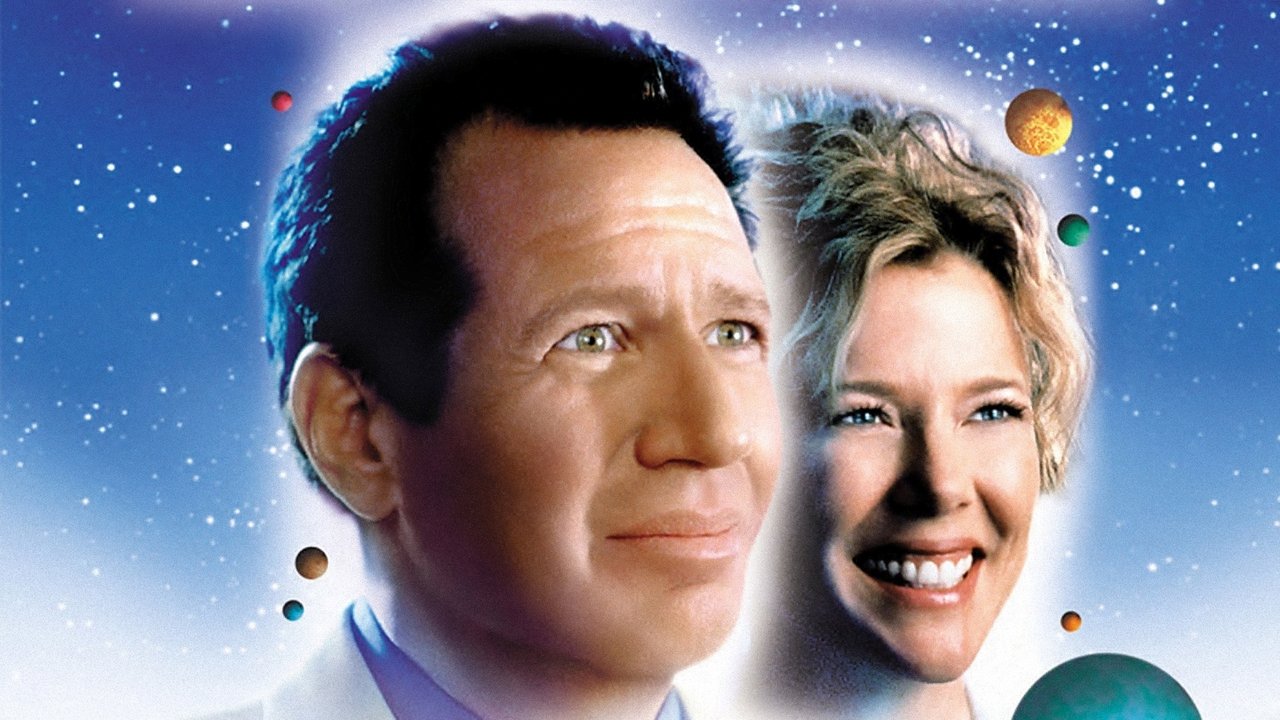
You can’t talk about this movie without focusing on Garry Shandling. He not only stars but also co-wrote and produced, and his comedic DNA is all over Harold. It's less Larry Sanders and more an extension of his stand-up persona: neurotic, insecure, constantly observing human absurdity from a detached, slightly bewildered perspective. Harold’s attempts at pickup lines ("I want to compliment you on your breeding potential") and his utter confusion about basic social interaction provide most of the film's laughs, landing somewhere between cringe and genuinely funny observational humor. It’s a performance that relies heavily on Shandling’s signature deadpan and awkward physicality.
Interestingly, the film's journey to the screen was famously bumpy. Shandling had been developing the idea for years, reportedly clashing with director Mike Nichols – yes, the legendary director of The Graduate (1967) and Working Girl (1988) – over the tone and script. Four writers are credited, often a sign of a turbulent creative process. This friction perhaps explains some of the film's tonal inconsistencies, bouncing between broad farce, gentle romance, and surprisingly sharp satire about gender dynamics and relationships. One wonders what Shandling's original, perhaps purer, vision might have looked like before the studio machine got involved.
A Galaxy of Supporting Stars
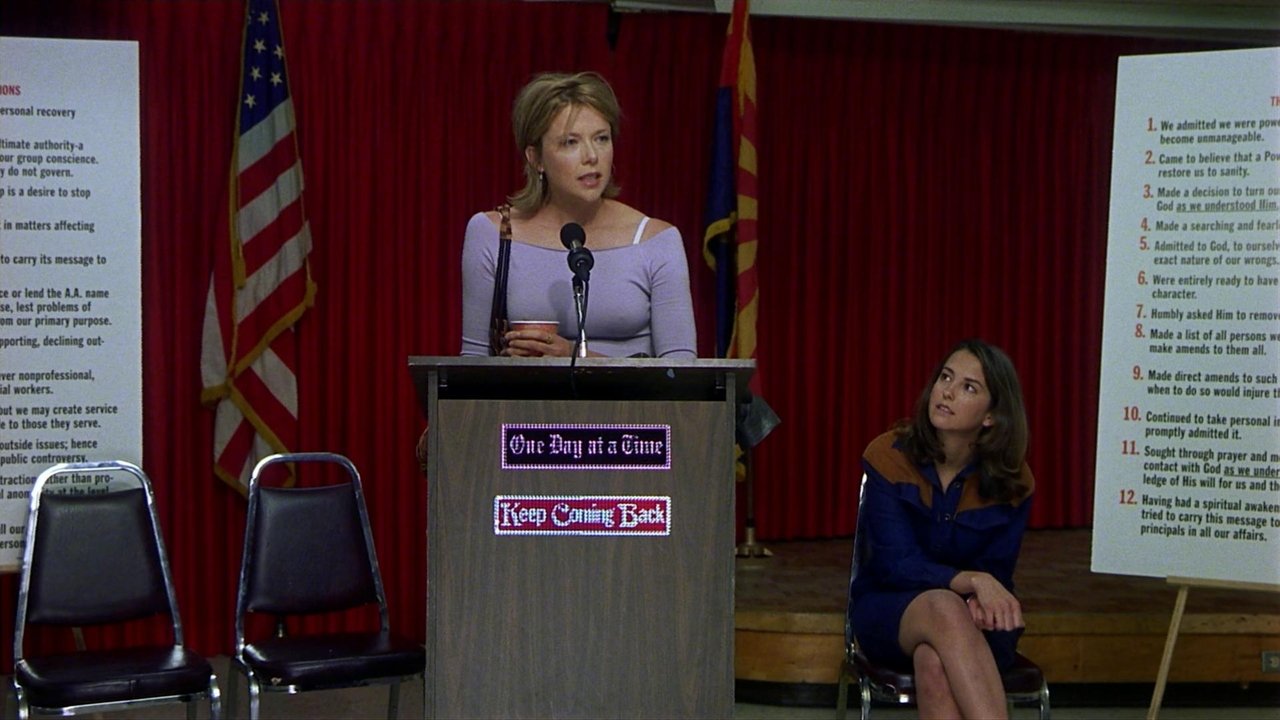
Surrounding Shandling is an absolutely stacked cast who seem game for the weirdness. Annette Bening shines as Susan, the recovering alcoholic Harold targets for his mission. She brings warmth, vulnerability, and genuine heart to a role that could have easily been just "the target," grounding the film's more outlandish elements. Her chemistry with Shandling, while unconventional, forms the emotional core.
Then there’s Greg Kinnear as Perry Gordon, Harold’s aggressively sleazy co-worker at a bank, delivering lines with maximum smarm. Ben Kingsley pops up as the benevolent-yet-stern leader of Harold’s home planet, delivering exposition via cosmic projection. And let's not forget John Goodman as Roland Jones, an FAA investigator tracking strange atmospheric phenomena (caused by Harold's arrival, naturally), adding a layer of low-key conspiracy paranoia. Even Linda Fiorentino, fresh off Dogma (1999), appears as Perry's equally cynical wife. It’s a murderer’s row of talent for what feels, at times, like a deeply personal, quirky indie comedy accidentally given a blockbuster budget (reportedly around $60 million).
That Early 2000s Sheen (and Hum)
Visually, the film has that specific look of comedies transitioning into the new millennium – bright, clean, maybe a little sterile compared to the grittier textures of the 80s or early 90s. The alien planet scenes have a deliberately minimalist, almost retro-futuristic design. But the most memorable "effect"? That constant, low hum emanating from Harold's nether regions. It’s a gag that wears thin, perhaps, but it’s undeniably audacious. Was that sound effect focus-grouped? Probably not! It feels like pure, unfiltered Shandling weirdness making it to the screen.
The film bombed hard at the box office, pulling in only about $14 million worldwide, becoming one of Mike Nichols' rare critical and commercial failures. Critics were largely baffled, unsure whether to treat it as a satire, a romance, or just a bizarre vanity project. Audiences, it seems, just didn't know what to make of it either. It wasn't quite family-friendly, yet maybe too gentle for the gross-out comedy crowd.
Retro Fun Fact: The original cut reportedly featured even more explicit content and darker humor, which was toned down after test screenings didn't go well. It makes you wonder about the lost, perhaps even stranger, version of What Planet Are You From? that might exist somewhere.
Final Orbit

What Planet Are You From? isn't a hidden masterpiece, let's be clear. Its pacing flags, some jokes fall flat, and the blend of tones doesn't always mesh. But for fans of Garry Shandling, oddball concepts, or just remembering those weird transitional comedies from the turn of the century that studios sometimes took expensive risks on, it holds a certain fascination. It’s awkward, unique, and features Annette Bening giving a performance far better than the material strictly requires.
Rating: 5/10 - The score reflects its undeniable flaws and commercial failure, but it earns points for sheer audacity, Shandling's committed weirdness, Bening's grounding presence, and its status as a fascinatingly strange artifact from a major director and star colliding creatively.
It’s a cinematic curiosity, a rental you might have picked up on a whim and spent the rest of the night debating with your friends – a perfect example of a big swing that didn't quite connect, humming awkwardly all the way.