It's a strange thing, the gravity some films possess. Not the weight of explosions or grand spectacle, but the quiet, intense pull of a singular, consuming idea. François Truffaut’s The Green Room (La Chambre verte) from 1978 is precisely such a film, a picture that likely sat somewhat soberly on the video store shelf, perhaps near the foreign language section, promising something far removed from the neon glow of its neighbours. Watching it again feels less like revisiting a movie and more like entering a hushed, candlelit space dedicated entirely to the past.
A Sanctuary Built of Memory and Grief
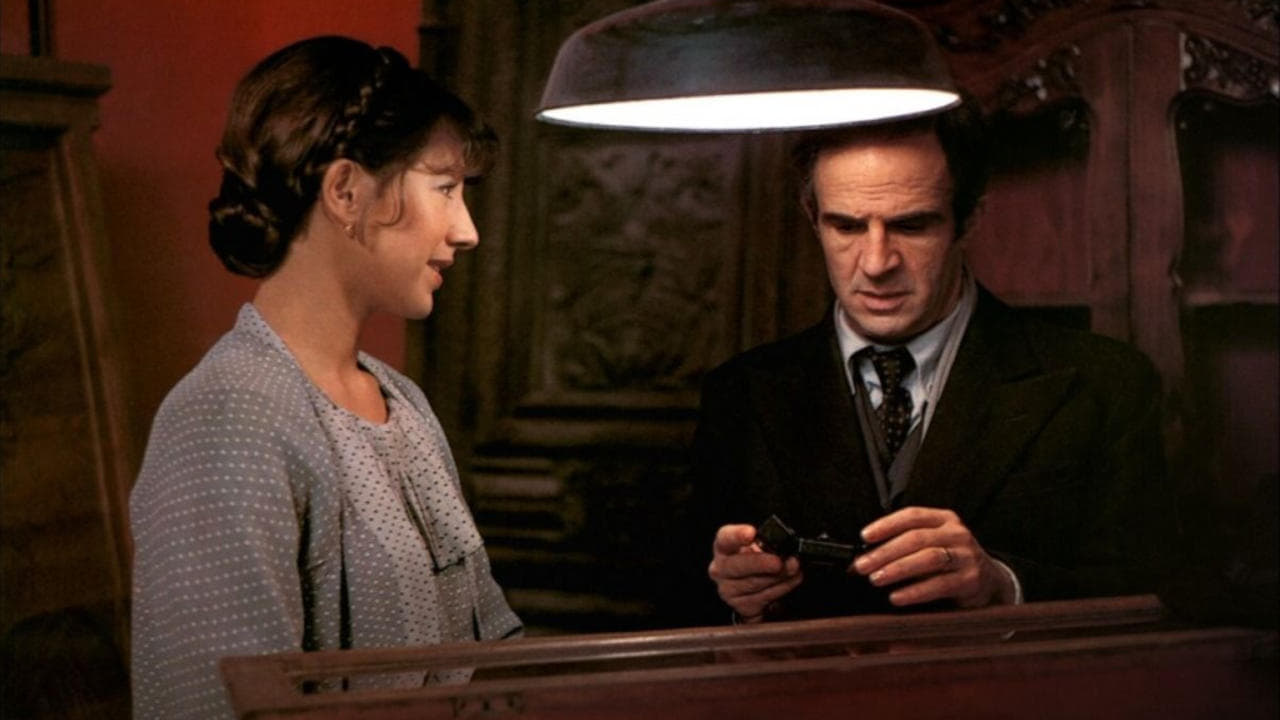
The film introduces us to Julien Davenne, played with a haunting, almost unnerving stillness by Truffaut himself. A writer for a provincial newspaper specializing in obituaries, Davenne is a man utterly defined by loss. His wife, Julie, died years prior, yet she remains the unwavering centre of his existence. He maintains a room in his house – the titular green room – as a shrine to her, filled with portraits, mementos, and perpetually burning candles. It’s a space sealed off from the flow of life, a physical manifestation of his refusal, or perhaps inability, to let go. When this sanctuary is threatened, his obsession escalates, leading him to restore a ruined chapel as a grander, more permanent monument not just to Julie, but to all his cherished dead.
What unfolds isn't a plot in the conventional sense, but rather a profound meditation on mourning. How much devotion is remembrance, and at what point does it curdle into a self-destructive fixation that shuts out the living? Davenne’s world shrinks, populated only by ghosts and the flickering candlelight that illuminates their images. The atmosphere Truffaut crafts is palpable – melancholic, claustrophobic, imbued with the damp chill of old stone and unspoken sorrow. It’s a feeling that lingers long after the tape hiss fades.
A Performance Etched in Personal Loss
The casting of Truffaut as Davenne is a choice laden with significance. Known more for his vibrant chronicles of youth and love (The 400 Blows, Jules and Jim), here he embodies a man ossified by grief. His performance is minimalist yet deeply resonant; every gesture, every quiet gaze speaks volumes about Davenne's inner state. There's a profound vulnerability beneath the austere surface, a sense that this character's pain mirrors something deeply felt by the director himself.
This connection becomes almost unbearably poignant when one learns a piece of behind-the-scenes insight: the photographs Davenne places in his chapel shrine aren't just props. They include images of figures important to Truffaut who had passed away – writers like Oscar Wilde and Henry James (whose work partially inspired the film), composers, filmmakers, even the actor Jean-Pierre Léaud’s parents. This knowledge transforms the film from a fictional study into something more akin to a personal cinematic ritual, blurring the line between the creator and his creation in a way that feels both courageous and intensely intimate. It's a detail that doesn't just add trivia; it deepens the film's already considerable emotional weight.
A Glimmer of Connection
Amidst this landscape of remembrance stands Cécilia Mandel, played with gentle sensitivity by Nathalie Baye. She enters Davenne's orbit seemingly sharing a similar reverence for the departed, offering a potential connection, a shared language of loss. Baye, who would become a major star of French cinema, provides the film’s crucial counterpoint – a representation of life, empathy, and the possibility of navigating grief without being entirely consumed by it. The tentative, complex relationship that develops between Julien and Cécilia forms the fragile heart of the narrative. Can he allow another living soul into his meticulously curated world of the dead? Her presence forces the question, highlighting the profound isolation Davenne has chosen.
The Uncompromising Vision
The Green Room is undeniably a challenging film. Its pace is deliberate, its tone unrelentingly somber. It demands patience and a willingness to engage with uncomfortable questions about mortality and the human psyche. Truffaut’s direction, aided by the evocative, often shadow-drenched cinematography of the legendary Néstor Almendros (who also shot Days of Heaven around the same time), perfectly captures the oppressive beauty of Davenne's obsession. There are no easy answers here, no cathartic release in the traditional sense.
This isn't the kind of movie you'd grab for a Friday night pizza party. Renting this back in the day felt like unearthing something significant, something that demanded quiet contemplation afterwards. It’s a film that respects its audience enough to present its difficult themes without dilution. It explores the potentially destructive power of memory, the way love can twist into a form of imprisonment when it refuses to acknowledge the passage of time.
Rating: 8/10
This score reflects the film's artistic integrity, its powerful emotional core, and the haunting resonance of Truffaut's performance and personal investment. It's a beautifully crafted, deeply affecting piece of cinema that achieves exactly what it sets out to do. However, its demanding nature and unrelenting melancholy mean it won't connect with everyone, hence docking a point or two for sheer accessibility. It’s a film you admire, are moved by, perhaps even troubled by, more than one you simply 'enjoy'.
The Green Room remains a singular work in Truffaut's filmography, a stark departure that feels like a necessary, albeit painful, exorcism. It leaves you pondering the ghosts we all carry – how we honour them, and how we ensure their memory doesn't extinguish our own flame. A quiet masterpiece whispering from the shelves of VHS Heaven.