Okay, fellow travelers of the magnetic tape galaxy, settle into your beanbag chair and adjust the tracking. Tonight, we're plugging in a tape that feels like a fever dream cooked up after a marathon of Star Wars, samurai flicks, and maybe a late-night disco documentary: 1978's spectacular, sometimes baffling, utterly unique Japanese space opera, Message from Space (Uchu kara no messeji). Forget slick, modern CGI polish; this is the glorious, handcrafted chaos that populated the sci-fi shelves of our beloved video stores.
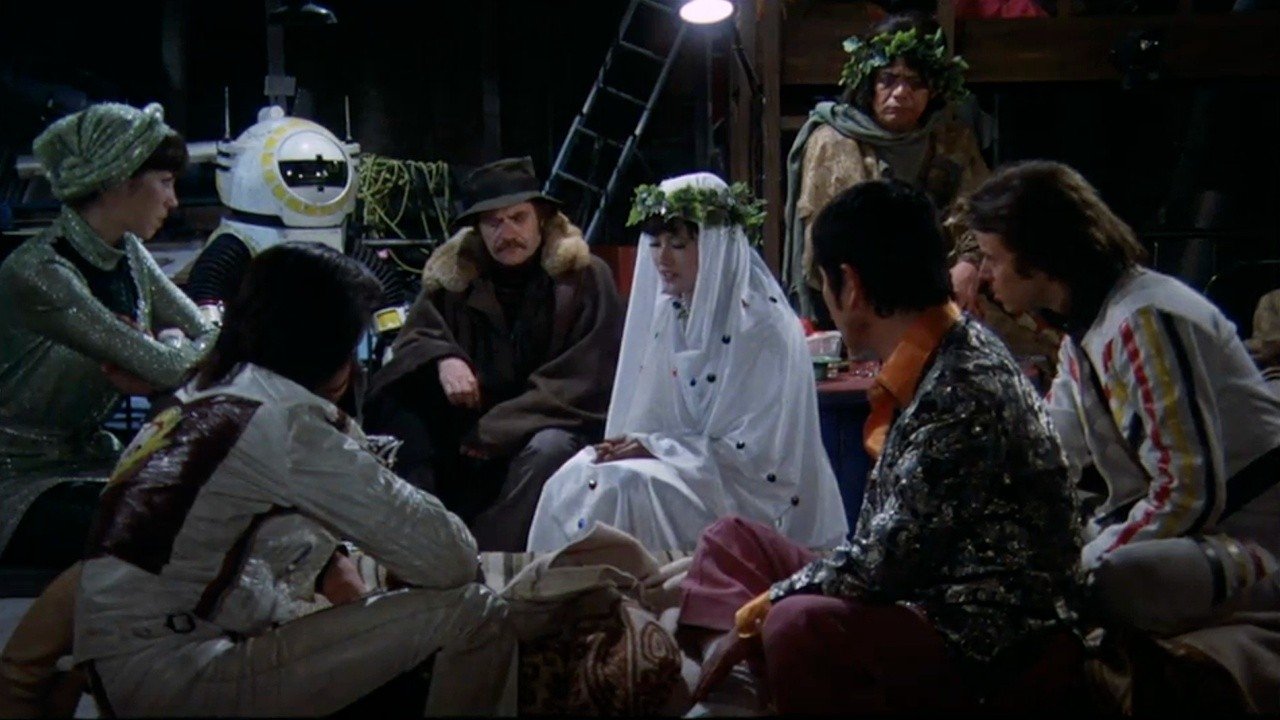
Barely a year after A New Hope rearranged the cinematic universe, Toei Company unleashed this ambitious answer, directed by the legendary Kinji Fukasaku – yes, the very same maestro who would later give us the brutal intensity of Battle Royale and co-directed Tora! Tora! Tora!. Talk about range! With a then-record-breaking budget for a Japanese film (around ¥1.5 billion, roughly $6-7 million USD back then – a hefty sum!), Message from Space throws absolutely everything at the screen, hoping enough of it sticks. And you know what? A surprising amount does, in the most wonderfully weird way possible.
### A Galaxy of Glorious Weirdness
The plot orbits the peaceful planet of Jillucia, which has been conquered by the iron-fisted (and spectacularly costumed) Gavanas Empire. In a desperate plea for help, Jillucia's elder sends out eight mystical Liabe Seeds, seeking heroes destined to liberate their world. These seeds find an... eclectic bunch: two reckless young space racers, Shiro (Hiroyuki Sanada in an early, charismatic role!) and Aaron (Philip Casnoff); the spoiled, rebellious daughter of the Earth Federation president, Meia (Peggy Lee Brennan); a hard-drinking, disillusioned former general named Garuda (Vic Morrow, bringing some grizzled American star power); and eventually, a few others including samurai-esque warriors and even a robot, Beba-2. Sound familiar? Sure, the echoes of Luke, Han, Leia, and Obi-Wan are impossible to ignore, but the execution feels filtered through a distinctly Japanese lens, courtesy partly of co-writer Shotaro Ishinomori, the genius creator behind Kamen Rider and Cyborg 009. You can feel his tokusatsu influence in the bold designs and hero-team dynamics.
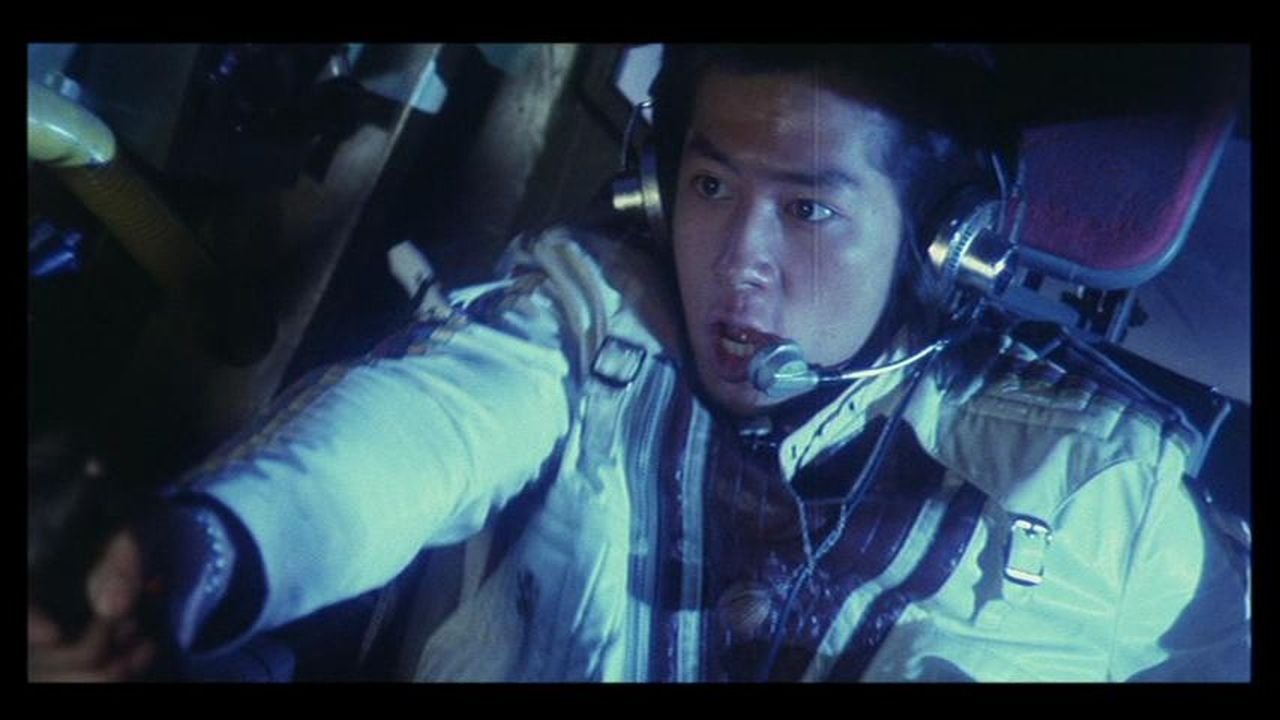
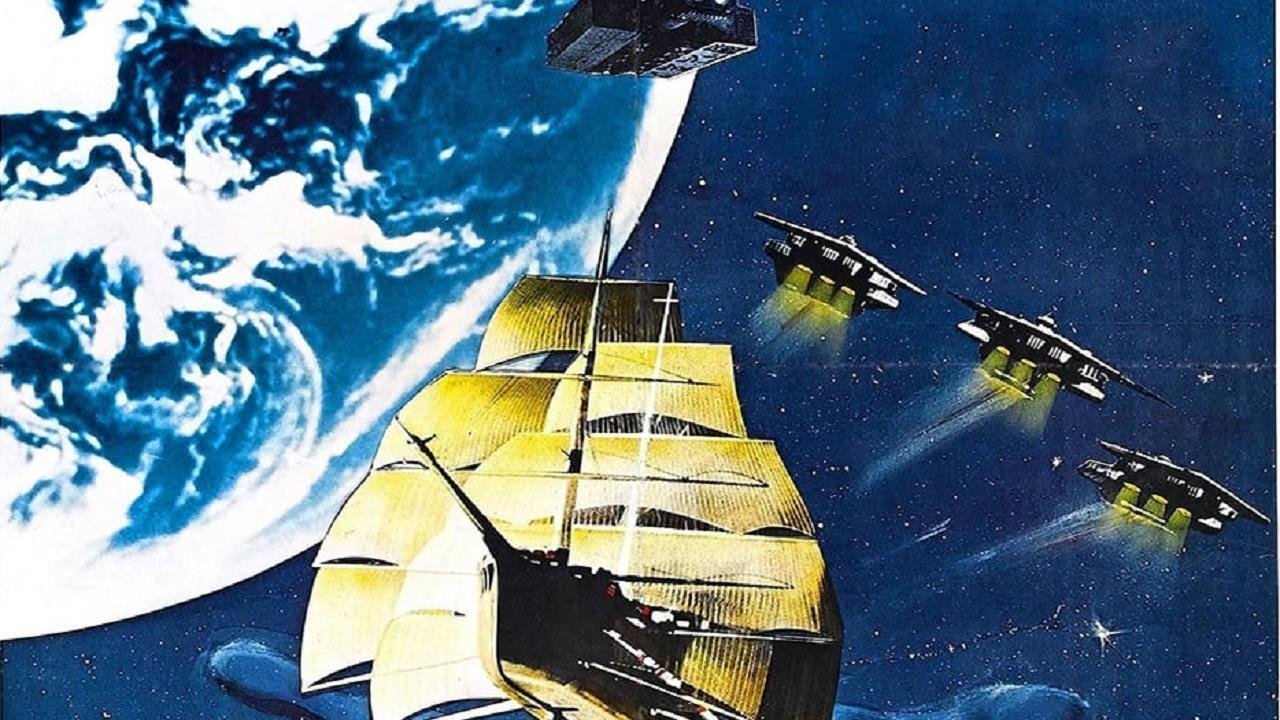
The story barrels along with the breathless energy of a Saturday morning cartoon, jumping between space dogfights, ground battles, mystical prophecies, and moments of surprisingly earnest character drama. It doesn't always make perfect sense, but who needed airtight logic when you had spaceships that looked like majestic flying galleons battling chrome-plated skull fortresses?
### Spaceship Chic and Cardboard Carnage
Let's talk about those visuals. Oh, the glorious, tangible visuals! This is peak late-70s practical effects work. The model miniatures are intricate and lovingly detailed, from the heroes' ramshackle freighter to the aforementioned space galleon belonging to the Jillucian princess-figure Emeralida. Forget photorealism; this is about imaginative design and a certain handcrafted charm. When ships explode, they really explode, sometimes looking suspiciously like firecrackers going off inside plastic models – and honestly, isn't that part of the fun?
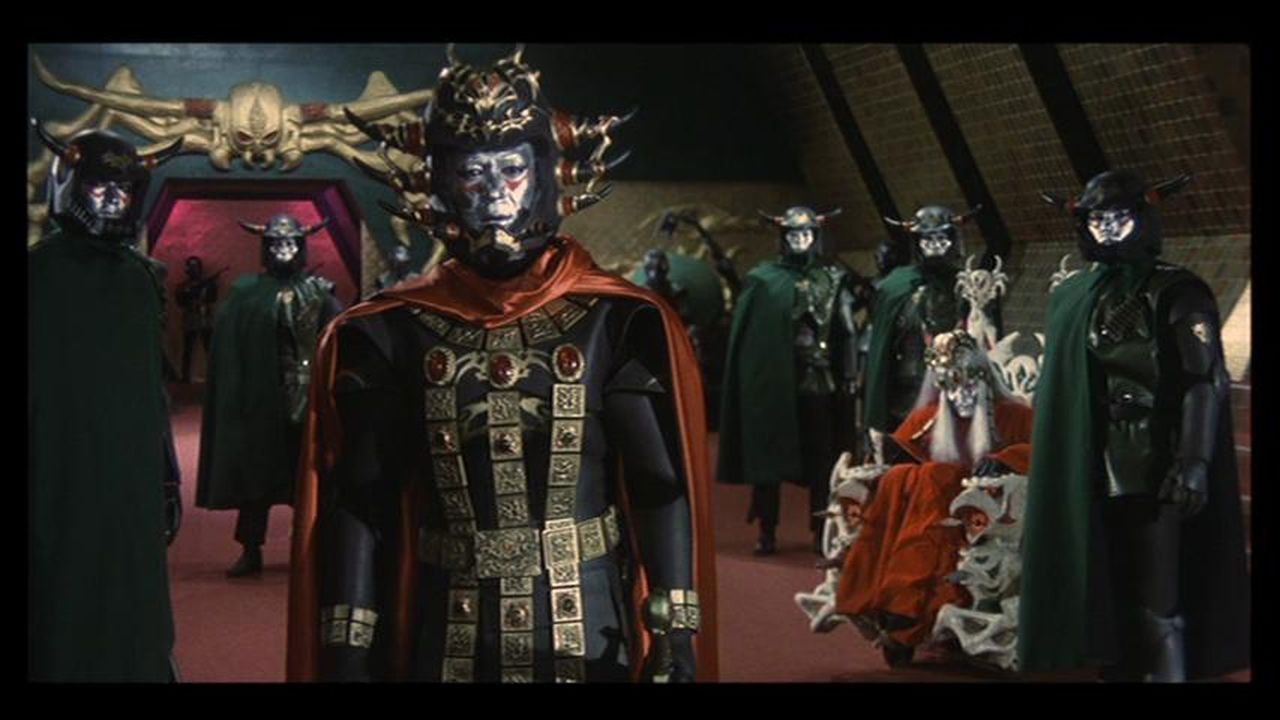
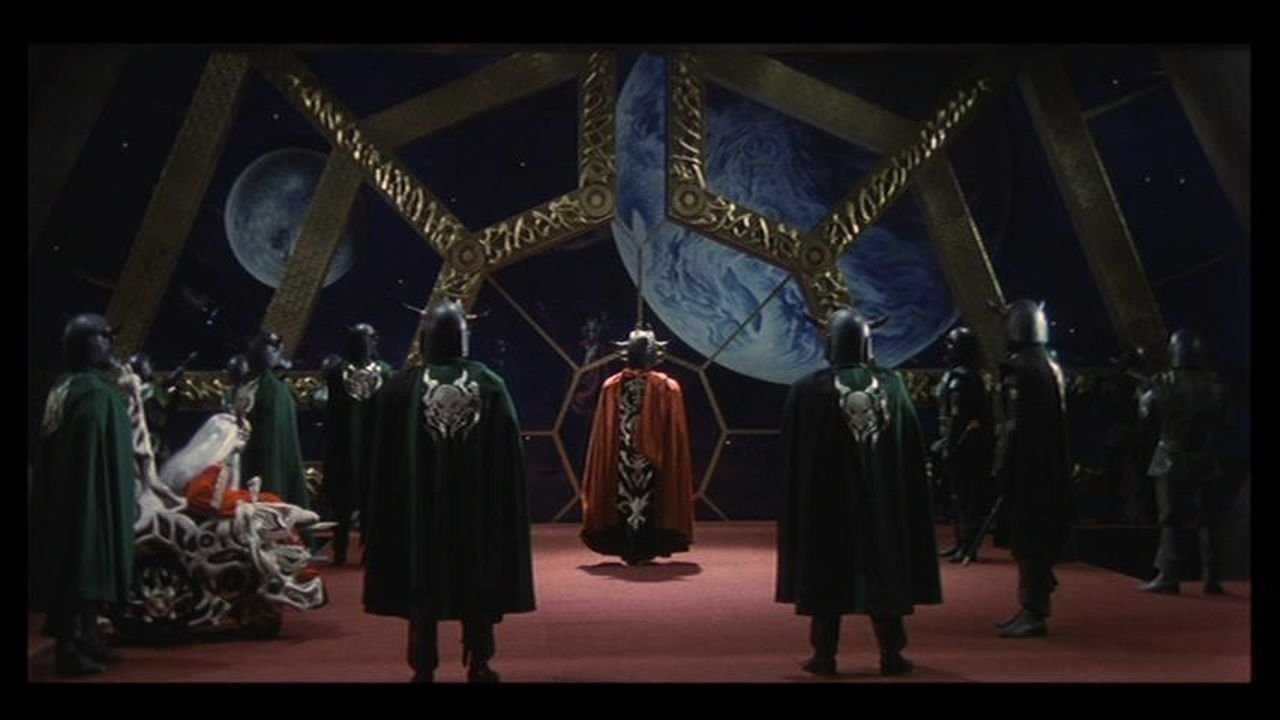
The costumes are a trip, ranging from Morrow's surprisingly grounded military garb to the Gavanas warriors' ornate, vaguely samurai-inspired armor, and the heroes' often brightly colored, slightly disco-tinged space gear. And the villain, Emperor Rockseia XXII (played with theatrical menace by Mikio Narita), residing inside his planet-like fortress? Pure space opera excess. Fukasaku directs with a kinetic energy, ensuring that even when the budget strains show (and they sometimes do, bless their hearts), the pace rarely flags. You can almost feel the sheer effort and ambition poured into every frame. Watching it now, it takes me right back to being glued to the screen, utterly captivated by the sheer spectacle, even if my younger self couldn't quite follow every plot twist.
### Assembled Heroes and Space Drifters
The cast commits wholeheartedly to the intergalactic melodrama. Vic Morrow lends a welcome gravitas as the reluctant veteran pulled back into the fight. Sanada and Casnoff have a fun, competitive chemistry as the young hotshots, full of youthful bravado. Peggy Lee Brennan as Meia embodies the spirited-but-slightly-entitled archetype common in these tales. While some of the dialogue, especially in the English dub most of us probably encountered on VHS, can feel a bit clunky, the earnestness of the performances shines through. There's a genuine sense of adventure and camaraderie amongst the chosen heroes that makes you root for them, despite (or maybe because of) the surrounding absurdity. It’s the kind of film where you desperately wanted one of those cool space race cars after watching it.
### Echoes Across the Stars (and the Video Store)
Message from Space wasn't the global phenomenon Star Wars was, scoring modestly at the box office and receiving mixed reviews (currently sitting at a 5.5/10 on IMDb). Critics at the time often saw it as simply a knock-off. But over the years, it's earned a devoted cult following among fans of retro sci-fi and Japanese cinema. It represents a fascinating moment where Japanese filmmakers took a popular American template and infused it with their own cultural aesthetics and storytelling sensibilities. It even spawned a spin-off TV series, Message from Space: Galactic Wars, further cementing its place in genre history. Finding this tape on the rental shelf felt like unearthing a secret, slightly weirder chapter of the space opera saga.
Rating: 7/10
Why a 7? Message from Space is undeniably flawed. It's derivative, the effects are dated (charmingly so!), and the plot is looser than a Wookiee's belt after Thanksgiving. But it compensates with boundless imagination, spectacular design work (for its time), infectious energy, and a unique cultural fusion that sets it apart. It's ambitious, it's colorful, it's utterly bonkers, and it possesses a heartfelt sincerity that's hard to resist. It earns its points through sheer audacity and the pure, unadulterated joy of throwing space samurai, flying galleons, and disco outfits into a cosmic blender.
For fans of vintage sci-fi looking for something beyond the usual suspects, Message from Space is a transmission absolutely worth receiving – a glorious, slightly battered artifact from a time when space adventures felt handcrafted and wonderfully unpredictable. Fire up the VCR, this is pure VHS Heaven fuel.