Stepping into the cinematic time machine for this one requires adjusting the dials past the peak 80s and landing squarely in 1979, a year perched between gritty realism and the gloss that would soon define a new decade. It’s here we find Anthony Page’s remake of The Lady Vanishes, a film that arrived on VHS shelves perhaps promising Hitchcockian thrills but delivering something altogether… different. Trying to recapture the lightning-in-a-bottle magic of a certified masterpiece is always a gamble, and this late-70s take, while boasting considerable star power, offers a curious blend of mystery, comedy, and transatlantic charm that feels distinctly of its time.
### All Aboard for a Different Kind of Mystery
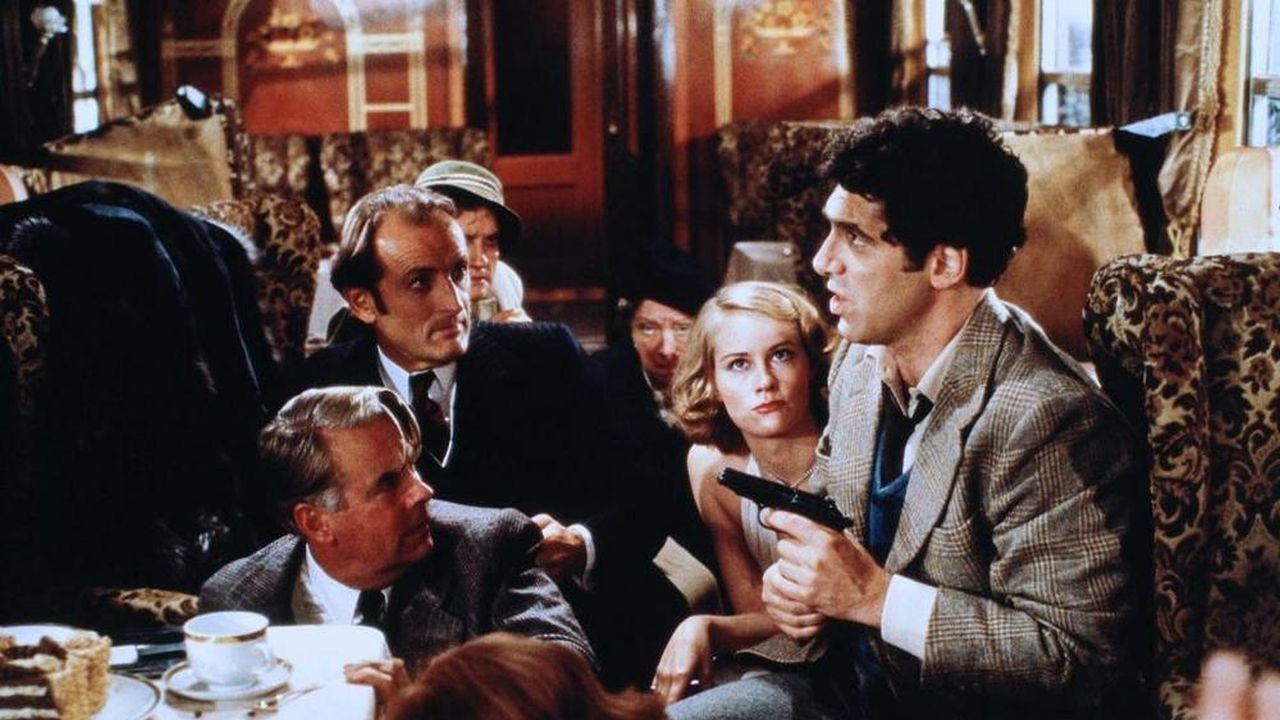
The setup remains classic: a diverse group of passengers are stranded by weather in pre-WWII Bavaria before boarding a train bound for Switzerland. Among them is Amanda Kelly (Cybill Shepherd), a wealthy, carefree American heiress, and Robert Condon (Elliott Gould), a cynical Life magazine photographer eager to escape the looming political tensions. Amanda strikes up a friendship with a kindly English governess, Miss Froy (Angela Lansbury), only for the older woman to disappear seemingly into thin air shortly after the train departs. Amanda’s insistence that Miss Froy was real is met with disbelief and polite dismissal from the other passengers, each with their own reasons to avoid complications. Only Robert, initially reluctant, eventually agrees to help her unravel the conspiracy unfolding in the corridors and compartments.
Right away, this version distinguishes itself from Alfred Hitchcock’s iconic 1938 original. Where Hitch played masterfully with tension and suspense, building dread with subtle glances and claustrophobic framing, Anthony Page’s film, penned by the legendary George Axelrod (who gave us scripts for Breakfast at Tiffany's (1961) and The Manchurian Candidate (1962)), leans more heavily into the star dynamic and injects a broader, sometimes screwball, comedic energy. This wasn't just any production; it was a significant gamble for Hammer Films, the famed British studio primarily known for gothic horror, attempting to diversify into more mainstream, bigger-budget fare. Reportedly costing around $6 million – a hefty sum then – it was designed as a star vehicle, hoping the combined wattage of Shepherd, Gould, and Lansbury would guarantee a hit.
### Stars Crossing Paths (and Cultures)
The casting is certainly intriguing on paper. Cybill Shepherd, coming off major roles in the 70s like The Last Picture Show (1971) and Taxi Driver (1976), embodies the brash American heiress with a certain fizzy energy. Elliott Gould, already a household name from M*A*S*H (1970) and his Altman collaborations, brings his trademark laid-back, slightly sarcastic persona to the photographer role. Their banter forms the core of the film’s lighter side, aiming for that classic Hollywood repartee. Does it always land? Honestly, the chemistry feels a bit forced at times, lacking the effortless spark of the best screen pairings. It’s entertaining in moments, but occasionally feels like two stars operating on slightly different frequencies.
Then there’s the luminous Angela Lansbury as Miss Froy. Decades before she became the beloved Jessica Fletcher in Murder, She Wrote, Lansbury was already a screen veteran with multiple Oscar nominations. She imbues Miss Froy with the requisite warmth and mystery, making her disappearance genuinely puzzling. The supporting cast is filled with wonderful British character actors, including Herbert Lom as the suspicious Dr. Hartz, and the delightful duo of Arthur Lowe (Captain Mainwaring from Dad's Army) and Ian Carmichael reprising the cricket-obsessed Charters and Caldicott roles made famous by Naunton Wayne and Basil Radford in the original. Their presence adds a welcome touch of dry British wit that connects back to the film's roots.
### Retro Fun Facts: Hammer's Gamble and Austrian Vistas
Hammer Films' decision to remake The Lady Vanishes was bold. They secured the rights and aimed for an A-list production, moving away from their horror comfort zone. Filming largely took place on location in Austria, providing some genuinely beautiful alpine scenery that gives the film a different visual texture than Hitchcock’s more studio-bound original. You get a real sense of the train journey through the mountains, even if the plot sometimes meanders along with it.
Despite the star power and scenic locations, the film struggled to find its audience. Critics were often unkind, constantly drawing comparisons to the insurmountable 1938 version, and it ultimately became a box office disappointment for Hammer, nudging them back towards familiar horror territory soon after. Watching it now, perhaps on a slightly worn VHS tape pulled from the back of the shelf, its shortcomings are apparent, but so is a certain quirky charm. George Axelrod's script has flashes of wit, and the attempt to blend American star sensibilities with a classic British thriller framework is fascinating, even if not entirely successful. It feels very much like a 70s European co-production trying to capture international appeal.
### Does This Train Still Reach its Destination?
So, is the 1979 The Lady Vanishes worth revisiting? If you’re expecting the taut suspense and perfect pacing of Hitchcock, you might be disappointed. This version operates at a more leisurely pace, sometimes getting lost in its own comedic diversions or the slightly uneven chemistry of its leads. The central mystery feels less urgent, the stakes less palpable.
However, if you approach it as a distinct entity – a 70s curiosity piece with a game cast, lovely locations, and a connection to a legendary studio trying something new – there’s enjoyment to be found. It’s like finding a familiar tune played in a different, slightly unexpected key. Seeing Shepherd and Gould navigate the plot, alongside the ever-reliable Lansbury and a host of British stalwarts, has a definite nostalgic appeal for fans of that era's cinema. It might not be a hidden gem, but it’s an interesting footnote in the careers of its stars and the history of Hammer Films.
Rating: 5/10
Justification: The film earns points for its appealing cast (Shepherd, Gould, Lansbury, Lowe, Carmichael), handsome Austrian locations, and its status as a fascinating artifact of Hammer Films attempting a mainstream pivot. However, it loses significant ground due to the unavoidable and unfavorable comparison to the Hitchcock original, somewhat sluggish pacing, inconsistent tone, and a central star chemistry that doesn't quite ignite. It ultimately struggles to carve out its own compelling identity beyond being "that other Lady Vanishes".
Final Thought: While it never quite manages to steam ahead with the thrilling momentum of its namesake, this 1979 journey offers a scenic, star-studded detour that’s worth a look for dedicated fans of 70s cinema or Hammer history, even if it feels more like a leisurely excursion than a suspenseful express.