What lingers most, perhaps, after the flickering end credits of Jean-Jacques Annaud's The Name of the Rose (1986) isn't just the intricate medieval whodunit, but the palpable chill – not just of the wind whipping around the desolate Italian abbey, but of the intellectual and spiritual darkness the film so brilliantly portrays. It’s a film that felt substantial, weighty, even on a grainy VHS tape pulled from the 'New Releases' wall. This wasn't your typical 80s fare; it demanded attention, drew you into its cold, crumbling stone corridors, and dared you to think alongside its protagonist.

A Fortress Against Time and Thought
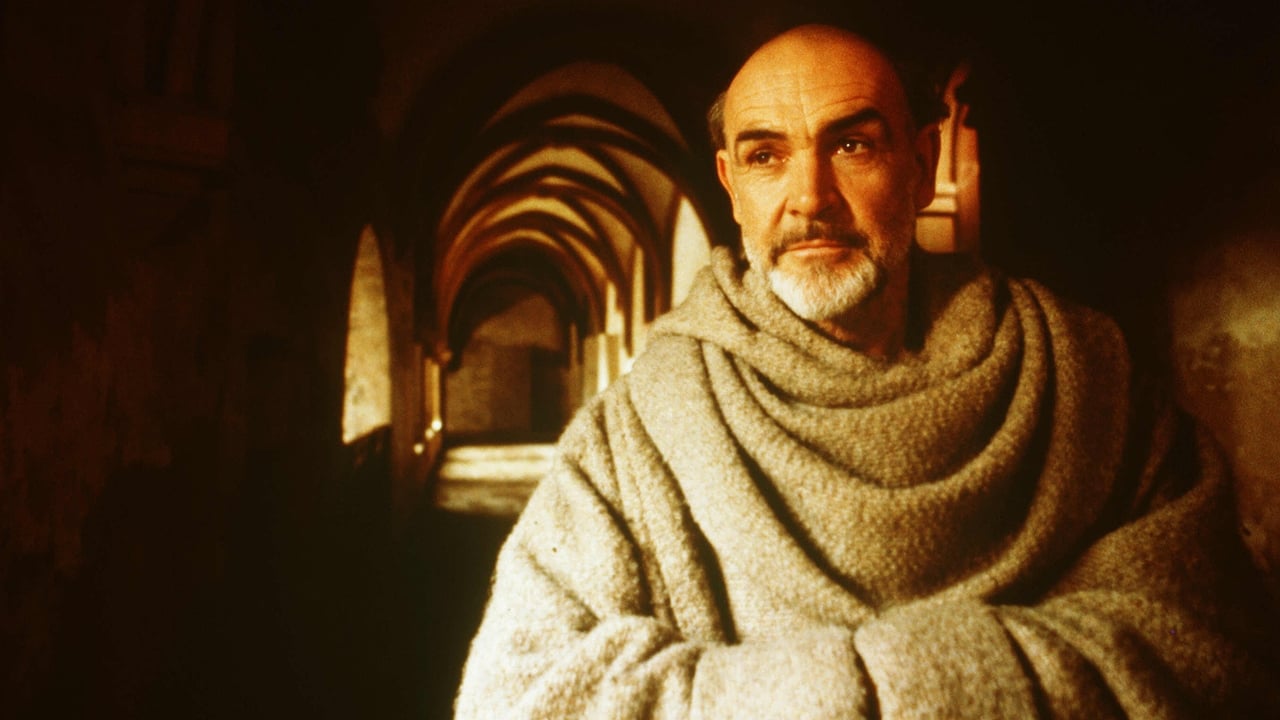
Based on Umberto Eco's dense, labyrinthine novel, the film transports us to a remote Benedictine monastery in 14th century Italy, a place already feeling ancient and isolated. Director Jean-Jacques Annaud, who had already shown a penchant for immersive, dialogue-sparse world-building with Quest for Fire (1981), uses the bleak landscape and the astonishingly detailed monastery set (a massive, purpose-built structure near Rome, reportedly one of the largest European sets since Cleopatra) to create an atmosphere thick with dread and decay. You can almost smell the damp stone, the tallow candles, the fear. Annaud famously sought out monks and actors with "interesting," often unconventional faces, avoiding Hollywood gloss to heighten the sense of period authenticity. This commitment extended to the harsh shooting conditions; filming in winter often meant actors were genuinely freezing, adding an unscripted layer of hardship that reads onscreen. The $20 million budget, considerable for a European production then, is visible in every frame, meticulously recreating a world both physically imposing and intellectually suffocating.
Baskerville Arrives: Reason in a Cowl

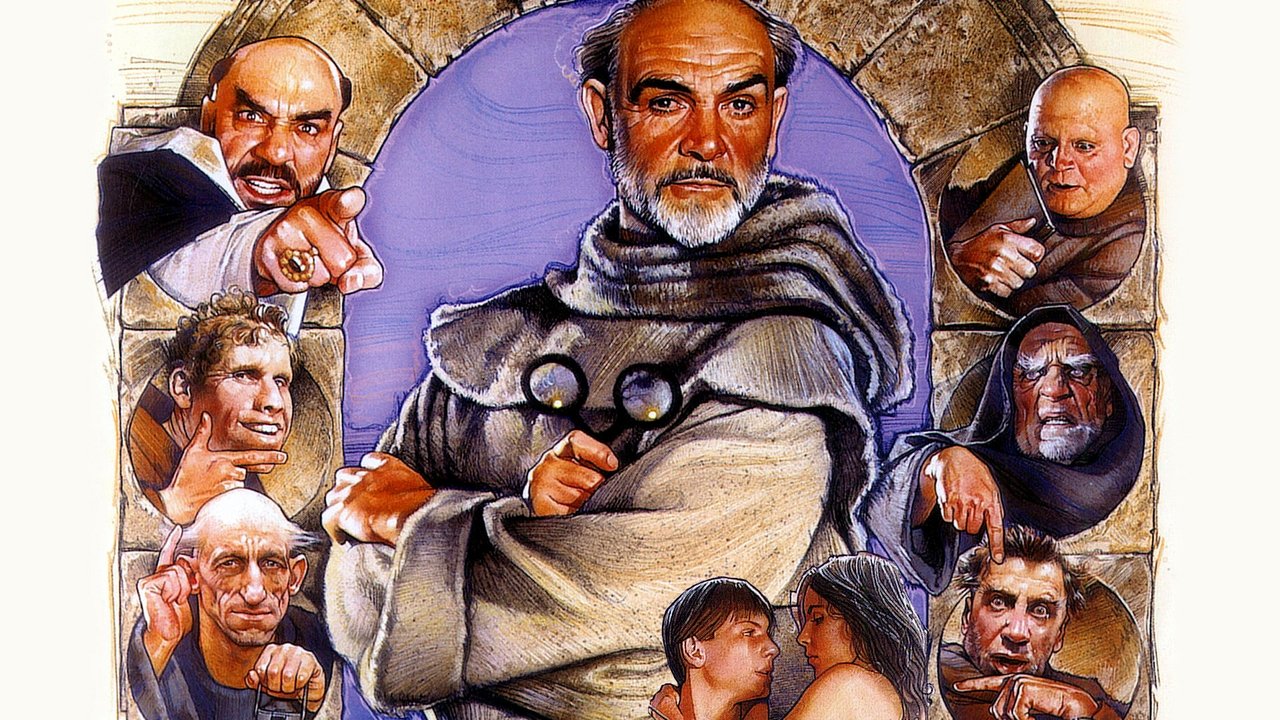
Into this crucible steps William of Baskerville, played by Sean Connery in a career-redefining role. It's hard to overstate how perfect Connery is here. Shedding the tuxedo and swagger of Bond (a move some studio executives reportedly resisted, doubting audiences would accept him as a medieval monk), he embodies William's sharp intellect, quiet authority, and weary humanism. His William is a Franciscan friar, a former inquisitor himself, but one whose faith is tempered by logic, observation, and a belief in the power of reason – qualities that make him immediately suspect in this bastion of dogmatic control. Connery conveys William's brilliance not through grand speeches, but through watchful eyes, subtle gestures, and the quiet confidence of a man who trusts his own mind. Watching him deduce clues amidst the superstition and fear is the film's central pleasure. This role, followed by his Oscar-winning turn in The Untouchables (1987), firmly re-established Connery as a commanding dramatic actor far beyond his iconic spy persona.
Through the Eyes of Youth
Accompanying William is his young novice, Adso of Melk, portrayed by a fresh-faced Christian Slater in one of his earliest significant roles. Adso serves as the audience's surrogate – wide-eyed, impressionable, caught between the intellectual rigor of his master and the stark, often terrifying realities of monastic life, including the simmering theological disputes and the brutal authority wielded by figures like the chilling Bernardo Gui (F. Murray Abraham, fresh off his Amadeus Oscar win). Slater captures Adso's vulnerability and burgeoning awareness effectively, his narration providing exposition and a necessary emotional anchor. The controversial subplot involving Adso and a peasant girl (Valentina Vargas) feels perhaps a bit truncated compared to the novel, but it serves its purpose in highlighting the clash between carnal human nature and enforced spiritual purity.
Secrets Locked Away
The plot revolves around a series of bizarre deaths plaguing the abbey, occurring just as it prepares to host a crucial theological debate. William, with his Sherlockian methods, is tasked with finding the cause. The investigation leads inevitably towards the monastery's famed library, a forbidden labyrinth housing – and hoarding – knowledge deemed dangerous by the church hierarchy. This central metaphor – the suppression of knowledge, particularly works that encourage laughter and critical thought (personified by the hunt for a legendary lost book by Aristotle) – remains potent. How can faith coexist with unfettered inquiry? The film doesn't offer easy answers, instead immersing us in the deadly consequences of fear and ignorance. Adapting Eco's complex philosophical novel was a monumental task, and screenwriters Andrew Birkin, Gérard Brach, Howard Franklin, and Alain Godard skillfully streamlined the narrative while preserving its core themes and suspenseful structure.
An Enduring Chill
Beyond the central performances and compelling mystery, the film's technical craft is superb. Tonino Delli Colli's cinematography captures both the stark beauty and the claustrophobic menace of the abbey, often using low light and shadow to great effect. James Horner's score is perfectly pitched, evoking medieval liturgical music while subtly underscoring the tension and sorrow. It’s a film that looked and sounded incredible, even on a 20-inch CRT with muffled speakers – a testament to its inherent quality. I remember renting The Name of the Rose from the local video store, drawn by Connery's familiar face on the cover, expecting perhaps a historical adventure. What I got was something far richer, darker, and more thought-provoking – a film that stayed with me long after the tape was rewound and returned. It grossed over $77 million worldwide, a remarkable success for such challenging, adult-oriented material in the mid-80s, proving audiences were hungry for substance alongside their blockbusters.
VHS Heaven Rating: 9/10
This score reflects the film's masterful atmosphere, Sean Connery's iconic performance, the stunning production design, and its intelligent adaptation of complex source material. It successfully blends historical thriller with profound questions about knowledge, faith, and power. While perhaps slightly simplifying some of Eco's philosophical depth, it remains a powerful, engrossing cinematic experience that stands the test of time far better than many of its flashier contemporaries.
The Name of the Rose is more than just a medieval mystery; it's a haunting reflection on the dangers of suppressing knowledge and the enduring light of reason in the darkest of times – a theme that, perhaps worryingly, feels as relevant today as it did in the 14th century, or indeed, when we first pushed that tape into the VCR back in '86.