It begins not with a creeping shadow or a jump scare, but with a profound sense of disorientation. You press play, the tape whirs, and the screen flickers to life with images that feel both familiar and utterly alien: cosmic vistas juxtaposed with mundane domesticity, religious iconography tangled with sci-fi hardware, and a legendary Hollywood director (John Huston) appearing as some kind of intergalactic guardian angel. Welcome, fellow traveler, to the beautiful cinematic fever dream that is The Visitor (1979). This isn't just a movie; it's an experience akin to finding a bootleg recording from another dimension, beamed directly onto a flickering CRT screen in the dead of night.
Cosmic Horror Meets Corporate Conspiracy
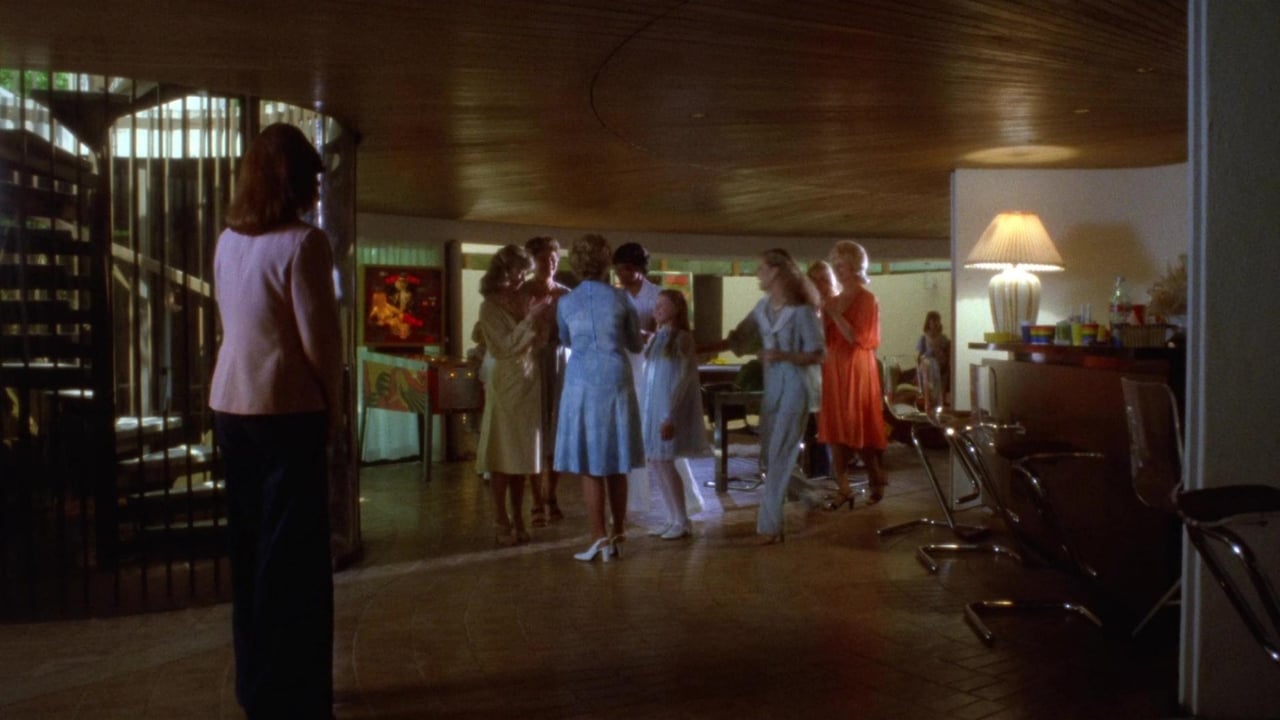
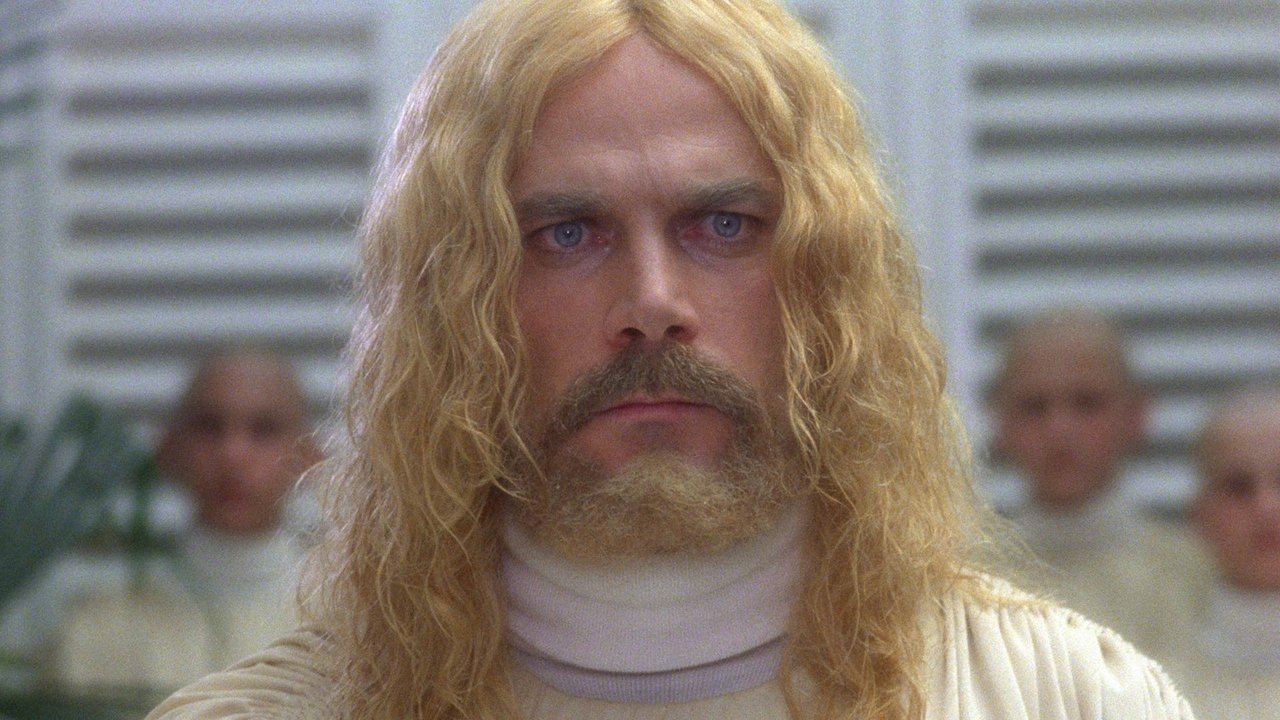
Trying to synopsize The Visitor is like trying to nail Jell-O to a wall, but the attempt itself reveals its strange charm. At its fractured core, it concerns a struggle between forces of good and evil, embodied by celestial beings and a shadowy Earth-based organization. The prize? Katy Collins (Paige Conner), an eight-year-old girl with burgeoning, terrifying telekinetic powers. Representing evil is a cabal seemingly led by the wealthy Raymond Armstead (Lance Henriksen, years before Aliens), backed by corporate suits and sinister figures like Dr. Walker (Mel Ferrer). They aim to ensure Katy conceives a similarly powered male child, continuing a demonic bloodline. Opposing them is the titular Visitor, Jerzy Colsowicz (John Huston), an emissary from a cosmic council (populated by bald children, naturally) sent to stop the propagation of this evil lineage. Caught in the middle are Katy’s bewildered mother, Barbara (Joanne Nail), and police detective Jake Durham (Glenn Ford), who seems increasingly aware that something deeply unnatural is unfolding.
A Cast Conjured from Madness
The sheer audacity of the cast assembled by Italian director Giulio Paradisi (working under the pseudonym Michael J. Paradise) and producer Ovidio G. Assonitis (infamous for Tentacles and Beyond the Door) remains staggering. Seeing screen legends like Huston and Ford navigate this gonzo plot alongside genre mainstays like Ferrer and Henriksen, plus a bafflingly intense Shelley Winters as a housekeeper/occult nanny, adds layers of surrealism. Rumor has it Huston took the role primarily to finance his next directorial effort, Wise Blood (1979), lending an air of almost mercenary detachment to his portrayal of space Jesus. Even legendary director Sam Peckinpah appears in a brief, jarring cameo as an abortion doctor! Did these actors fully grasp the kaleidoscope of rip-offs and tonal shifts they were participating in? Their grounded performances amidst the chaos only heighten the film’s unsettling effect. One can only imagine the on-set atmosphere trying to reconcile cosmic battles with scenes shot in Atlanta shopping malls.
Echoes in the Static: Influences and Oddities
The Visitor wears its influences not just on its sleeve, but emblazoned across its entire polyester jumpsuit. Watching it feels like channel surfing between The Omen, Close Encounters of the Third Kind, Rosemary's Baby, The Exorcist, and even Star Wars, often within the same scene. The film borrows imagery and plot points liberally – the evil child, the occult conspiracy, the benevolent alien presence, the telekinetic outbursts – mashing them together with a logic uniquely its own. This derivative quality, rather than feeling cheap (though perhaps it was), creates a strange sense of fractured familiarity, like a half-remembered nightmare cobbled together from other late-night movie sessions. The low budget, reportedly around $2 million (a respectable sum then, but stretched thin by the ambition), likely necessitated some of the more bizarre creative choices, particularly in the effects-heavy sequences like the infamous rooftop bird attack or the absolutely unhinged psychic basketball game.
That VHS Unease
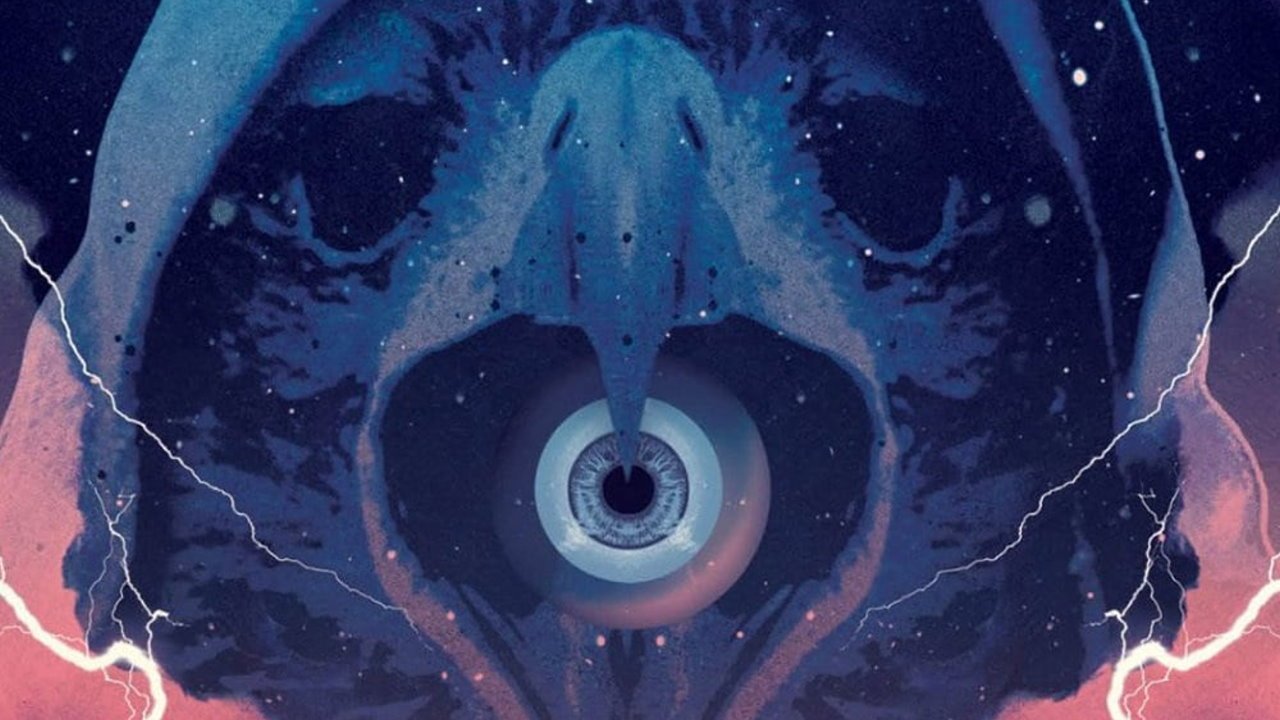
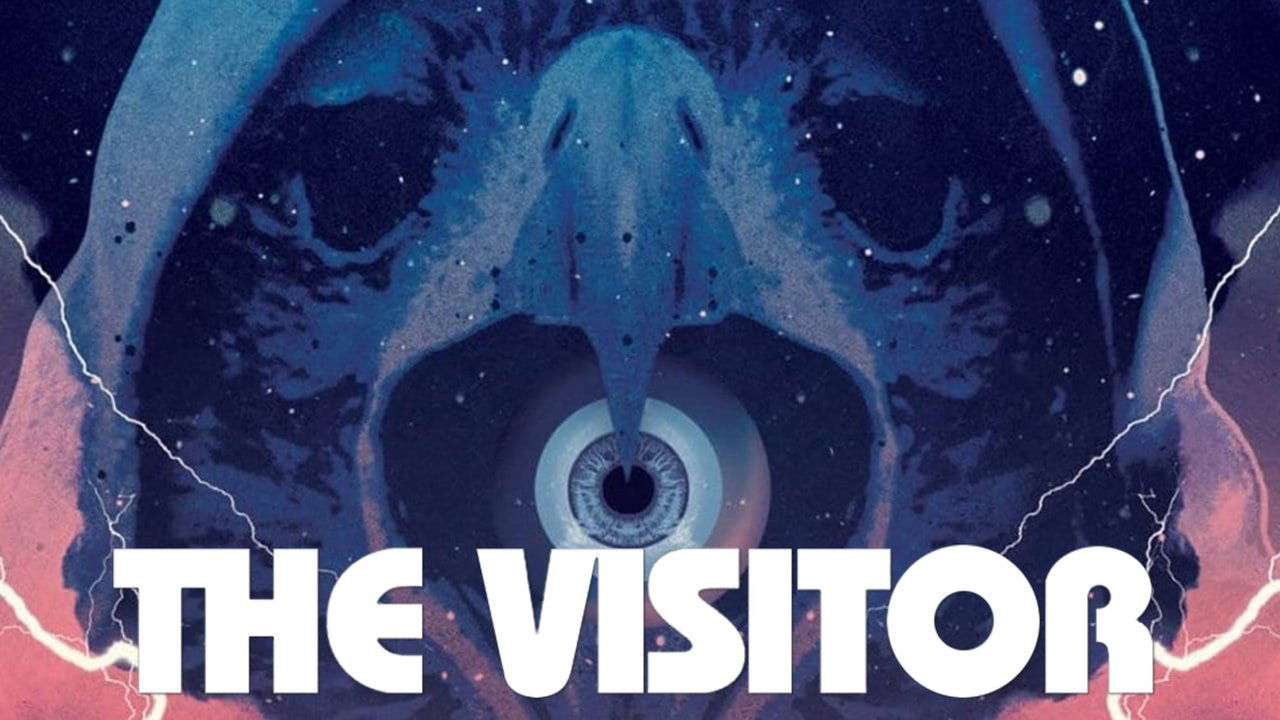
Discovering The Visitor on a dusty VHS tape felt like uncovering forbidden knowledge. Its narrative jumps, its baffling character motivations, its sudden lurches between genres – from domestic drama to sci-fi spectacle to occult horror – all contribute to a pervasive feeling of unease. It doesn't play by conventional rules. Scenes erupt seemingly out of nowhere, like Katy’s violent tantrum during the aforementioned basketball game, leaving you questioning not just the characters’ sanity, but your own perception. The score, a mix of eerie synth and orchestral swells, further amplifies the disorientation. This isn't just dated filmmaking; it's uniquely weird filmmaking, the kind that thrived in the less scrutinized corners of the video rental era. It's the type of movie you'd rent on a whim, drawn by the bizarre cover art, and spend the rest of the week trying to piece together what you just witnessed. Doesn't that specific brand of cinematic bewilderment feel uniquely tied to those late-night VHS discoveries?
Legacy of the Lost Transmission
Initially bombing at the box office upon its limited release, The Visitor faded into obscurity, becoming a whispered legend among cult film enthusiasts. Its rediscovery and restoration, notably championed by Drafthouse Films in the 2010s, brought its glorious strangeness to a new generation. It stands as a testament to a certain kind of kitchen-sink genre filmmaking, particularly from Italy in the 70s, where ambition often wildly outpaced budget and narrative coherence, resulting in something unpredictable and unforgettable. It’s not conventionally “good,” perhaps, but its sheer audacity and baffling commitment to its nonsensical vision make it utterly compelling.
Rating: 6/10
This score reflects The Visitor not as a masterpiece of coherent storytelling, but as a fascinating, baffling, and uniquely atmospheric piece of cult cinema history. Its narrative is a mess, its influences brazenly worn, yet the unsettling mood, the jaw-dropping cast, the unforgettable moments of pure weirdness (that basketball scene!), and its status as a prime example of bizarre 70s genre filmmaking earn it a solid place in the annals of VHS oddities. It fails as conventional horror or sci-fi, but succeeds tremendously as a singular, perplexing artifact.
The Visitor remains a transmission from a weirder wavelength, a film that lingers not because it perfected scares, but because it dared to be so profoundly, unforgettably strange. It’s a relic from an era when something this gloriously unhinged could somehow get made, funded, and released, eventually finding its true home on flickering television screens late at night, forever baffling and intriguing those who dared to press play.