There are films, and then there are films that feel less like constructed narratives and more like captured fever dreams, records of human endeavor pushed to the brink. Les Blank's 1982 documentary Burden of Dreams isn't just a "making-of" featurette; it's a profound, often harrowing chronicle of obsession, chaos, and the sheer, terrifying force required to wrestle art from the jaws of an indifferent universe. Watching it again after all these years, perhaps on a worn-out tape dug from a box in the attic, feels like unearthing a potent artifact – a testament to a kind of filmmaking madness we rarely witness today.
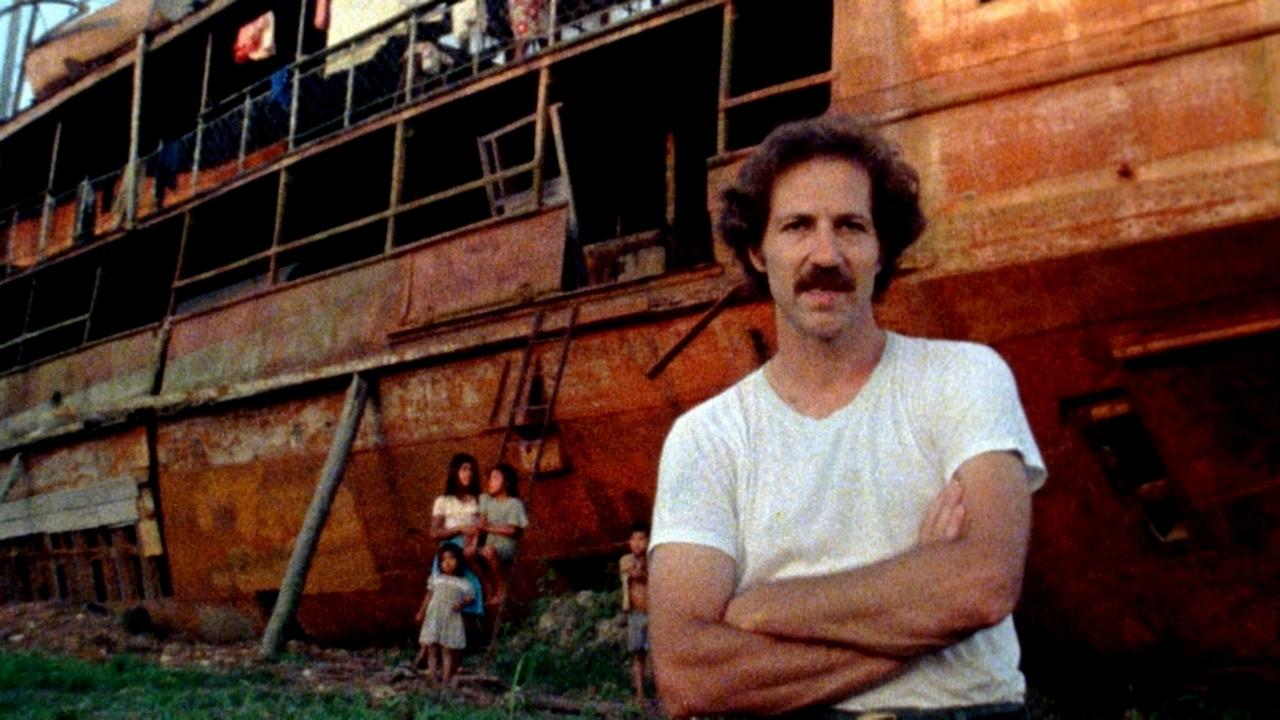
The film documents the notoriously troubled production of Werner Herzog's Fitzcarraldo (1982) in the heart of the Peruvian Amazon. Herzog, already a filmmaker known for courting extremity (think Aguirre, the Wrath of God from 1972, another fraught collaboration with Klaus Kinski in the jungle), set out to tell the story of Brian Sweeney Fitzgerald, an opera-loving Irishman determined to build an opera house in Iquitos, Peru, financing his dream by hauling a massive steamship over a steep hill from one river system to another. The kicker? Herzog, in a decision that defines the "burden" of the title, insisted on performing this feat for real, eschewing models or camera trickery.
Into the Green Inferno
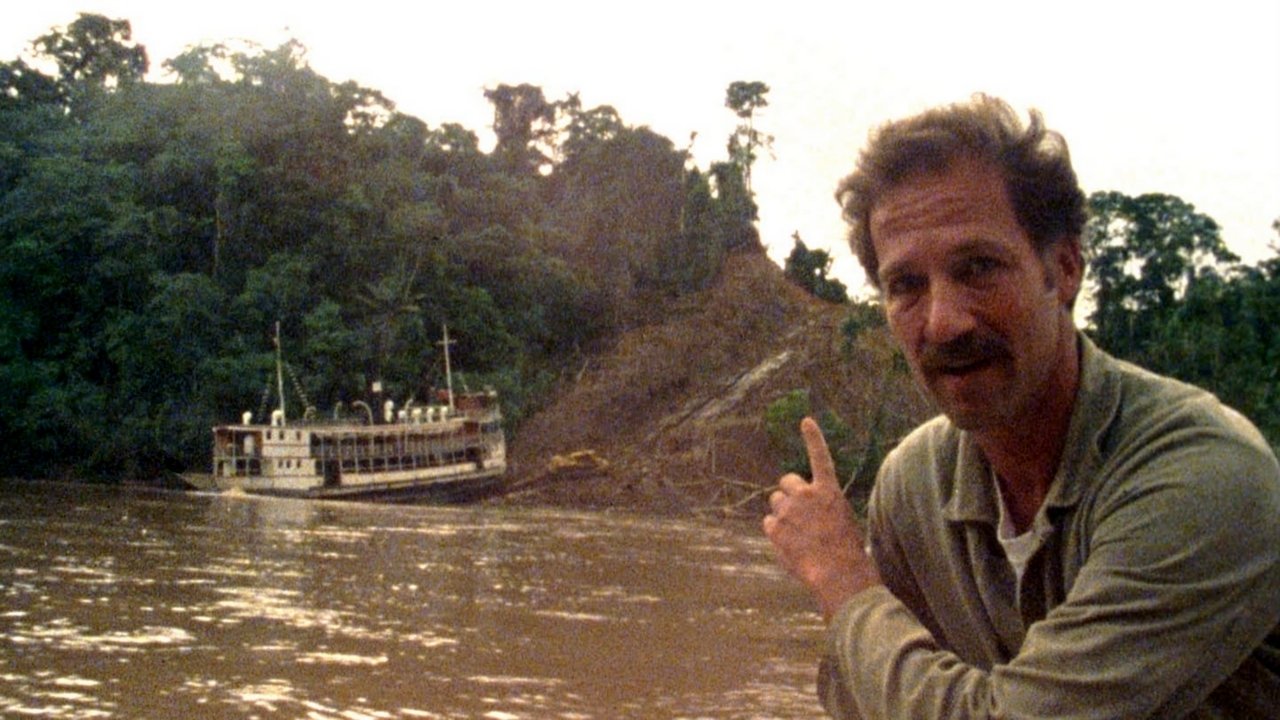
Blank's camera doesn't flinch. It captures the oppressive humidity, the logistical nightmares, the mounting tensions, and the palpable sense of isolation. We aren't just told about the difficulties; we feel them. The initial production attempt collapsed when star Jason Robards fell critically ill and co-star Mick Jagger departed due to scheduling conflicts (footage of Jagger in character exists, a fascinating ghost in the machine). Herzog regrouped, recasting with his volatile muse Klaus Kinski and the unflappable Claudia Cardinale, but the problems only escalated. Border skirmishes threatened the location, relations with indigenous groups grew strained (sometimes dangerously so), and the sheer engineering challenge of moving a 320-ton steamship up a muddy incline loomed large.
Herzog Under Pressure
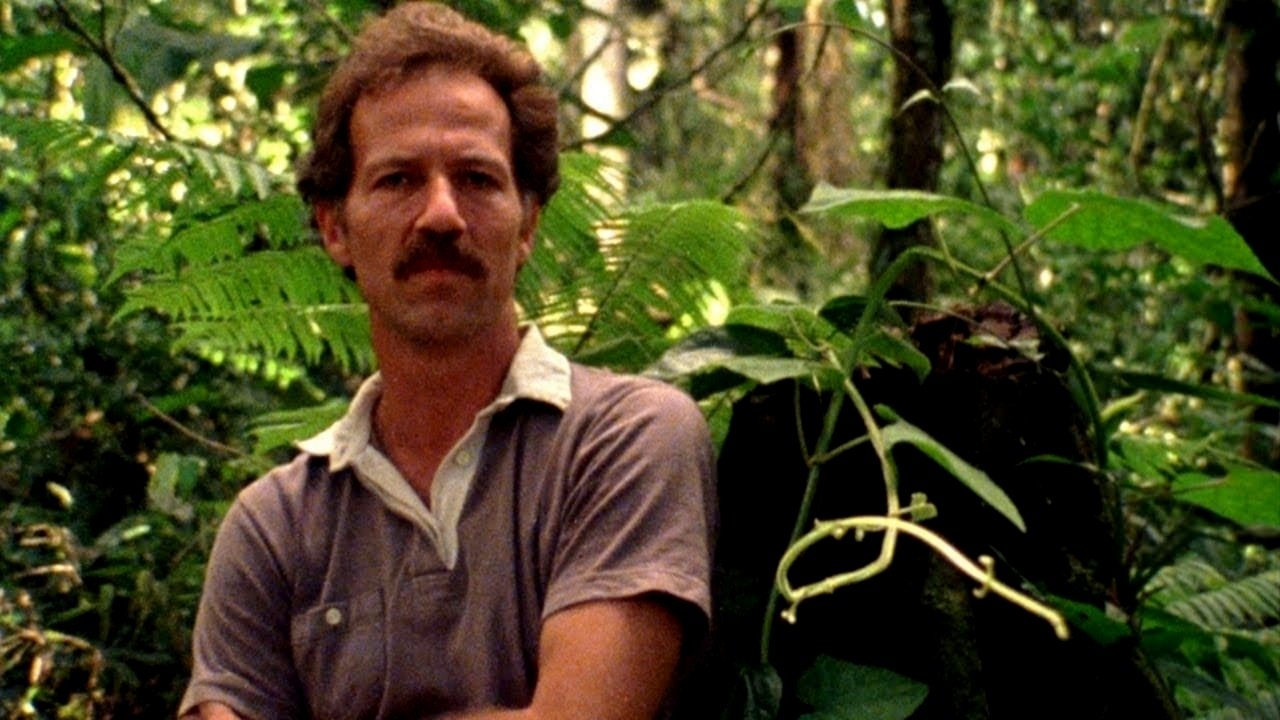
What elevates Burden of Dreams beyond mere production diary is its intimate portrait of Werner Herzog. Blank captures him not just directing, but philosophizing, grappling with the immense weight of his vision. His famous monologue comparing the jungle not to the lush paradise of romantic imagination, but to an obscene, chaotic entity "full of fornication and asphyxiation and choking," is unforgettable. We see a man driven by an artistic imperative that seems almost otherworldly, pushing himself, his crew, and arguably the limits of sanity itself. Is it genius? Is it madness? Blank wisely leaves the question open, presenting the evidence with stark clarity. You witness Herzog's exhaustion, his frustration, but also his unwavering, almost terrifying resolve.
The Eye of the Storm
And then there's Klaus Kinski. His legendary tantrums and difficult behavior are well-documented, and Blank captures glimpses of this volatile energy. Yet, contrasted with Herzog's existential wrestling, Kinski often seems like another force of nature the production had to contend with – unpredictable, dangerous, yet somehow essential to the chaotic ecosystem of the film. Claudia Cardinale floats through it all with a remarkable grace, a point of calm professionalism amidst the maelstrom.
The film is filled with "how did they even survive this?" moments. The complex rigging required for the ship, the injuries, the diseases, the sheer physical toil – it’s all laid bare. One fascinating tidbit often shared is how the indigenous extras, witnessing the seemingly pointless and dangerous task of moving the ship, reportedly offered, quite seriously, to kill Kinski for Herzog, an offer the director politely declined. This anecdote, whether wholly apocryphal or rooted in truth, speaks volumes about the extreme pressures and bizarre alliances forged in that crucible. It wasn't just a movie set; it was a microcosm of human struggle against overwhelming odds. Les Blank himself, known for documentaries on uniquely American subjects like blues musicians (A Well Spent Life) and garlic lovers (Garlic Is as Good as Ten Mothers), proved uniquely suited to capturing this different, more primal kind of human experience. He became part of the landscape, his camera an almost invisible observer.
More Than Just a 'Making-Of'
Burden of Dreams transcends its genre. It’s a film about the price of vision, the clash between human will and the natural world, and the thin line between dedication and obsession. Watching it feels less like entertainment and more like bearing witness. It forces you to question the nature of artistic creation – how much sacrifice is too much? Where does ambition curdle into folly? Finding this on a dusty VHS tape back in the day felt like discovering forbidden knowledge, a glimpse behind a curtain few ever get to see. It wasn't the usual glossy studio promo; it was raw, unsettling, and utterly mesmerizing.
Rating: 9.5/10
This rating reflects the documentary's sheer power, its unparalleled access, and its profound philosophical undertones. Les Blank crafted not just a making-of, but a standalone masterpiece that captures the harrowing reality of radical filmmaking. It's slightly shy of a perfect 10 only because its relentless focus on struggle can be almost overwhelming, demanding a certain fortitude from the viewer.
Burden of Dreams lingers long after the credits. It’s a stark reminder of a time when cinematic ambition sometimes meant flirting with genuine danger, leaving you in awe of the film that somehow emerged (Fitzcarraldo), and perhaps even more so, of the incredible human story captured in its shadow. What endures most? Perhaps the quiet intensity in Herzog’s eyes as he contemplates the 'obscenity' of the jungle – the look of a man wrestling not just with a film, but with existence itself.