Some films live purely on the screen, contained within their runtime. Others cast long shadows, their stories echoing far beyond the final frame, becoming legends whispered among cinephiles. Sergei Eisenstein’s ill-fated Mexican epic, glimpsed here in the 1979 version assembled by his collaborator Grigori Aleksandrov, is firmly in the latter camp. Watching Que Viva Mexico! isn't like watching a finished movie; it's more like gazing upon magnificent, haunting ruins – fragments of a colossal vision that never fully saw the light of day, yet still possess an undeniable, almost overwhelming power.

A Vision Interrupted
The backstory is almost as famous as the surviving footage. In 1930, Eisenstein, already a titan of Soviet cinema celebrated for Battleship Potemkin and October, traveled to Mexico financed by American author Upton Sinclair and his wife. His ambition was staggering: to create a sprawling, multi-part cinematic symphony capturing the very soul of Mexico, its history, its cycles of life and death, its pre-Columbian past mingling with its revolutionary present. Alongside his trusted cinematographer Eduard Tisse, Eisenstein shot hundreds of thousands of feet of film, crafting images of astonishing beauty and formal rigor.
But reality, as it often does, intervened. Funding disputes arose, political pressures mounted from both the US and Stalin's USSR (which eventually recalled Eisenstein), and the director ultimately lost control of his footage. It remained locked away, a treasure trove plundered over the decades for other projects, never assembled by the master himself. What we see in this 1979 version is Aleksandrov's attempt, decades later, to piece together something resembling Eisenstein's outline from the recovered material. It's a noble effort, born of deep connection, but inevitably filtered through another sensibility and the passage of time.
Fragments of Astounding Beauty
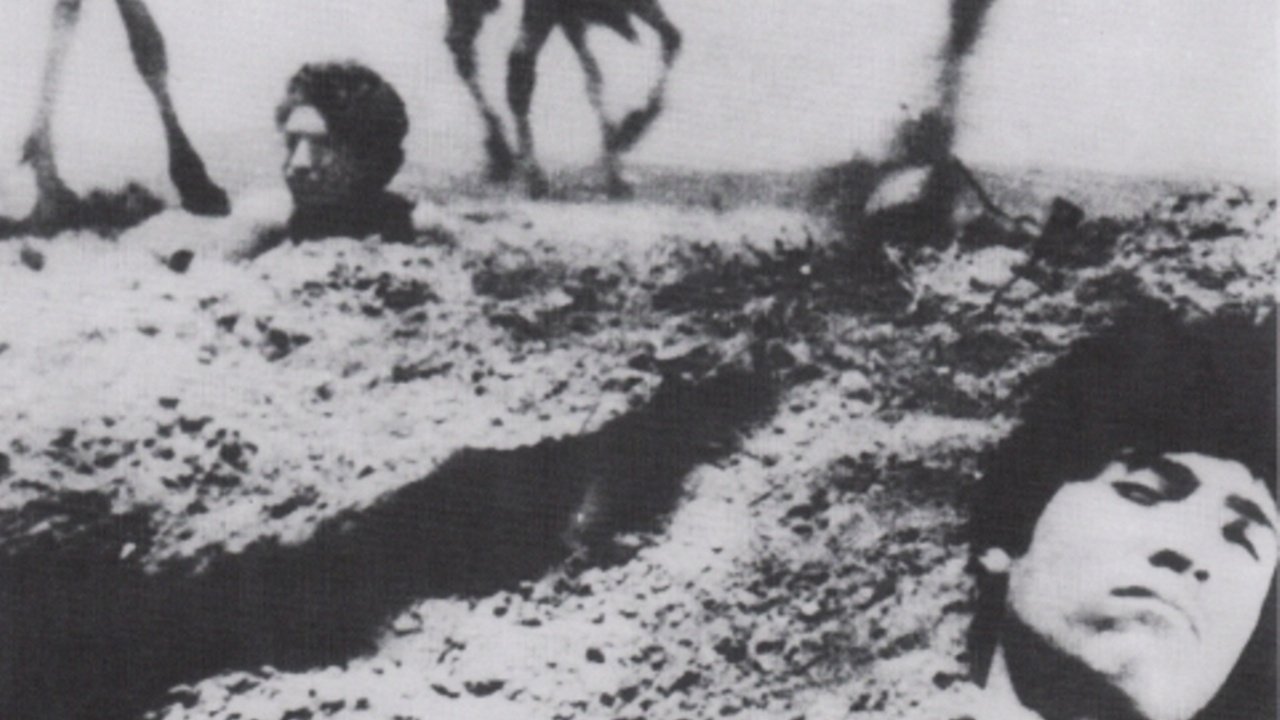
Even fragmented, even re-contextualized, the sheer visual genius on display is breathtaking. Tisse's cinematography, guided by Eisenstein's unparalleled eye for composition, is simply extraordinary. Every frame feels meticulously constructed. Think of those dramatic low angles, positioning human figures against vast, expressive skies; the sculptural quality of faces in close-up; the rhythmic editing (even in this later assembly) that hints at Eisenstein's theories of montage.
The film, as presented here, attempts to follow Eisenstein's planned prologue, epilogue, and four central stories ("Sandunga," "Maguey," "Fiesta," and the unfinished "Soldadera"). We witness ancient pyramids, timeless village rituals, the stoic beauty of indigenous peoples, the tragic exploitation during the hacienda era, and the vibrant, almost morbidly joyous celebration of the Day of the Dead. The "Maguey" sequence, depicting the brutal treatment of peons, remains particularly potent and deeply unsettling. It’s raw, powerful filmmaking that transcends language and time. Does it feel entirely coherent? Perhaps not always. The linking narration added by Aleksandrov can feel a bit pedestrian compared to the visual poetry it accompanies. Yet, the images themselves lodge in the mind.
An Echo in the Video Store Aisles?
Now, was Que Viva Mexico! (1979) a tape you'd commonly find nestled between Die Hard and The Breakfast Club down at the local Video Palace? Probably not. Its journey to home video, especially in the 80s and 90s, would likely have been more circuitous – perhaps a specialty label import, a university library copy, or something discovered through a deep-dive catalogue. But isn't that part of the magic of that era? The potential for discovery, the thrill of unearthing something rare, something historically significant, a piece of legendary 'lost' cinema resurrected, however imperfectly, on a physical tape you could actually hold and watch. Finding this wouldn't have been about casual Friday night viewing; it was about connecting with film history, with a troubled masterpiece.
The Weight of What Might Have Been
Watching Aleksandrov's version is inherently a bittersweet experience. There's the awe inspired by Eisenstein's surviving artistry – the compositions, the lighting, the ambition to capture a nation's spirit through dialectical montage. But there's also a profound sense of melancholy, a constant awareness of the compromise, the fragmentation, the ghost of the true film that Eisenstein carried in his head. We're seeing echoes, interpretations, brilliant shards rather than the intended mosaic. Can we truly judge this as Eisenstein's film? No, but we can certainly appreciate the salvaged pieces and mourn the unrealized whole. It forces us to ponder the delicate relationship between artistic vision, financial backing, and political interference. How many other potential masterpieces have been lost or compromised by forces beyond the filmmaker's control?
***
Rating: 7/10
Justification: This score reflects the film's immense historical importance and the breathtaking visual artistry captured by Eisenstein and Tisse, which shines through even in this fragmented, posthumously assembled version. It loses points for the inherent incompleteness and the fact that it represents an interpretation rather than the director's final cut, leading to unavoidable unevenness. It's rated not as a conventional narrative film, but as a crucial, if flawed, piece of cinematic heritage.
Final Thought: Que Viva Mexico! (1979) remains a powerful, poignant testament to one of cinema's great 'what ifs' – a visually stunning ruin that speaks volumes about both the genius it contains and the tragedy of its incompletion.