Here we go, another trip down the rabbit hole of Italian cinema, plucked straight from the era when video stores were our temples. Today, let's rewind to 1982 and hop in the car for Journey with Papa (original title: In viaggio con papà), a film that pairs two absolute giants of Italian comedy, Alberto Sordi and Carlo Verdone, in a road trip that’s far more than just miles covered. It’s a journey across generations, expectations, and the often-unspoken complexities between a father and son. Forget high-octane thrills; this is about the slow burn of recognition, the awkward silences, and the unexpected moments of connection that can only happen when you’re stuck in a car together.
### Two Generations Hit the Road
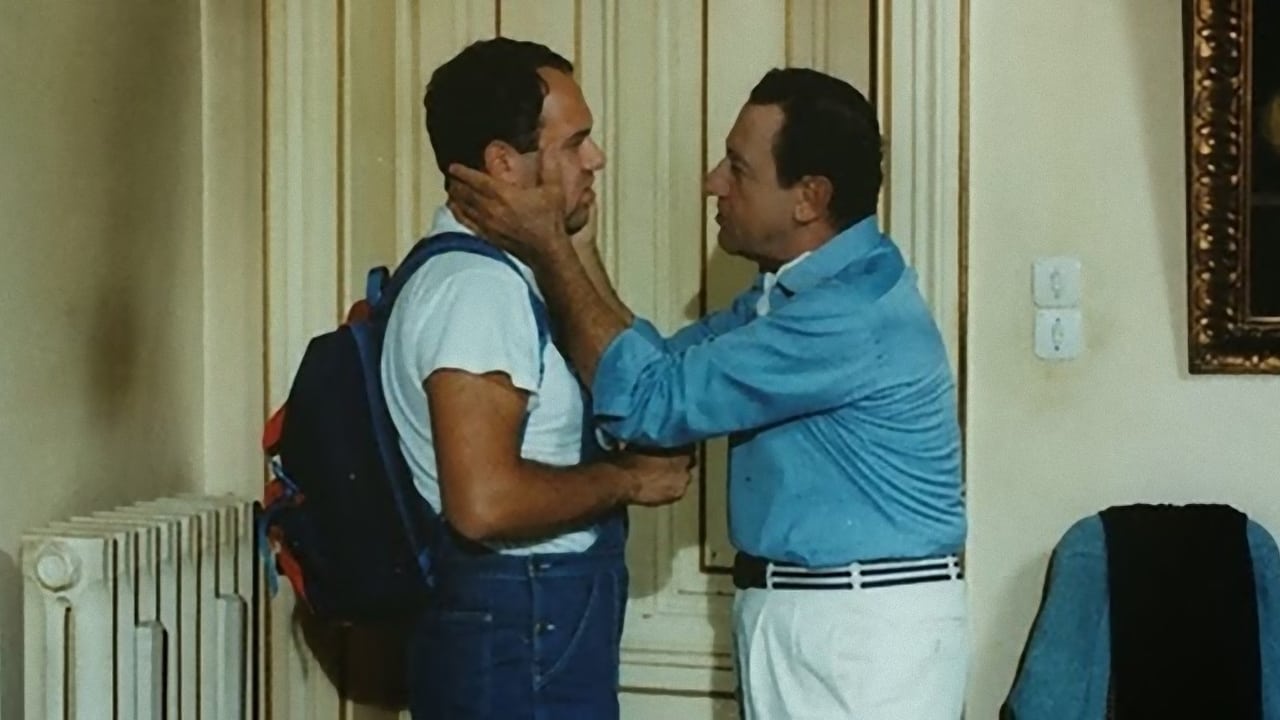
The setup is deceptively simple: Cristiano (Carlo Verdone), a shy, somewhat inhibited young man deeply involved in an environmental commune, finds his carefully constructed world interrupted by the arrival of his estranged father, Armando (Alberto Sordi). Armando, a flamboyant, worldly, and unapologetically hedonistic businessman, needs Cristiano to accompany him on a trip to ostensibly visit Cristiano’s hospitalized mother. What unfolds is less a straightforward drive and more a poignant, often funny, collision of worlds. Sordi, who also directed and co-wrote the script with his frequent collaborator Rodolfo Sonego and Augusto Caminito, crafts a narrative that feels deeply personal yet universally resonant. It poses a question many wrestle with: can two people, bound by blood but separated by vastly different life philosophies, ever truly understand each other?
### The Sordi-Verdone Effect
The absolute heart of Journey with Papa lies in the chemistry – or perhaps, the compelling lack of easy chemistry – between its two leads. Alberto Sordi, already a living legend of Italian cinema, embodies Armando with a lifetime's worth of charisma, cynicism, and a carefully guarded vulnerability. He’s the kind of father who dispenses questionable life advice with absolute certainty, forever chasing the next deal or the next woman, yet revealing fleeting glimpses of loneliness beneath the bravado. It's a performance that feels lived-in, instantly recognizable even if your own father wasn't quite so larger-than-life. Sordi, directing himself, knows exactly how to play Armando’s subtle shifts from bluster to quiet reflection.
Then there's Carlo Verdone, who by 1982 was rapidly becoming a comedy star in his own right, known for his portrayals of endearingly awkward and anxious characters. Here, as Cristiano, he’s the perfect foil: idealistic, sensitive, easily flustered by his father's shamelessness. Verdone masterfully conveys Cristiano's internal struggle – his disapproval warring with a deep-seated desire for his father's acceptance. Watching Verdone, who deeply admired Sordi and considered him a mentor, share the screen with the master feels significant. There's a palpable sense of respect, even as their characters clash. Reportedly, Sordi saw Verdone as his natural successor in Italian comedy, and this film feels almost like a passing of the torch, exploring the very generational shifts they represented in real life.
### More Than Just Laughs
While billed often as a comedy, Journey with Papa carries a significant weight of melancholy. The humor arises naturally from the characters' interactions – Armando’s attempts to "loosen up" his son, Cristiano’s horrified reactions to his father’s antics – but beneath it lies a palpable sadness. The film doesn't shy away from the disappointments and compromises of life. Armando’s carefree existence is revealed to be perhaps less fulfilling than it appears, while Cristiano’s rigid idealism is challenged by the messy realities of the world his father navigates. The journey forces both characters, and the audience, to confront uncomfortable truths about family, aging, and the masks we wear.
The early 80s Italian setting subtly informs the narrative. The backdrop includes nods to the changing social landscape, the lingering influence of traditional values clashing with newer ideologies (represented by Cristiano's commune), and the economic realities of the time. It feels authentic to its era without being heavy-handed, capturing a specific moment in Italian culture through the microcosm of this father-son relationship. The locations, shifting from the urban environment to the coastal roads, mirror the internal shifts happening within the characters.
### Retro Fun Facts & Production Insights
Digging into the making of Journey with Papa reveals some interesting layers. The Sordi-Verdone pairing wasn't just a casting coup; it was a genuine meeting of comedic minds. Verdone has often spoken about the initial intimidation of working so closely with Sordi, who was not only his co-star but also his director. Sordi, known for his meticulous preparation, apparently gave Verdone considerable space to develop Cristiano, allowing the younger actor's distinct comedic timing and sensitivity to shine.
The film was a notable success in Italy, grossing significantly well (reportedly over 10 billion Lire, a hefty sum back then) and striking a chord with audiences who saw reflections of their own family dynamics. It wasn't necessarily aiming for the international market in the same way some Italian films did, focusing instead on themes deeply rooted in Italian culture, particularly the enduring power (and complexity) of the family unit and the figure of the papà. The script itself went through development, with Sordi and Sonego refining the balance between comedy and drama, ensuring the emotional core remained central even amidst the humorous scenarios. It's a testament to their writing that the film avoids easy sentimentality, opting for a more bittersweet, realistic portrayal of reconciliation.
### Final Reflections
Journey with Papa isn't a film that shouts its themes; it allows them to unfold quietly, often in the spaces between words. It’s about the slow, sometimes painful, process of seeing a parent not just as a figurehead, but as a flawed human being. And conversely, it’s about a father learning to accept his son for who he is, not who he wishes him to be. The pacing is deliberate, matching the rhythm of a long car ride, allowing moments of boredom, irritation, unexpected laughter, and quiet understanding. The final scenes carry a particular emotional resonance, leaving you with a sense of fragile hope rather than neat resolution. Does it resonate today? Absolutely. The generational divide, the struggle for connection – these are timeless human experiences.
Rating: 8/10
This score reflects the film's powerful central performances, its nuanced blend of comedy and drama, and its insightful exploration of the father-son dynamic. Sordi and Verdone are simply magnificent together, creating a believable and moving portrait of a complex relationship. It loses a couple of points perhaps for a pacing that might feel slow to some modern viewers and a focus that remains intensely Italian, potentially requiring a bit more cultural context for wider audiences. However, its emotional honesty and the sheer pleasure of watching these two actors share the screen make it a standout piece from the era.
For anyone who appreciates character-driven stories with a touch of melancholy humor, or simply wants to see two legends of Italian cinema at the top of their game, digging up this VHS (or finding it streaming) is a journey worth taking. It leaves you pondering the roads we travel with our families, both literal and metaphorical, and the discoveries we make along the way.