Alright, fellow tape travellers, let's rewind to 1984. You've worn out your copy of Conan the Barbarian, mesmerized by its brutal poetry and Basil Poledouris’s thunderous score. You hit the local video store, maybe a ‘Mom & Pop’ place with laminated membership cards, and there it is: a gleaming new release box featuring Arnold Schwarzenegger, muscles oiled and sword held high, promising more Cimmerian carnage. You grab Conan the Destroyer, pop it into the VCR later that night, the tracking adjusts with a satisfying whirr, and... well, it’s definitely more Conan, but something’s different. The air feels lighter, the shadows less menacing, and suddenly, our favourite brooding barbarian is on a quest that feels suspiciously like a high-fantasy Dungeons & Dragons campaign sprung to life.
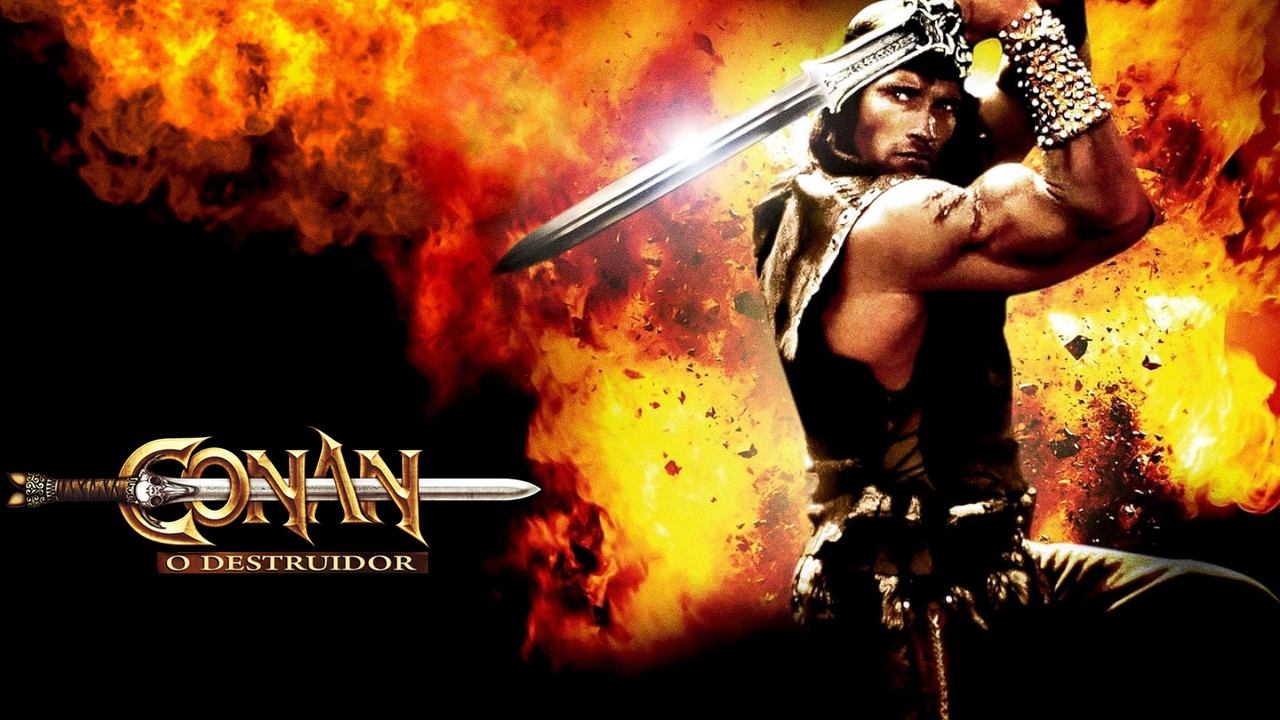
By Crom, It's Brighter In Here!
Make no mistake, Conan the Destroyer is a conscious shift from John Milius's stark, philosophical 1982 original. Under the direction of veteran Richard Fleischer – a man who knew his way around spectacle, having given us classics like 20,000 Leagues Under the Sea (1954) and Fantastic Voyage (1966) – this sequel aims squarely for PG-rated adventure territory. The plot kicks off when Queen Taramis (Sarah Douglas, radiating regal menace) hires Conan to escort her virgin niece, Princess Jehnna (Olivia d'Abo in her film debut), on a perilous journey to retrieve a mystical gem. In return? Taramis promises to resurrect Conan’s lost love, Valeria. Of course, there are ulterior motives involving awakening the dreaming god Dagoth, but that’s just part of the fun. It’s a simpler, more episodic structure than the first film, sending Conan and his newly assembled party from one fantastical set piece to another.
Arnold and His Amazing Friends
Arnold Schwarzenegger is back, of course, looking impossibly ripped and embodying the physicality of Robert E. Howard’s creation. While his dialogue remains sparse (perhaps even more so than the first film), his presence is undeniable. He is Conan. But the real scene-stealers here are his companions. Mako returns as the wizard Akiro, providing familiar exposition and a touch of comic relief. The true standouts, however, are the newcomers. Has there ever been a more visually striking casting choice than Grace Jones as the tribal warrior Zula? Jones, a force of nature herself, apparently stayed in character on set, intimidating some of the crew, and performed many of her own demanding stunts with ferocious energy. She’s magnetic every second she’s on screen.
And then there's Wilt Chamberlain. Yes, the Wilt Chamberlain, NBA legend, towers over everyone as Bombaata, the imposing captain assigned to guard Jehnna (and secretly kill Conan later). Seeing the 7'1" basketball star swinging a mace is pure 80s casting gold. Reportedly, standard prop weapons looked comically small in his massive hands, requiring custom-made gear just to look proportional. While his acting might be a tad stiff, his sheer physical presence adds a unique dynamic to the group. Along with the cowardly thief Malak (Tracey Walter, a familiar character actor face), they form one of the era's more memorable fantasy ensembles.
Creatures, Castles, and Cold Hard Steel

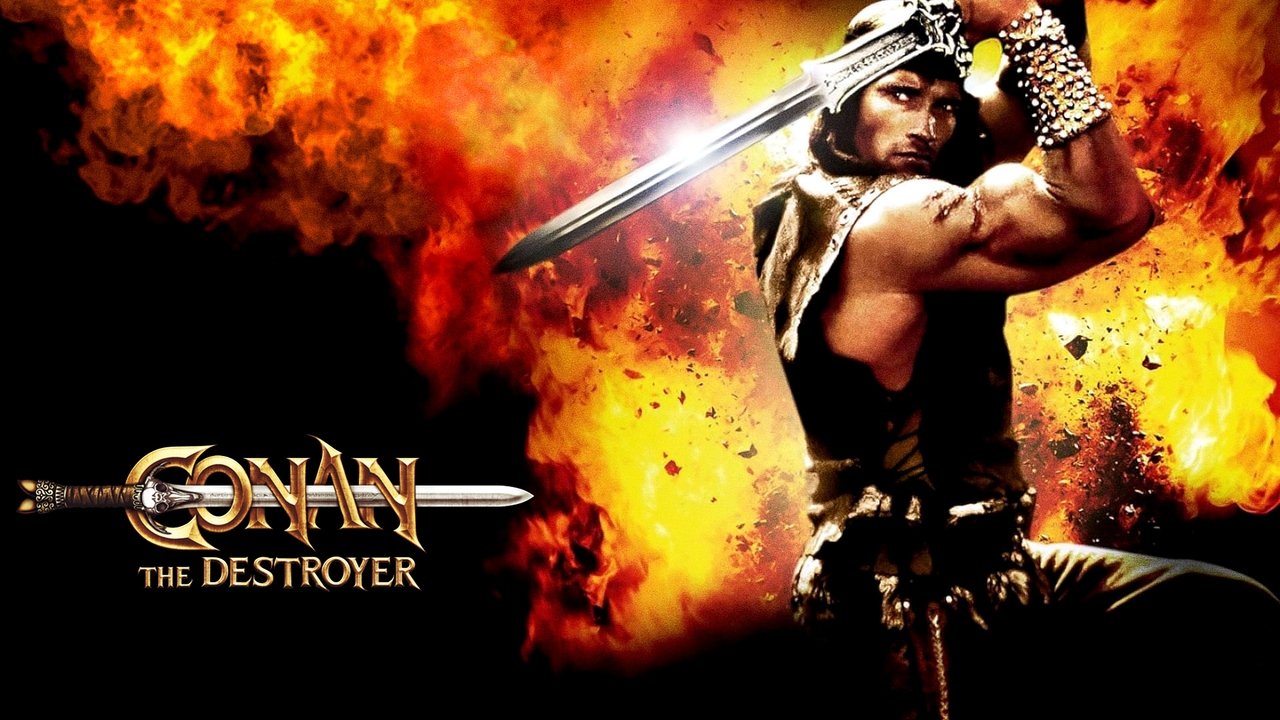
Where Destroyer truly embraces its VHS-era charm is in the action and effects. Forget slick CGI; this is the realm of practical magic! Remember that fight in the ice fortress hall of mirrors? It’s a brilliantly staged sequence, full of shattering glass and disorienting reflections – a nightmare to film, meticulously choreographed to hide the camera crew. The horseback chases feel kinetic and dusty, the sword fights chunky and impactful. And the creature feature elements? Pure delight for fans of tactile effects.
The wizards conjuring monstrous apparitions, the bird-like beast that snatches Jehnna, and culminating in the final battle against the resurrected Dagoth – these were brought to life through puppetry, animatronics, and good old-fashioned performers in suits. Carlo Rambaldi, the genius who gave us E.T. just two years prior, designed the Dagoth creature. Watching it lumber and roar, you appreciate the artistry and effort involved. Sure, maybe the seams show a bit more clearly on a crisp Blu-ray today, but on that slightly fuzzy CRT screen back in the day? It felt monstrous and real in a way that purely digital creations sometimes struggle to replicate. Wasn't that raw physicality part of the thrill?
A Lighter Shade of Sword & Sorcery
While Basil Poledouris returned to score the film, his music here feels less operatic and more geared towards straightforward adventure cues, matching the film's lighter tone. The production design leans heavily into colourful, almost comic-book fantasy aesthetics, filmed largely on location in Mexico, utilizing some of the same dramatic landscapes seen in other epics. It's less concerned with philosophical weight and more focused on delivering a fun, accessible fantasy romp.
Critically, it wasn't as well-received as the original, often dinged for its less complex story and broader tone. However, it performed respectably at the box office, pulling in around $31 million in the US against its $18 million budget, proving audiences were still hungry for Hyborian adventures. Over the years, it's settled into a comfortable cult status – the slightly sillier, but undeniably entertaining, younger sibling to the brooding original.
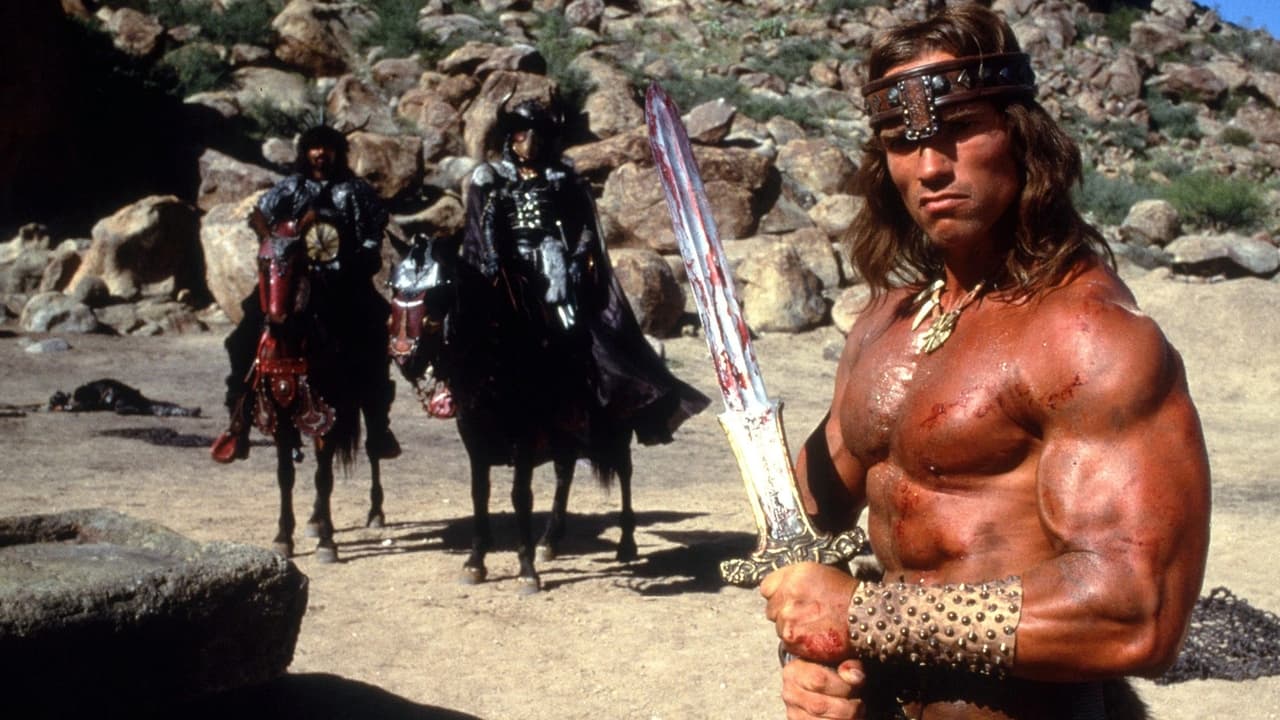
VHS Heaven Rating: 6/10
Justification: Conan the Destroyer loses points for ditching the raw power and thematic depth of its predecessor, resulting in a simpler, sometimes cheesy plot. However, it gains points for Arnold's iconic presence, Grace Jones's electrifying performance, the sheer audacity of casting Wilt Chamberlain, and its wholehearted embrace of glorious, practical 80s fantasy effects. It’s undeniably fun, visually memorable, and delivers exactly the kind of sword-swinging adventure promised by its cover box.
Final Thought: It might lack the Cimmerian grit of Milius's masterpiece, but for a pure, unadulterated blast of 80s fantasy adventure straight from the video store shelf – complete with wizards, warriors, and a rubber monster god – Conan the Destroyer still smashes.