Okay, settle back into that comfy armchair, maybe grab a beverage reminiscent of something you'd sneak into the living room back in the day. Let's rewind the tape to 1985, a time when fantasy films often came with a side of synth-pop, and drop the needle – or rather, slide the cassette – into Richard Donner's visually stunning medieval romance, Ladyhawke. This wasn't your typical sword-and-sorcery epic; it felt different, imbued with a unique blend of timeless romance and unmistakably 80s flair.
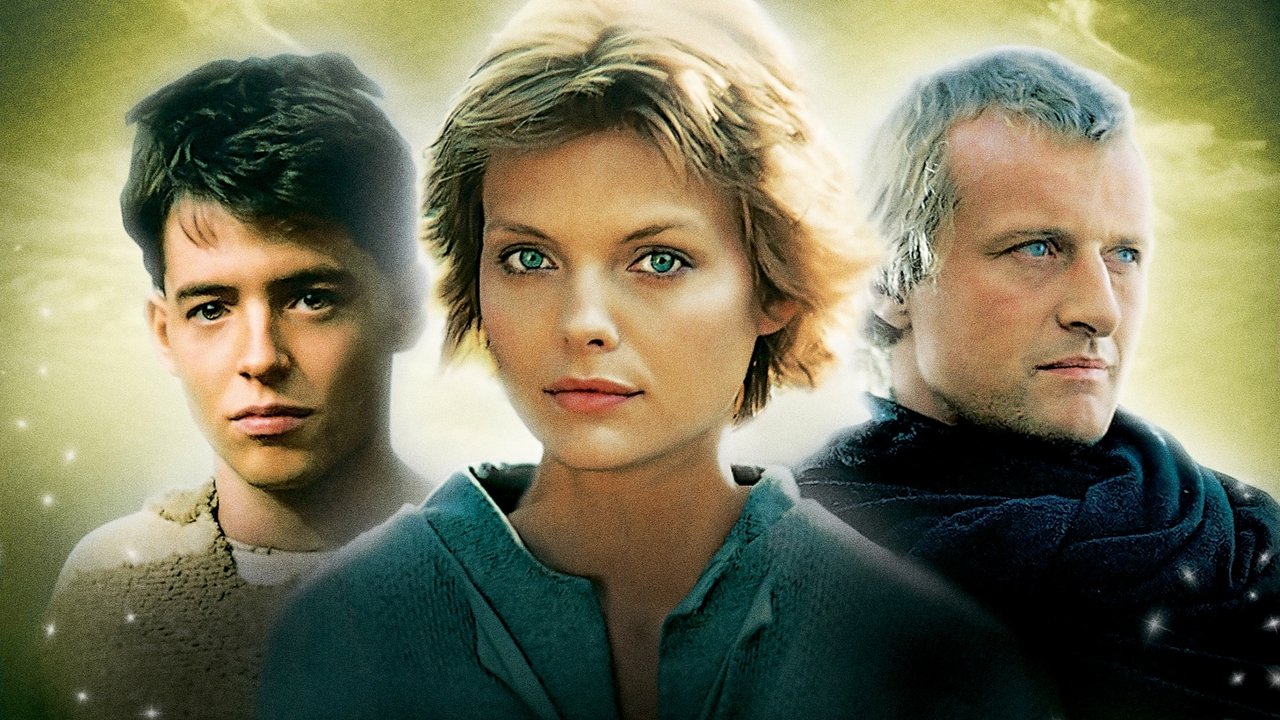
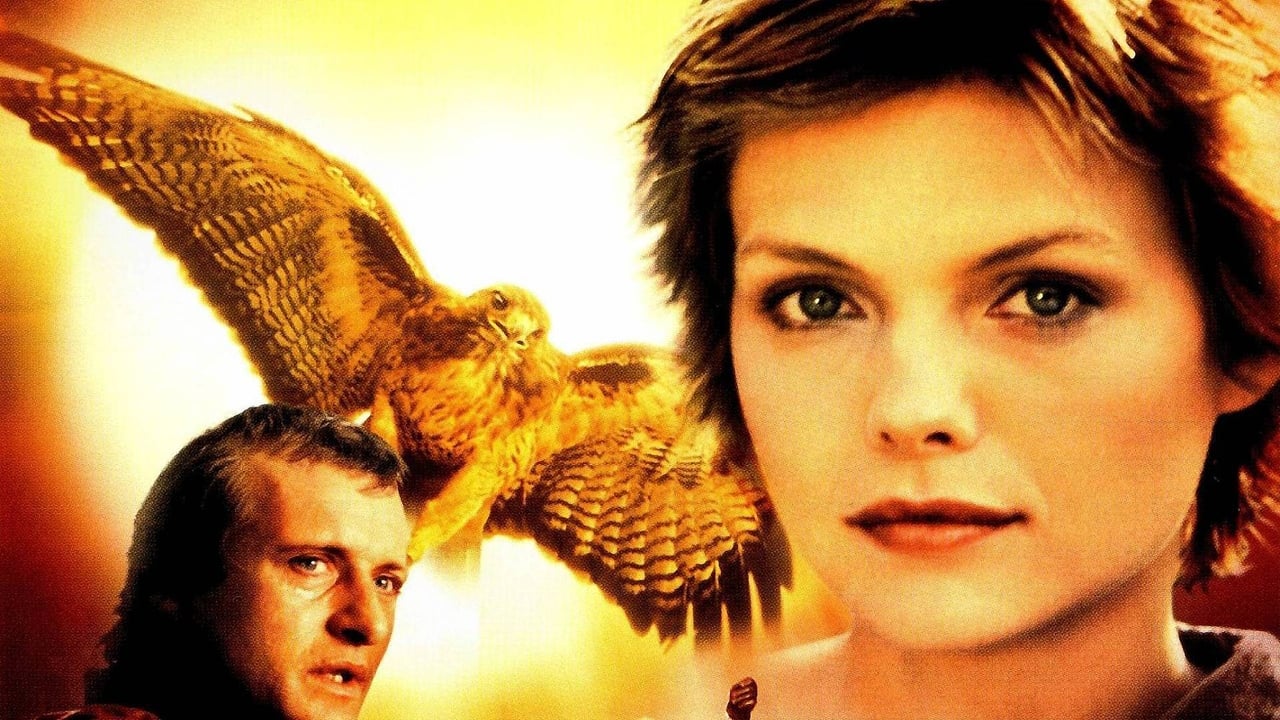
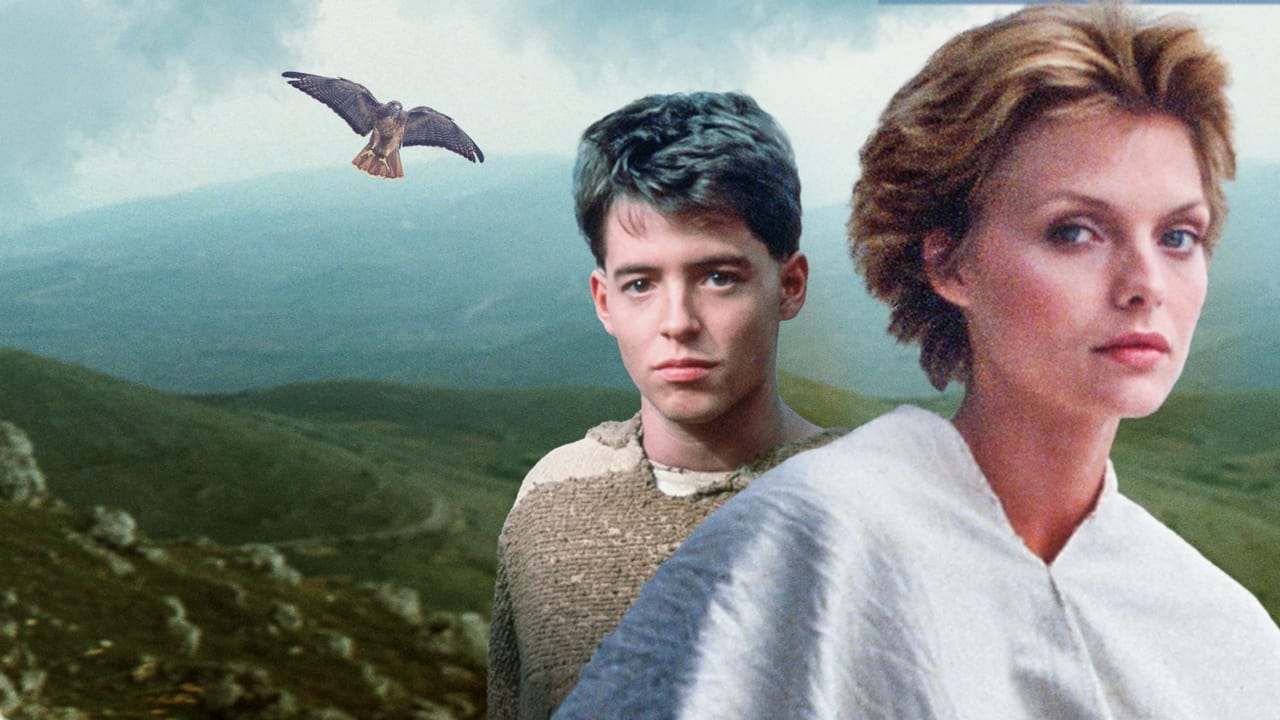
The premise itself is pure fairytale magic, the kind that instantly captures the imagination. Imagine lovers cursed by a jealous, malevolent Bishop: by day, the noble Isabeau d'Anjou (Michelle Pfeiffer, luminous even then) transforms into a hawk, soaring helplessly above her beloved Captain Etienne Navarre (Rutger Hauer, radiating brooding intensity). By night, as Isabeau returns to human form, Navarre becomes a magnificent black wolf, forever guardians, forever separated, able to glimpse each other only fleetingly at dawn and dusk. It’s a curse of exquisite cruelty, the kind of high-concept hook that lodges itself firmly in your memory.
A Thief, a Knight, and a Lady
Into this tragic tapestry stumbles Phillipe "The Mouse" Gaston, played by a young Matthew Broderick hot off the success of WarGames (1983). Escaping the dungeons of Aquila, Phillipe becomes the unwitting link between the cursed lovers, the only one who knows their full secret. Broderick brings his signature charm, a distinctly modern, almost smart-alecky sensibility that provides much of the film's humor. He chats with God, quips about his predicament, and generally acts as the audience surrogate dropped into this fantastical past. It’s a performance that divides some viewers even today – does his contemporary style clash too much with the medieval setting? Perhaps. But for many watching back then, his relatable wisecracking was the anchor in a world of dark magic and stoic knights. He was us, reacting with bewildered amusement to the epic drama unfolding around him.
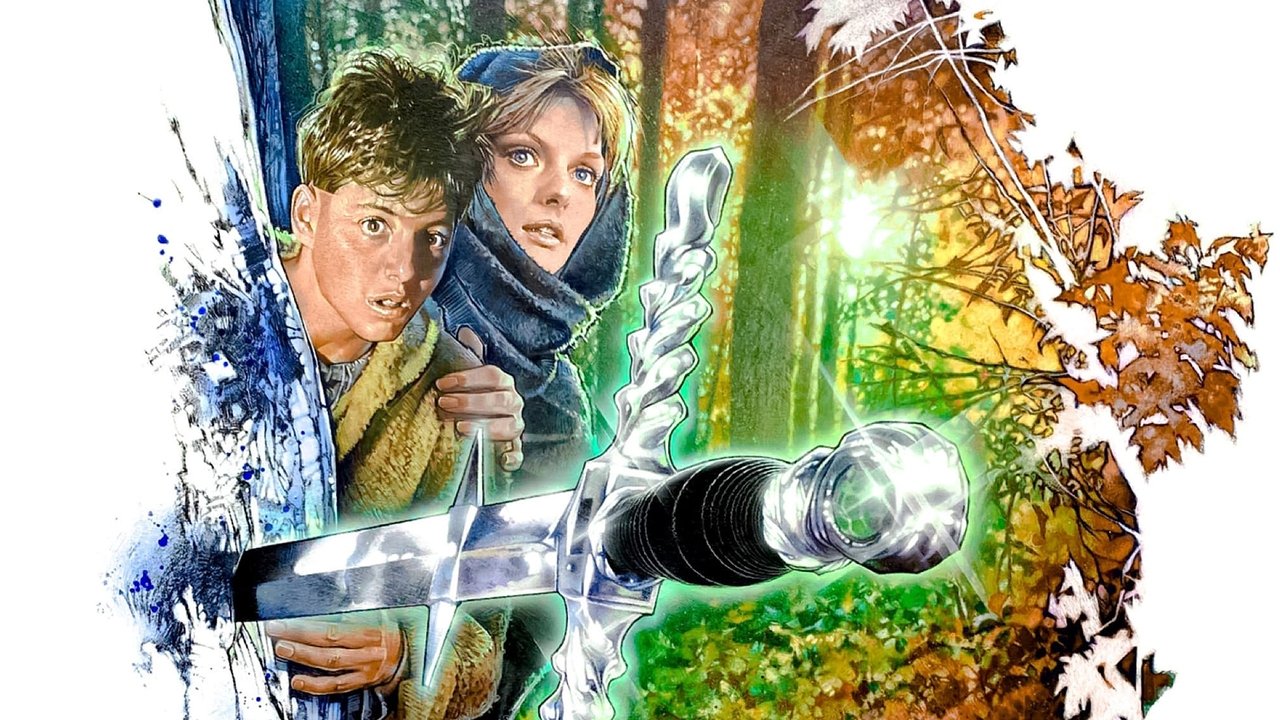
Opposite him, Hauer and Pfeiffer are simply magnetic. Hauer, fresh from his iconic role in Blade Runner (1982), embodies Navarre's tormented nobility. He carries the weight of the curse in his weary eyes and wields his sword with lethal grace (apparently, Hauer performed many of his own demanding stunts, including intricate horseback sequences). Pfeiffer, in one of her earlier major roles, possesses an ethereal beauty perfect for Isabeau. Though her screen time as a human is limited by the curse, her presence is deeply felt throughout the film, the driving force behind Navarre's quest for vengeance and freedom. Their fleeting moments together at twilight, achingly brief, are the heart of the film's romantic power.
Sun-Drenched Italy Meets Synth Dreams
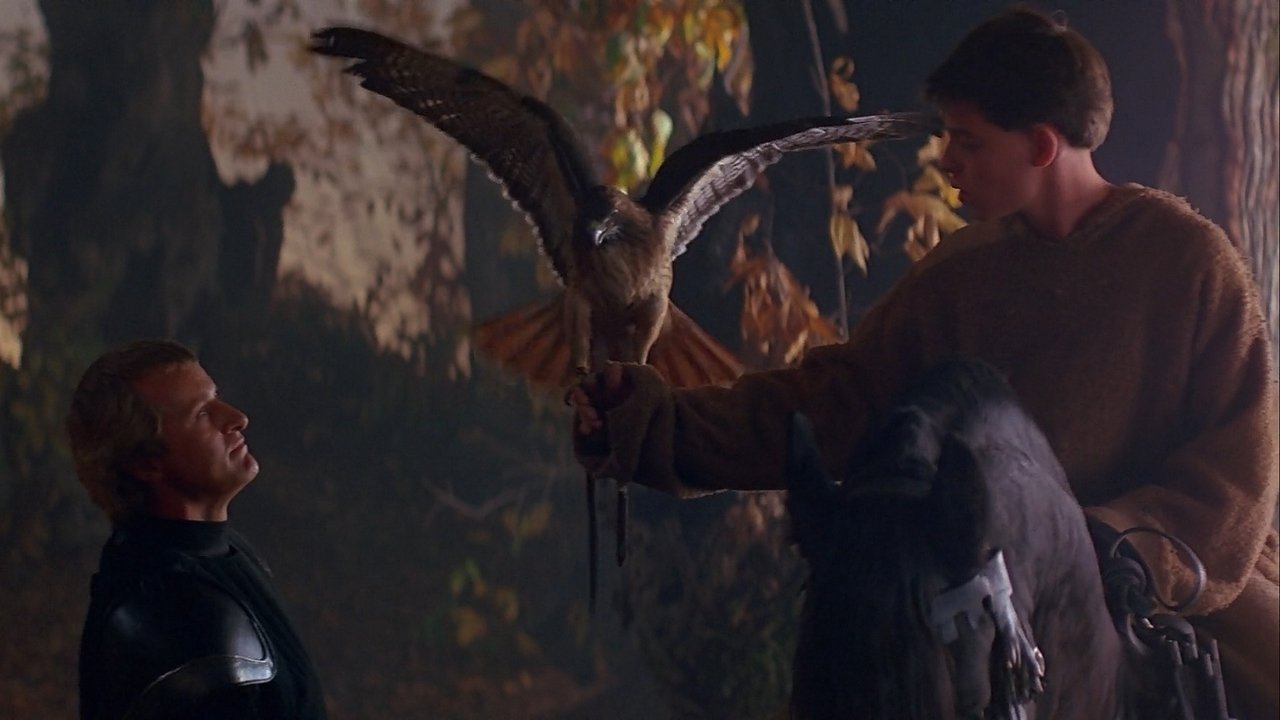
Visually, Ladyhawke is breathtaking. Director Richard Donner, already a master of spectacle with Superman (1978) and soon to give us The Goonies (1985), teamed up with legendary cinematographer Vittorio Storaro (Apocalypse Now). They shot on location across stunning medieval castles and landscapes in Italy (mostly the Abruzzo region), capturing a sense of tangible history and epic scale bathed in gorgeous natural light. The castles look real because they are real, lending the fantasy an earthy grounding often missing in studio-bound productions. The practical effects, particularly the seamless integration of the trained hawks and wolves representing the cursed lovers, still hold up remarkably well, adding to the film's unique charm.
Now, about that soundtrack. Composed by Andrew Powell of The Alan Parsons Project, the score is a driving force of progressive rock and synthesizer melodies laid over medieval imagery. It was, and remains, a bold choice. Donner reportedly wanted a modern, powerful sound to contrast with the setting, aiming for something akin to a rock opera. Did it work? Well, that’s the million-dollar question (or maybe the $18.4 million question, which is roughly what it grossed domestically against its $20 million budget – finding more love later on VHS). For some, the pulsing 80s synths are jarringly anachronistic, pulling them out of the medieval fantasy. For others, myself included, it adds a layer of quirky, unforgettable energy that firmly places Ladyhawke in its era, contributing to its cult status. It might be dated, yes, but it’s also undeniably cool in its own weird way.
Retro Fun Facts: Secrets of Aquila
Digging through the archives (or, you know, remembering old magazine articles and DVD extras) reveals some fun tidbits. Casting could have gone differently – Kurt Russell was apparently considered for Navarre early on. And imagine Sean Penn or even Dustin Hoffman as Phillipe! It’s hard to picture anyone else now. There’s also the story that Michelle Pfeiffer accidentally clocked Matthew Broderick for real during a scene where she had to strike him – adding a touch of unplanned authenticity! The challenges of working with trained animals, particularly the majestic hawk Goliath, were significant but ultimately paid off, creating some truly iconic imagery. It’s these kinds of production details – the commitment to location shooting, the practical creature work, even the controversial music choice – that make Ladyhawke feel like such a distinct product of its time.
Forever Chasing Twilight
Ladyhawke isn't a perfect fantasy film. Broderick's modern humor can sometimes feel slightly out of step, and that synth score will forever be a point of debate. But its strengths are undeniable: the stunning visuals, the deeply romantic core concept, the compelling performances from its leads, and its sheer, unadulterated 80s spirit. It tells a timeless story of love against impossible odds, wrapped in a package that could only have been delivered in 1985. It didn't quite set the box office alight initially, but like so many films we cherish from the era, it found its devoted audience on home video, those hefty VHS tapes ensuring its passage into nostalgic memory. Watching it again feels like revisiting an old friend – perhaps one with questionable musical taste, but whose heart is undeniably in the right place.
Rating: 8/10
This score reflects the film's undeniable charm, stunning visuals, and powerful romantic core, which easily outweigh the occasionally jarring modern elements like Broderick's delivery or the divisive synth score. It’s a beautifully crafted piece of 80s fantasy filmmaking with standout performances and a truly memorable premise. The slight deduction acknowledges that its unique blend might not click for everyone, particularly newcomers less forgiving of its era-specific quirks.
Ladyhawke remains a magical cinematic curse, the kind you’re more than happy to fall under again and again, especially when that glorious, controversial score kicks in.