It’s a strange thing, memory. Not the sharp, edited highlights we often replay, but the murky, indistinct feeling of a time and place. The texture of it. That's the sensation that washes over you when watching Aleksei German's staggering 1985 film, My Friend Ivan Lapshin (Мой друг Иван Лапшин). It doesn't present the past; it immerses you in its cold, damp, often bewildering reality. Forget crisp narratives and easy answers; this is like stepping into a half-remembered dream of the Soviet Union in the mid-1930s.
A Window Onto a Lost World
Framed by the recollections of a narrator looking back from the early 80s ("I want to tell you about my childhood friend..."), the film transports us to the provincial town of Unchansk. Life unfolds not through grand events, but through fragmented moments, overheard conversations, and the oppressive weight of communal living. We follow Ivan Lapshin (Andrei Boltnev), the chief of the local Criminal Investigation Department, as he navigates petty crimes, hunts a brutal gang of murderers, and deals with the messy realities of life in cramped communal apartments, all under the looming, unspoken shadow of Stalinism. It's less a conventional police procedural and more a tapestry woven from the threads of everyday existence – anxieties, fleeting joys, bureaucratic frustrations, and sudden, shocking violence.
German's Immersive Realism

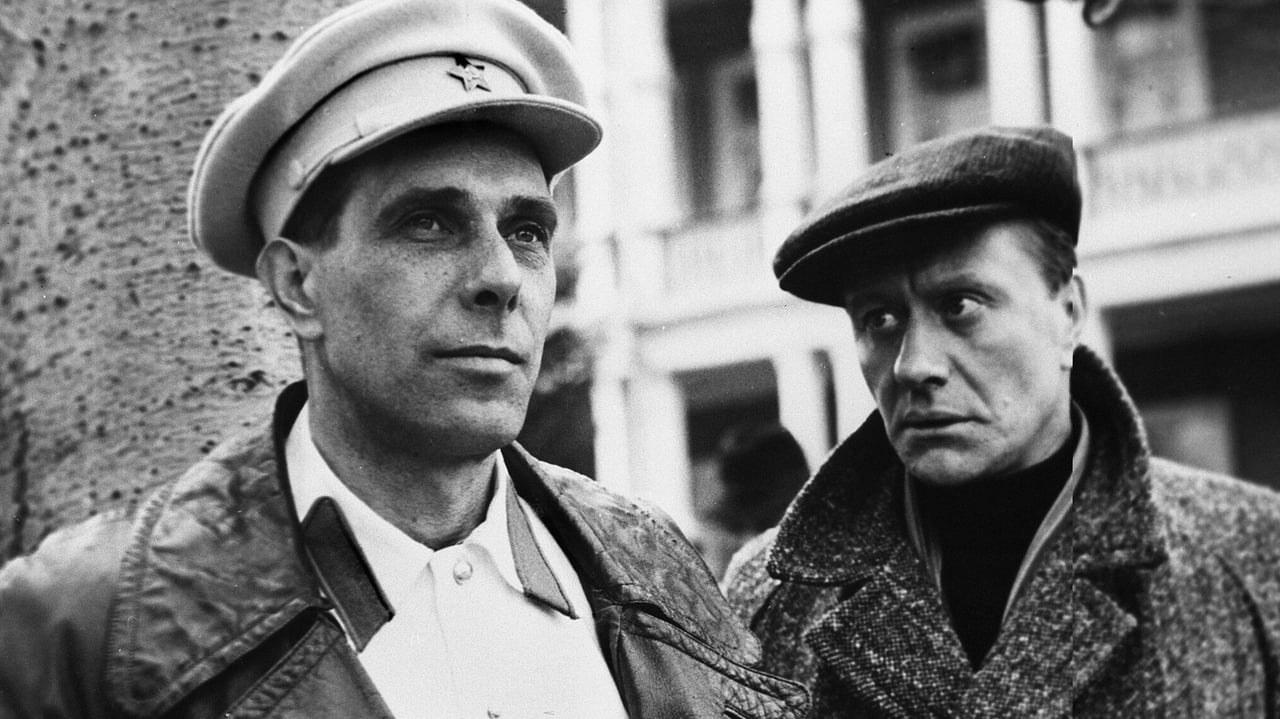
What makes Lapshin so arresting, and perhaps challenging for some, is German's utterly unique directorial style. Forget polished Hollywood aesthetics. German crafts a world that feels startlingly, almost uncomfortably, authentic. The camera often feels like an invisible observer, catching snippets of conversations that overlap and fade, characters drifting in and out of frame, the mise-en-scène deliberately cluttered with the mundane details of life. It's a technique sometimes labelled 'dirty realism', shot primarily in a stark, desaturated palette that shifts between black and white and a muted sepia, occasionally punctured by startling, brief flashes of colour – like intrusions of subjective memory or heightened emotion. This isn't just stylization; it creates an overwhelming sense of place and time, a world you feel you could almost smell and touch. It demands your attention, forcing you to piece together the narrative from the rich, dense details provided.
Portraits Etched in Grey
The performances are integral to this immersive quality. Andrei Boltnev is unforgettable as Lapshin. He embodies a weary competence, a man dedicated to his often grim work, but carrying an unspoken burden. There's no simplistic heroism here; Lapshin is gruff, sometimes harsh, capable of both dogged police work and moments of quiet introspection. His exhaustion feels palpable. Nina Ruslanova provides a vital emotional counterpoint as Natasha Adashova, an actress lodging in the communal apartment, her vulnerability and yearning for connection adding a layer of fragile humanity amidst the bleakness. Perhaps most surprising is the casting of Andrei Mironov, a hugely popular star typically known for his charismatic comedic roles in Soviet cinema. Here, as the journalist Khanin, grappling with personal tragedy, Mironov delivers a performance of profound melancholy and quiet desperation, utterly shedding his familiar persona. It's a testament to his range and German's vision that this atypical role feels so devastatingly real.
A Film Born of Persistence
The film's journey to the screen was almost as fraught as the era it depicts. Based on stories by the director's father, Yuri German, My Friend Ivan Lapshin was actually completed around 1982 but shelved by Soviet authorities for years. Its bleakness, ambiguity, and refusal to offer easy ideological comforts likely made officials uneasy. It wasn't until the era of Glasnost under Gorbachev that it finally received a proper release in 1985/86. This difficult birth somehow feels baked into the film itself – a sense of truths struggling to surface, of history half-buried. German was known for his meticulous, demanding methods, sometimes incorporating non-professional actors alongside his seasoned cast to enhance the feeling of authenticity. The result is a film that feels less like a historical recreation and more like a recovered artifact, unearthed from the permafrost of the past.
Lingering Questions in the Thaw
My Friend Ivan Lapshin isn't an easy watch. It doesn't offer the escapism found in many beloved 80s staples that populated video store shelves. I remember finding a copy tucked away in the 'World Cinema' section of my local rental place, the stark cover promising something entirely different from the usual action heroes and teen comedies. It was the kind of discovery that broadened horizons, a reminder that cinema could be challenging, immersive, and deeply unsettling in ways I hadn't encountered often. It asks profound questions: How do we truly remember the past? How does the weight of history press down on individual lives? What does duty mean in morally compromised times? The film doesn't provide answers, but allows these questions to linger, much like the pervasive chill that seems to hang over Unchansk.
Rating: 9/10
My Friend Ivan Lapshin earns this high score for its audacious artistic vision, Aleksei German's masterful creation of atmosphere, the stunningly authentic performances, and its unflinching gaze into the complexities of history and memory. It's a demanding film, yes, but profoundly rewarding. Its unique style and thematic depth make it a towering achievement of late Soviet cinema, feeling less like a product of the 80s and more like a vital transmission from a deeper, more complex past, discovered on a flickering CRT screen.
It’s a film that stays with you, not because of explosions or catchphrases, but because of the faces, the textures, the inescapable feeling of having spent time in a world rarely depicted with such stark, haunting honesty. What ghosts of our own pasts does it stir?