Some films arrive like ghosts, whispering tales not just from their own narrative, but from the troubled journey they took to reach the screen. Such is the case with Aleksei German's Trial on the Road (originally Proverka na dorogakh), a film technically completed in 1971 but which haunted the vaults of Soviet censorship for fifteen long years before finally seeing the light of day – and eventually, our flickering CRT screens via well-worn VHS tapes – in 1986. Watching it now feels less like dusting off a forgotten relic and more like uncovering a buried testament, a raw, morally complex portrayal of war that feels startlingly ahead of its time.

### Shelved Truth: The Long Wait
Why the delay? Imagine the political climate of Brezhnev's Soviet Union. Trial on the Road, based on a story by director Aleksei German's father, Yuri German, and scripted by Eduard Volodarsky, dared to tread ground considered treacherous. Set in the brutal winter of 1942 during the Nazi occupation, it centers on Lazarev (Vladimir Zamansky), a Red Army sergeant who initially surrendered and served in a German-backed collaborationist unit (ROA). Having deserted the Germans, he now seeks redemption by joining a desperate band of Soviet partisans led by the pragmatic Commander Lokotkov (Rolan Bykov). The film’s unforgivable sin, in the eyes of the authorities, wasn't just depicting collaborators, but portraying one with nuance and exploring the grim choices faced by partisans, stripping away the veneer of uncomplicated heroism often demanded by state-sanctioned narratives. It was deemed ideologically unsound, a portrayal considered too bleak, too questioning. For fifteen years, it remained unseen, a powerful story silenced until the era of Glasnost finally allowed its release. Knowing this history fundamentally shifts how one experiences the film; it becomes an act of defiance viewed decades later.
### Mud, Snow, and Moral Fog
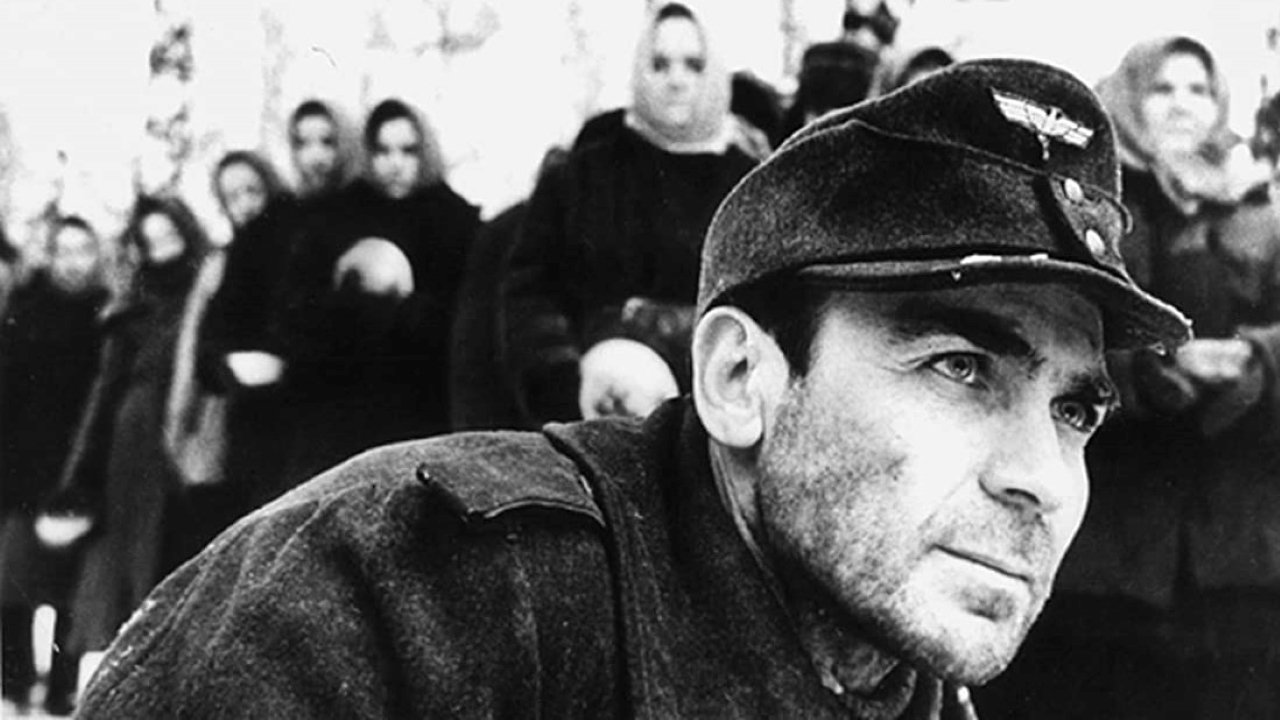
Forget flag-waving heroics. Trial on the Road plunges you into the grim reality of partisan warfare – the gnawing hunger, the paralyzing cold, the constant, grinding fear. German achieves an atmosphere of near-documentary realism, shot in stark black and white that emphasizes the desolate landscapes and the exhaustion etched on every face. There's little room for battlefield spectacle; instead, the tension builds through hushed conversations in cramped dugouts, the suspense of scouting missions across treacherous snowfields, and the ever-present threat of betrayal, both from the enemy and within their own ranks. The central plot revolves around Lazarev's desperate attempt to prove his loyalty by helping the partisans capture a German train loaded with food desperately needed by the starving local population. But can he truly be trusted? This question hangs heavy, explored through the differing perspectives of the humane Lokotkov and the rigidly suspicious political officer, Petushkov (played with chilling conviction by Anatoliy Solonitsyn, a familiar face from Andrei Tarkovsky's masterpieces).
### Performances Forged in Winter
The acting in Trial on the Road is remarkable for its unvarnished authenticity. Vladimir Zamansky delivers a career-defining performance as Lazarev. His face is a landscape of conflict – shame, determination, weariness, and a desperate flicker of hope. He rarely needs dialogue to convey the weight of his past actions and his uncertain future. You see the collaborator, the soldier, and the broken man all warring within him. Equally compelling is Rolan Bykov as Lokotkov. He embodies the burden of leadership in impossible circumstances, wrestling with the practical need for Lazarev's skills against the ingrained distrust and political pressure represented by Petushkov. Bykov portrays Lokotkov not as a saint, but as a fundamentally decent man forced to make potentially fatal moral calculations. His quiet authority and underlying empathy provide the film's moral compass, however precarious.
### German's Gritty Realism
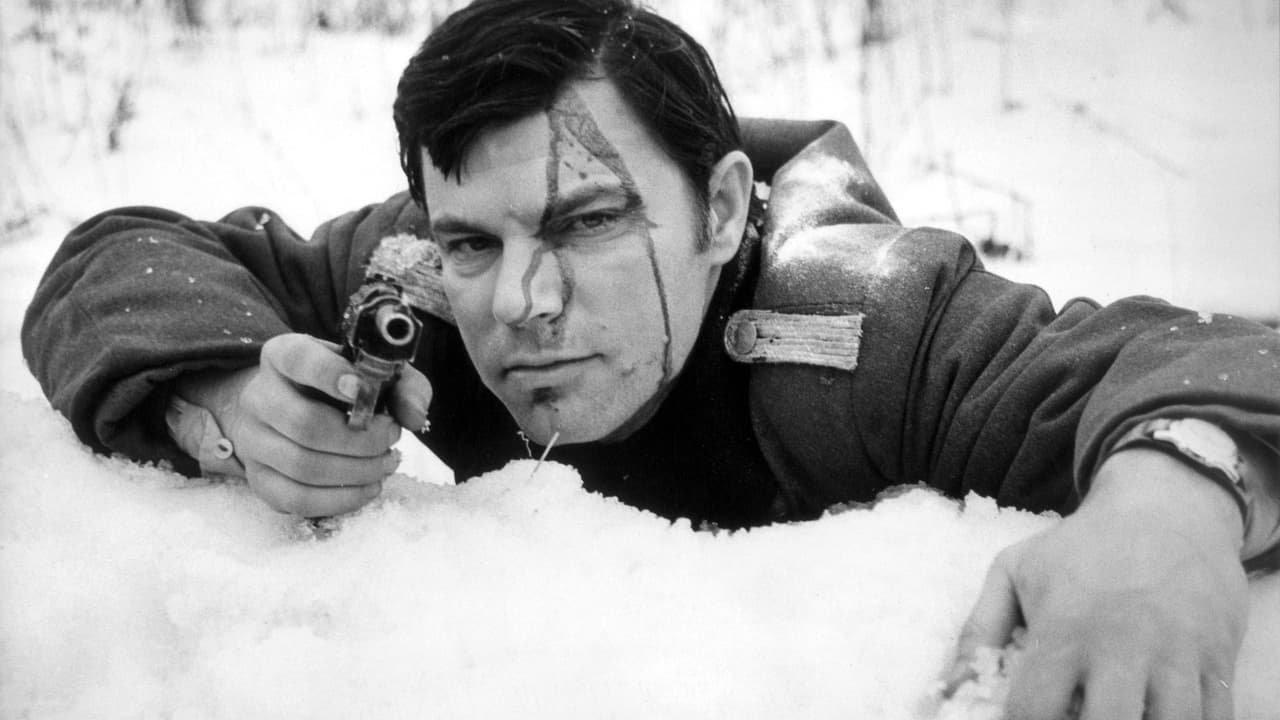
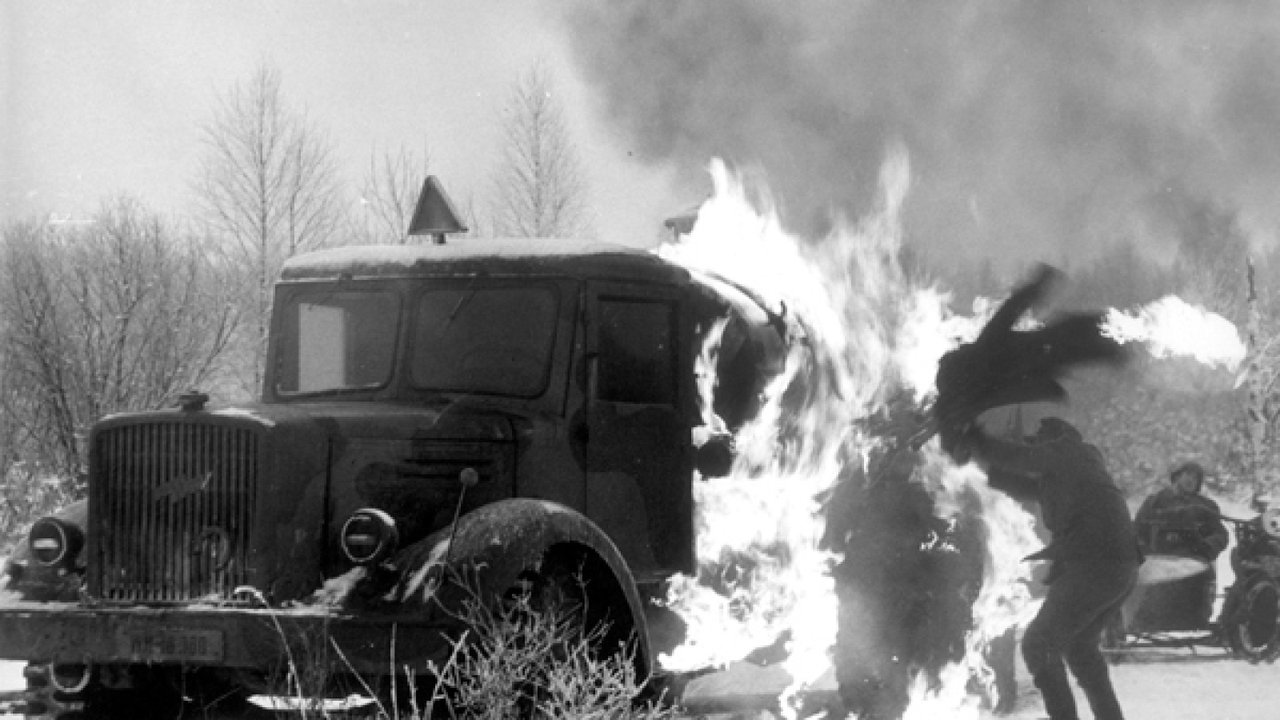
Aleksei German, who would later gift us the equally challenging and brilliant My Friend Ivan Lapshin (1985, also delayed), directs with an unflinching eye. The camera often feels like another weary participant in the events, claustrophobic in interiors, exposed and vulnerable in the vast, snowy exteriors. There’s a palpable sense of texture – the rough wool of coats, the splintered wood of shelters, the biting wind. German avoids easy answers or simplistic characterizations. The partisans aren't always noble, and the moral lines blur under the extreme duress of survival. This refusal to romanticize or simplify the conflict is what made the film so dangerous in 1971 and what makes it so powerful today. It asks difficult questions about loyalty, forgiveness, and the dehumanizing nature of war that resonate far beyond its specific historical context. Doesn't the struggle to trust, to judge fairly under pressure, echo challenges we still grapple with?
### Legacy of a Thawed Truth
Finding Trial on the Road on VHS back in the day might have felt like stumbling upon a secret transmission from another world. It lacked the polish of Western war films, offering instead a raw, demanding experience. It doesn't offer catharsis in the traditional sense, but leaves you contemplating the immense grey areas of human behavior under fire. It stands as a monument to artistic integrity and a stark reminder of how political ideology can attempt to stifle uncomfortable truths. Its eventual release wasn't just a cinematic event; it was a cultural one, signaling a tentative thaw in a system that had long suppressed such complex narratives.
Rating: 9/10
This score reflects the film's profound thematic depth, its masterful direction creating an almost unbearable sense of realism, and the powerhouse performances, particularly from Zamansky and Bykov. Its historical significance as a suppressed work adds another layer of appreciation. While its bleakness and deliberate pace might challenge some viewers expecting conventional war action, its unflinching honesty and artistry make it an essential, unforgettable piece of cinema.
Trial on the Road remains a chilling, vital piece of filmmaking – a stark reminder that the hardest battles are often fought not against tanks and guns, but within the human soul, amidst the unforgiving landscapes of war and conscience.