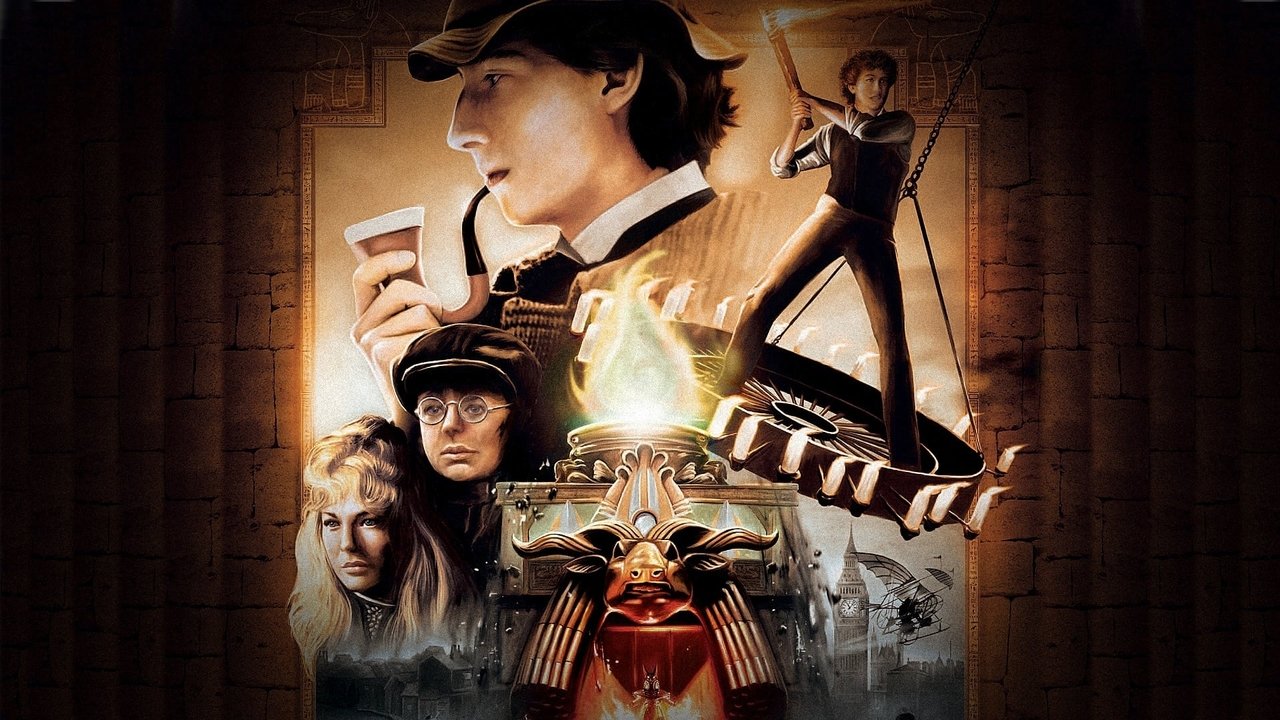
Alright, settle back into that comfy armchair, maybe imagine the faint hum of a VCR powering up. Let's rewind to 1985, a time when Amblin Entertainment, under the watchful eye of Steven Spielberg (serving as executive producer here), was practically synonymous with cinematic wonder. It's in this vibrant atmosphere that a truly intriguing idea took shape: what if Sherlock Holmes and John Watson met not as adults, but as inquisitive, adventurous teenagers? The result was Barry Levinson's Young Sherlock Holmes, a film penned by Chris Columbus (hot off writing Gremlins (1984) and soon to direct Home Alone (1990)), and it remains a fascinating, beautifully crafted piece of 80s adventure cinema.
### Back to Baker Street... Junior Division
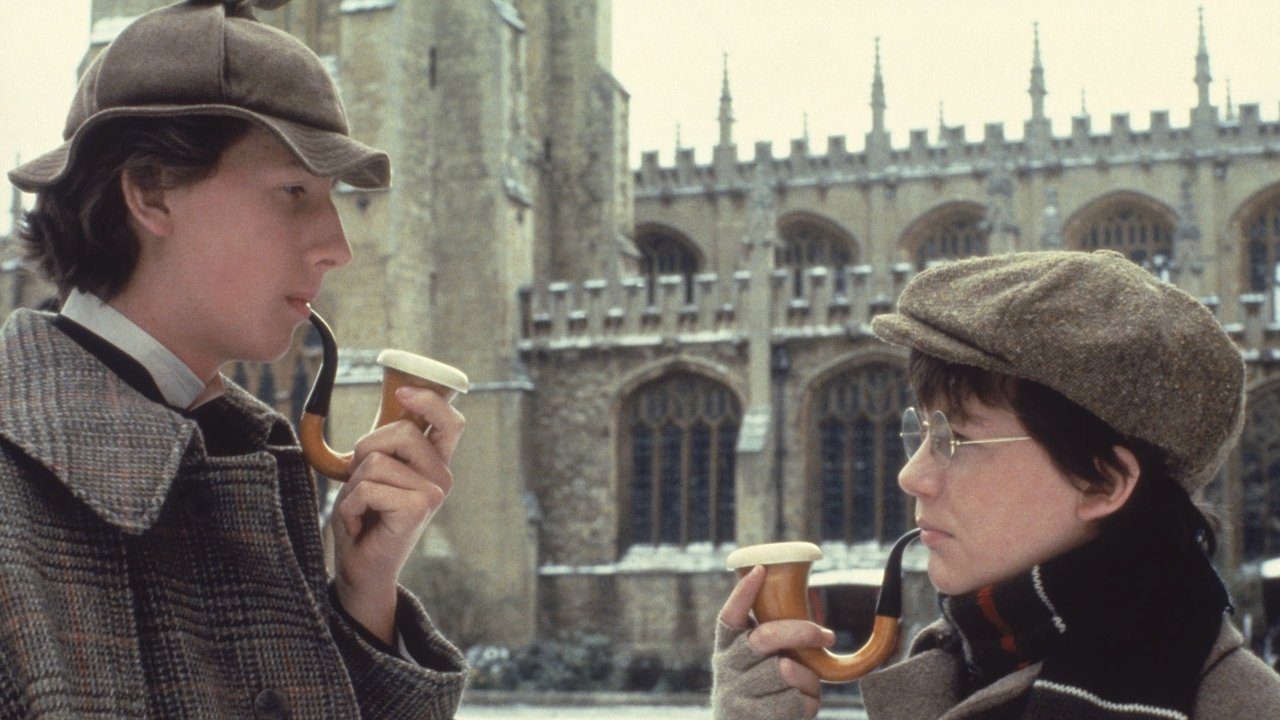
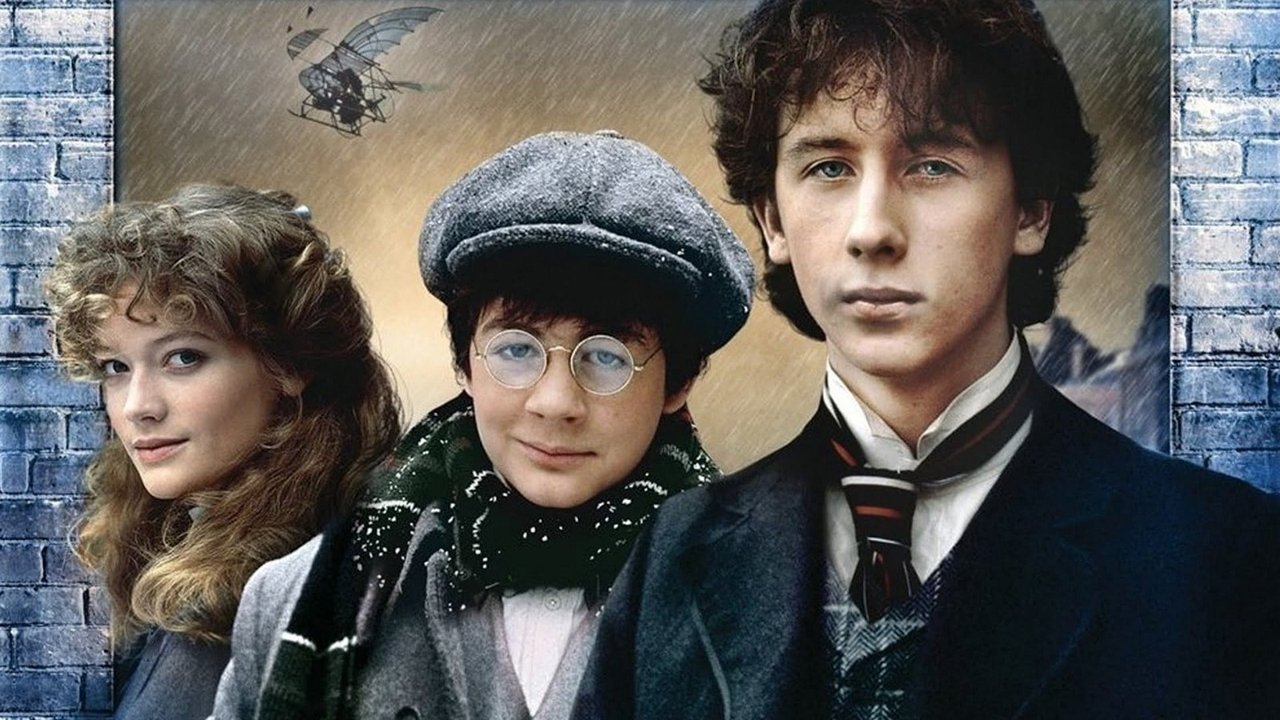
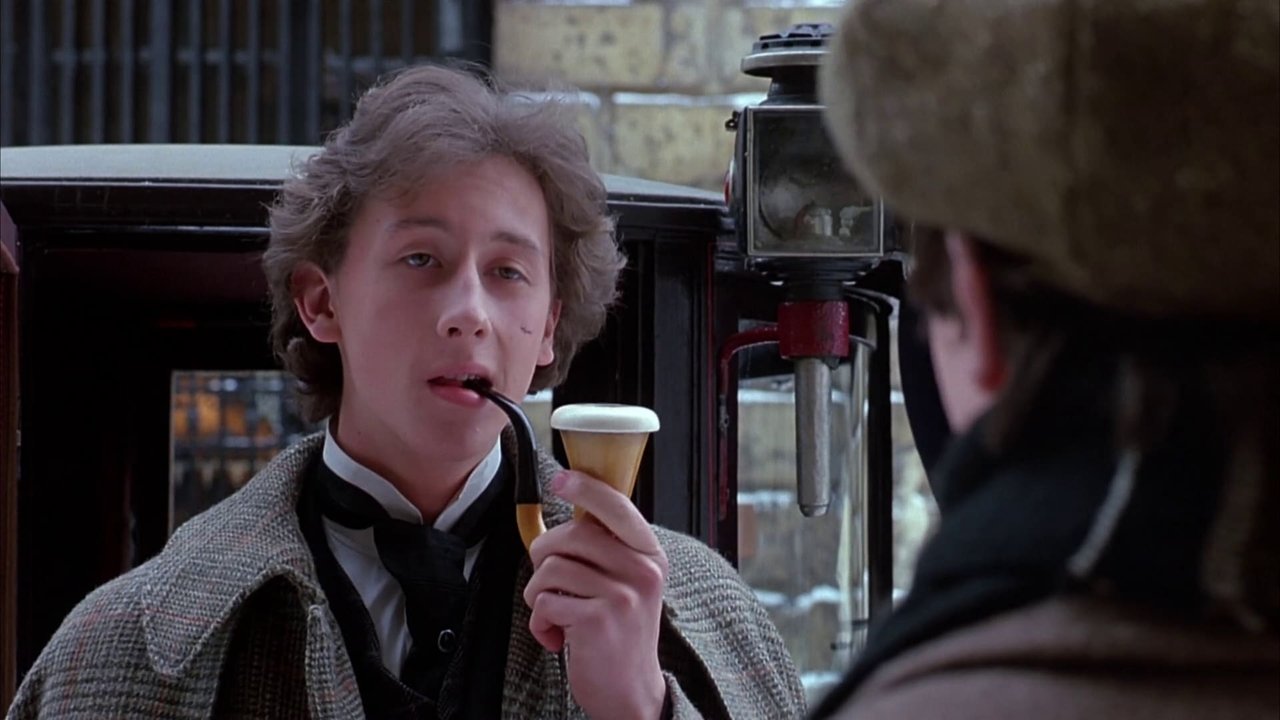
The film plunges us straight into a wonderfully realized Victorian London, complete with fog-drenched cobblestone streets and the imposing gothic architecture of Brompton Academy. It’s here we meet a brilliant, somewhat arrogant, but undeniably charismatic young Holmes, played with sharp intelligence by Nicholas Rowe. He quickly crosses paths with the earnest, slightly bewildered new student, John Watson (Alan Cox, son of actor Brian Cox), forging the foundations of that legendary partnership amidst school rivalries and burgeoning mysteries. The immediate chemistry between Rowe and Cox is a cornerstone of the film's success; they capture the essence of their future selves while grounding them firmly in the anxieties and excitements of adolescence. Adding charm and heart is Sophie Ward as Elizabeth Hardy, Holmes's early love interest and an active participant in their adventures.
The story kicks off with a series of bizarre, seemingly unrelated deaths across London. Victims are struck by terrifying hallucinations before meeting their demise, a mystery that naturally piques young Holmes's deductive instincts. What follows is a thrilling dive into a dark conspiracy involving an ancient Egyptian cult, the Rame Tep, operating beneath the city streets. Levinson, who would later direct acclaimed dramas like Rain Man (1988), balances the youthful energy with genuine suspense and some surprisingly dark turns. Remember those hallucination sequences? Induced by poison-tipped thorns, they were genuinely unsettling – the menacing pastries, the swarm of killer cakes, the roasted pheasant coming alive – pure nightmare fuel for younger viewers back in the day, showcasing a slightly harder edge than some other Amblin productions.
### A Touch of Digital Magic and Victorian Grit
Young Sherlock Holmes wasn't just notable for its clever premise; it holds a significant place in visual effects history. That scene where a knight leaps out of a stained-glass window to menace a clergyman? That was a landmark moment, marking the first time a fully computer-generated character interacted seamlessly within a live-action film sequence. Created by Lucasfilm's Industrial Light & Magic (with future Pixar visionary John Lasseter animating the knight!), it was absolutely mind-blowing on the big screen (or, let's be honest, on our trusty CRTs via VHS). It felt like a glimpse into the future of filmmaking, perfectly complementing the film's blend of old-world mystery and modern cinematic techniques.
Beyond the groundbreaking CGI, the film boasts excellent production design. The recreation of 19th-century London feels authentic and atmospheric, from the cluttered labs to the snowy streets. The practical effects, particularly for the cult's temple and rituals, hold up remarkably well, adding a tactile grit that enhances the adventure. Chris Columbus's script cleverly weaves in nascent elements of the familiar Holmes canon – the deerstalker hat (a gift), the violin playing, the deductive reasoning – making it feel like a genuine, respectful origin story rather than just a gimmick. He reportedly wrote the script in about six weeks while living in a freezing London flat above a pub – talk about atmosphere influencing the work!
### More Than Elementary, My Dear Watson
While a critical success and visually impressive, Young Sherlock Holmes wasn't quite the box office smash Amblin might have hoped for, pulling in around $19.7 million domestically against a similar budget. Perhaps its blend of teen adventure with moments of genuine darkness and scares made it a slightly harder sell. Yet, for those of us who caught it on video rental shelves or cable TV, it often became a cherished favorite. It captured that thrilling sense of discovery, the idea that even the most iconic figures had beginnings filled with uncertainty, danger, and friendship.
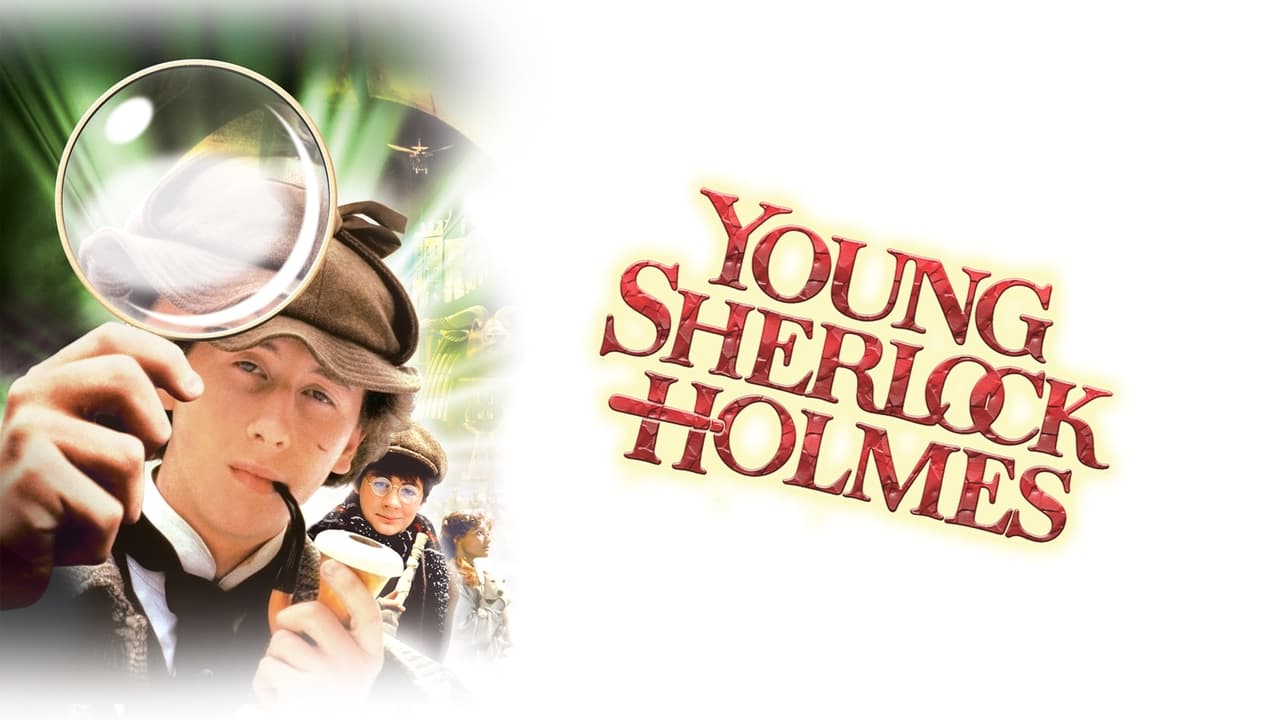
It expertly balances deduction with action, from thrilling chases to sword fights (even featuring an early fencing duel between Holmes and his rival, Dudley). The score by Bruce Broughton is perfectly pitched, swelling with adventure and underscoring the moments of mystery and emotion. It’s a film that respects its source material while forging its own path, offering a unique window into the formative years of literature's greatest detective. It even features a post-credits scene – something of a novelty back then – that provides a fantastic twist hinting at the future arch-nemesis, ensuring viewers left the cinema (or their living rooms) buzzing.
Rating: 8/10
Young Sherlock Holmes is a wonderfully atmospheric and imaginative adventure that perfectly captured the Amblin spirit while adding its own darker, sophisticated twist. Strong performances, a clever script, groundbreaking effects (for its time), and a palpable sense of Victorian mystery make it far more than just a curious footnote. It earns its 8/10 for successfully reimagining iconic characters with warmth and excitement, delivering genuine thrills and showcasing early digital magic that still impresses. For many, it remains a treasured piece of 80s cinema, a reminder of when even familiar stories could feel brand new and utterly captivating on that flickering television screen. A true gem retrieved from the hallowed halls of the video store.