What happens when summer stretches before you not as a promise of sun-drenched freedom, but as a landscape of social anxieties and missed connections? It's a feeling many of us might recognize, that peculiar loneliness that can somehow feel most acute amidst the supposed joys of vacation season. This very specific, often unspoken, melancholy sits right at the heart of Éric Rohmer's quietly profound 1986 film, The Green Ray (often known by its alternate title, Summer), a film that drifted onto the 'World Cinema' shelf of the video store like a message in a bottle from a different kind of cinematic sensibility.
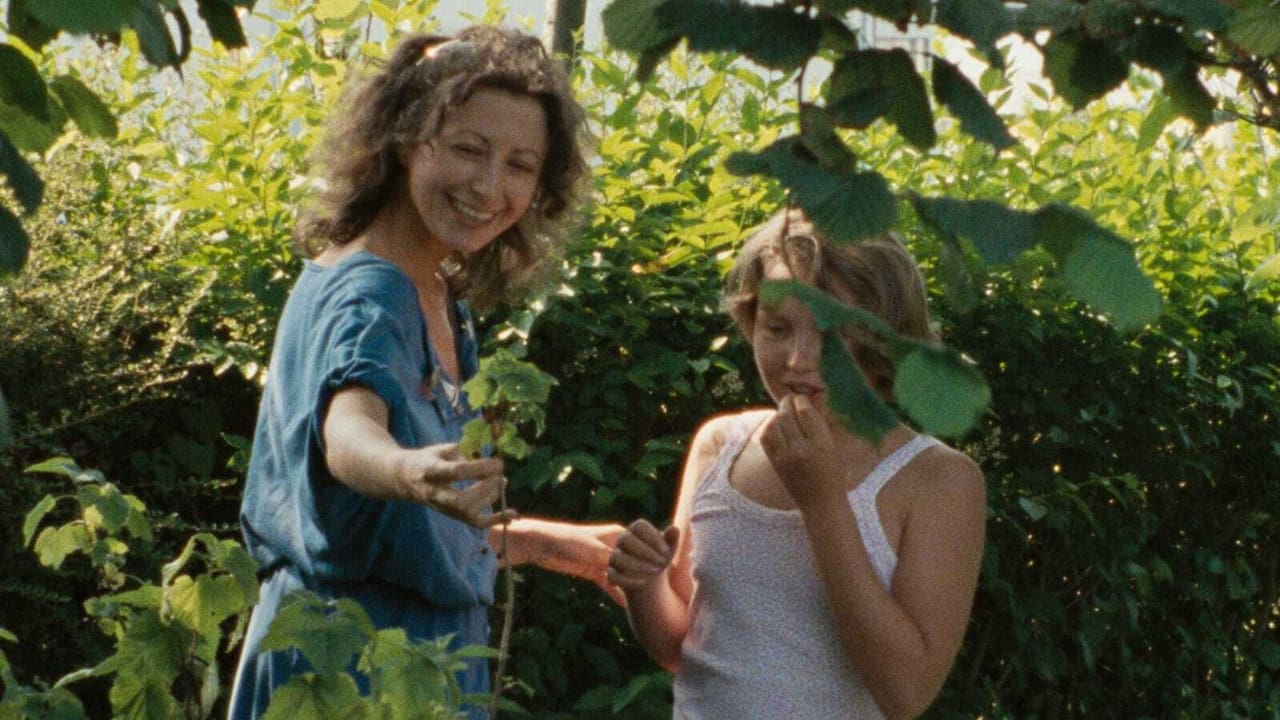
Part of Rohmer’s celebrated "Comedies and Proverbs" series – each film loosely inspired by a saying, though this one's proverb ("Ah, for the times / When heart صحبت می کرد") was invented by Rohmer himself – The Green Ray follows Delphine (Marie Rivière), a young Parisian secretary whose holiday plans abruptly evaporate. What follows isn't a plot in the conventional sense, but rather a poignant, often uncomfortable, drift through various summer locales – Cherbourg, the Alps, Biarritz – as Delphine searches less for a destination and more for a sense of belonging, or perhaps just a moment of genuine understanding.
An Unfolding Map of Disquiet
Rohmer, ever the master observer of human behaviour, lets Delphine's journey unfold with an almost startling lack of dramatic artifice. We watch her navigate awkward social gatherings, overhear conversations where she feels perpetually out of sync, and witness her tearful frustrations with an intimacy that feels both voyeuristic and deeply empathetic. She rejects invitations, bristles at well-meaning advice, and clings fiercely to her vegetarianism, a detail that becomes less about diet and more a symbol of her difficulty fitting into the casual compromises of social life. Remember those long, meandering phone calls trying to salvage plans or just connect with someone? Delphine embodies that feeling, dialed up to an existential pitch.
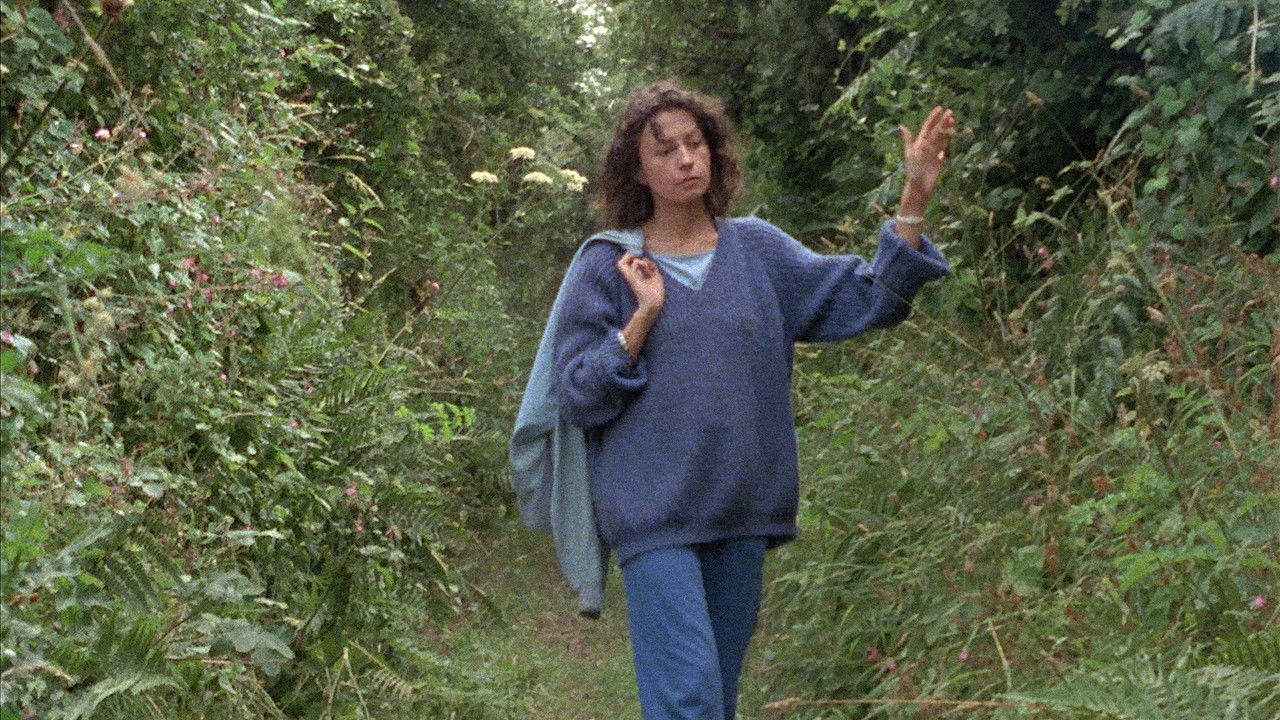
The film’s production itself mirrors this searching quality. Rohmer famously worked with a minimal crew, shooting on location often with lightweight 16mm cameras, which lends the film an incredible immediacy, almost like a home movie capturing unusually perceptive moments. Much of the dialogue, particularly Delphine’s, was developed through improvisation and close collaboration between Rohmer and Marie Rivière. This wasn't just acting; Rivière poured aspects of her own personality and anxieties into the character, resulting in a performance of staggering, sometimes prickly, authenticity. It's a fascinating insight into Rohmer's method – trusting the moment, the actors, and the natural rhythms of conversation to reveal deeper truths. This approach reportedly allowed the film to be made for a relatively modest budget, relying on ingenuity and the richness of its central performance rather than elaborate sets or effects.
The Weight of Observation
Marie Rivière's portrayal of Delphine is the film's undeniable core. It’s a brave performance, unafraid to show vulnerability, uncertainty, and even moments of near-unbearable self-pity. Yet, she never loses our empathy entirely. We see the yearning beneath the defensiveness, the desire for connection warring with an almost paralyzing fear of it. Her moments of solitary weeping, overheard rather than presented, feel wrenchingly real. Isn't there something profoundly relatable in that struggle to articulate an inner sadness that doesn't quite have a name? She makes Delphine more than just a character; she feels like someone we might know, or perhaps, aspects of ourselves we rarely admit to. Supporting actors like Vincent Gauthier as the kind Swede Jacques, or Sylvie Richez as a more conventional holidaymaker, serve as effective counterpoints, highlighting Delphine's unique wavelength.


Rohmer’s direction is characteristically patient. He holds shots, allows conversations to play out naturally, and trusts the audience to find the meaning within the mundane. There are no flashy edits or manipulative scores here. The soundtrack is the ambient noise of beaches, cafes, and train stations – the sounds of summer itself. It requires a certain attunement from the viewer, a willingness to slow down and simply observe. This style, while perhaps challenging for those raised on the rapid-fire editing of 80s blockbusters often found on nearby rental shelves, offers its own deep rewards. It allows the small moments – a shared glance, an overheard remark, the specific quality of light on the water – to resonate with unexpected weight.
Chasing the Elusive Ray
The film takes its title from the meteorological phenomenon – a fleeting flash of green light sometimes visible at sunset – famously described in Jules Verne’s novel Le Rayon vert. Within the film, it becomes a symbol, discussed by characters as a moment that allows one to read their own feelings and those of others with perfect clarity. Delphine, overhearing this, clings to it as a sort of mystical hope. The quest for this phenomenon gives her wandering a subtle, almost spiritual, direction. Capturing the actual green ray on film was no small feat; Rohmer and his small crew reportedly waited patiently in the Canary Islands, relying on meteorological luck as much as cinematic skill to authentically film the elusive flash that provides the film's transcendent, hopeful closing image. This commitment to authenticity, even for such a fleeting moment, speaks volumes about Rohmer's artistic integrity.
The Green Ray went on to win the prestigious Golden Lion at the Venice Film Festival in 1986, a testament to its unique power despite its unconventional approach. It wasn't a typical VHS grab for a Friday night, perhaps, nestled between action flicks and comedies, but finding it felt like discovering a secret.
Rating: 8/10
This score reflects the film's undeniable artistry, Marie Rivière's exceptional and deeply authentic performance, and Éric Rohmer's masterful, unique directorial vision. It captures a specific, poignant kind of human experience with rare honesty. The pacing is deliberately unhurried, which might test the patience of some viewers expecting more conventional narrative drive, but for those willing to meet the film on its own terms, it offers a rich, rewarding, and deeply moving experience.
The Green Ray lingers not because of grand events, but because of its profound understanding of the quiet, internal dramas that shape our lives. It reminds us that sometimes the most significant journeys are the ones we take within ourselves, searching for that elusive moment of clarity, like a flash of green against the setting sun.