Sometimes a film arrives not as a carefully constructed piece of cinema, but as a cultural snapshot, a brightly coloured Polaroid capturing a specific moment in time with unapologetic energy. That’s very much the case with Suffer, You Prick (original Spanish title: Sufre mamón), the 1987 vehicle for the wildly popular Spanish pop-rock band Hombres G. Watching it now, decades removed from its original context, feels like excavating a time capsule filled with catchy tunes, questionable fashion choices, and an infectious, almost naive, enthusiasm that’s hard to entirely resist.
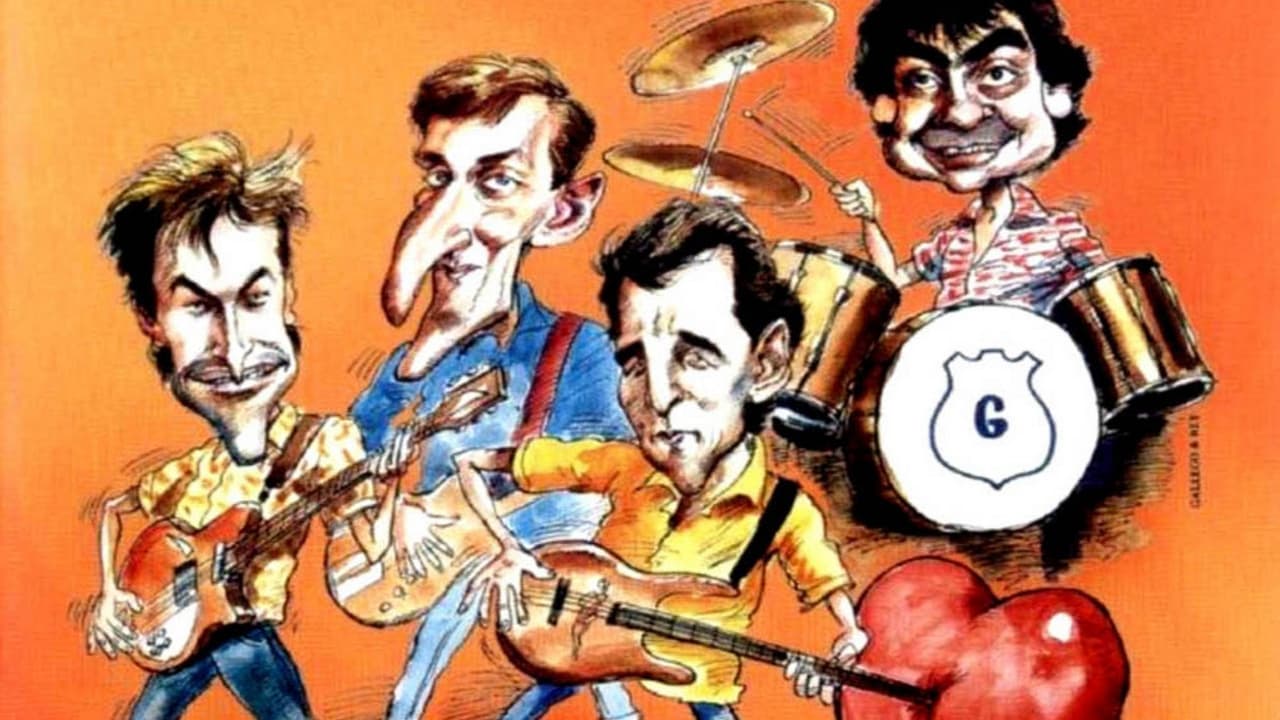
This wasn't just a movie; for Spanish teens in the late 80s, it was practically an event. Hombres G were riding high, churning out hit after hit, and this film essentially translated the simple, relatable angst and romantic frustrations of their lyrics directly onto the screen. It caught lightning in a bottle, becoming a massive domestic box office phenomenon. And who better to capture the band's essence than Manuel Summers, a noted filmmaker and cartoonist... and father of the band's frontman, David Summers? That familial connection permeates the film, giving it a certain homegrown, unpretentious quality.
From Hit Song to Silver Screen
The premise is charmingly straightforward, ripped directly from the lyrics of Hombres G’s massive hit "Devuélveme a mi chica" (Give Me My Girl Back), whose vindictive chorus gives the film its provocative title (a phrase perhaps closer to "Suffer, Sucker" or "Suffer, Jerk" in its original slang context). David (played by David Summers, naturally) is dumped by his girlfriend for a preening, muscle-bound rival who drives a flashy car – the ultimate 80s betrayal! Heartbroken and humiliated, David and his bandmates – Javier Molina, Daniel Mezquita, and Rafael Gutiérrez (though Gutiérrez doesn't appear credited as an actor in the film itself, the band dynamic is central) – channel their frustration into music, forming the band that would become Hombres G, and plotting a little lighthearted revenge.
There’s no complex character development here, no deep exploration of the human condition. It’s a film running on the pure fuel of teenage emotion: heartbreak, friendship, the sheer joy of making music, and the desire to show up the person who wronged you. The members of Hombres G aren't exactly Daniel Day-Lewis, but that’s precisely the point. They’re playing heightened versions of themselves, translating their stage presence and pop-star charisma (or sometimes, endearing awkwardness) directly to the screen. David Summers, as the focal point, carries the narrative with a kind of puppy-dog vulnerability mixed with nascent rock-star swagger. Their interactions feel largely authentic because, well, they were a band, buddies navigating newfound fame. This authenticity, rather than polished acting, is the film's core appeal.
Capturing the Madrid Vibe
Manuel Summers directs with a light touch, letting the band's energy and the vibrant backdrop of Madrid carry the film. It doesn’t strive for cinematic artistry; the style is functional, almost like an extended music video at times, focusing on capturing the band performing their hits and navigating relatable teenage scenarios. There's a certain lo-fi charm to it, a sense that it was made with affection rather than a massive budget – although its subsequent box office haul (reportedly grossing over 450 million pesetas, a huge sum at the time in Spain) certainly defied any modest production constraints. You can almost feel the sticky floor of the rehearsal room, the buzz of a Madrid summer night.
One fascinating tidbit is how directly the film leans into the band's real-life narrative. The formation of the group, the writing of their songs (many of which are showcased in performance), it’s all presented as part of David’s journey to win back respect (and maybe the girl). This blurring of lines between reality and fiction was a key part of its appeal, allowing fans to feel like they were getting an inside look at their idols' "origin story," even if fictionalized. It cleverly leveraged the existing parasocial relationship fans had with the band.
A Nostalgic Echo
Does Suffer, You Prick hold up as a standalone film classic? Perhaps not in the traditional sense. The plot is wafer-thin, the conflicts are resolved with adolescent simplicity, and some elements feel distinctly, sometimes amusingly, dated. Yet, its power lies elsewhere. It’s a potent dose of nostalgia, not just for fans of Hombres G, but for anyone who remembers the sheer cultural force of pop music in the 80s, the importance of shared musical tastes in forging friendships, and the dramatic weight of teenage romance. It perfectly encapsulates that specific Spanish post-"Movida Madrileña" pop explosion – less edgy counter-culture, more mainstream, radio-friendly charm.
Watching it today on a worn-out VHS tape (if you're lucky enough to find one!) feels right. The slightly fuzzy picture, the warble of the sound – it complements the film's unpolished aesthetic. It reminds us of a time when pop music felt genuinely larger than life, capable of spawning not just albums, but entire cinematic universes, however small and self-contained. The film was successful enough to spawn a sequel, Suéltate el pelo (Let Your Hair Down) in 1988, further cementing the band's cinematic adventures.
Rating: 6/10
This rating reflects Suffer, You Prick's undeniable charm and cultural significance within its specific context, balanced against its simplistic plot and non-professional (though endearing) performances. It earns points for its infectious energy, fantastic soundtrack (it's basically a Hombres G greatest hits collection), and its value as a perfect time capsule of late-80s Spanish pop culture. It’s not high art, but it possesses a sincerity and buoyant spirit that's hard to dislike, especially if you have any affection for the era or the band.
It’s a film that leaves you humming catchy tunes and perhaps smiling wryly at the high drama of first heartbreaks. What lingers isn't a profound message, but a feeling – the exuberant, slightly goofy, utterly heartfelt pulse of youth, captured on film.