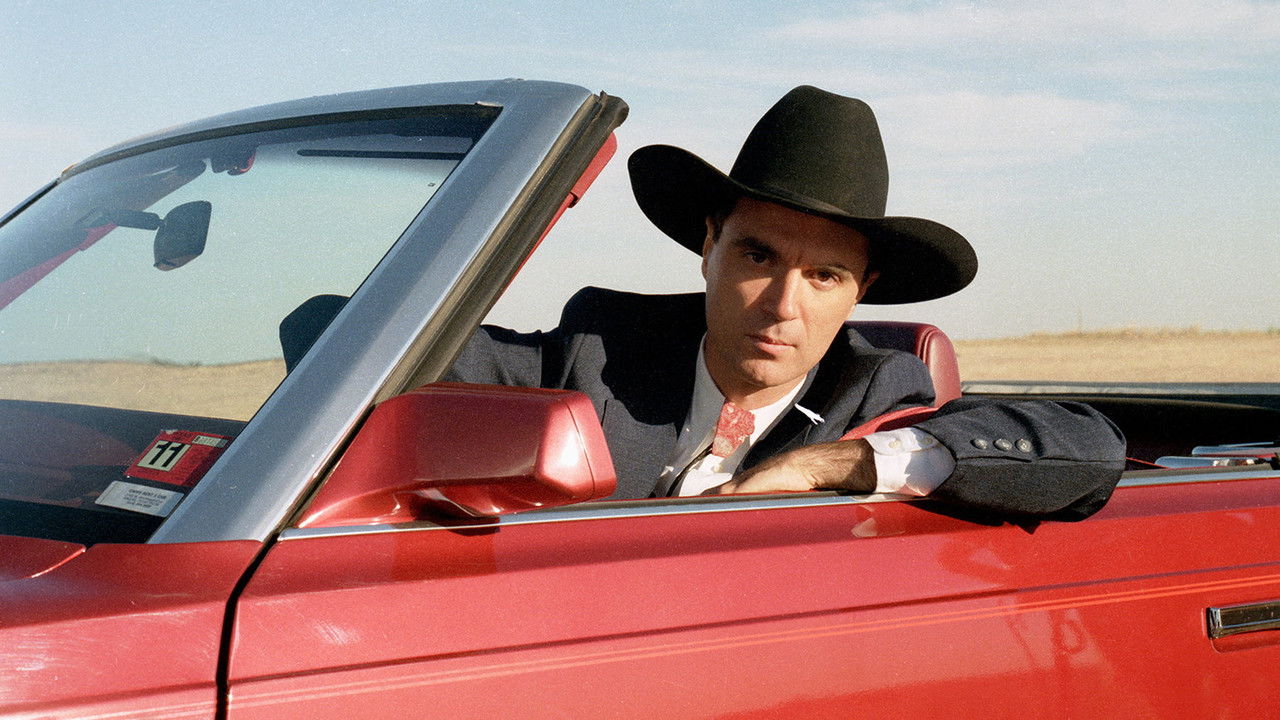
Alright folks, settle back into that comfy armchair, maybe crack open a Tab or a Crystal Pepsi if you can find one, because tonight on VHS Heaven, we’re taking a detour from the usual high-octane explosions and venturing into the gloriously odd, pastel-hued landscape of David Byrne's True Stories (1986). Forget the usual action heroes; our guide tonight is Byrne himself, clad in a crisp suit and cowboy hat, looking like an inquisitive alien anthropologist who just touched down in the middle of Texas. And honestly? Finding this gem on the rental shelf back in the day felt a bit like that – discovering something utterly unique, strangely familiar, yet delightfully weird.

### Welcome to Virgil: Population, Quirky
True Stories isn’t really a movie with a plot in the traditional sense. Instead, Byrne, serving as both director and narrator (credited simply as 'Narrator'), takes us on a tour of the fictional town of Virgil, Texas, as it prepares for its "Celebration of Specialness" coinciding with the state's sesquicentennial. What unfolds is a series of vignettes, introducing us to the town's peculiar inhabitants. Think of it less as a narrative drive and more as a gentle, observational drift through a heightened reality, captured with a loving, almost documentarian eye, albeit one filtered through Byrne's distinctly art-pop lens.
The film reportedly stemmed from actual bizarre headlines and stories Byrne collected from tabloid newspapers, a concept fleshed out with playwrights Beth Henley and Stephen Tobolowsky (who also pops up memorably as the Lying Man). This grounding in supposedly "true" weirdness gives the film its unique flavour – it’s surreal, yes, but it feels strangely plausible, like discovering a hidden pocket of America where everyone marches to the beat of a slightly different, synthesized drum.
### Meet the Locals (Especially Louis)
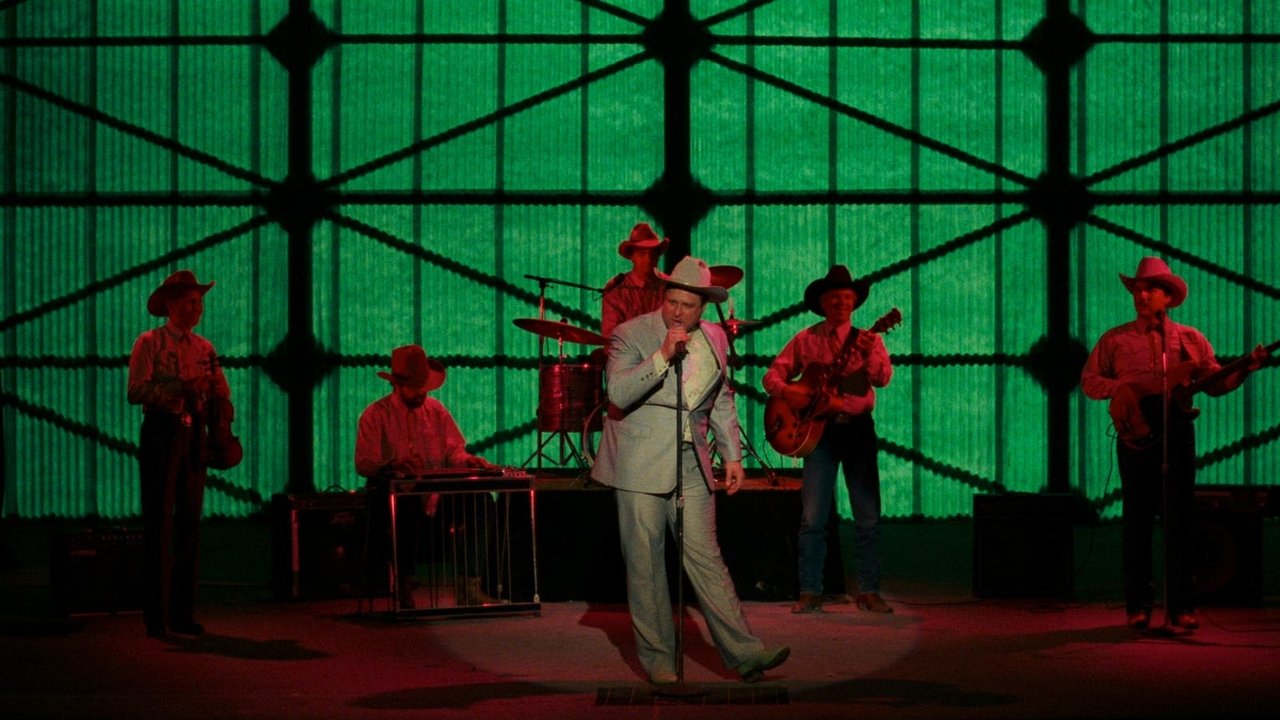
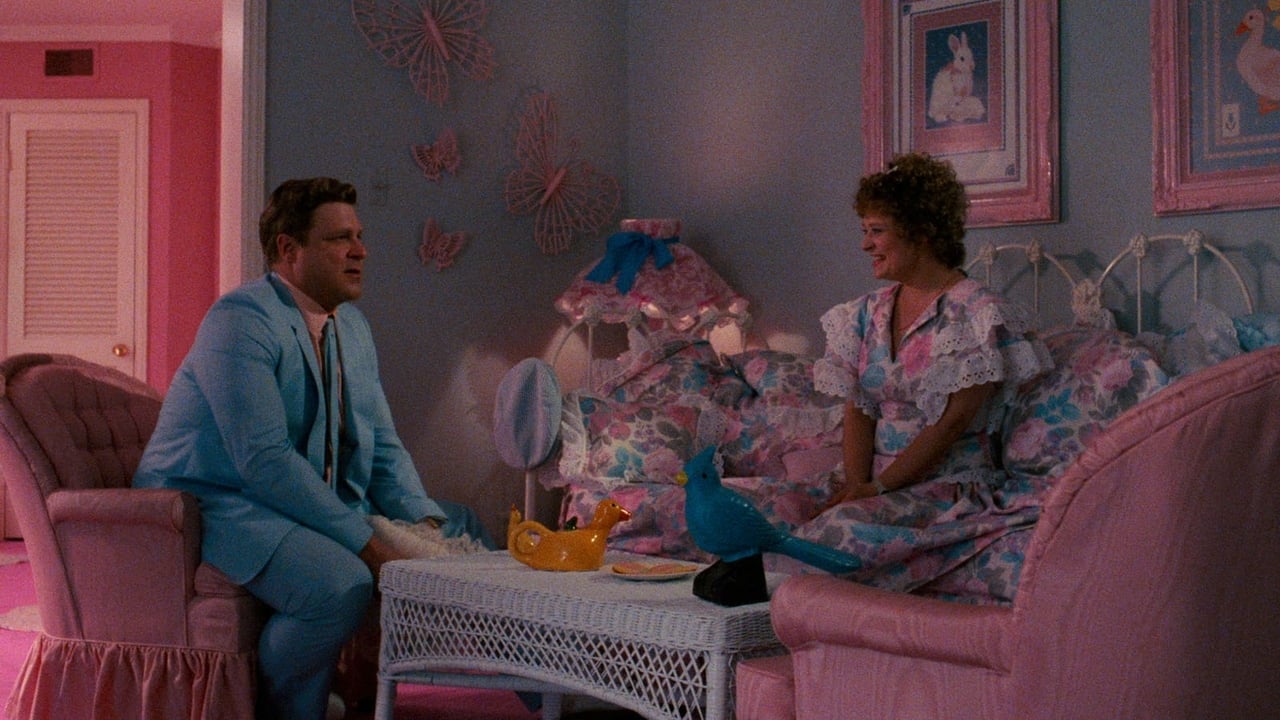
The heart of the film, if it has one, belongs to Louis Fyne, played with immense warmth and gentle soulfulness by a pre-stardom John Goodman. Louis is the epitome of the film's spirit: a large, kind man working at a computer plant (Varicorp – the benevolent corporate sponsor of the town's celebration), who spends his days searching for love via television commercials and bulletin board postings. Goodman is simply perfect here, radiating decency and a quiet longing that makes Louis instantly lovable. His quest for a wife, culminating in a performance at the talent show, is perhaps the most traditionally structured "story" in the film, and it’s utterly charming. Remember how genuine he felt? No irony, just pure, hopeful yearning.
Alongside Louis, we meet characters like the impossibly wealthy and perpetually bedridden Miss Rollings (the Lazy Woman), played with ethereal detachment by Swoosie Kurtz, who communicates entirely via closed-circuit television. There’s also the aforementioned Lying Man (Stephen Tobolowsky, who co-wrote the screenplay and apparently drew inspiration from his own experiences), who spins fantastical tales, and a voodoo practitioner (Pops Staples!) who helps Louis in his search for love. Each character sketch is brief, impressionistic, but memorable, adding another tile to the mosaic of Virgil. Even Spalding Gray, known for his monologues, turns up as Earl Culver, the civic leader overseeing the Celebration of Specialness with a kind of benign corporate enthusiasm.
### An Art Project You Can Watch
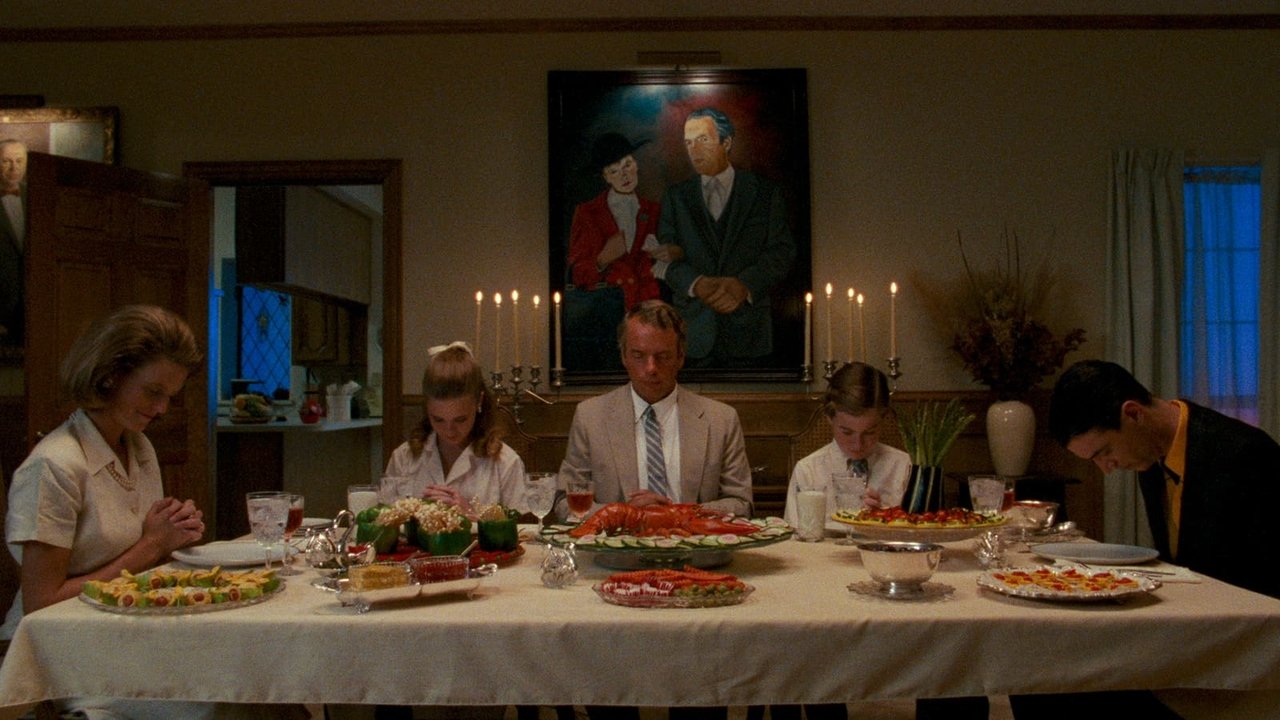
As a director, Byrne (yes, that David Byrne from Talking Heads) brings a singular vision. This was his only fiction feature directing credit, and it feels less like a conventional movie and more like a visual album or an extended music video project. The compositions are often static, symmetrical, almost like paintings. The colours are bold and deliberate – lots of primary colours and clean lines against the flat Texas landscape. It feels designed, but not in the slick Hollywood way. It’s more like a meticulous art installation celebrating the mundane and the eccentric. Filmed primarily around Dallas and its suburbs, the locations themselves – the shopping malls, the sterile corporate environments, the tract housing – become characters, reflecting the intersection of consumer culture and individual expression that fascinates Byrne.
And the music! Of course, the music is integral. While the film uses versions of Talking Heads songs sung by the cast members themselves (like Goodman’s heartfelt rendition of "People Like Us" or Tito Larriva's energetic "Radio Head"), the Talking Heads album True Stories features Byrne singing lead on polished studio versions. It’s interesting how the film versions feel rougher, more integrated into the fabric of Virgil, less like standalone pop songs. They add another layer to the film's unique texture, punctuating the vignettes with Byrne’s trademark blend of catchy hooks and cerebral observation.
### Nostalgia for the Nicely Strange
Watching True Stories now feels like unearthing a time capsule, not just of 1986 fashion (that mall fashion show is a glorious spectacle!), but of a particular kind of filmmaking optimism. It’s a film completely devoid of cynicism. It observes its quirky characters with affection and curiosity, never mockery. There’s a sincerity here, even amidst the strangeness, that feels refreshing. It didn’t exactly set the box office on fire back then – its gentle oddity perhaps too niche for mainstream audiences expecting something more conventional – but like many unique visions, it found its audience on home video, passed around among fans who appreciated its distinct rhythm and perspective. It’s a movie that makes you smile, not necessarily from laugh-out-loud jokes, but from a warm recognition of the beautiful weirdness that makes people, well, people.
Rating: 8/10
Justification: True Stories earns an 8 for its sheer originality, its infectious charm, John Goodman's wonderful performance, and its status as a unique cinematic vision from David Byrne. It perfectly balances quirky humour with genuine affection for its characters and offers a visually distinct and musically rich experience. It loses a couple of points perhaps for its deliberately loose structure, which might leave some viewers wanting more narrative drive, but its unique atmosphere and gentle spirit are undeniable triumphs.
Final Thought: In an era often remembered for cinematic bombast, True Stories remains a wonderfully weird and warm-hearted detour down a quieter, more eccentric highway – a perfect slice of 80s art-pop sincerity preserved on tape, still special after all these years.