It starts quietly, with a layer of dust and the melancholic longing of forgotten things. A simple cabin, sunlight streaming through the window, illuminating five household appliances waiting patiently, faithfully, for the return of their beloved "Master." This wasn't your typical Saturday morning cartoon fare; 1987's The Brave Little Toaster possessed a surprising emotional weight from its opening moments, hinting at the unusual and often poignant adventure that lay ahead. For many of us who first encountered it on a worn VHS tape, perhaps rented from a corner store shelf, it felt like discovering a secret classic, one that mixed childlike wonder with themes that resonated deeper than we might have expected.
Meet the Gang: More Than Just Nuts and Bolts
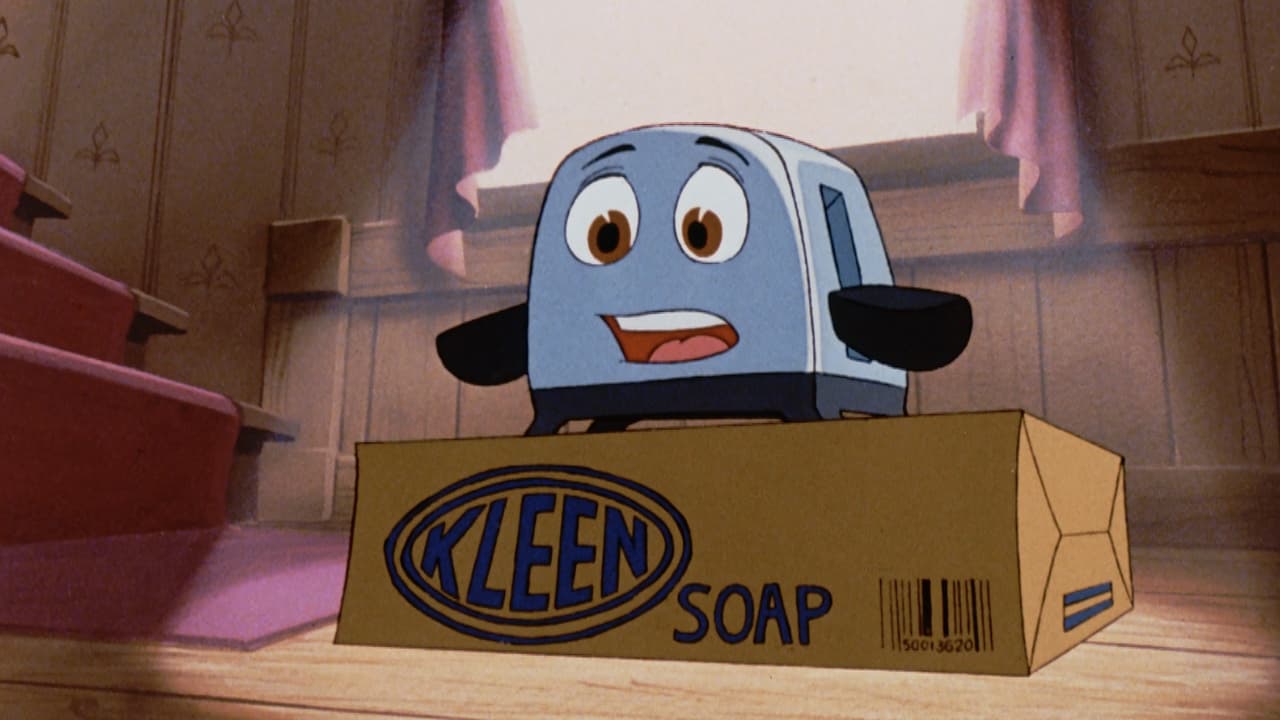
Our unlikely heroes are a study in personality: the optimistic and determined Toaster (Deanna Oliver), the perpetually insecure but endlessly loyal Blanky (Timothy E. Day), the slightly dim but bright-bulbed Lampy (Timothy Stack), the grumpy but ultimately reliable vacuum Kirby (voiced initially by Thurl Ravenscroft of Tony the Tiger fame, though uncredited, with later lines by Jon Lovitz), and the scene-stealing, motor-mouthed Radio (Jon Lovitz again, pulling double duty). Based on a 1980 novella by Thomas M. Disch, the film imbues these inanimate objects with such distinct hopes, fears, and quirks that you completely buy into their desperate quest to reunite with the young boy, Rob. Their journey from the tranquil (if lonely) cabin to the overwhelming, dangerous city is the heart of the film, a pilgrimage driven by unwavering loyalty.
An Unexpectedly Epic Journey
Directed by Jerry Rees and co-written by Rees alongside future Pixar luminary Joe Ranft (who worked on classics like Toy Story and The Lion King) and Brian McEntee, the film had a somewhat complex production history. Originally conceived within Disney in the early 80s, it was eventually produced independently by Hyperion Pictures along with Kushner-Locke before Disney acquired the distribution rights. This slightly outside-the-system genesis might explain its unique flavour – it doesn't quite feel like the Disney Renaissance films that would follow, possessing a scrappier, more melancholic tone. The animation itself, while perhaps not reaching the dizzying budgets of major studio releases, has a distinct charm, effectively conveying the characters' emotions and the scale of their odyssey through forests, swamps, and eventually, the terrifying urban landscape.
The journey is fraught with peril that often feels surprisingly real. Who could forget the terrifying encounter with the sadistic air conditioner (Phil Hartman delivering a truly unhinged performance)? Or the sheer panic of the waterfall sequence? These moments weren't just cartoon obstacles; they felt like genuine threats, tapping into childhood fears of abandonment and the unknown. The film masterfully balances these darker beats with moments of humour and genuine camaraderie amongst the appliances.
Echoes in the Junkyard
Perhaps the most enduring sequence, and the one that cemented The Brave Little Toaster's cult status, is the infamous junkyard scene. Set to the hauntingly bleak song "Worthless," we watch as broken-down cars lament their planned obsolescence before being crushed into oblivion. It's a surprisingly dark and existential moment for an animated film, tackling themes of aging, disposability, and mortality with startling directness. Watching it as a kid could be genuinely upsetting, yet it’s this willingness to engage with heavier themes that makes the film stick with you long after the credits roll. It respects its audience, young or old, enough to not shy away from the shadows. This sequence alone probably guaranteed its place in the hearts (and maybe nightmares) of a generation of viewers.
Retro Fun Facts: Behind the Filament
- The film's budget was remarkably low for animation at the time, reportedly around $2.3 million. Its journey to the screen was long, starting development years before its eventual 1987 premiere at the Los Angeles International Animation Celebration (it didn't get a wide theatrical release in the US, finding its audience primarily through cable and home video).
- The talent involved is remarkable in hindsight. Besides Joe Ranft's key role, the voice cast included comedy legends Phil Hartman and Jon Lovitz, who were just hitting their stride on Saturday Night Live. Their contributions add layers of personality and humour.
- Animators who worked on the film, frustrated by the lack of opportunities at Disney during a slump period, used their experience on Toaster to push for new creative directions. Several key figures, including Ranft, would become instrumental in the founding and success of Pixar. You can see echoes of Toaster's "inanimate objects with feelings" concept in Toy Story, though the tones are vastly different.
- Despite its limited initial release, the film garnered critical acclaim, winning awards at animation festivals and developing a fierce following on VHS, becoming a staple rental for many families.
Loyalty, Loss, and Lasting Affection
The Brave Little Toaster is more than just an adventure story. It’s a surprisingly touching meditation on loyalty, the fear of being replaced, and the emotional attachments we form, even to everyday objects. It captures that childhood feeling where favourite possessions seemed to have lives of their own. Its blend of warmth, humour, adventure, and unexpected melancholy creates a unique cinematic experience that feels both nostalgic and timeless. It reminds us that bravery comes in all shapes and sizes, even that of a small kitchen appliance leading its friends through the wilderness. The film's enduring appeal lies in its honesty; it doesn't sugarcoat the scary parts of the world or the sadness of being left behind, but it ultimately celebrates the power of friendship and perseverance.
VHS Heaven Rating: 9/10
Justification: The Brave Little Toaster earns a high score for its sheer heart, memorable characters, surprising emotional depth, and willingness to tackle mature themes within an animated format. Its unique tone, stellar voice work (especially from Lovitz and Hartman), and iconic sequences (the junkyard!) make it a standout from the era. While the animation might not be as technically polished as big-budget contemporaries, its charm and storytelling power are undeniable, cementing its place as a beloved cult classic that punched well above its weight.
It’s a film that stays with you, a testament to the idea that even the simplest stories, told with conviction and a touch of melancholy magic, can become cherished treasures tucked away in our collective VHS memories. Now, if you'll excuse me, I suddenly feel the urge to reassure my toaster that it's appreciated.