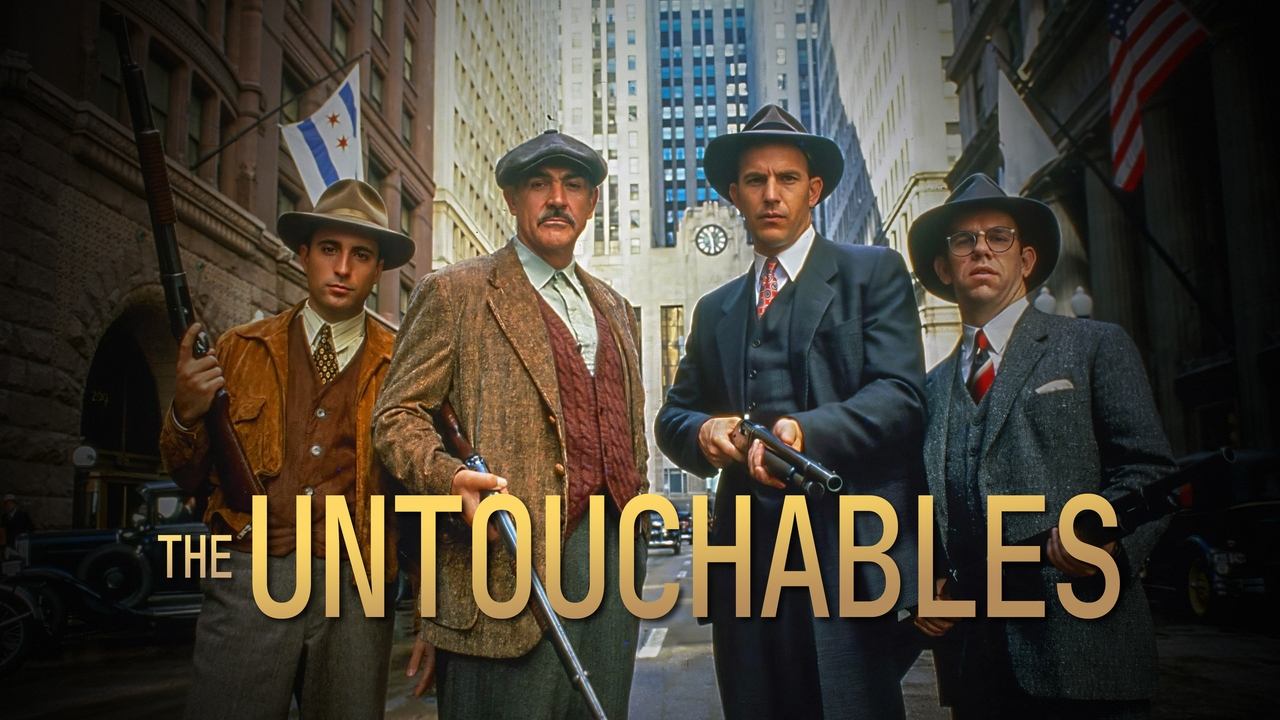
There's a certain kind of righteous fury that burns at the heart of Brian De Palma's The Untouchables (1987), a clarity of purpose that grabs you from the opening frames and rarely lets go. It’s more than just a cops-and-robbers story set against the rain-slicked, Tommy gun-rattled streets of Prohibition-era Chicago; it feels like a morality play writ large, splashed across the screen with operatic flair and undeniable conviction. Watching it again now, decades after first sliding that hefty Paramount VHS tape into the VCR, what strikes me isn't just the thrill of the action, but the film's unwavering focus on the cost of upholding the law when the lawbreakers hold all the cards.
The Weight of the Badge
At the center stands Eliot Ness, played by Kevin Costner in a role that truly announced his arrival as a leading man. Costner embodies Ness not as a hardened cynic, but as an almost painfully earnest federal agent, initially naive to the depth of corruption festering in the city. His square jaw and unwavering gaze project an idealism that feels increasingly fragile as the narrative unfolds. We see the weight of his impossible task etching itself onto his face. It’s a performance built on quiet determination rather than explosive outbursts, making his moments of decisive action – and the gradual hardening of his resolve – all the more impactful. Doesn't his journey raise that timeless question: how much of yourself must you sacrifice to defeat monstrosity?
Gathering the Faithful

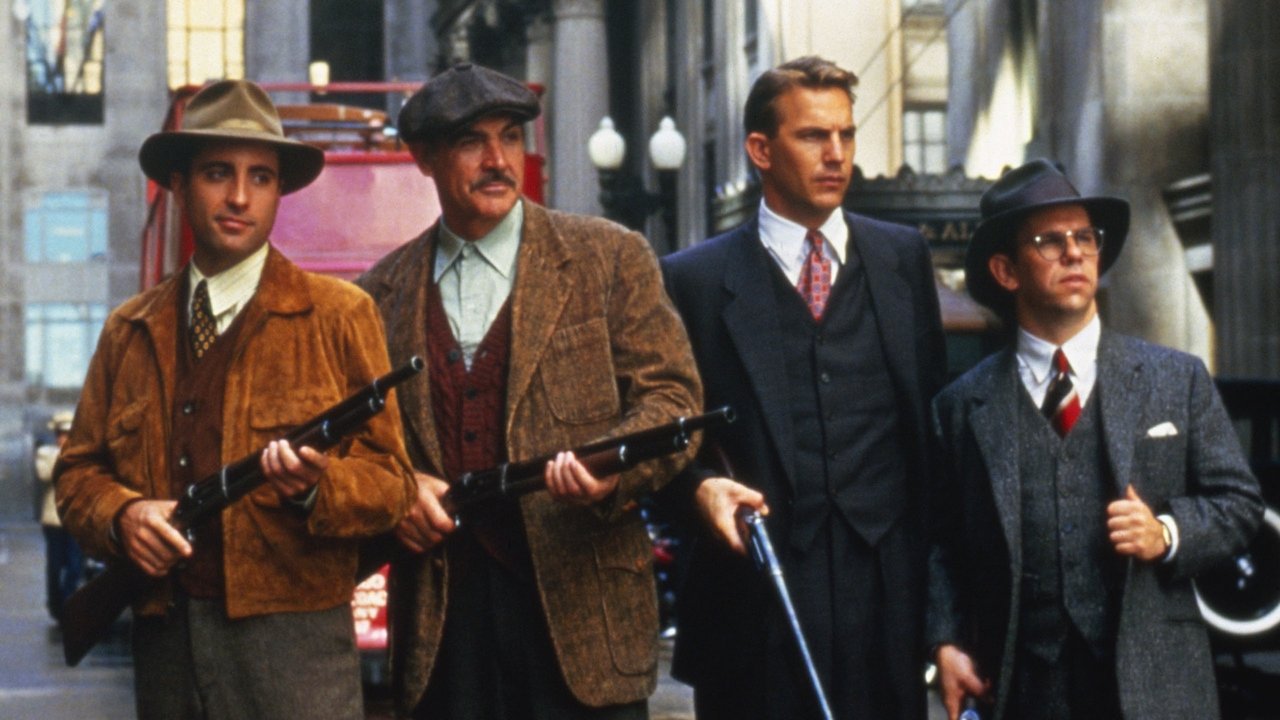
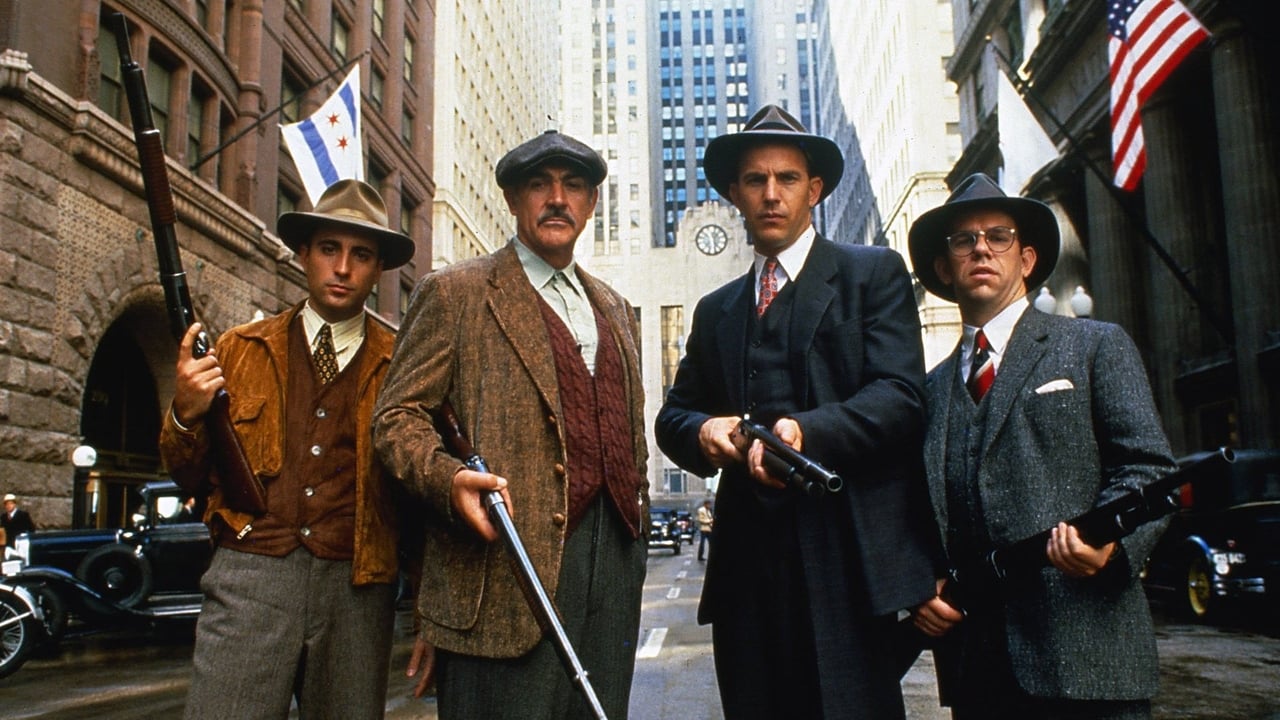
Ness quickly learns he can't fight Al Capone's empire alone, leading him to assemble his legendary team. And what a team it is, anchored by the magnificent Sean Connery as Jim Malone, the weary but incorruptible Irish beat cop who becomes Ness's mentor and moral compass. Connery, fresh off films like Highlander (1986), absolutely owns this role, delivering David Mamet's sharp, streetwise dialogue with grizzled authority and finding surprising warmth beneath the tough exterior. His famous "Chicago Way" speech remains a chillingly pragmatic assessment of the battle ahead. It's no surprise Connery rightfully earned the Academy Award for Best Supporting Actor; his Malone feels utterly real, a grounding force amidst the stylized violence. He’s complemented perfectly by Andy Garcia as the sharpshooting George Stone and Charles Martin Smith as the bookish accountant Oscar Wallace, each bringing distinct energy and completing a quartet you genuinely root for. Their camaraderie feels earned, forged in shared danger.
A Devil Enthroned
Opposing them is Robert De Niro's Al Capone. De Niro, known for his immersive transformations (think Raging Bull from 1980), famously gained significant weight for the part, embodying Capone not just as a ruthless gangster, but as a preening, bloated monarch holding court. His portrayal is magnetic and terrifying – the sudden shifts from bonhomie to brutal violence are genuinely unnerving. Apparently, Bob Hoskins was De Palma's initial backup choice and was reportedly paid $200,000 when De Niro finally signed on; Hoskins supposedly joked he should ask De Palma if there were any other films he didn't want him in! De Niro’s Capone is less a character study and more a force of nature, representing the pervasive rot Ness is fighting against.
De Palma's Operatic Vision
This clash of good and evil is orchestrated with bravura style by Brian De Palma, a director never shy about visual flourishes. The Untouchables is packed with his signature elements: sweeping crane shots, intense close-ups, and meticulously staged set pieces. The legendary Union Station staircase shootout, a deliberate and stunning homage to the Odessa Steps sequence in Sergei Eisenstein's Battleship Potemkin (1925), remains a masterclass in suspense and action choreography. Watching that baby carriage bounce precariously down the steps while bullets fly is still edge-of-your-seat stuff, a perfect marriage of high art influence and mainstream thriller mechanics. This wasn't just about violence; it was about making violence feel consequential, almost balletic in its horror. De Palma’s direction, coupled with Ennio Morricone's unforgettable, soaring score – alternately heroic and menacing – elevates the material beyond a simple crime drama. It feels epic.
The Mamet Edge and Enduring Echoes
David Mamet's screenplay provides the lean, muscular structure beneath De Palma's visual opera. The dialogue crackles with tension and wit ("He pulls a knife, you pull a gun. He sends one of yours to the hospital, you send one of his to the morgue. That's the Chicago way!"). While historical purists might quibble with the dramatic liberties taken (the real Ness's story was perhaps less cinematic), the film captures the spirit of the era and the moral stakes involved. It's a film that understands the power of myth-making.
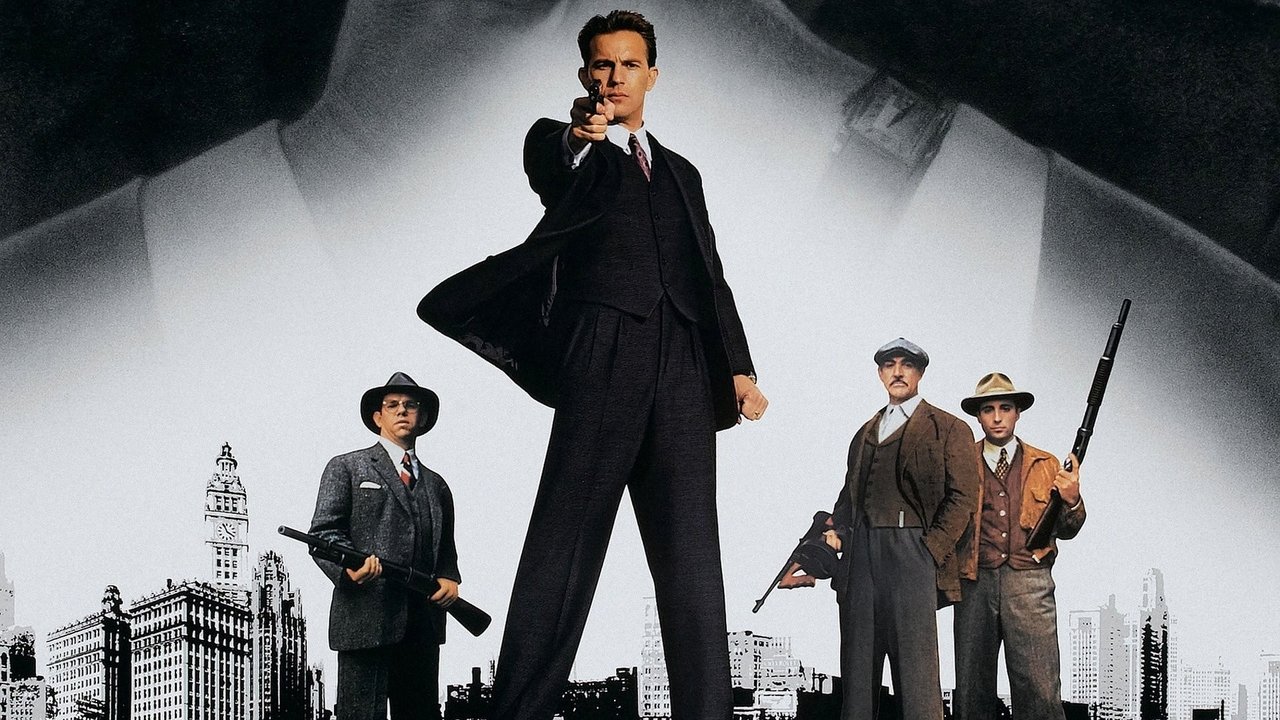
Thinking back, The Untouchables was a fixture in rental stores, its iconic poster art instantly recognizable. It was a prestige picture ($25 million budget, a hefty sum then, earning over $106 million worldwide – that's well over $270 million today!) that also delivered visceral thrills. It cemented Costner's stardom, gave Connery a late-career triumph, and remains one of De Palma's most accessible and satisfying works. It managed that rare feat of feeling both adult and exhilaratingly cinematic.
Rating: 9/10
This score reflects the film's masterful blend of style and substance. The superb performances, particularly Connery's career-defining turn, De Palma's virtuosic direction, Mamet's taut script, and Morricone's iconic score combine to create an exceptionally crafted and enduring crime classic. It falters perhaps only slightly in its occasional simplification of complex history for dramatic effect, but as a piece of cinematic storytelling, it’s nearly flawless.
What lingers most powerfully after the credits roll isn't just the gunfire or the period detail, but the image of Eliot Ness, having paid a terrible price, standing firm. The Untouchables reminds us that the fight for justice, even when seemingly impossible, possesses its own stark, enduring power. It’s a theme, and a film, that still resonates deeply within the landscape of 80s cinema.