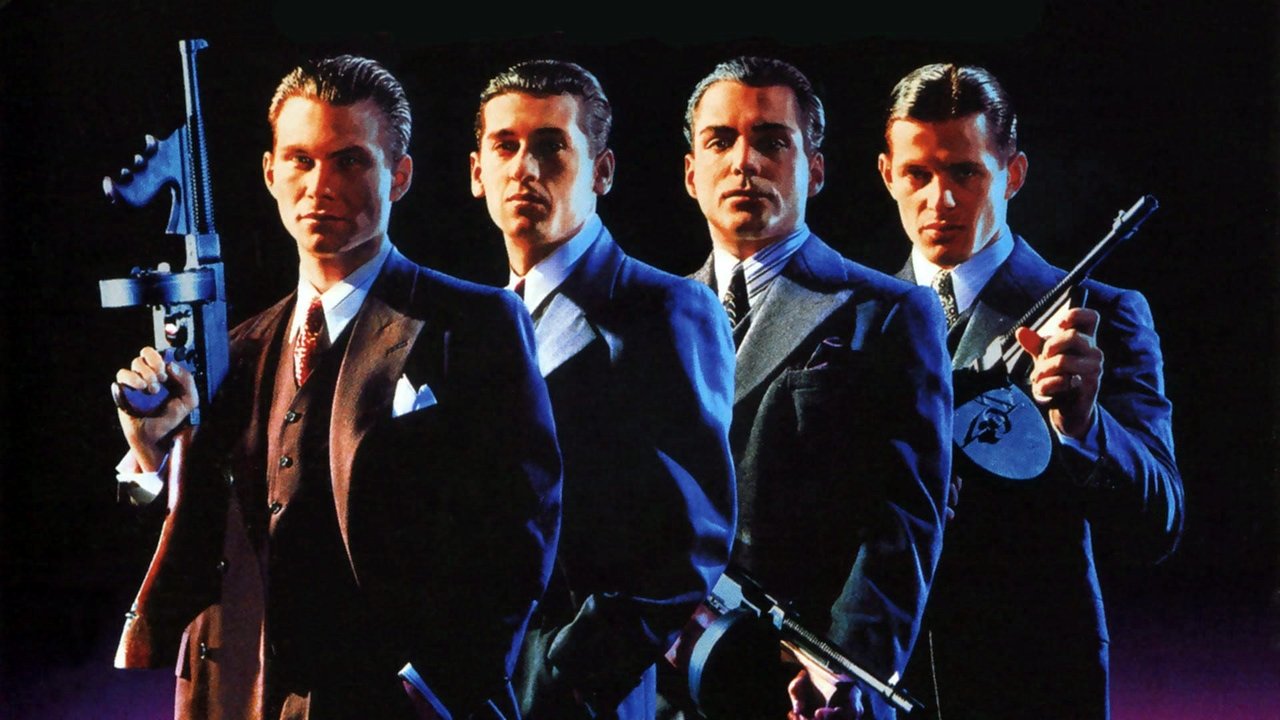
It arrived on video store shelves with a certain swagger, didn't it? Mobsters, released in 1991, felt like a brash statement. Here were faces familiar from teen comedies and heartthrob posters – Christian Slater, Patrick Dempsey, Richard Grieco – suddenly thrust into the brutal, smoke-filled world of Prohibition-era New York City, portraying the formative years of men who would become legends of organized crime: Lucky Luciano, Meyer Lansky, and Bugsy Siegel, respectively, alongside Costas Mandylor as Frank Costello. The very concept felt like a high-wire act. Could these young stars, icons of their specific late-80s/early-90s moment, convincingly embody the ruthlessness and cunning required?
The Young Guns Go Gangster
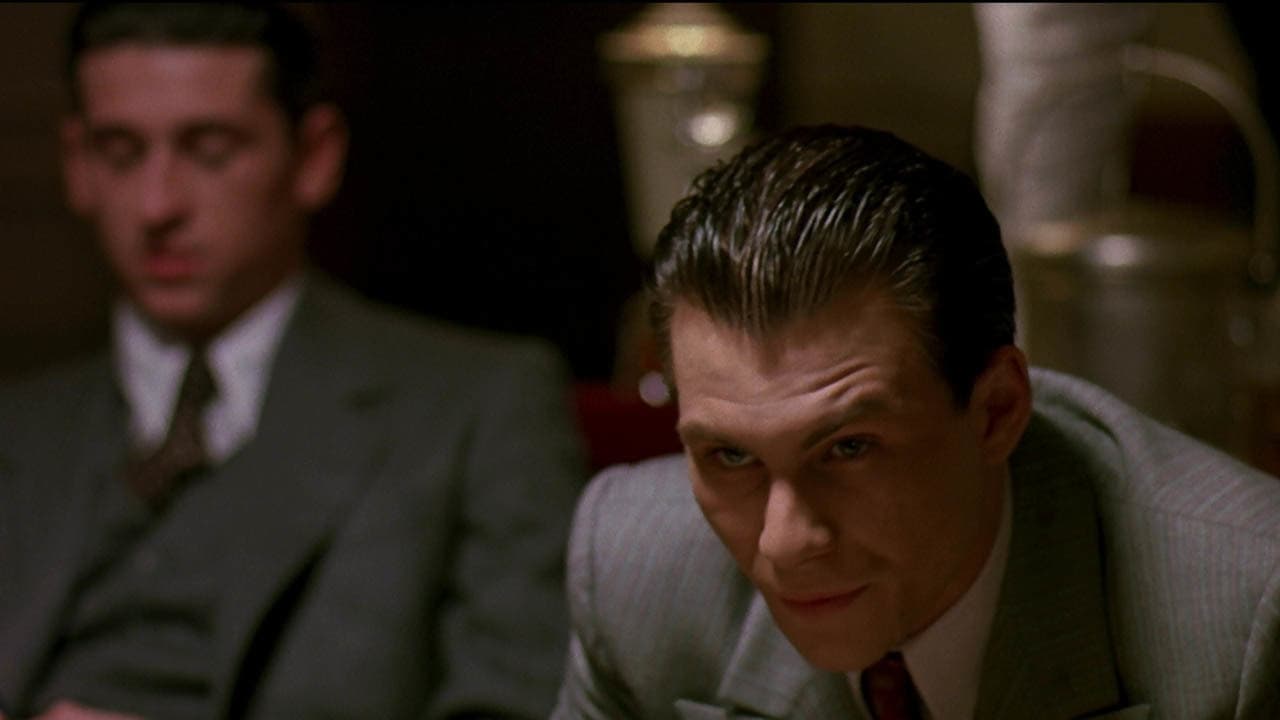
Watching it again, decades later, that central casting choice remains the film's most defining – and debated – feature. Christian Slater, already known for his Nicholson-esque intensity in films like Heathers and Pump Up the Volume, channels that energy into Luciano's ambition. He smirks, he calculates, he explodes. Does it always feel authentic to the historical Luciano? Perhaps not entirely, but Slater commits fully, giving the film a magnetic, if occasionally anachronistic, center. Patrick Dempsey, shedding his lovable romantic comedy image (Can't Buy Me Love, Loverboy), tackles the intellectual Meyer Lansky. It's an interesting attempt at playing against type, portraying Lansky's quiet intelligence, though sometimes he seems overshadowed by the flashier roles around him. And then there's Richard Grieco, fresh off 21 Jump Street and If Looks Could Kill, as the volatile Bugsy Siegel. Grieco certainly brings the requisite swagger and impulsiveness, embodying the future Flamingo Hotel founder's notorious temper. Costas Mandylor rounds out the quartet as the smoother, diplomatic Costello. The chemistry between the four leads feels genuine, capturing a sense of brotherhood forged in violence and ambition, even if they sometimes seem more like a cool 90s crew playing dress-up than hardened criminals of the 1920s. Supporting them are heavyweight veterans like Anthony Quinn and F. Murray Abraham as rival old-guard dons, adding a welcome layer of gravitas, though their presence sometimes highlights the relative greenness of the leads by comparison.
Style, Smoke, and Tommy Guns
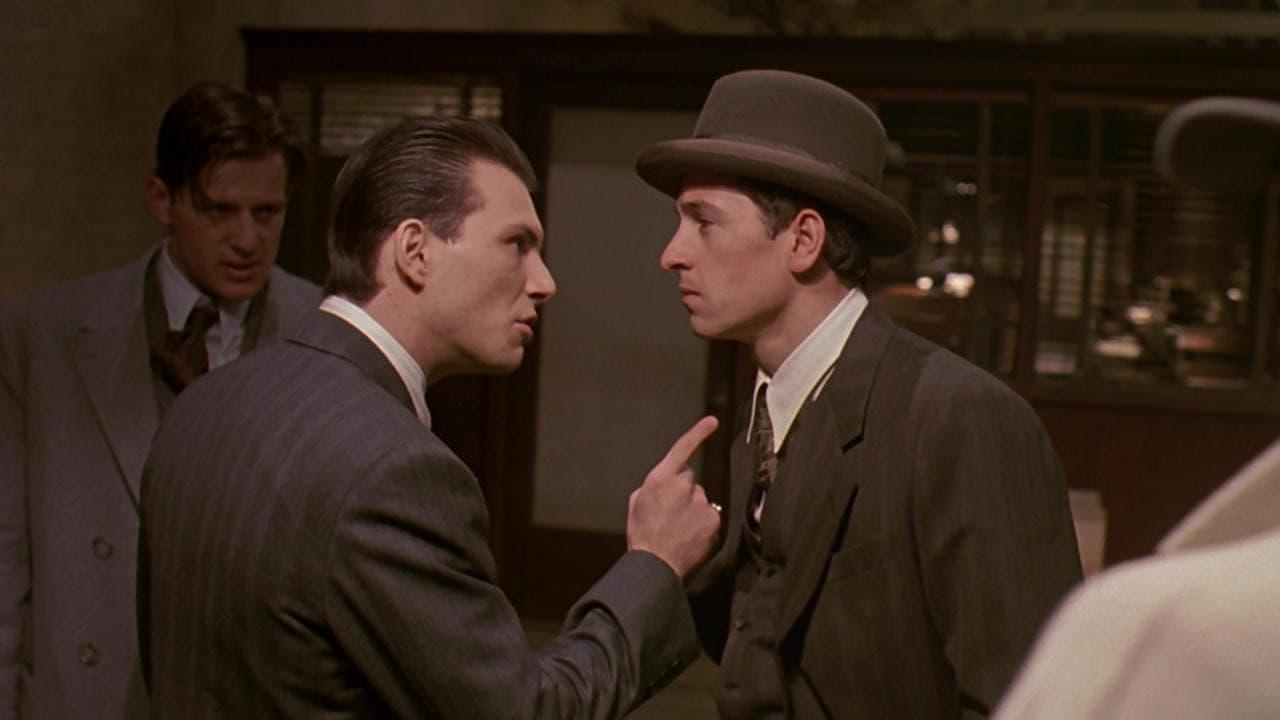
Visually, Mobsters certainly tries to capture the period atmosphere. Director Michael Karbelnikoff, in his feature debut, delivers a slick, often visually striking film. There's a palpable sense of early 90s prestige picture ambition here – the moody lighting, the period costumes (even if they sometimes look a bit too pristine), the slow-motion shootouts drenched in squibs and theatrical blood. You can almost smell the stale cigar smoke and cheap gin. The film reportedly had a substantial budget for the time, around $24 million (roughly $54 million in today's money), and much of it seems to be up on screen, aiming for that classic gangster epic feel. Yet, it often feels more like a high-gloss music video version of the era than a gritty immersion. The violence, quite graphic for 1991 and leading to an 'unrated' version appearing on some home video releases later, feels designed to shock and impress, sometimes prioritizing stylish brutality over narrative weight. This approach likely contributed to its lukewarm box office reception, where it grossed only about $20 million domestically (around $45 million adjusted for inflation), failing to recoup its budget in its initial run.
Truth Optional: Weaving the Legend
Let's be frank: historical accuracy isn't exactly Mobsters' strong suit. Writers Michael Mahern and Nicholas Kazan (the latter an Oscar nominee for Reversal of Fortune) take considerable liberties with the timelines, events, and personalities of these infamous figures. Key moments are condensed, motivations simplified, and relationships likely embellished for dramatic effect. This isn't necessarily a fatal flaw – gangster movies have always blended fact and fiction – but here, it sometimes contributes to a feeling of superficiality. Released just a year after Scorsese's masterpiece Goodfellas, Mobsters inevitably suffered by comparison, lacking that film's depth, nuance, and lived-in authenticity. Critics at the time certainly pointed this out. Instead of a deep dive into the socio-economic conditions that bred organized crime, we get a more straightforward, action-oriented tale of young men seizing power. It was marketed perfectly for the VHS era, though – the tagline "The Gang Started Young" and posters highlighting the famous young cast promised exactly the kind of cool, violent entertainment that flew off rental shelves on a Friday night. I definitely remember the buzz around it, my friends and I eager to see these guys swap high school hallways for back-alley executions.

A Flawed Gem in the VHS Vault?
So, what lingers after the tape clicks off? Mobsters is undeniably a product of its time – an attempt to graft the burgeoning star power of its young cast onto the enduring template of the gangster saga. It doesn't achieve the heights of the genre's masterpieces, feeling more like a stylish footnote than a defining chapter. The script often feels underdeveloped, skimming across the surface of these complex lives rather than truly plumbing their depths. Yet, there's an undeniable energy to it, fueled by the commitment of its leads and its sheer visual confidence. Does it hold up? As a historical document, no. As a nuanced character study, not really. But as a piece of early 90s pop-culture filmmaking, a specific kind of ambitious, slightly misjudged studio picture? Absolutely. There's a certain nostalgic charm in watching Slater, Dempsey, and Grieco strutting through Prohibition New York, even if they never fully escape their 90s personas. It’s entertaining in its own right, a fascinating artifact from an era when Hollywood thought the Brat Pack (or their successors) could take on the Cosa Nostra.
Rating: 6/10
The score reflects the film's undeniable style, energetic (if uneven) performances from its young cast, and sheer 90s ambition. However, it's held back by a superficial script that plays fast and loose with history and lacks the thematic depth of truly great gangster films. It’s a fun, flashy rental from the era, but ultimately more of a curiosity than a classic.
Final Thought: Mobsters remains a fascinating "what if?" – a glossy, violent snapshot of early 90s stardom colliding with classic Hollywood myth-making, leaving behind a film that’s perhaps more memorable for its bold casting gamble than its lasting impact on the genre.