There's a certain chill that settles in long after the credits roll on Stephen Frears' Dangerous Liaisons (1988). It’s not the comforting cool of a forgotten autumn evening, but the unsettling draft from a door opened onto the darker corridors of human nature. Watching it again now, decades after first sliding that distinctive black-and-red VHS cassette into the VCR – perhaps rented alongside something far lighter, a jarring double feature common in those browsing days – the film’s intricate cruelty and devastating elegance feel even more pronounced. It wasn't your typical Friday night popcorn fare, was it? Even then, tucked amongst the action heroes and teen comedies, it felt like handling something sharper, more adult.
A Gilded Cage of Corruption
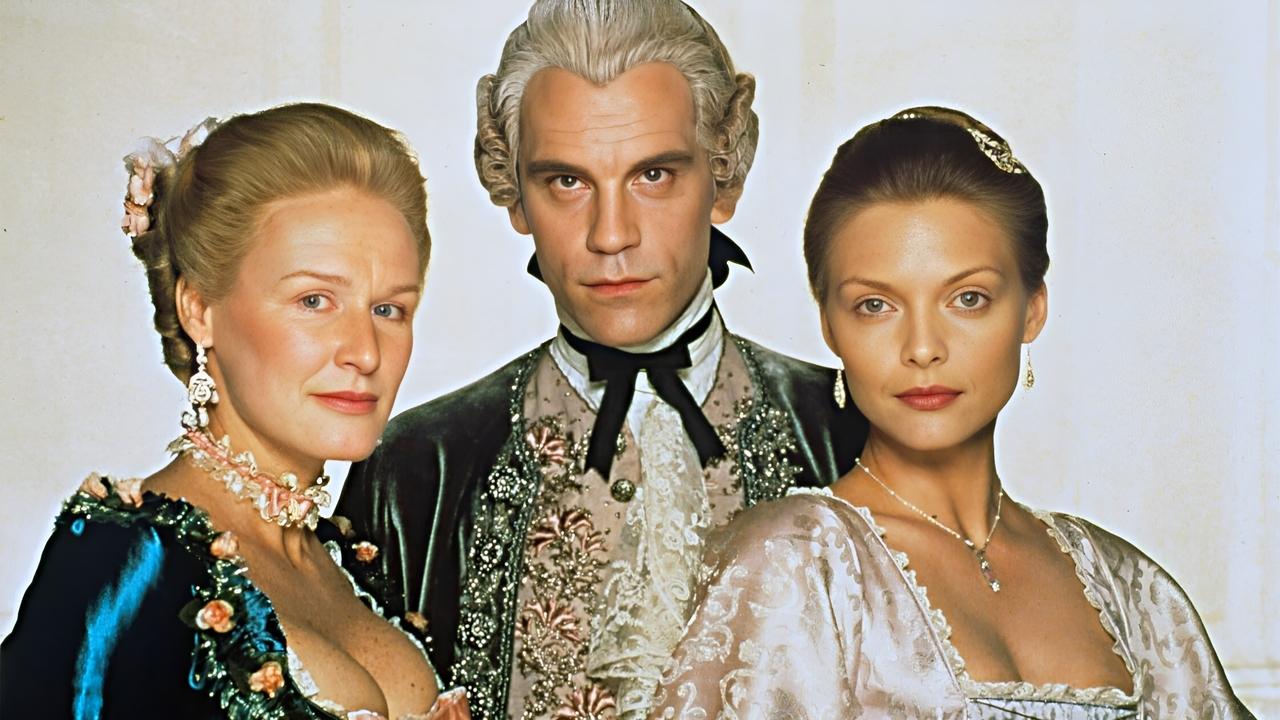
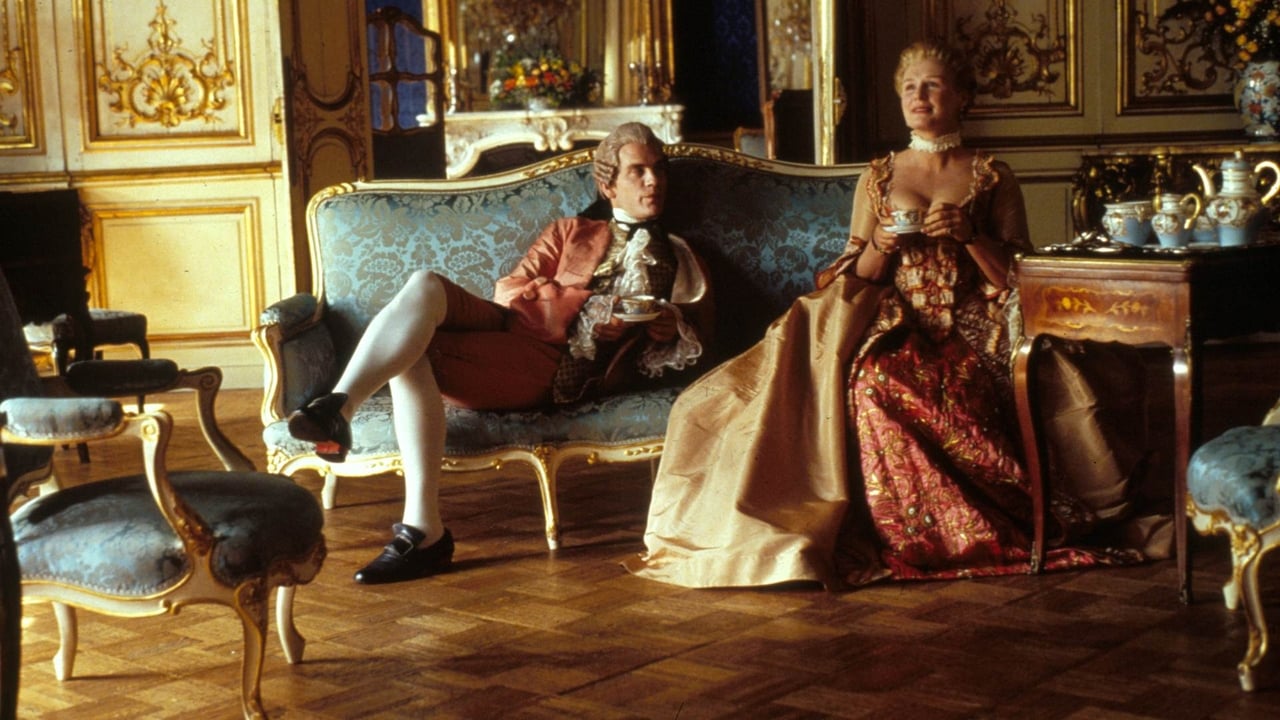
Based on Christopher Hampton's stage play, which itself brilliantly adapted Choderlos de Laclos' 1782 novel, the film plunges us into the perfumed, privileged world of the French aristocracy just before the Revolution. But the opulent châteaux and exquisite costumes – work that rightly earned Oscars for Production Designer Stuart Craig (who later brought Hogwarts to life) and Costume Designer James Acheson – serve less as romantic backdrops and more as gilded cages. Within these luxurious confines, the bored and brilliant Marquise de Merteuil (Glenn Close) and the predatory Vicomte de Valmont (John Malkovich) engage in sophisticated games of seduction and revenge, using hearts and reputations as mere pawns. Their weapons are whispered words, strategically deployed secrets, and a chilling understanding of social leverage.
Masters of the Malignant Game
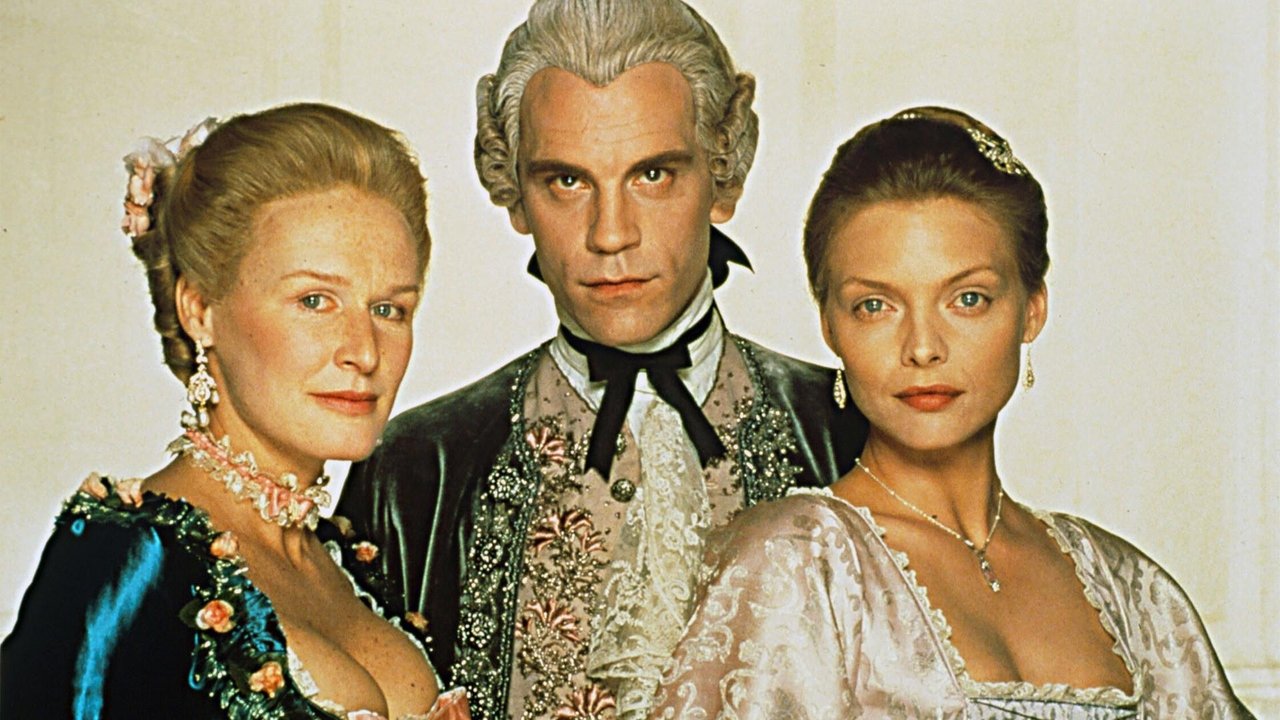
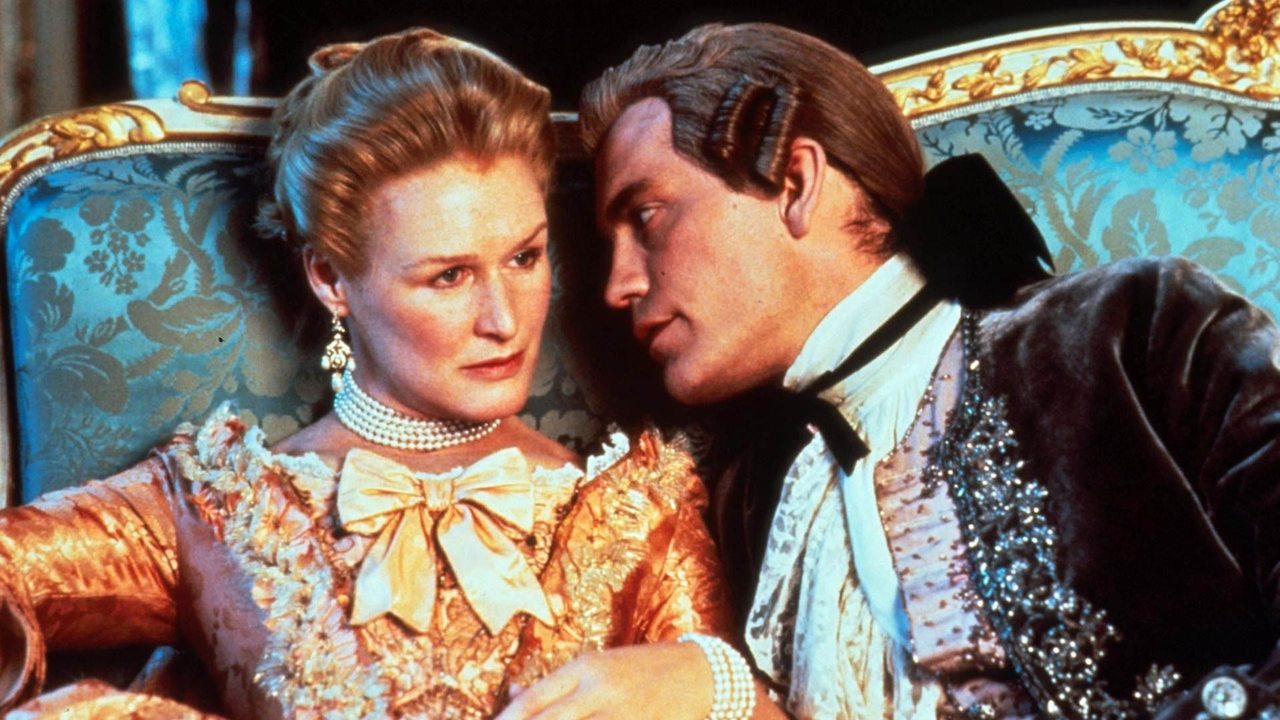
The film hinges entirely on the venomous chemistry between Close and Malkovich, and it’s a spectacle of controlled malevolence. Close, as Merteuil, is a revelation. There's a terrifying stillness about her, a mind always calculating, resentment simmering beneath a veneer of perfect composure. She wields her intellect and social standing like precision instruments, seeking retribution against a society that, despite her brilliance, ultimately limits her power because of her gender. Her performance isn't just about delivering Hampton's razor-sharp dialogue; it's in the flicker of contempt in her eyes, the slight, satisfied curl of her lip as a scheme unfolds. You understand her motivations, even as you recoil from her methods. Remember that final, devastating shot of her removing her makeup, revealing the hollowness beneath? It’s an image seared into cinematic memory.
Malkovich, who famously beat out Alan Rickman (the original stage Valmont) for the role, embodies Valmont's reptilian charm and casual cruelty. He’s a creature of appetite and ego, driven by the thrill of conquest. There's a languid danger in his movements, a deliberate theatricality to his seductions. It wasn't the kind of heroic leading man role audiences might have expected, and Malkovich leans into the character's inherent unpleasantness, making his rare moments of vulnerability – or perhaps just wounded pride – all the more complex. Their partnership, a toxic blend of shared cynicism and simmering rivalry, feels utterly believable, a folie à deux played out on society's grand stage.
Innocence Ensnared
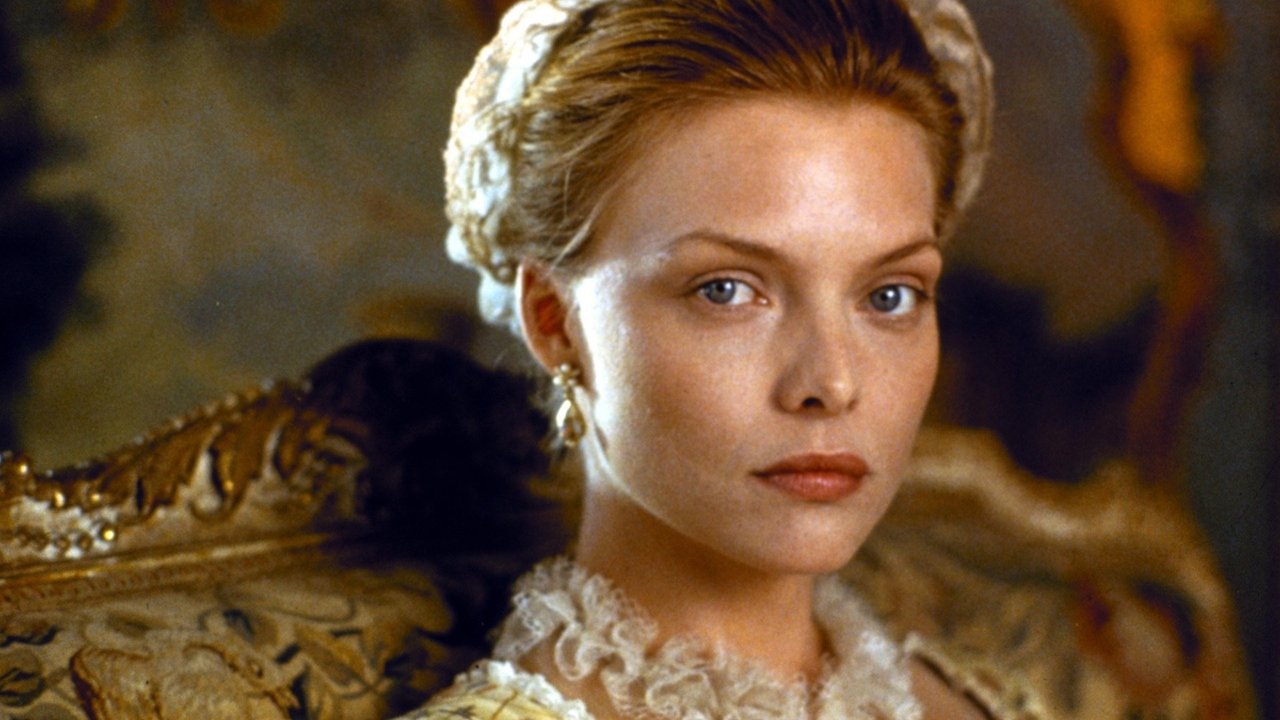
Caught in their devastating web are the virtuous Madame de Tourvel (Michelle Pfeiffer) and the naive Cécile de Volanges (Uma Thurman, in a star-making early role). Pfeiffer, fresh off films like Married to the Mob (1988), brings a heartbreaking fragility to Tourvel. Her struggle against Valmont's advances, the gradual erosion of her devout principles under the onslaught of his calculated charm, is agonizing to watch. She embodies the genuine emotion that Merteuil and Valmont seemingly despise yet perhaps secretly crave. Thurman, barely out of her teens, perfectly captures Cécile's bewildered journey from convent-bred innocence to bewildered pawn, her initial girlish excitement curdling into fear and shame. Even Keanu Reeves, as the earnest but easily manipulated Chevalier Danceny, serves his purpose well as another piece on the board, highlighting the collateral damage of the central pair's ambitions.
Behind the Velvet Curtain
Knowing that the film was shot entirely on location in stunning French châteaux adds a layer of authenticity that grounds the heightened drama. Director Stephen Frears, who'd soon give us another sharp character study with The Grifters (1990), masterfully uses these settings not just for spectacle, but to emphasize the claustrophobia and artifice of this world. There's a sense of lives lived entirely indoors, trapped by convention and their own intricate plots. It's fascinating to recall that Frears' film was racing against another adaptation, Miloš Forman's Valmont (1989). Dangerous Liaisons got there first and reaped the rewards, both critically (7 Oscar nominations, winning 3) and commercially, pulling in nearly $35 million in the US against its $14 million budget – a solid hit for a period piece with such dark themes. Christopher Hampton's screenplay, also an Oscar winner, is a masterclass in adaptation, retaining the novel's epistolary feel through sharp, revealing dialogue.
Why It Still Bites
What makes Dangerous Liaisons endure beyond its impeccable craft and performances? It's the chillingly timeless nature of its observations. The manipulation disguised as charm, the weaponization of reputation, the destructive consequences of unchecked ego and envy… don't these dynamics feel disturbingly familiar, even stripped of their powdered wigs and corsets? The film forces us to confront the capacity for cruelty that can exist beneath the most polished surfaces. It explores the complex interplay of power, sex, and social standing with an intelligence and acidity rarely matched. It’s a film that doesn't offer easy answers or comfortable resolutions, leaving you instead with a profound sense of unease and a grudging admiration for its dark brilliance.
Rating: 9/10
This near-perfect score reflects the film's exceptional quality across the board. The powerhouse performances from Close, Malkovich, and Pfeiffer are career highlights, inhabiting their complex characters with unnerving conviction. Hampton's script is literate and lethal, Frears' direction is masterful in its control of tone and atmosphere, and the Oscar-winning costumes and production design are integral, not just decorative. It loses perhaps a single point only for the inherent iciness that, while intentional and effective, keeps the viewer at a slight, albeit fascinated, distance.
Dangerous Liaisons remains a potent, sophisticated drama that uses its historical setting to dissect timeless human failings. It's a reminder that the most dangerous games are often played with the human heart, leaving scars that even the most exquisite silks cannot hide.