There are films that feel less watched and more experienced, like stepping into someone else's heightened, emotionally charged dream. Andrzej Żuławski's 1989 Franco-German drama, My Nights Are More Beautiful Than Your Days (Mes nuits sont plus belles que vos jours), is precisely that kind of cinematic immersion. It doesn’t gently invite you in; it pulls you under its intoxicating, often turbulent, current of love, impending doom, and feverish poetry. Finding this on a dusty VHS shelf back in the day, perhaps nestled in the 'World Cinema' section often overlooked by blockbuster hunters, felt like uncovering a secret – a challenging, beautiful, and utterly unforgettable one.

A Dance on the Edge
The premise resonates with a tragic, almost operatic intensity. Lucas (Jacques Dutronc), a brilliant computer scientist, discovers he has a terminal brain illness causing increasingly severe memory loss and linguistic breakdown. Fleeing his life, he encounters Blanche (Sophie Marceau), a captivating young cabaret performer with psychic abilities, haunted by her own traumatic past. They meet in the windswept coastal resort town of Biarritz, and over a few intense days and nights, forge a desperate, passionate connection against the backdrop of inevitable loss. It’s a romance blooming not just under pressure, but under a death sentence.
Żuławski, known for his emotionally raw and visually arresting style perhaps most famously seen in the cult classic Possession (1981), doesn't shy away from extremes here. The dialogue, adapted from the novel by Raphaëlle Billetdoux (who co-wrote the screenplay with Żuławski), often feels less like natural conversation and more like lyrical incantation. Words tumble out, phrases repeat and fracture, mirroring Lucas's deteriorating mind and the couple's heightened emotional state. It’s a bold choice, demanding the viewer surrender to its unique rhythm rather than expect conventional exposition. Does this stylized language sometimes feel overwhelming? Perhaps. But isn't it also true to the way profound emotion – love, grief, fear – can shatter our everyday speech?
Performance as Raw Nerve
What anchors this potentially overwrought material are the central performances. Jacques Dutronc, already a huge star in France as both a singer and actor (think Van Gogh (1991)), brings a weary, almost spectral charm to Lucas. His struggle isn't just with memory, but with maintaining his sense of self as his mind unravels. It’s a performance etched with vulnerability and a desperate clinging to the present moment, to Blanche.
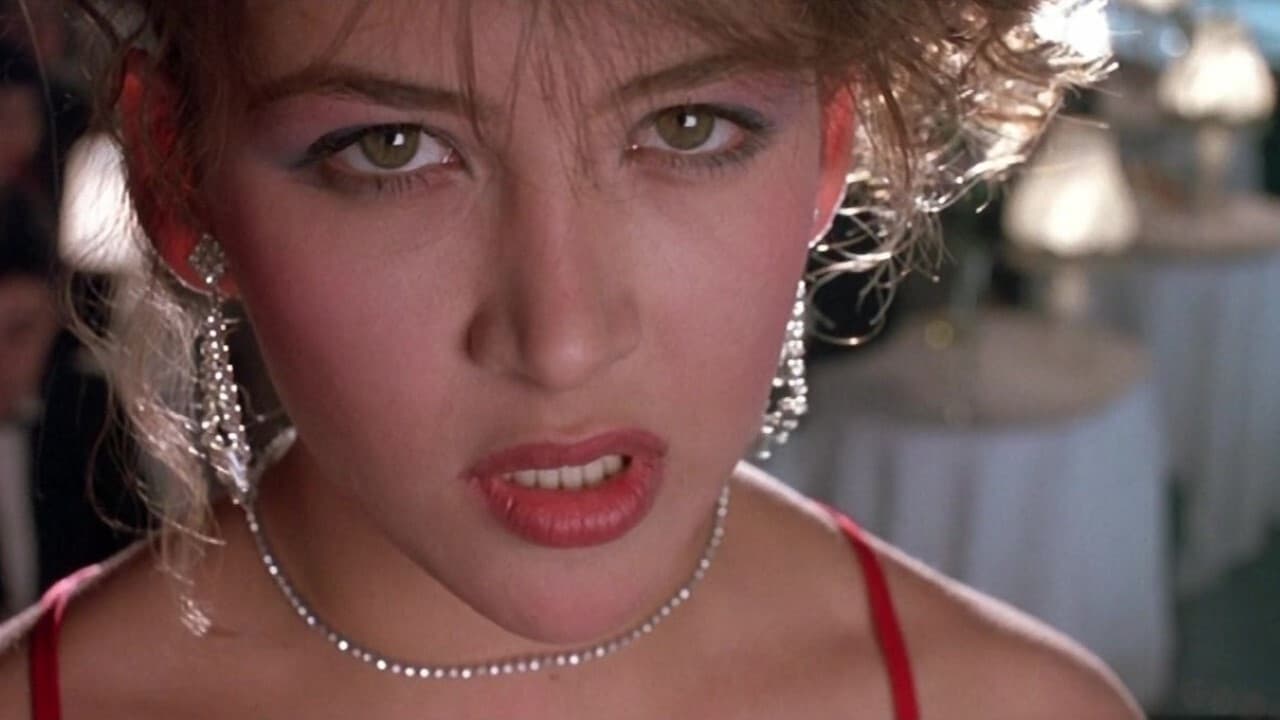
And then there's Sophie Marceau. Just 22 during filming but already an established star since La Boum (1980), this film marked a significant step into more demanding, adult territory. Working with Andrzej Żuławski, who would become her long-term partner, clearly pushed her. Her Blanche is luminous but deeply wounded, radiating both an ethereal sensitivity and a fierce, almost primal, energy. The chemistry between Marceau and Dutronc is electric, a volatile mix of tenderness and desperation that feels entirely authentic despite the stylized world they inhabit. Their connection feels less like a plot device and more like the film’s very soul. It’s fascinating to know that Żuławski often employed long, continuous takes, demanding sustained emotional intensity from his actors, a technique palpable in the finished film.
A Sensory Overload
Żuławski uses the Biarritz locations brilliantly – the crashing waves, the grand-yet-faded hotel interiors, the slightly gaudy cabaret – to create a world that feels both real and dreamlike. Cinematographer Andrzej J. Jaroszewicz's camerawork is often dynamic, restless, mirroring the characters' inner turmoil. The visual style is rich, sometimes bordering on the baroque, filled with striking compositions and a use of colour that underscores the emotional landscape. This wasn't a film made on a shoestring; while exact budget figures are elusive, it had the backing to achieve its distinct aesthetic, even if its challenging nature meant it wasn't destined for blockbuster status (its French box office was respectable but not massive).
One can imagine the initial critical reception being somewhat polarized, as Żuławski's work often is. It demands patience and a willingness to engage with its heightened reality and poetic language. This isn't a film that provides easy answers or comfortable viewing. It asks profound questions about the nature of love, memory, communication, and mortality. What remains when the structures of language and memory begin to fail? Can love offer a true sanctuary, however fleeting, against the void?
Retro Fun Facts Woven In
- The film's title itself, Mes nuits sont plus belles que vos jours, is a line Blanche says, encapsulating the nocturnal, dreamlike intensity of their brief time together compared to the mundane 'daylight' world.
- Filming in Biarritz, particularly during potentially turbulent weather, added a layer of authentic atmosphere that couldn't easily be faked on a soundstage. The raw power of the Atlantic feels like a character in itself.
- While not laden with practical effects, the film uses clever editing and sound design to convey Lucas's mental deterioration – jarring cuts, overlapping dialogue, moments of disorientation – immersing the viewer in his experience.
The Lingering Echo
My Nights Are More Beautiful Than Your Days isn't for everyone. Its emotional intensity can be exhausting, its dialogue occasionally opaque. Yet, for those willing to surrender to its unique wavelength, it's a profoundly moving and visually stunning piece of cinema. It’s the kind of film that truly benefits from the focused viewing experience that pulling a VHS tape off the shelf and dedicating time to it used to encourage. It gets under your skin, leaving you contemplating the fragility of life and the fierce beauty of human connection in the face of oblivion. It’s a testament to a time when European art cinema, even when dealing with challenging themes, could still command attention and feature genuine star power.
Rating: 8/10
This score reflects the film's artistic ambition, its unforgettable atmosphere, and the powerhouse performances from Marceau and Dutronc, which anchor the potentially overwhelming stylization. It's a demanding but ultimately rewarding experience, docked slightly only for an intensity and stylistic approach that, while purposeful, might alienate some viewers expecting a more conventional narrative.
It leaves you pondering: In the end, which memories truly define us – the long, accumulated mundane, or the brief, blinding flashes of intense connection?