Here we are, back in the flickering glow of the cathode ray tube, pulling another tape from the shelf. But this time, it’s not a comfort-food blockbuster or a creature feature. No, this is one of those rentals that felt different, heavier. A film that, once seen, embeds itself in your memory not with explosions or punchlines, but with the profound weight of its truth. I’m talking about Agnieszka Holland’s staggering 1990 film, Europa Europa. What haunts me most, perhaps, isn't just the harrowing events depicted, but the sheer, almost unbelievable fact that they actually happened.
A Survival Story Beyond Belief
At its heart, Europa Europa recounts the astonishing true story of Solomon Perel, a young German Jew whose life becomes a terrifying chameleon act during World War II. Fleeing eastward from the Nazis, he’s separated from his family and finds refuge in a Soviet orphanage, becoming a fervent young Communist. When the Germans invade Russia, fate takes another bizarre turn: captured, he convinces his German captors he’s an ethnic German orphan, Josef "Jupp" Peters. From there, his journey spirals into the surreal – becoming a celebrated war hero, a translator for the Wehrmacht, and ultimately, an student at an elite Hitler Youth academy in Braunschweig, all while desperately concealing the physical proof of his Jewish identity.
This premise alone is staggering, but it's the execution by Holland, a Polish filmmaker deeply familiar with the complexities and brutalities of 20th-century European history (she previously directed the Oscar-nominated Angry Harvest (1985)), that elevates it. She navigates Perel's odyssey with unflinching honesty, refusing easy sentimentality. The film captures the constant, gnawing terror of discovery, the psychological dissonance of outwardly embracing the ideology that seeks your annihilation, and the moments of pitch-black, almost unbearable irony.

The Boy Who Wore the Enemy's Skin
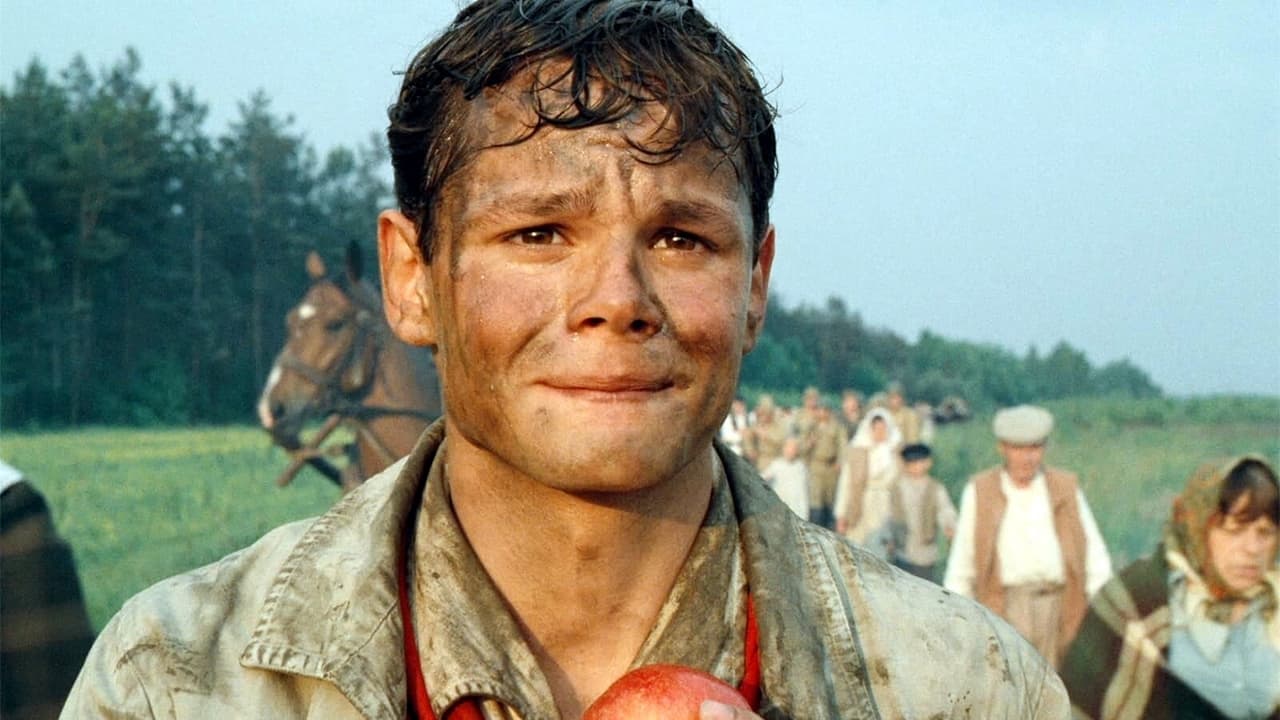
The film rests squarely on the shoulders of newcomer Marco Hofschneider as Solek/Jupp. It’s a performance of incredible nuance. He portrays not just the fear, but the confusion, the moments of genuine connection he forms even within the belly of the beast, and the desperate loneliness of his secret. Watch his eyes – they convey everything. There’s a scene where, lauded as a hero, he’s asked to identify a captured Soviet soldier who turns out to be Stalin's son – the pressure, the absurdity, the danger – it's all there in Hofschneider's trembling silence. He embodies the impossible tightrope walk of survival.
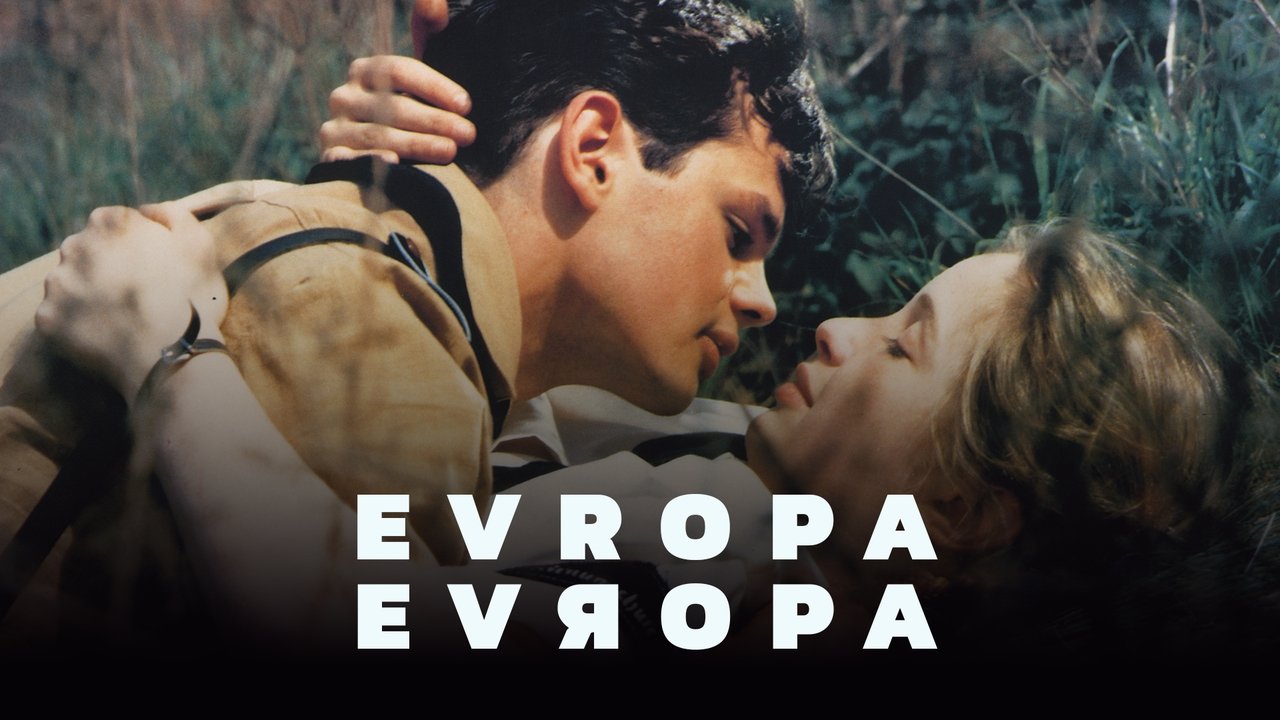
His interactions, particularly with Leni (Julie Delpy, radiating fervent ideology yet undeniable vulnerability, years before her iconic role in Before Sunrise (1995)), are fraught with tension. Leni is deeply in love with the "Aryan hero" Jupp, completely unaware of his true identity. Their relationship underscores the film’s exploration of how ideology can blind, yet human connection can still flicker in the darkest places. Can you imagine the internal conflict, falling for someone who represents everything you're supposed to hate, and who would despise you if they knew the truth?

Truth Stranger Than Fiction
One of the most compelling aspects, something that likely fueled word-of-mouth recommendations back in the video store days, is that Europa Europa is based directly on Solomon Perel's autobiography, Ich war Hitlerjunge Salomon. Holland sticks remarkably close to his account. Apparently, Perel himself was often on set during filming, providing an invaluable resource and, one imagines, an almost surreal presence for the cast and crew recreating his younger life. The film doesn't shy away from the physical reality of Solek's secret – his circumcision. Several scenes revolve around the terrifyingly mundane threat of communal showers or medical exams, moments laden with more suspense than any contrived thriller plot. It’s a constant, visceral reminder of his vulnerability.
Interestingly, despite widespread critical acclaim (including a Golden Globe for Best Foreign Language Film and an Oscar nomination for Best Adapted Screenplay for Holland), Germany controversially declined to submit Europa Europa as its official entry for the Academy Awards that year. The decision sparked considerable debate, with some suggesting the film's complex, sometimes darkly comedic portrayal of German characters, and its Polish director, made the German selection committee uncomfortable. It was a strange echo of the film's own themes of identity and national perception. Made for a relatively modest budget, its critical success and the power of its story ensured it found an audience, becoming one of those significant foreign films that punched above its weight in the arthouse and home video markets.
Beyond the Uniform
What makes Europa Europa resonate beyond just a historical account is its exploration of identity itself. Who are we when stripped of labels, passports, uniforms? Solek is forced to constantly shed skins – Jew, Communist, Nazi – yet beneath it all, he remains simply a young man desperate to live. The film asks profound questions about conformity, ideology, and the bewildering absurdity of hatred based on arbitrary lines drawn by nations and fanatics. Doesn't this constant pressure to belong, to conform, echo in less extreme ways even today?
There are moments of shocking brutality, yes, but also flickers of kindness from unexpected sources, and sequences dripping with irony, like Solek being lectured on the inferiority of Jews in a racial science class while desperately trying not to faint from fear. Holland masterfully balances the harrowing with the human, the tragic with the darkly absurd.
The Verdict
Europa Europa isn't light viewing. It’s not the tape you’d pop in for casual background noise. I remember finding it on the shelf, perhaps nestled between action flicks and comedies, drawn in by the stark cover art or a brief description. It was the kind of discovery that video stores uniquely offered – a chance encounter with something powerful and unexpected. It demands your attention and leaves you contemplating the resilience of the human spirit, the madness of war, and the slippery nature of identity long after the credits roll and the VCR clicks off. It's a testament to the power of truth, however unbelievable, captured on film.
Rating: 9.5/10
This is essential viewing. Its power stems directly from the authenticity of Perel's unbelievable journey and Holland's sensitive, intelligent direction, brought to life by a remarkable central performance. It avoids easy answers, confronting the viewer with the brutal complexities of survival and the absurdities inherent in judging humanity by its uniforms. A film that truly stays with you, a chilling reminder of history found on a humble VHS tape. What does it truly mean to belong, and what price is too high for survival? Europa Europa offers no simple answers, only the unforgettable story of one boy forced to find out.